
The Rebirth of Existential Dread in Modern Prose
Albert Camus famously defined the absurd as the fundamental conflict between the human tendency to seek inherent value and meaning in life and the silent, cold, and meaningless universe. In the mid-twentieth century, this philosophical friction birthed a literary movement that sought to capture the disorientation of a post-war world. Authors like Franz Kafka, Samuel Beckett, and Eugène Ionesco discarded traditional narrative arcs, favoring stories where logic collapsed and characters were trapped in incomprehensible situations.
For a time, the literary absurd was viewed as a historical artifact—a specific reaction to the specific traumas of the twentieth century. Yet, as we navigate the complexities of the twenty-first century, a distinct resurgence of absurdist fiction has emerged. Modern authors are resurrecting these themes not to mimic their predecessors, but to address a new breed of existential dread. Today’s absurdity is not born from the rubble of global conflict, but from the overwhelming sensory overload of the digital age, the inescapable grind of late-stage capitalism, and the surreal nature of contemporary crises.
Contemporary fiction has adopted the absurd as a primary lens through which to view a reality that often feels entirely fictional. When the daily news cycle reads like satire, traditional realism struggles to capture the authentic human experience. Writers are realizing that to accurately depict the modern condition, they must abandon strict adherence to logic and embrace the chaotic, the senseless, and the profoundly weird.
Bureaucracy as the Ultimate Antagonist
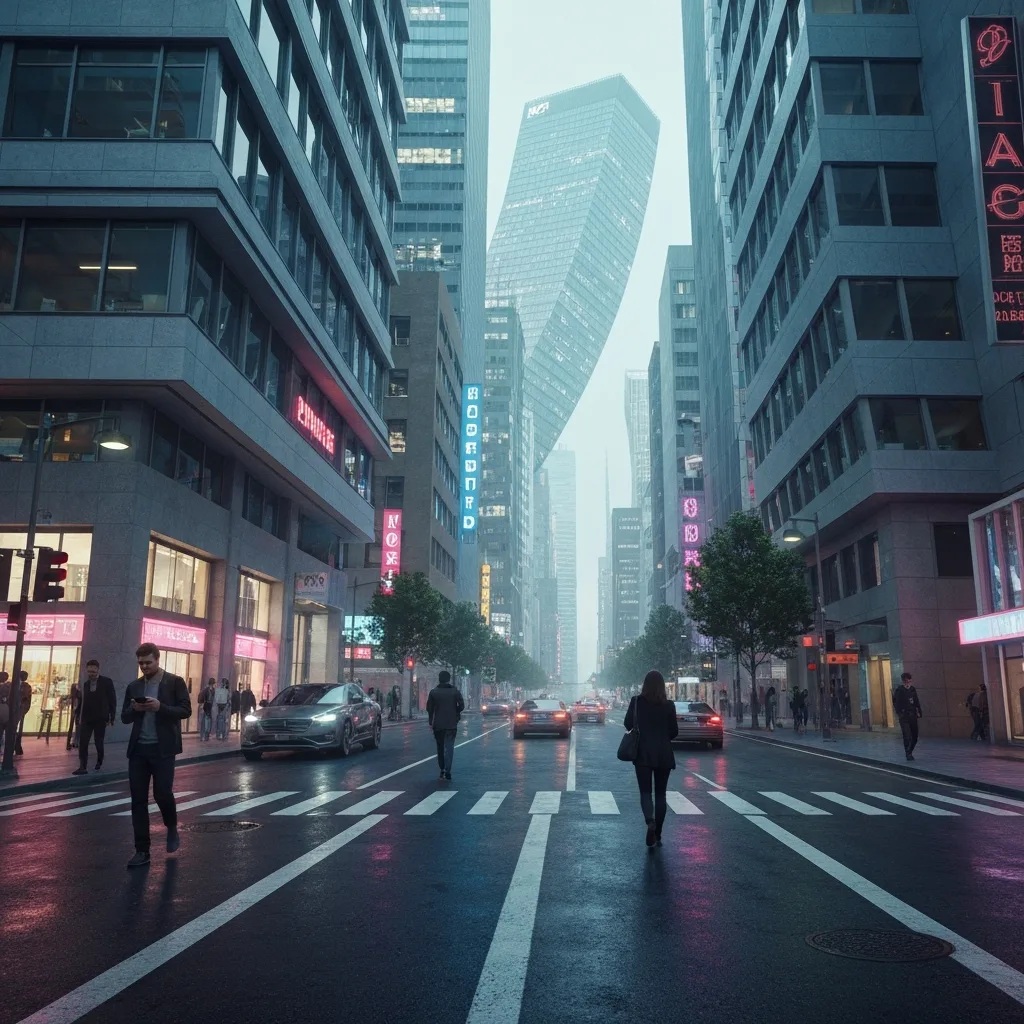
In classical literature, protagonists battled dragons, rival nations, or their own tragic flaws. In the modern absurdist novel, the greatest antagonist is often a middle manager, a convoluted HR policy, or an endless loop of automated customer service prompts. Bureaucracy has become the modern labyrinth, a space where human agency goes to die, suffocated by red tape and meaningless jargon.
This theme is brilliantly executed in novels that transform the modern workplace into a site of existential horror. The physical cubicle and the virtual Slack channel become arenas where characters perform tasks devoid of any tangible value. Unlike the dystopian fiction of the past, which featured oppressive, violent regimes, modern absurdist fiction presents a softer, more insidious form of control. The oppression here is mundane. It is the horror of spending forty hours a week optimizing a spreadsheet for a product that no one needs.
The Humor in the Hopeless
What prevents these narratives from collapsing into pure nihilism is their reliance on deadpan humor. Comedy in modern absurdist fiction functions as a vital coping mechanism. Authors utilize a flat, detached tone to describe utterly bizarre or bleak situations, forcing the reader to laugh at the sheer ridiculousness of the scenario. This humor is often pitch-black, relying on the stark contrast between the catastrophic events happening in the background and the petty, mundane concerns of the characters in the foreground.
For instance, a protagonist might be more concerned about the office coffee machine breaking down than the fact that a mysterious apocalyptic event is slowly wiping out the population. This juxtaposition highlights the fragmented way we consume information today, where a global tragedy and a celebrity meme occupy the same amount of space on our social media feeds. By laughing at the absurdity on the page, readers are given permission to laugh at the absurdity of their own lives.
The Disintegration of Linear Logic
Traditional storytelling relies on a clear chain of cause and effect. A character makes a choice, and that choice leads to a direct consequence, driving the plot forward. Modern absurdist fiction frequently severs this chain. Actions do not produce the expected reactions. Hard work does not lead to success; it might lead to a demotion, or to the character literally turning into a piece of office furniture.
This breakdown of logic reflects a growing cultural sentiment that the traditional ‘rules’ of life no longer apply. The promise that education and hard work will guarantee stability has been severely undermined by economic crashes and systemic inequality. When the real world feels arbitrary, fiction responds by creating worlds where arbitrariness is the only governing law. Characters drift through these narratives, subjected to random events over which they have absolutely no control, mirroring the powerlessness many feel in the face of massive global systems.
Language as a Broken Tool
Another hallmark of this genre is the failure of communication. In the theater of the absurd, dialogue often circles back on itself, with characters talking past one another rather than to one another. Contemporary authors have adapted this technique for the digital era. Conversations in these novels are frequently filled with corporate buzzwords, internet slang, and hollow platitudes that signify nothing.
Characters might send hundreds of text messages or emails without ever achieving true connection. Language, rather than acting as a bridge between individuals, becomes a barrier. It is used to obfuscate, to deflect, and to maintain a superficial sense of normalcy while everything beneath the surface is falling apart. This linguistic breakdown serves as a sharp critique of a hyper-connected society that is paradoxically experiencing an epidemic of loneliness.
The Modern Anti-Protagonist: Drifting Through the Void
The heroes of these stories are rarely heroic, but they are also distinct from the traditional anti-hero. They are not morally compromised masterminds or brooding rebels. Instead, they are passive observers. They are the ultimate anti-protagonists—characters who refuse to drive the plot, preferring to let the plot happen to them.
These characters often exhibit a profound emotional detachment. They respond to bizarre or traumatic events with a shrug, choosing compliance over resistance because resistance requires an energy they simply do not possess. This passivity is not a character flaw, but a survival strategy. In a world that demands constant outrage, constant productivity, and constant engagement, choosing to care about nothing becomes a radical act of self-preservation. These protagonists resonate deeply with a readership experiencing profound burnout, offering a vicarious release from the pressure to constantly optimize one’s life.
Why Readers Seek Comfort in the Uncomfortable
It might seem counterintuitive that readers would flock to books that offer no answers, feature passive characters, and depict a meaningless universe. Yet, modern absurdist fiction is surprisingly popular, providing a unique form of comfort. When the real world is chaotic and unpredictable, reading a neatly resolved story can feel patronizing or false. There is a deep, validating comfort in reading a book that looks at the mess of modern existence and simply agrees that it makes no sense.
These novels offer a space for collective catharsis. They do not promise that everything will be okay, nor do they offer a ten-step plan for fixing society. Instead, they offer solidarity in bewilderment. By articulating the specific flavor of modern existential dread, these authors make the reader feel seen. The absurdity on the page acts as a pressure valve, releasing the pent-up tension of trying to navigate a fundamentally illogical world.
A Mirror to Our Fragmented Reality
Ultimately, the resurgence of the absurd in contemporary fiction is a testament to literature’s ongoing ability to adapt to the emotional needs of its time. By discarding the rigid structures of traditional realism, modern authors are able to capture the surreal, fragmented, and often hilarious reality of life in the twenty-first century. Embracing the absurd is no longer just a philosophical exercise; it has become a necessary tool for survival, allowing us to confront the void, point at it, and laugh.
Do you enjoy the content on Agenda Creativa?
Your contributions help me create new articles, share creative ideas, and keep this platform alive! If you like what I do and want to support my work, you can buy us a coffee.
Every cup of coffee means more than just a gesture – it's direct support for my passion to create inspiring and useful content. Thank you for being part of this journey!
☕ Buy me a coffee