The Allure of the Uncanny
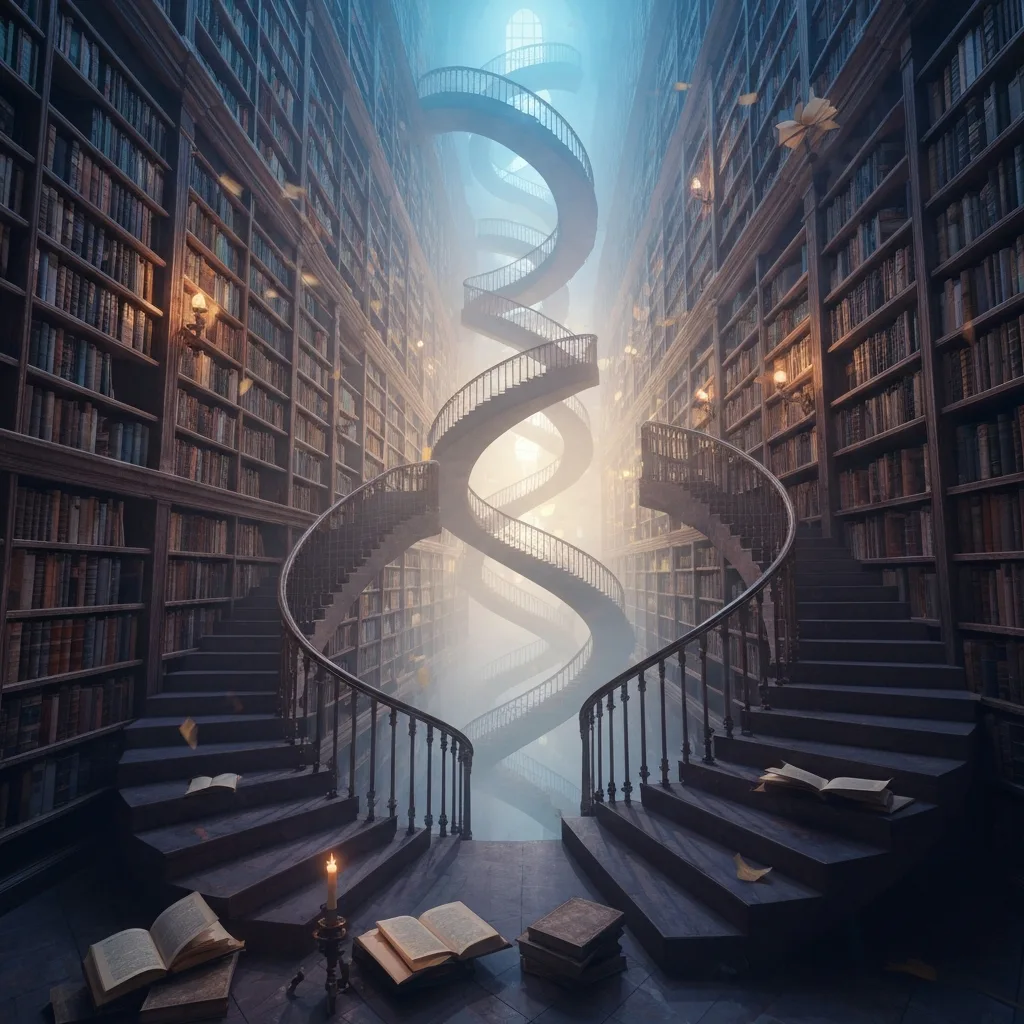
We often speak of getting lost in a good book, usually referring to a state of deep absorption where the outside world falls away. But a distinct subset of contemporary fiction takes this idiom literally. Rather than offering a clear path from prologue to resolution, these narratives construct deliberate mazes. They utilize surrealism, dream logic, and impossible architectures to disorient the reader, creating an experience where confusion is not a flaw of the writing, but the central mechanism of the story.
This is the literature of the labyrinth. It operates in the liminal space between strict realism and high fantasy. Unlike traditional fantasy, which builds entirely new worlds with rigid magical rules, labyrinthine fiction warps the world we already know. It bends the familiar until it snaps, introducing elements of the uncanny that force readers to question the reliability of their own perceptions. By abandoning traditional narrative linearity, these novels mirror the chaotic, often incomprehensible nature of human consciousness.
The Foundations of the Literary Labyrinth
To understand the modern literary maze, one must look to its architects. Jorge Luis Borges is perhaps the most famous purveyor of the metaphysical labyrinth. In his short stories, libraries stretch into infinity, and maps are drawn at a one-to-one scale with the empires they represent. Borges used the physical maze as a stand-in for the epistemological limits of humanity—our desperate, doomed attempts to categorize and understand a universe that defies categorization.
Similarly, Franz Kafka laid the groundwork for narratives where logic is fluid and bureaucracy becomes a surreal nightmare. The modern labyrinthine novel borrows heavily from both authors, taking Borges’s spatial impossibilities and Kafka’s atmospheric dread, and filtering them through the anxieties of the twenty-first century. Today’s authors are not just building physical mazes; they are constructing psychological ones, where the walls are made of repressed memories, shifting identities, and fractured timelines.
Spatial Disorientation as a Narrative Tool
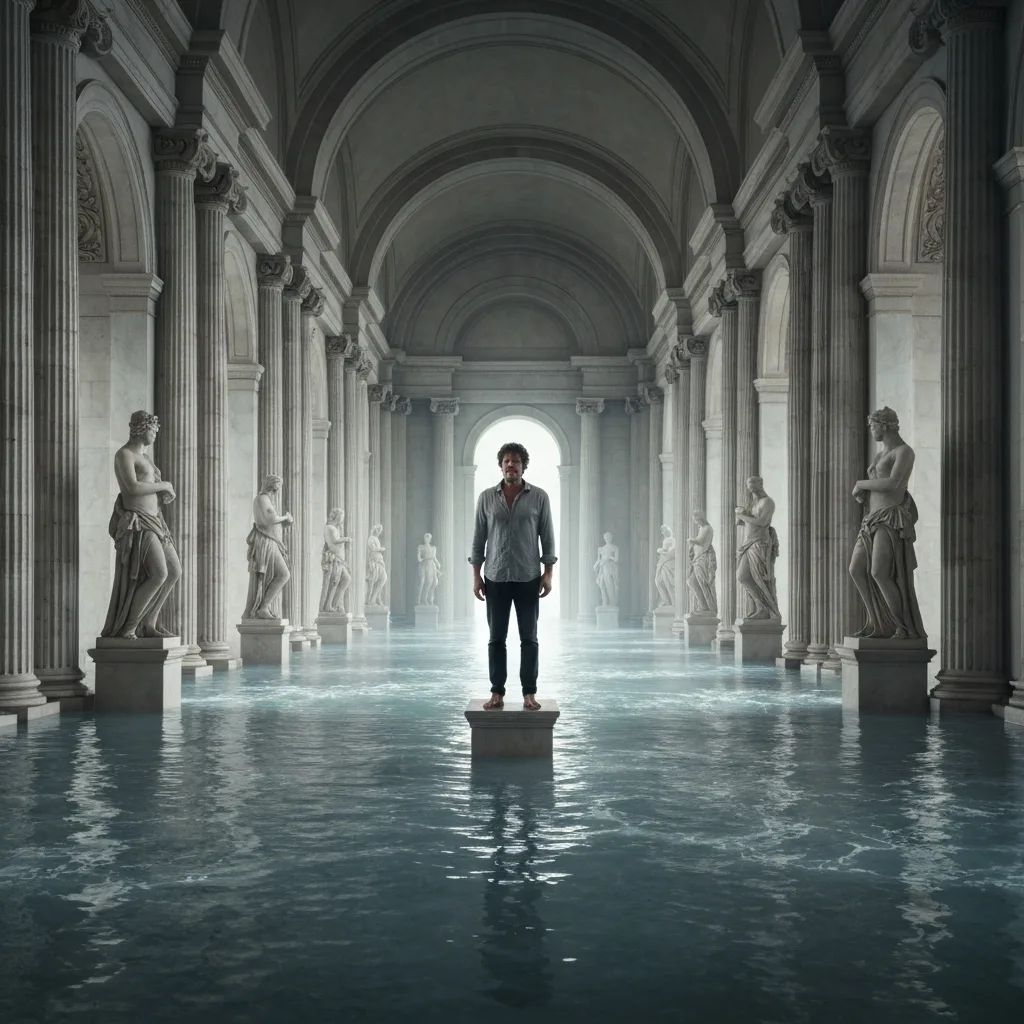
One of the most effective ways contemporary authors employ surrealism is through spatial disorientation. The physical setting of the novel becomes an antagonist, or at least an unreliable narrator in its own right. Susanna Clarke’s brilliant novel Piranesi is a masterclass in this technique. The protagonist lives in “The House,” an endless expanse of classical halls containing captive oceans and clouds. For the protagonist, this impossible architecture is entirely normal. The reader, however, is plunged into a state of continuous vertigo, trying to map a space that defies the laws of physics.
This spatial manipulation forces a shift in how we read. When the ground beneath the characters’ feet is literally shifting, we can no longer rely on our standard assumptions about setting. The architecture of the environment becomes a direct reflection of the protagonist’s internal state. A house that is larger on the inside than the outside is not just a neat architectural trick; it is a manifestation of hidden trauma, secrets, and the expansive, often terrifying nature of the subconscious mind.
Dream Logic and the Fluidity of Identity
While some authors use physical spaces to disorient, others rely on “dream logic.” In dreams, transitions are seamless but nonsensical. You might walk through a door in your childhood home and step out onto a moving train, and within the context of the dream, this makes perfect sense. Haruki Murakami is arguably the modern master of applying dream logic to contemporary fiction.
In Murakami’s universes, the boundary between the conscious world and the subconscious realm is porous. Characters climb down dry wells to access parallel dimensions, cats hold conversations with humans, and people vanish into thin air without explanation. Crucially, the characters in these novels rarely react to these bizarre occurrences with the panic or disbelief we would expect in reality. They accept the surreal with a passive resignation that mimics the way we accept the events of our own dreams.
This acceptance strips away the rigid boundaries of identity. If the world is fluid, then so is the self. Characters in labyrinthine fiction frequently experience fractured identities, encountering doppelgängers or losing their own memories. Helen Oyeyemi frequently employs this in her work, blending fairy-tale motifs with modern surrealism to explore how identity is constructed, dismantled, and rebuilt. Her characters navigate worlds where mirrors show the wrong reflections and houses seem to possess their own malicious intent, forcing the characters to constantly negotiate who they are in relation to an unstable reality.
The Slippery Nature of Time and Memory
In the literature of the labyrinth, time rarely marches forward in a straight line. It pools, loops, and fractures. Memory becomes an unreliable compass. Characters might remember events that haven’t happened yet or forget tragedies that define their present circumstances. This temporal fluidity is distinct from the mechanics of science fiction time travel; it is not about altering the past or saving the future. Instead, it is about the subjective experience of time.
Trauma, grief, and profound isolation can make a single day feel like a year, or a decade feel like a passing moment. Surrealist fiction externalizes this internal reality. By unmooring the narrative from a strict chronological timeline, authors simulate the experience of memory itself—how we recall the past not as a continuous film, but as a series of disjointed, emotionally charged vignettes.
Slipstream and the Blurring of Genre Lines
The proliferation of dream logic and surrealism has given rise to a literary classification often referred to as “slipstream.” Coined in the late 1980s but flourishing in contemporary publishing, slipstream sits at the intersection of literary fiction, fantasy, and the bizarre. It is the fiction of cognitive dissonance. Authors like Kelly Link and Carmen Maria Machado excel in this space, writing stories that feel deeply grounded in the emotional realities of the modern world, yet are punctuated by the impossible.
Slipstream fiction resonates so strongly today because it mirrors the absurdity of contemporary life. We exist in a hyper-connected, rapidly changing world where the daily news often reads like satire or dystopian fiction. Strict realism sometimes feels inadequate to capture the overwhelming, disorienting experience of modern existence. Surrealism, paradoxically, has become a more accurate tool for reflecting reality.
Anchoring the Bizarre: The Contrast of the Mundane
A labyrinth is only effective if it has walls. In surrealist fiction, pure chaos quickly becomes exhausting for the reader. If anything can happen, then nothing matters. The most successful labyrinthine narratives anchor their bizarre elements with hyper-specific, mundane details. The contrast between the ordinary and the impossible is what gives the surreal its power.
Consider how often characters in surreal fiction are engaged in routine tasks when the impossible occurs. They are boiling pasta, folding laundry, or commuting to a sterile office job when the fabric of reality tears open. This juxtaposition does two things: it grounds the reader, providing a familiar handhold in a disorienting environment, and it amplifies the shock of the uncanny. The impossible feels much more visceral when it intrudes upon a quiet, domestic Tuesday.
The Psychological Resonance of the Maze
Why do we willingly subject ourselves to these confusing, disorienting narratives? The answer lies in our intrinsic desire to make meaning out of chaos. Navigating a literary labyrinth requires active engagement. The author refuses to hand the reader a map, forcing us to become cartographers of the text. We must look for patterns, interpret symbols, and learn to sit comfortably with ambiguity.
In a world that constantly demands neat resolutions and binary answers, labyrinthine fiction offers a profound relief. It acknowledges that life is rarely straightforward. People are contradictory, memories are flawed, and the universe does not always operate according to a logical plan. By immersing ourselves in narratives that embrace the absurd, we practice navigating the uncertainties of our own lives.
Embracing the Unresolved
The true literature of the labyrinth rarely offers a clean exit. The protagonist does not always slay the minotaur and find their way back to the daylight. Often, the resolution involves learning to live within the maze, accepting the shifting walls and the strange logic of the space. This lack of closure can be frustrating for readers accustomed to traditional story arcs, but it is entirely the point.
Surrealism and dream logic in contemporary fiction challenge us to let go of our need for absolute control. They ask us to trust the narrative even when we cannot see the destination. In doing so, these novels provide a unique literary catharsis. They remind us that while the architecture of reality may be confusing, intimidating, and entirely beyond our comprehension, there is still immense beauty to be found in wandering the halls.
Do you enjoy the content on Agenda Creativa?
Your contributions help me create new articles, share creative ideas, and keep this platform alive! If you like what I do and want to support my work, you can buy us a coffee.
Every cup of coffee means more than just a gesture – it's direct support for my passion to create inspiring and useful content. Thank you for being part of this journey!
☕ Buy me a coffee