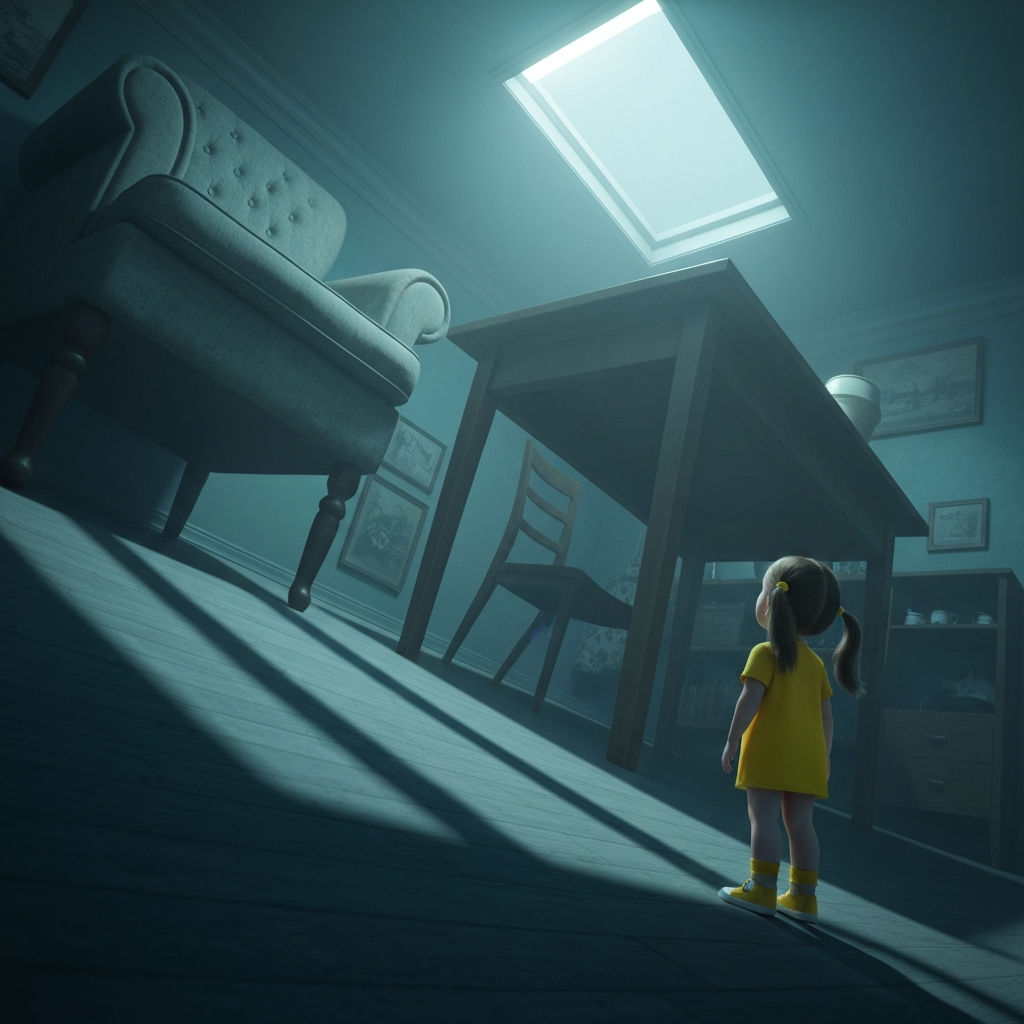
The Mechanics of Naive Observation
In the early twentieth century, literary theorist Viktor Shklovsky introduced the concept of ostranenie, or defamiliarization. He argued that the primary purpose of art is to impart the sensation of things as they are perceived, not as they are known. We grow numb to the everyday world, blinded by routine and cultural conditioning. To make the familiar strange again, writers must force us to look at reality through an unconventional lens. Few narrative devices achieve this disruption as effectively as the child narrator.
When an author hands the reigns of a narrative to a child, they are fundamentally altering the contract between the text and the reader. Adults process the world through a dense filter of social norms, historical context, and psychological defenses. Children, conversely, observe the world with an unfiltered, often literal exactness. They record the actions, words, and emotional temperatures of the adults around them without necessarily understanding the underlying context. This creates a profound space for structural irony—a narrative situation where the reader understands the true implications of the events unfolding, while the narrator remains oblivious.
This gap in comprehension is where the true power of the child perspective resides. The reader is tasked with translating the child’s naive observations into adult realities. When a young protagonist describes a mother crying over a stack of papers with red numbers, the child might think the red ink is frightening; the reader, however, recognizes the crushing weight of financial ruin. By forcing the audience to connect these dots, the author transforms reading from a passive reception of facts into an active, highly engaging act of psychological decoding.
Bridging the Gap Between Text and Reader
The success of this device relies heavily on the writer’s ability to maintain the illusion of innocence while simultaneously feeding the reader the necessary plot information. The child cannot suddenly possess the vocabulary or emotional intelligence of a forty-year-old simply because the plot demands exposition. Instead, the author must rely on the child’s acute sensory perception. Children are excellent observers of micro-expressions and atmospheric shifts. They notice when a parent’s voice changes pitch, when a door is closed too quietly, or when a smile fails to reach someone’s eyes. By grounding the narrative in these hyperspecific, sensory details, the author provides the reader with all the clues needed to reconstruct the adult drama happening just outside the narrator’s comprehension.
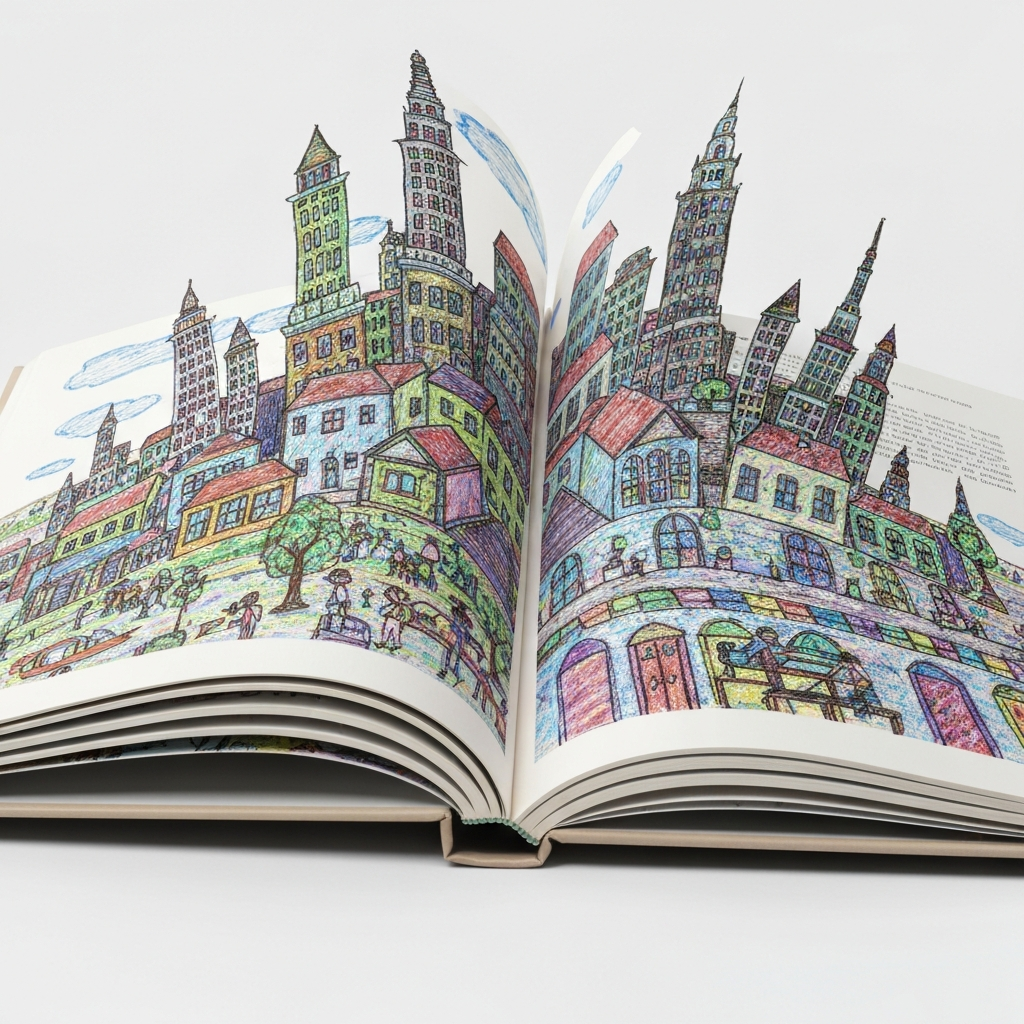
Unmasking Adult Hypocrisy and Societal Flaws
Because children are still in the process of learning the rules of society, they are uniquely positioned to expose how arbitrary, absurd, and often cruel those rules can be. Social constructs such as class, race, gender roles, and political allegiances are not innate; they are taught. A child narrator encounters these constructs as bizarre, illogical mandates rather than accepted facts of life.
When a young protagonist questions why certain people are treated differently based on the neighborhood they live in or the color of their skin, their genuine confusion strips away the sophisticated justifications adults use to maintain systemic inequalities. The child’s logic is usually simple and fiercely moral, highlighting the moral compromises adults make daily. The emperor has no clothes, and the child is the only one in the crowd lacking the social conditioning required to pretend otherwise.
This dynamic forces the reader to confront their own complicity in these societal norms. We are compelled to look at our world through eyes that have not yet learned to accept injustice as a pragmatic necessity. The child’s innocent questioning acts as a mirror, reflecting the hypocrisies of the adult world with a clarity that a more mature, cynical narrator could never achieve.
Navigating Trauma Through a Fractured Lens
One of the most ambitious applications of the child narrator is the exploration of severe trauma, captivity, or war. Authors frequently employ youthful perspectives to narrate horrific events because the child’s lack of understanding provides a necessary psychological buffer for both the protagonist and the reader.
Consider narratives set in the midst of historical atrocities or extreme domestic abuse. If these stories were told through the eyes of an adult fully aware of the hopelessness and depravity of their situation, the resulting text might be unbearably bleak. A child, however, normalizes their environment. To a child born in captivity, the walls of their confinement are not a prison; they are the entire universe. They invent games, assign personalities to inanimate objects, and find moments of profound wonder in situations an adult would find utterly soul-crushing.
Linguistic Limitations as Narrative Strengths
This normalization of trauma is often reflected in the child’s language. A limited vocabulary forces the author to invent new, idiosyncratic ways for the narrator to describe their world. Proper nouns might be assigned to everyday objects, elevating a mundane room into a mythological landscape. A terrifying event might be described using the vocabulary of a playground game. This linguistic constraint actually heightens the emotional impact of the story. The contrast between the innocence of the language and the horror of the reality creates a devastating emotional resonance. The reader mourns not just the physical suffering of the child, but the inevitable loss of the innocence currently protecting them from the full weight of their reality.
The Neurodivergent and Unconventional Child Voice
Contemporary fiction has expanded the boundaries of the child narrator by exploring neurodivergent perspectives, further complicating the relationship between perception and reality. When a narrator operates with a highly specific, rule-bound understanding of the world, the structure of the novel itself often morphs to accommodate their mind.
These narratives challenge the reader to abandon their neurotypical assumptions about how a story should be told. Digressions into mathematics, intense fixations on specific sensory details, and a literal interpretation of idioms and metaphors become the architectural pillars of the book. The author uses the child’s unique cognitive processing not as a gimmick, but as a legitimate, rigorous framework for investigating the world. This approach demystifies neurodivergence, placing the reader directly inside a mind that processes emotion and logic differently, ultimately proving that there is no single, objective way to experience human existence.
The Challenge for the Author: Balancing Authenticity and Plot
Writing from the perspective of a child is a high-wire act of literary craft. The most common pitfall is the creation of the overly precocious child—a narrator who speaks with the vocabulary, world-weariness, and philosophical depth of the author hiding behind them. When a ten-year-old begins delivering flawless soliloquies on existential dread, the illusion shatters, and the reader is abruptly pulled out of the narrative.
To avoid this, authors must impose strict limitations on their own prose. They must strip away their hard-earned adult vocabulary and resist the urge to over-explain. The art lies in restraint. The writer must trust the reader to do the heavy lifting. Furthermore, the author must distinguish between the ‘experiencing I’ and the ‘narrating I’. Is the story being told by a child in the present tense, experiencing events as they happen? Or is it being told by an adult looking back at their childhood?
A retrospective narrator allows for adult vocabulary and hindsight, but sacrifices the immediate, visceral tension of the present-tense child. The present-tense child offers unmatched immediacy and dramatic irony, but severely limits the narrative tools available to the author. Choosing which framework to use is one of the most critical decisions an author makes, dictating the entire rhythm and emotional trajectory of the novel.
Conclusion: The Enduring Power of the Unformed Mind
The child narrator endures as a staple of literary fiction because it offers a fundamental reset of our worldview. In a literary landscape often dominated by cynical, hyper-aware, and unreliable adult voices, the child offers a different kind of unreliability—one born of innocence rather than deception. They remind us that the systems, anxieties, and social rules that govern our adult lives are largely invented. By borrowing their eyes for a few hundred pages, we are granted the rare opportunity to see our complicated, beautiful, and terrifying world exactly as it is: strange, newly minted, and waiting to be understood.
Do you enjoy the content on Agenda Creativa?
Your contributions help me create new articles, share creative ideas, and keep this platform alive! If you like what I do and want to support my work, you can buy us a coffee.
Every cup of coffee means more than just a gesture – it's direct support for my passion to create inspiring and useful content. Thank you for being part of this journey!
☕ Buy me a coffee
