
The Shift Away from the Human Center
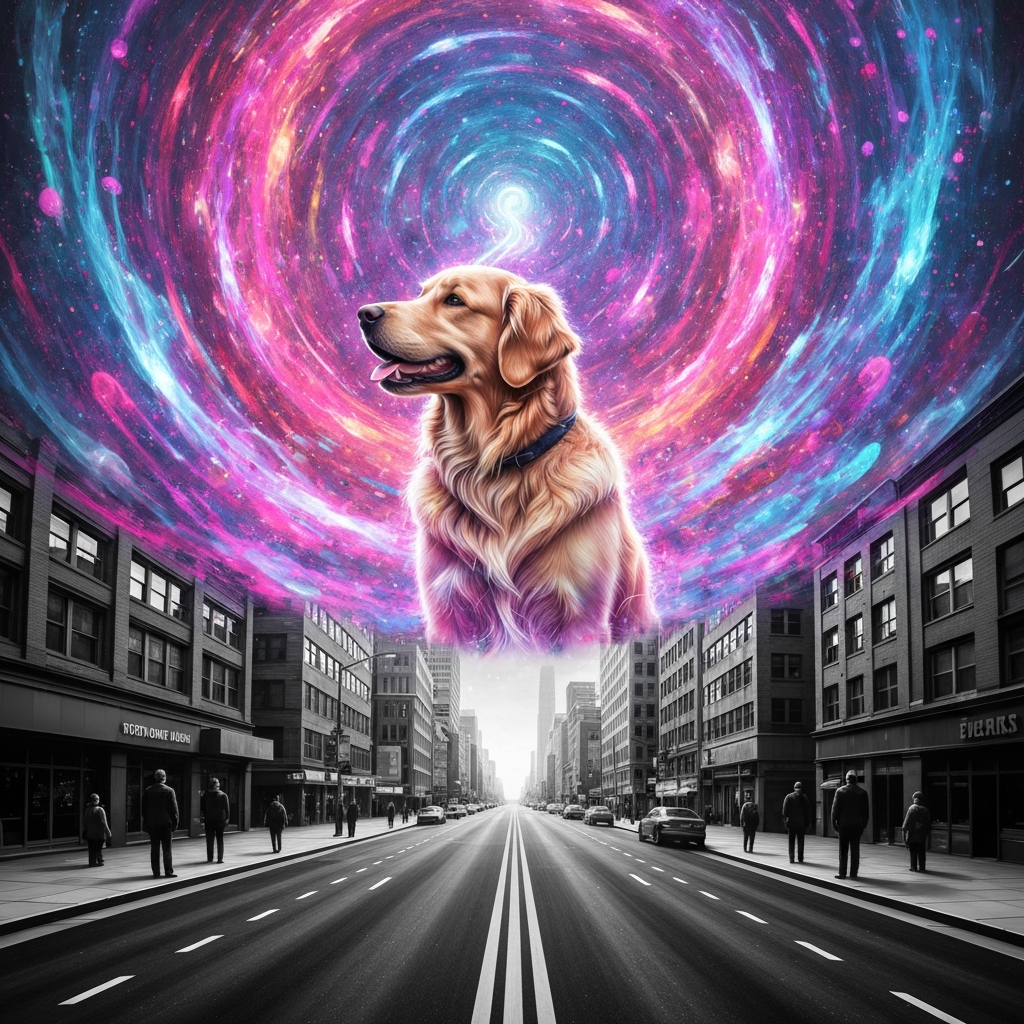
Literature has traditionally served as a mirror reflecting the human condition. For centuries, authors have meticulously documented human desires, flaws, and societal structures. Yet, some of the most profound observations regarding humanity emerge from narratives that abandon the human perspective entirely. The utilization of animal narrators in literary fiction represents a daring structural choice, one that forces readers to step outside their inherent biases and view their world through an entirely alien lens.
While animals have populated stories since the dawn of oral tradition, their function has shifted drastically. Modern literary fiction treats non-human consciousness not as a gimmick, but as a complex psychological state worthy of serious exploration. By decentering the human experience, authors can critique society, explore raw emotion, and challenge the boundaries of empathy in ways that conventional human narrators cannot achieve.
This evolution from simple fable to complex psychological realism marks a significant maturation in storytelling. It demands rigorous imaginative labor from the writer and asks the reader to suspend their anthropocentric worldview, ultimately redefining what it means to be a conscious being in a shared world.
From Moral Proxies to Conscious Beings
To appreciate the modern animal narrator, one must first recognize their historical predecessors. In ancient traditions, such as Aesop’s fables, animals functioned strictly as flat moral proxies. A fox represented cunning; a lion represented pride. These creatures possessed no internal life or biological realism; they were merely humans wearing fur, designed to deliver a didactic lesson.
Later, works like George Orwell’s Animal Farm utilized animals for political allegory. While brilliant in its execution, the pigs and horses of Orwell’s farm were stand-ins for historical figures and class struggles. The narrative was never truly about the animals themselves, but rather about the political mechanisms of the Soviet Union.
The Departure from Allegory
Contemporary literature has largely moved beyond these allegorical constraints. Authors now strive to capture the genuine interiority of non-human entities. When André Alexis wrote Fifteen Dogs, he granted human intelligence to a pack of canines, but he did not strip them of their canine instincts. The resulting narrative explores the friction between raw animal nature and the burden of complex philosophical thought. The dogs do not stand in for human political parties; they represent the terrifying, isolating reality of consciousness itself.
This shift requires authors to engage deeply with ethology and animal behavior. The modern animal narrator is grounded in sensory reality, driven by instincts that are distinctly non-human, even as they attempt to interpret the human world around them.
The Power of Defamiliarization
One of the most potent literary effects achieved by the animal narrator is defamiliarization, a concept introduced by Russian formalist Viktor Shklovsky as ostranenie. The goal of defamiliarization is to present common things in an unfamiliar way, forcing the reader to slow down and perceive the world anew, rather than relying on automatic recognition.
When an animal describes a human environment, the mundane becomes strange and often absurd. A television is no longer a source of entertainment; it is a cold, flickering box of trapped light that emits artificial voices. A morning commute is not a routine necessity, but a bizarre daily migration into metal shells. By stripping away human context, the animal narrator exposes the arbitrary nature of our societal norms.
Redefining the Mundane
Consider the perspective of a domestic pet observing its owner’s grief. To a human, grief is bound up in memories, photographs, and complex psychological trauma. To a dog or a cat, grief is a physical presence—a change in the chemical scent of the owner’s sweat, a disruption of daily routines, a heavy stillness in the house. By describing emotional devastation through pure sensory input rather than psychological exposition, the author can deliver a more visceral emotional impact. The reader must translate the animal’s observations back into human terms, making them an active participant in the emotional resonance of the scene.
Crafting a Sensory Syntax
Writing from a non-human perspective demands a radical restructuring of prose. Human language is inherently abstract, built on concepts of time, morality, and complex social hierarchies. How, then, does a writer capture the consciousness of a creature that prioritizes scent, sound, and immediate physical sensation?
Authors must invent a sensory syntax. This often involves stripping away complex compound sentences in favor of immediate, rhythmic prose. The vocabulary shifts from the abstract to the concrete. For a wolf or a bear, the concept of “tomorrow” might not exist, replaced instead by the immediate cycles of hunger, temperature, and light.
In Richard Adams’s classic Watership Down, the author went so far as to invent a partial language—Lapine—to represent concepts specific to rabbit survival, such as tharn (a state of paralyzed fear). This linguistic invention bridges the gap between human readability and animal authenticity. The prose must mimic the rapid, instinctual processing of the animal mind, creating a reading experience that feels urgent, grounded, and intensely physical.
The Silent Witnesses to Human Folly
Animal narrators frequently serve as the ultimate marginalized observers. They live intimately alongside humans, occupying our homes and our cities, yet they exist entirely outside our moral and legal frameworks. This positioning makes them perfect witnesses to human folly, cruelty, and tragedy.
In times of war or domestic crisis, an animal narrator provides a lens free of political bias or ideological justification. They do not care about the geopolitical reasons for a bombing campaign; they care only about the deafening noise, the smell of cordite, and the sudden absence of their caretakers. This localized, survival-driven perspective highlights the devastating absurdity of human conflict.
Furthermore, because the animal cannot intervene or speak out against human actions, their narration carries a profound sense of helplessness. This powerlessness amplifies the tragedy of the events they witness, forcing the reader to confront the collateral damage of human behavior on the innocent and the voiceless.
Navigating the Anthropomorphic Trap
The greatest risk an author faces when employing an animal narrator is falling into the anthropomorphic trap—the “Disneyfication” of the subject. If the animal sounds exactly like a human teenager complaining about their day, the illusion shatters, and the literary device devolves into a cheap gimmick.
Striking the correct balance requires rigorous discipline. The narrator must remain fundamentally “other.” Their motivations must stem from their specific biological reality. A cat should not act out of human spite, but out of territorial instinct. A bird should not feel human romantic love, but the drive of the mating season.
Yet, the author must also ensure the character remains relatable enough to sustain a narrative arc. The solution often lies in identifying the overlapping emotional territories between species: fear, comfort, maternal protection, and the pain of loss. By anchoring the narrative in these shared, primal emotional states, the author maintains the integrity of the animal perspective while forging a powerful empathetic bond with the human reader.
Posthumanism and the Eco-Critical Shift
The rising prominence of the animal narrator in contemporary fiction aligns closely with the growth of posthumanist philosophy and eco-criticism. As global environmental crises force humanity to reconsider its relationship with the natural world, literature reflects this urgent reevaluation.
Posthumanism challenges the Renaissance idea that man is the measure of all things. It suggests that human consciousness is just one of many valid ways of experiencing the universe. By elevating animal consciousness to the level of the narrator, authors actively dismantle the hierarchy that places human needs above all other forms of life.
Novels that explore the lives of endangered species, captive animals, or urban wildlife force readers to confront the consequences of human expansion. These narratives ask uncomfortable questions about dominance, captivity, and ecological responsibility. They demand that we recognize the inherent value of non-human life, independent of its utility to human beings.
A New Dimension of Empathy
Ultimately, the enduring power of the animal narrator lies in its capacity to expand the boundaries of human empathy. Reading is inherently an exercise in perspective-taking, a quiet practice of stepping into another’s shoes. When a novel asks us to step out of our species entirely, it stretches our empathetic muscles to their absolute limits.
By forcing us to navigate the world through heightened senses, raw instinct, and a vulnerable physical form, these narratives strip away our intellectual defenses. They remind us that beneath our complex societal structures and sophisticated technologies, we share a fragile, biological existence with the creatures around us. In the hands of a skilled author, looking through non-human eyes does not diminish our humanity; it deepens our understanding of it.
Do you enjoy the content on Agenda Creativa?
Your contributions help me create new articles, share creative ideas, and keep this platform alive! If you like what I do and want to support my work, you can buy us a coffee.
Every cup of coffee means more than just a gesture – it's direct support for my passion to create inspiring and useful content. Thank you for being part of this journey!
☕ Buy me a coffee
