The Boundary Between Day and Dark
In the architecture of a novel, time is rarely just a measure of passing hours. It functions as a psychological boundary, a shifting environment that dictates how characters behave, think, and interact. While daytime in fiction is largely governed by logic, societal expectations, and the rigid structures of commerce and community, the night operates under an entirely different set of physical and emotional laws. When the sun sets in contemporary fiction, the masks worn for the waking world begin to slip. The night becomes a canvas for the subconscious, a space where authors can isolate their protagonists, strip away the noise of the daily grind, and expose the raw, unpolished machinery of the human mind.
Historically, the night was a space of literal danger—a time of predators, both human and animal. Early Gothic literature capitalized on this, using the darkness to conceal monsters, ghosts, and looming threats. However, modern and contemporary fiction has internalized the night. The monsters are no longer hiding in the moors or the shadows of a ruined castle; they are hiding in the protagonist’s own mind. The darkness is less about external threat and more about internal confrontation. By examining how modern authors utilize nocturnal settings, we can uncover a fascinating psychological framework that relies on shadows, sleeplessness, and the profound quiet of the early hours to drive character development.

Insomnia and the Unraveling Mind
One of the most potent tools in a contemporary author’s arsenal is sleep deprivation. Insomnia is not merely a medical condition in literature; it is a narrative device that destabilizes reality. When a character cannot sleep, the rigid boundary between the waking world and the dreamscape dissolves, allowing authors to blur the lines between memory, hallucination, and objective reality.
Consider the unnamed narrator in Chuck Palahniuk’s Fight Club. His chronic insomnia is the catalyst for the entire narrative. The lack of sleep detaches him from the material world, rendering everything around him as a copy of a copy. This exhaustion creates a psychological vacuum, one that is eventually filled by a violent, charismatic alter ego. Here, the night is not restful; it is a breeding ground for a fractured psyche. The inability to participate in the natural human cycle of rest alienates the character from society, pushing him into a nocturnal underworld that operates by its own brutal rules.
Similarly, in Ottessa Moshfegh’s My Year of Rest and Relaxation, the protagonist attempts to invert the insomnia trope by forcing herself into a chemically induced hibernation. Yet, the novel remains deeply obsessed with the mechanics of sleep and waking. The hours she spends awake are characterized by a groggy, disconnected nighttime logic, even during the day. Authors use this state of exhaustion to bypass a character’s rational defenses. An exhausted mind is an honest mind, prone to intrusive thoughts, buried traumas, and impulsive decisions that a well-rested character would easily suppress.
The Witching Hour and Confessional Intimacy
Beyond the solitary torment of insomnia, the night also alters how characters interact with one another. There is a distinct shift in dialogue and vulnerability that occurs after midnight. The distractions of the day—jobs, ringing phones, societal gaze—are gone. What remains is a quiet isolation that fosters a unique brand of confessional intimacy.
Haruki Murakami is a master of this nocturnal intimacy. In his novel After Dark, the entire narrative unfolds over a single night in Tokyo. The characters who populate this temporal space—a student reading in a Denny’s, a trombonist practicing in a studio, a love hotel manager—are all disconnected from the daytime economy. When they interact, their conversations are steeped in a quiet, existential honesty. The darkness acts as a protective cloak, giving characters the permission to articulate fears and desires they would never voice under the harsh glare of the sun. The 2 AM conversation in fiction is a recognized trope: it is the moment when the prose slows down, the action pauses, and the emotional core of the narrative is laid bare.
The Altered City: Urban Nightscapes as Entities
When the setting of a novel is an urban environment, the transition from day to night transforms the city from a mere backdrop into an active, breathing entity. The daytime city is defined by its crowds, its traffic, and its commerce. The nighttime city is defined by its emptiness, its artificial light, and its shadows.
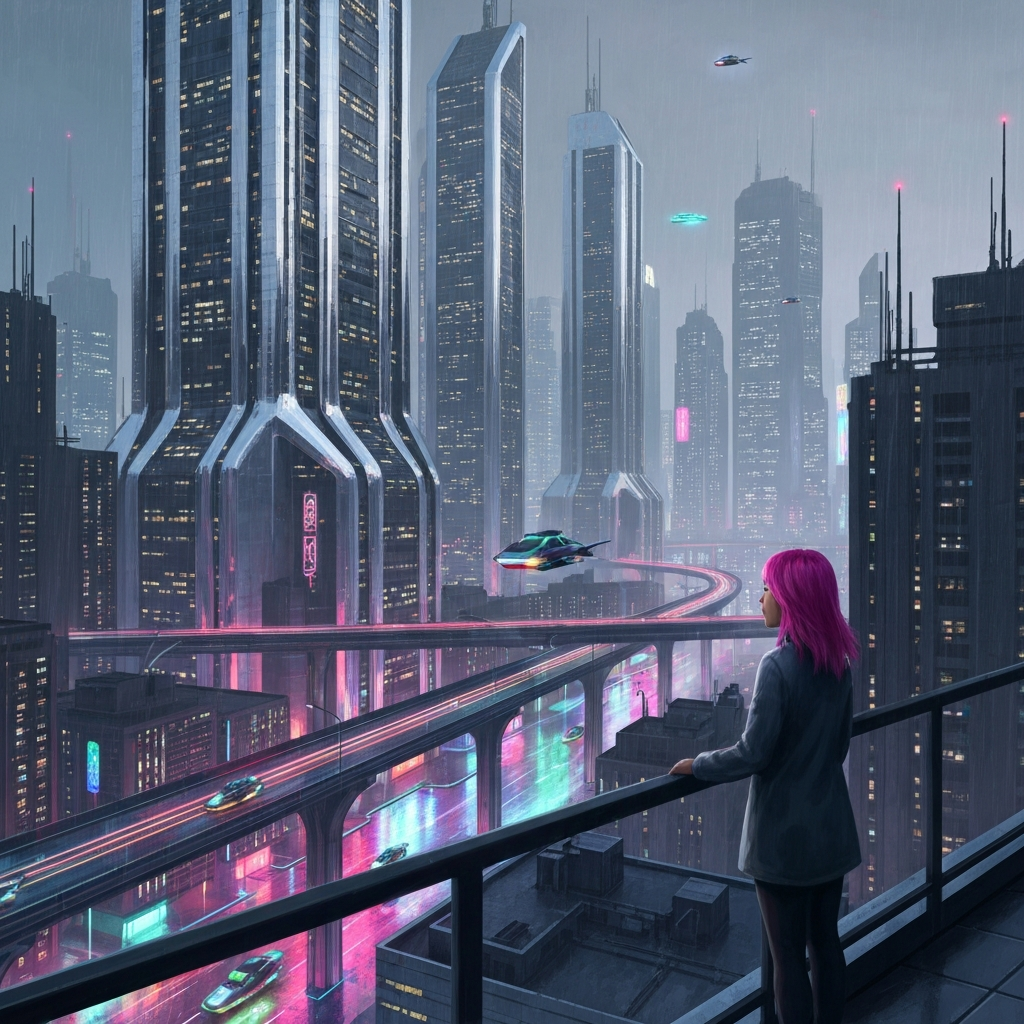
In contemporary noir and urban fantasy, the city at night belongs to the marginalized, the restless, and the dangerous. The neon lights do not just illuminate the streets; they cast harsh, colorful shadows that distort reality. The nocturnal city is a place of overlapping realities. An alleyway that serves as a mundane shortcut at noon becomes a place of profound menace or hidden magic at midnight. Authors use the urban nightscape to physically represent the emotional state of their characters. A protagonist walking down a rain-slicked, empty avenue at 3 AM is visually and thematically isolated. The towering, dark skyscrapers emphasize their smallness, while the distant hum of traffic serves as a reminder that the rest of the world is asleep and oblivious to their current struggle.
Neon, Shadows, and the Aesthetics of Isolation
The visual language of the nighttime city in literature heavily relies on contrast. The interplay between artificial light—streetlamps, diner signs, the glow of a smartphone screen—and the surrounding darkness creates a cinematic quality in the prose. This aesthetic of isolation forces the reader to focus entirely on the immediate surroundings of the protagonist. Because the character cannot see the horizon, their world shrinks to the radius of the nearest light source. This claustrophobia is incredibly effective for building tension in thrillers, but it is equally effective in literary fiction for creating an atmosphere of intense introspection.
The Subversion of the Restful Night
Traditionally, sleep is viewed as a restorative process, a period of healing and reset. Contemporary fiction frequently subverts this expectation, turning the bedroom into a battleground. For characters dealing with grief, guilt, or anxiety, the moment the lights go out is the moment the distractions end and the haunting begins.
The quiet of the house amplifies the noise in the character’s head. The creak of floorboards, the ticking of a clock, or the hum of a refrigerator become deafening markers of time passing. By denying their characters the sanctuary of sleep, authors amplify the stakes of the internal conflict. The night becomes a crucible. If a character can survive the dark night of the soul—whether that involves confronting a literal intruder or a metaphorical demon—they emerge into the morning fundamentally changed. The dawn in these narratives is rarely just a change in lighting; it is a hard-won victory, a symbol of survival.
Nighttime as a Realm of Rebellion and Freedom
While the night is often associated with fear and isolation, it is equally utilized as a space for liberation. For characters who are oppressed, marginalized, or forced to conform during the day, the night offers a cloak of invisibility. It is a time when the societal gaze is averted, allowing characters to explore their true identities, engage in forbidden romances, or plot their rebellion.
This theme is particularly prevalent in dystopian and young adult fiction, where the ruling class controls the daylight hours through surveillance and strict scheduling. The night becomes the only time for genuine human connection and subversive action. The darkness provides safety from the panopticon. In this context, the night is not a psychological burden, but a necessary refuge. It is the only space where characters can breathe freely, unencumbered by the expectations and restrictions of their waking lives.
The Enduring Power of the Dark
The psychology of the night in contemporary fiction is a multifaceted tool. It is the setting for our deepest anxieties and our most profound confessions. It is the landscape of the insomniac, the playground of the rebel, and the confessional booth of the lost. By shifting the temporal setting of a scene from day to night, authors instantly alter the emotional frequency of their prose.
As readers, we are instinctively drawn to these nocturnal narratives because they mirror our own vulnerabilities. We all know the quiet dread of being awake when the rest of the world is asleep. We all understand the strange honesty that comes with the early hours of the morning. By tapping into these universal experiences, contemporary authors use the night not just as a time of day, but as a profound psychological state—a shadow world where the truest, most unfiltered versions of their characters are finally brought into the light.
Do you enjoy the content on Agenda Creativa?
Your contributions help me create new articles, share creative ideas, and keep this platform alive! If you like what I do and want to support my work, you can buy us a coffee.
Every cup of coffee means more than just a gesture – it's direct support for my passion to create inspiring and useful content. Thank you for being part of this journey!
☕ Buy me a coffee
