
The Allure of the Descent
The human imagination has always harbored a profound fascination with the spaces beneath our feet. While the surface world is illuminated, mapped, and strictly governed by societal rules, the subterranean realm remains a landscape of shadows, secrets, and subversion. In literary fiction, moving underground is rarely a mere shift in geography. It is a calculated descent into the human psyche, a physical transition that forces characters to confront the repressed, the forgotten, and the primordial. From the mythic underworlds of antiquity to the claustrophobic bunkers of contemporary speculative fiction, subterranean spaces serve as powerful narrative devices that strip away the superficial layers of everyday life.
The Tradition of Katabasis in Modern Letters
The literary tradition of descending into the earth is known as katabasis. Historically rooted in epic poetry and mythology—such as Orpheus journeying to retrieve Eurydice, or Dante following Virgil through the concentric circles of Hell—katabasis represents the ultimate test of a protagonist’s soul. In modern and contemporary fiction, authors have stripped this descent of its supernatural deities, replacing them with psychological demons and societal horrors.
From Myth to Metropolis
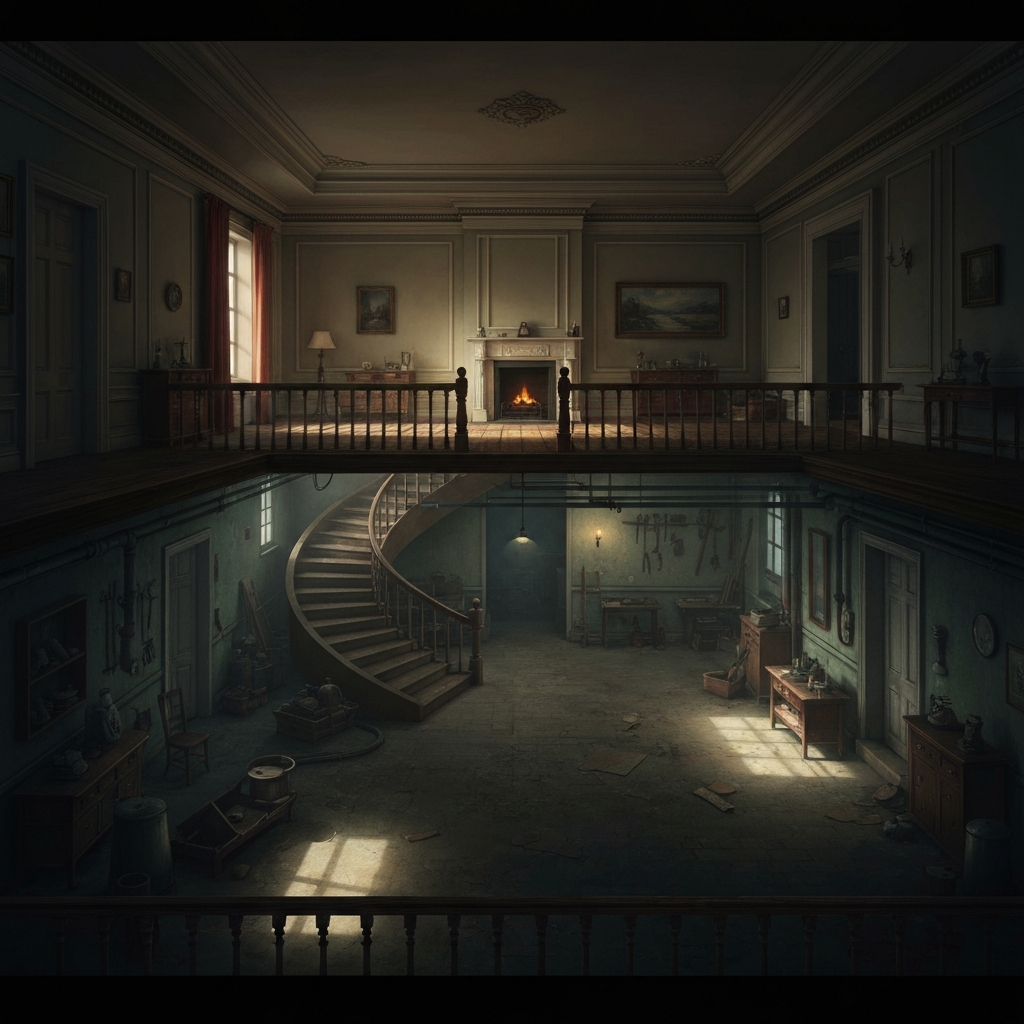
The modern katabasis does not require a magical portal; a simple stairwell, a subway grate, or a cavern entrance will suffice. This transition from the mythic to the mundane allows authors to explore the underworld not as an afterlife, but as a shadow-dimension of our current reality. By forcing characters below ground, writers isolate them from the distractions of the surface, creating a vacuum where internal conflicts are magnified. The descent becomes a journey of un-becoming, where the social identities forged in the sunlight disintegrate in the dark.
The Basement as the Psychological Id
No discussion of subterranean literature is complete without addressing the foundational texts that utilize the underground as a space of ideological rebellion and existential isolation. The cellar and the basement frequently act as the architectural equivalent of the Freudian id, housing the primal desires and suppressed angers of the narrative.
Dostoevsky and Ellison: The Birth of the Underground Man
Fyodor Dostoevsky’s Notes from Underground established the cellar as the definitive domain of the anti-hero. Dostoevsky’s unnamed narrator retreats beneath the floorboards of St. Petersburg not for physical survival, but as a deliberate rejection of nineteenth-century rationalism and utopian ideals. The underground becomes a space of spiteful freedom, a place where the narrator can nurse his grievances away from the suffocating expectations of polite society.
Decades later, Ralph Ellison brilliantly repurposed this motif in Invisible Man. Ellison’s protagonist literally falls into a forgotten coal cellar, which he transforms into a brightly lit sanctuary using 1,369 stolen lightbulbs. For Ellison, the underground is a paradoxical space: it is both a site of societal marginalization and a crucible for self-realization. The surface world refuses to see the protagonist, rendering him socially invisible. By retreating underground, he reclaims his agency, illuminating his own existence on his own terms. In both texts, the subterranean space is the only environment where absolute, unvarnished truth can survive.
Subways and Sewers: The Veins of the City
As literature moved further into the urbanized twentieth and twenty-first centuries, the natural caverns and basements of older fiction were joined by the concrete arteries of public infrastructure. Subways, sewers, and service tunnels represent the hidden machinery of the metropolis, the vital but ignored systems that keep the surface world functioning. Authors often use these spaces to highlight class disparities and the invisible labor that sustains modern capitalism.
Urban Fantasy and the Literal Underworld
Neil Gaiman’s Neverwhere takes this concept literally, creating a shadow city—London Below—populated by the people who have fallen through the cracks of the surface world. Gaiman uses the abandoned tube stations and forgotten sewers to construct a narrative about homelessness, neglect, and the willful blindness of the privileged.
Similarly, Victor Hugo’s extensive digressions on the Parisian sewer system in Les Misérables serve as a profound metaphor for the city’s conscience. Hugo describes the sewer as the great equalizer, a place where the masks of society are stripped away and all human waste—both literal and metaphorical—mingles in the dark. The urban underground is depicted as a repository for everything the surface world wishes to discard, making it the perfect setting for characters who themselves have been marginalized by the ruling class.
Caves and the Primordial Void
While urban undergrounds are defined by human construction, natural subterranean spaces—caves, grottos, and sinkholes—evoke a completely different psychological response. The cave is the primordial void, a space that existed long before humanity and will endure long after. In literature, entering a cave is often a confrontation with the sublime and the terrifying indifference of nature.
The Echo of the Marabar Caves
E.M. Forster’s A Passage to India provides one of the most masterful examples of this in the English canon. The Marabar Caves are described as devoid of beauty, devoid of meaning, and characterized by a terrifying echo that reduces all sounds—whether a curse or a poem—to the same meaningless drone. When Mrs. Moore and Adela Quested enter the caves, they are confronted with a physical manifestation of nihilism.
The darkness of the Marabar Caves strips away their colonial assumptions, their religious convictions, and their sense of order. Forster uses the subterranean space to demonstrate the fragility of human constructs when faced with the vast, ancient emptiness of the earth. The cave does not actively harm the characters; it simply reflects their own insignificance back at them, causing a psychological rupture that drives the rest of the novel.
Bunkers and the Literature of Survival
In contemporary fiction, the subterranean space has taken on a new, anxiety-driven form: the bunker. Driven by modern fears of nuclear annihilation, climate collapse, and global pandemics, authors have increasingly turned to underground silos and bunkers as the final refuge of humanity. However, these spaces are rarely depicted as utopian sanctuaries. Instead, they become claustrophobic pressure cookers that amplify the worst aspects of human nature.
Hugh Howey’s Silo series explores a society living in a massive, self-sustaining underground structure after the surface becomes toxic. The silo is a marvel of engineering, yet it functions as a totalitarian prison where history is erased and curiosity is a capital offense. The bunker narrative flips the traditional katabasis on its head; the characters are already born in the underworld, and their ultimate quest is anabasis—the arduous ascent back to the surface. These stories use the enclosed, artificial environment of the bunker to examine themes of authoritarianism, the manipulation of truth, and the human cost of absolute security. The underground is no longer a place of temporary retreat or psychological exploration; it is a permanent cage built out of fear.
The Shadows Beneath Our Feet
The enduring presence of subterranean spaces in literature speaks to a fundamental human duality. We are creatures of the light, building our cities toward the sky, yet we remain inextricably tied to the earth. The underground serves as the perfect literary canvas because it is defined by absence: the absence of light, the absence of society, and the absence of pretense.
Whether it is a rebellious intellectual hiding in a St. Petersburg cellar, a marginalized man illuminating a forgotten basement, or a post-apocalyptic society trapped in a steel silo, the descent into the dark forces both characters and readers to confront the truths that cannot survive in the daylight. As long as there are secrets to bury and fears to suppress, novelists will continue to guide us down the stairs, into the tunnels, and through the caves, reminding us that the foundations of our world are built on shadows.
Do you enjoy the content on Agenda Creativa?
Your contributions help me create new articles, share creative ideas, and keep this platform alive! If you like what I do and want to support my work, you can buy us a coffee.
Every cup of coffee means more than just a gesture – it's direct support for my passion to create inspiring and useful content. Thank you for being part of this journey!
☕ Buy me a coffee
