The Terror of the Familiar
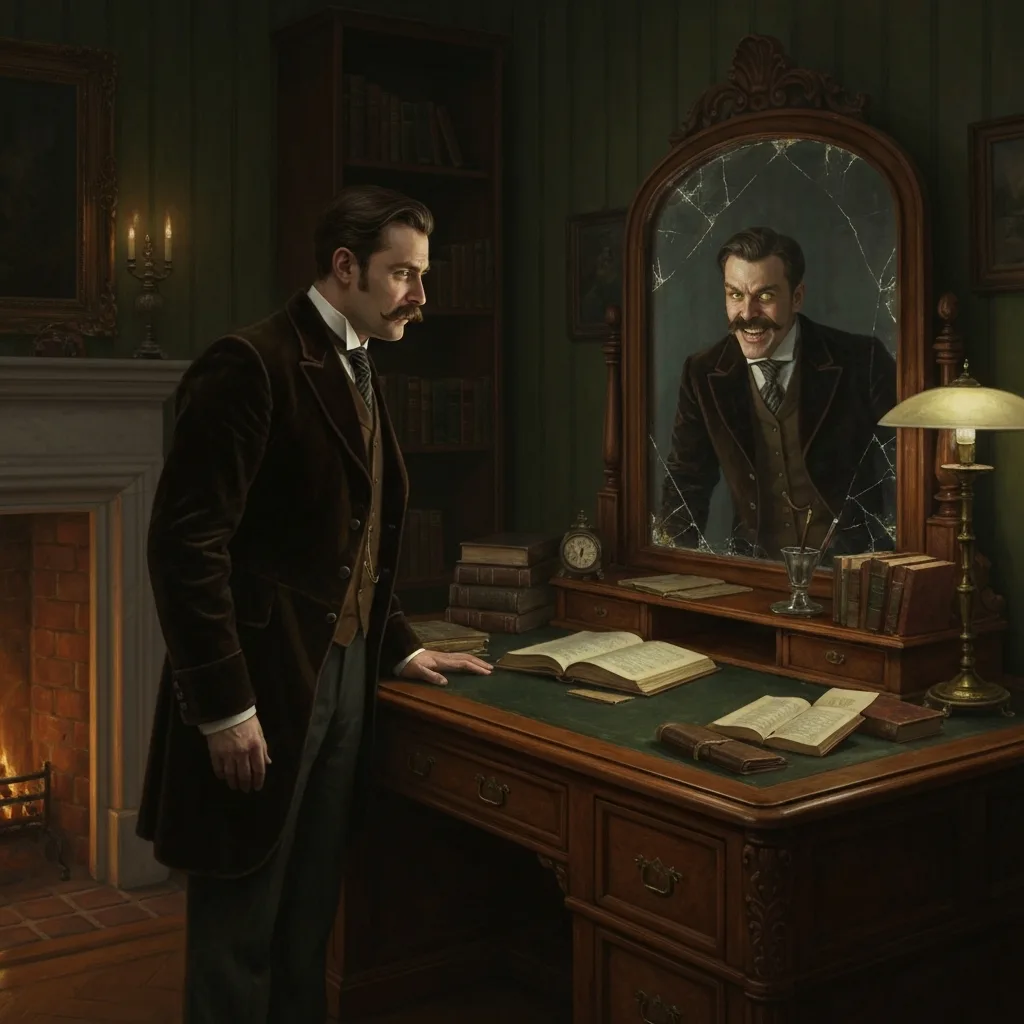
There are few concepts in literature as viscerally unsettling as encountering oneself. The doppelgänger—a German term translating literally to “double-goer”—has haunted the margins of storytelling for centuries. Long before it became a staple of psychological thrillers and science fiction, the double was a creature of myth and folklore, a harbinger of bad luck or imminent death. However, as literature matured, the doppelgänger evolved from a supernatural omen into a sophisticated narrative device used to explore the fractured human psyche.
By forcing a protagonist to confront an exact replica of themselves, authors strip away the comforting illusion of a unified, singular identity. The double acts as a mirror, reflecting the repressed desires, moral failings, and hidden anxieties that the protagonist—and by extension, the reader—would rather keep buried. Understanding the literary history of the doppelgänger requires an examination of how our cultural understanding of the mind has shifted, moving from spiritual dread to psychoanalytical complexity.
The Birth of the Shadow Self
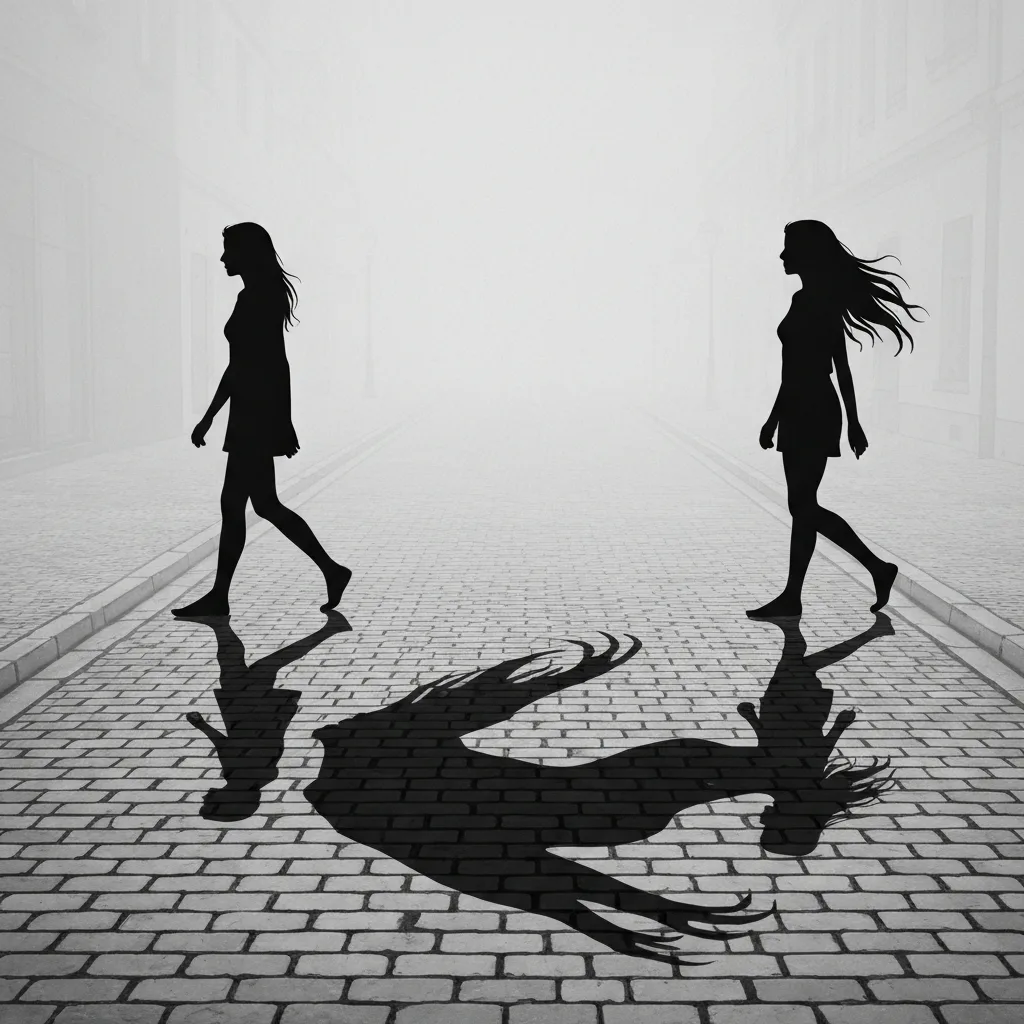
The literary coinage of the term is widely attributed to the German Romantic writer Jean Paul in his 1796 novel Siebenkäs, where a man is driven to despair by his identical alter ego. The Romantics were fascinated by the dual nature of humanity, rebelling against the Enlightenment’s insistence on pure reason. They understood that humans are driven by irrational, often contradictory impulses.
Edgar Allan Poe masterfully harnessed this concept in his 1839 short story William Wilson. Unlike the traditional folklore double that represents evil, Poe inverted the trope. The titular Wilson is a man of low moral character who is constantly thwarted by a double bearing his exact name and appearance. This doppelgänger acts as Wilson’s externalized conscience, appearing whenever he is about to commit a sin. The tragic climax, in which Wilson murders his double only to realize he has killed his own soul, established the psychological blueprint for the motif: to destroy the double is to destroy the self.
Shortly after Poe, Fyodor Dostoevsky published The Double (1846), shifting the focus from moral conscience to social anxiety. The protagonist, Golyadkin, is a low-level bureaucrat crushed by the rigid social hierarchy of St. Petersburg. His double emerges not as a moral guardian, but as a socially adept, ruthlessly ambitious version of himself. The double steals Golyadkin’s ideas, charms his superiors, and entirely supplants him. Dostoevsky used the doppelgänger to critique a society that values superficial conformity over genuine identity, illustrating how social alienation can literally split the mind.
Victorian Repression and the Moral Mirror
As the 19th century progressed, the Victorian era’s obsession with public morality and private vice provided fertile ground for the doppelgänger to flourish. The rigid social codes of the time forced individuals to repress their primal urges, leading authors to externalize these repressed desires into physical entities.
Robert Louis Stevenson’s The Strange Case of Dr. Jekyll and Mr. Hyde (1886) remains the quintessential exploration of this duality. Dr. Jekyll, a respected physician, uses science to separate his “good” and “evil” natures. Mr. Hyde is not an exact physical replica, but a moral doppelgänger—a deformed, younger, and more energetic manifestation of Jekyll’s suppressed cruelty. Stevenson captures the terrifying realization that the shadow self is not an external invader, but an integral part of the human condition that grows stronger the more it is denied.
Similarly, Oscar Wilde’s The Picture of Dorian Gray (1890) utilizes a variation of the doppelgänger trope. Dorian’s portrait serves as his psychic double, absorbing the physical and moral decay of his hedonistic lifestyle while Dorian himself remains young and beautiful. The painting acts as a visual ledger of his sins. Wilde’s masterpiece highlights the ultimate futility of trying to divorce one’s actions from their consequences; the double always keeps the score.
Psychoanalysis and the Uncanny
The turn of the 20th century brought Sigmund Freud and Carl Jung, whose theories provided a new vocabulary for understanding literary doubles. Freud’s essay The Uncanny (Das Unheimliche) specifically addresses the doppelgänger, describing it as something that is frightening precisely because it is deeply familiar yet simultaneously alien. Freud argued that the double originates in childhood narcissism—a defense mechanism against the fear of death. However, as we mature, this protective double becomes a harbinger of mortality and a reminder of our repressed impulses.
Carl Jung’s concept of the “Shadow” further illuminated the trope. The Shadow comprises the dark, unacknowledged aspects of the personality. In literature, when a protagonist refuses to integrate their Shadow, it projects itself outward, manifesting as an antagonist or a literal double. This psychoanalytic framework transformed the way authors approached the motif, moving away from supernatural explanations toward narratives of mental fragmentation and schizophrenia.
Modern Manifestations of the Motif
In contemporary fiction, the doppelgänger has adapted to reflect modern anxieties about individuality, consumerism, and technology. José Saramago’s 2002 novel The Double (adapted into the film Enemy) follows a history teacher who discovers an actor who looks exactly like him. Saramago strips away the supernatural elements, presenting the existence of the double as an absurd, terrifying biological coincidence. The novel explores the existential dread of replaceability. In a world of billions, if someone else has your face, your voice, and your mannerisms, what makes you unique?
Chuck Palahniuk’s Fight Club (1996) utilizes the doppelgänger to critique consumer culture and toxic masculinity. Tyler Durden is the ultimate modern double—everything the unnamed narrator wishes he could be: charismatic, physically imposing, and entirely free from societal constraints. The revelation that Tyler is a dissociative identity highlights how modern feelings of emasculation and corporate enslavement can fracture the psyche, creating a violent shadow self to cope with overwhelming impotence.
The Technological Double
As we navigate the 21st century, the doppelgänger has found a new home in science fiction, where it is no longer a psychological projection but a tangible reality created by technology. Kazuo Ishiguro’s Never Let Me Go explores the heartbreaking lives of clones raised for organ harvesting. These physical doubles force humanity to question the nature of the soul. If a clone can love, create art, and feel despair, are they merely a copy, or an original being?
Similarly, the concept of the multiverse has birthed a new variation of the doppelgänger. In books like Blake Crouch’s Dark Matter, protagonists are forced to confront alternate versions of themselves who made different life choices. These narratives tap into the universal anxiety of “what if,” using the double to explore the weight of our decisions and the fragility of our current reality.
Facing the Mirror
The enduring power of the doppelgänger lies in its versatility. It is a narrative chameleon, capable of representing moral conscience, repressed trauma, social alienation, or existential dread. Regardless of the genre, the presence of the double forces a reckoning. It strips the protagonist of their self-deception, demanding that they look at the parts of themselves they have tried to abandon.
As long as human beings continue to struggle with the complexities of identity, the doppelgänger will remain a vital literary device. It reminds us that no matter how far we run, how deeply we bury our secrets, or how meticulously we curate our public personas, we can never truly escape ourselves. The shadow is always waiting in the mirror, looking back.
Do you enjoy the content on Agenda Creativa?
Your contributions help me create new articles, share creative ideas, and keep this platform alive! If you like what I do and want to support my work, you can buy us a coffee.
Every cup of coffee means more than just a gesture – it's direct support for my passion to create inspiring and useful content. Thank you for being part of this journey!
☕ Buy me a coffee
