
Introduction to the Concept of ‘A New Earth’
The book A New Earth by Eckhart Tolle represents a profound exploration of the evolution of human consciousness and its impact on society. Tolle proposes a vision in which the spiritual transformation of the individual is essential for collective progress. He argues that most of the problems we face today stem from a dualistic consciousness, characterized by ego and separation. The concept of A New Earth is based on the idea that by transcending these mental states, individuals can contribute to significant global change.
A central aspect of this work is the importance of the present moment. Tolle emphasizes that the human mind is typically trapped in the past or future, preventing us from fully experiencing each moment. By practicing awareness and presence, individuals can learn to overcome the limitations of the ego and connect with their deeper essence. This approach encourages readers to embrace every moment as an opportunity for personal and spiritual transformation, ultimately contributing to the collective evolution of consciousness.
Additionally, Tolle suggests that every person plays an active role in this transformation. By changing how we think and act, we can influence our surroundings and contribute to creating a new paradigm of consciousness. A New Earth thus becomes not just a book but a call to action, urging us to take responsibility for our lives and our impact on society. This optimistic vision suggests that a more conscious and compassionate world is not just an ideal but an achievable reality through collective effort.
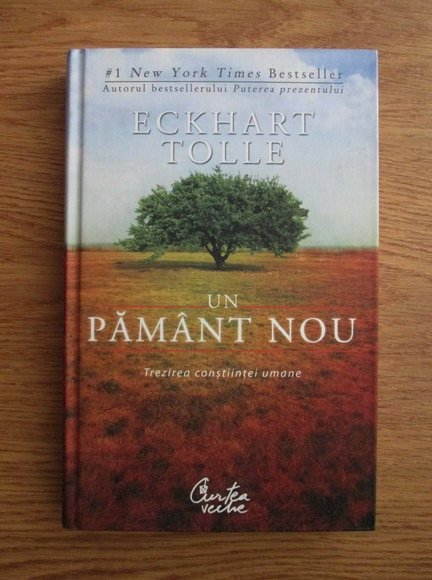
Who Is Eckhart Tolle?
Eckhart Tolle, born on February 16, 1948, in Germany, is an internationally renowned author and speaker specializing in spirituality, mindfulness, and personal development. His early life was marked by a deep struggle with depression and anxiety, experiences that led him to seek deeper answers and explore the nature of the human mind. After a period of inner turmoil, at the age of 29, Tolle had an unexpected spiritual awakening, a moment that radically transformed his perception of life.
Following this awakening, he moved to a small town in England, where he began studying spirituality from both philosophical and psychological perspectives. By combining these disciplines in his works, Tolle developed an integrated approach that captivated a global audience. His books, including the bestseller The Power of Now, explore concepts such as consciousness, presence, and the importance of the present moment, which are also reflected in A New Earth.
Tolle’s impact on readers has been remarkable, given how his message resonates with people worldwide seeking a more conscious and meaningful life. He has not only popularized terms like mindfulness and consciousness but also sparked profound discussions about the nature of human suffering and ways to transcend it. Through his courses, seminars, and books, he has helped millions embrace a new perspective on existence, promoting the idea that true happiness and fulfillment come from within.
Core Principles of the Book
In A New Earth, Eckhart Tolle addresses several fundamental concepts that revolutionize our understanding of identity and consciousness. One of the central principles is the idea of the false self, which arises from excessive identification with thoughts, emotions, and external circumstances. Tolle argues that this identification distorts our true nature and distances us from our natural state of consciousness. As a result, individuals become prisoners of their ego, which constantly seeks validation and satisfaction through external means, leading to suffering and confusion.
Another crucial concept is the nature of the ego, which thrives on separation and comparison. Tolle explores how the ego develops a self-perception based on fear, competition, and the desire for control. This mental structure creates a state of conflict both within individuals and in their interactions with others. While the ego is an inevitable aspect of human experience, Tolle suggests that through self-awareness, we can transcend its limitations. Self-awareness is an essential step in freeing ourselves from the ego’s grip and opening up to an authentic and meaningful existence.
In conclusion, Tolle ties these principles together to outline a holistic worldview, suggesting that true transformation begins with recognizing and transcending our ego. This practical approach provides a valuable framework for those seeking a more conscious life, even if the journey may sometimes be challenging. The path to A New Earth requires not just understanding but a profound shift in collective consciousness.
The Ego and Personal Identity
In his book, Eckhart Tolle defines the ego as a psychological construct that shapes our personal identity. The ego feeds on thoughts, emotions, and perceptions, creating an illusion of separation from others. This illusion is often deeply embedded in attachments, ranging from interpersonal relationships to material possessions or social status. Thus, the ego becomes a major obstacle to developing authentic consciousness.
A key point Tolle makes is how the ego affects interpersonal relationships. When we over-identify with our ego, the tendency to perceive others through comparison or competition increases, ultimately leading to conflict and emotional suffering. The fear of losing these attachments or failing to meet the ego’s perceived standards can cause deep anxiety, creating a state of constant tension. This fear prevents individuals from experiencing authenticity in their relationships.
Transcending the ego, according to Tolle, is an essential step toward a more fulfilled life. This involves heightened awareness of how our thoughts and emotions control our behaviors and decisions. By observing them without identification, we can ease our relationships and discover a space of acceptance and compassion. Thus, understanding the ego and its impact on personal identity becomes a crucial tool in the process of personal and spiritual evolution.
The Importance of the Present Moment
In his book, Eckhart Tolle places special emphasis on the concept of the present moment, highlighting it as the key to higher consciousness and a fulfilled life. Tolle argues that people are often caught in the traps of thoughts about the past or future, losing sight of the beauty and intensity of the here and now. This mental disturbance not only affects well-being but also blocks access to a deeper consciousness.
Through various techniques, Tolle urges readers to return to the present moment. One such technique is breath awareness, which involves focusing on each inhalation and exhalation, allowing the mind to calm down and detach from invasive thoughts. Another effective method is observing thoughts without identifying with them, adopting a witnessing attitude that enhances awareness. This process of separating from thoughts helps reduce anxiety and restore inner peace.
To live in the present, Tolle suggests daily meditation practices, which create a space where individuals can experience inner stillness. These sessions not only improve mental state but also strengthen the connection with oneself and the environment. Additionally, Tolle discusses the importance of accepting the present moment, whatever it may be, arguing that resistance to reality generates suffering. Thus, by cultivating the practice of living in the present moment, readers can profoundly transform their lives, finding joy in the simple existence of each moment.
The Collective Transformation of Consciousness
The concept of collective transformation of consciousness, as articulated by Eckhart Tolle in his book, emphasizes the importance of personal evolution as a driver of global change. Tolle argues that each individual has the power to contribute to societal well-being, and these contributions, though seemingly minor at first glance, can create a significant ripple effect. Through personal growth and awareness of our own thoughts and emotions, people can influence not only their own lives but also their communities, having a considerable impact on the entire planet.
Case studies from various fields illustrate this dynamic. For example, local environmental or social initiatives led by individuals who have undergone deep personal transformation have yielded positive results at the community and even national levels. These initiatives not only improve living conditions but also raise awareness about the importance of collective responsibility. Thus, when people assume their role as agents of change through personal development, they generate a favorable context for a higher collective consciousness.
Furthermore, recent global events, such as ecological or social crises, underscore the urgent need for individuals to contribute to the common good. Through personal example, an individual can become a catalyst for broader transformation. Practices like meditation, mindfulness, and self-reflection are essential in this process, providing people with the tools for inner change that can lead to collective transformation. Such an integrated approach is valuable not only for individuals but also for organizations and communities, facilitating the experience of shared change.
Practices Recommended by Eckhart Tolle
Eckhart Tolle proposes a series of practices to help readers integrate the concepts from A New Earth into daily life. These techniques focus on awareness and presence, aiming to reduce stress and clarify the mind. One of the most important practices is meditation, which serves as a tool for cultivating inner stillness. Through meditation, individuals can learn to focus on the present moment and become aware of their thoughts without being influenced by them.
Another recommended technique is the awareness exercise, which involves observing everything around us—from sounds to physical sensations—without judgment or interpretation. This practice helps develop a greater appreciation for the present and reduces our tendencies to dwell on the past or future. Breath awareness is also an effective way to anchor the mind in the here and now, making us less affected by daily stress.
Journaling can be another beneficial method. It allows for deep exploration of personal thoughts and emotions, facilitating a process of self-reflection. By writing down thoughts, individuals begin to notice repetitive patterns and become more aware of their reactions in different situations. Other effective methods may include mindful physical activities, such as yoga or nature walks, where attention is dedicated to physical sensations and the surrounding environment.
Implementing these practices in daily life can lead to a deeper state of presence and a greater understanding of the self, as Tolle suggests, where every moment becomes an opportunity for growth and personal transformation.
Criticisms and Interpretations of A New Earth
Eckhart Tolle’s A New Earth has generated mixed reactions from readers and experts, given the depth and complexity of its message. Some critics praise the book for its revolutionary approach to consciousness and spirituality, considering it an essential guide for personal development and inner transformation. These supporters highlight Tolle’s ability to combine concepts from various spiritual traditions, making them accessible to modern readers. In their view, the book’s central message—that individual change can lead to collective transformation—is both valid and necessary in contemporary society.
On the other hand, some critics from the fields of spirituality and psychology argue that Tolle’s approach may oversimplify solutions, ignoring the complexities and nuances of psychological and social issues. They contend that the use of spiritual terminology can sometimes be interpreted as a form of escapism, where people may seek to avoid their responsibilities in the material world.
Interestingly, reactions to A New Earth vary significantly across cultures and environments. In some societies, messages of self-help and self-awareness are well-received, positively impacting spiritual communities. In other cultures, where religious traditions are more conservative, Tolle’s ideas may be perceived as challenging or even subversive. For this reason, the book can be seen as a starting point for broader discussions about spirituality and consciousness.
Conclusion
The impact of Eckhart Tolle’s A New Earth on readers has been significant, with countless testimonials highlighting the inner transformations experienced by those who have engaged with the book. Many people report a profound shift in how they perceive reality after reading Tolle’s teachings. Through his insights, Tolle inspires readers to reflect on their identity and let go of the ego, facilitating an introspective journey toward consciousness. This book encourages a deeper understanding of the self, leading to a more compassionate and fulfilled life.
Readers often mention that Tolle’s simple yet profound messages have helped reduce anxiety and increase awareness. They emphasize the importance of the present, learning to value each moment and freeing themselves from worries and ruminations about the past or future. This approach has a beneficial impact on mental and emotional health, cultivating a more peaceful and present-focused mindset.
Moreover, many readers feel motivated to share the teachings they’ve discovered in the book, creating a community dedicated to exploring consciousness. This community not only deepens the understanding of Tolle’s principles but also helps others find their own path toward a new way of living based on higher principles. In conclusion, A New Earth continues to have a lasting and positive impact, inspiring a constant search for consciousness and inner illumination. This work remains a beacon for those seeking to transform their lives toward a more meaningful existence.
10 Extended Questions and Answers
- What does the concept of A New Earth represent in Eckhart Tolle’s vision?
A New Earth symbolizes a collective transformation of human consciousness, where the ego is transcended, and individuals find their authentic connection with the present. Tolle believes that suffering and conflict stem from over-identification with the ego, and the solution lies in cultivating a higher consciousness based on presence and compassion. This personal change contributes to creating a more harmonious and conscious world. - How does Eckhart Tolle define the ego, and what impact does it have on our lives?
The ego is defined as a mental construct that identifies with thoughts, emotions, and possessions, creating an illusion of separation from others. It thrives on comparison, competition, and fear, leading to suffering and conflict. Tolle emphasizes that transcending the ego requires awareness of how it controls us, allowing us to connect with our true essence and live an authentic life. - Why is the present moment central to Eckhart Tolle’s philosophy?
Tolle asserts that the present moment is the only real time, while the past and future are mental projections. Focusing on the here and now frees us from anxious thoughts and helps us discover inner peace. By practicing presence, individuals can overcome the limitations of the ego and live a more authentic and meaningful life. - What does it mean to live in the present moment, according to Tolle?
Living in the present means being fully aware of what is happening around and within us, without getting lost in thoughts about the past or future. It involves accepting reality as it is, without resistance or judgment. Tolle offers techniques like breath awareness and sensory mindfulness to anchor the mind in the now, reducing stress and anxiety. - How does personal transformation contribute to collective change?
Tolle argues that collective transformation begins with individual change. Each person who transcends the ego and adopts a conscious lifestyle positively influences their surroundings. This ripple effect can lead to global change, promoting compassion, empathy, and harmony in communities and societies. - What role does awareness play in transcending the ego?
Awareness is essential for observing and understanding how the ego influences our thoughts and behaviors. By becoming witnesses to our emotions and reactions—without identifying with them—we loosen the ego’s grip on our lives. This practice opens the door to a freer and more authentic existence. - What practices does Tolle recommend for achieving presence?
Tolle recommends meditation, breath awareness, and observing thoughts without judgment. Other practices include reflecting on the temporary nature of emotions and connecting with the world through sensory awareness. These exercises help reduce excessive mental activity and ground individuals in the present moment. - How can A New Earth influence interpersonal relationships?
Tolle suggests relationships become more harmonious when freed from the ego’s influence. By embracing presence and compassion, individuals can build connections based on understanding and mutual respect. This approach reduces conflicts, promotes open communication, and creates an environment conducive to shared growth. - What criticisms has A New Earth received, and how can they be interpreted?
The book has been criticized for its oversimplified approach, which some argue ignores the complexity of psychological and social issues. Critics claim Tolle’s ideas may be too abstract for practical application. However, many supporters view it as a starting point for reflection and personal growth, adaptable to different contexts. - What impact can A New Earth have on personal development?
The book encourages readers to reevaluate their relationship with thoughts, emotions, and the ego, offering tools for self-reflection and spiritual growth. By implementing practices like presence and awareness, individuals can experience reduced stress, deeper self-understanding, and stronger connections with others, leading to a more balanced and fulfilling life.


Do you enjoy the content on Agenda Creativa?
Your contributions help me create new articles, share creative ideas, and keep this platform alive! If you like what I do and want to support my work, you can buy us a coffee.
Every cup of coffee means more than just a gesture – it's direct support for my passion to create inspiring and useful content. Thank you for being part of this journey!
☕ Buy me a coffee