The Culinary Subtext: Why Fictional Food Matters
Human biology mandates that we eat, but human psychology dictates exactly how, why, and with whom we share our meals. In the realm of literature, a meal is rarely just a transfer of calories. When an author pauses the narrative to describe a spread of roasted meats, a meager bowl of thin gruel, or a perfectly baked pastry, they are deploying a highly calibrated narrative device. Food narratives in literature function as a psychological bridge between the author, the characters, and the reader. By engaging our sensory memory, writers use food to reveal hidden character traits, construct immersive settings, and advance the plot in ways that dialogue or internal monologue simply cannot achieve.
Reading about food triggers a visceral, biological response. Cognitive psychologists have noted that reading highly evocative sensory language activates the same regions of the brain that process actual sensory experiences. When a character bites into a warm, crusty loaf of bread, our mirror neurons fire, simulating the taste, the texture, and the accompanying emotional comfort. Authors exploit this neurological mirroring to bypass our critical faculties, planting emotional resonance directly into our subconscious. Through this sensory manipulation, food becomes a profound tool for exploring themes of identity, power, temptation, and memory.
The Madeleine Effect: Memory and Identity
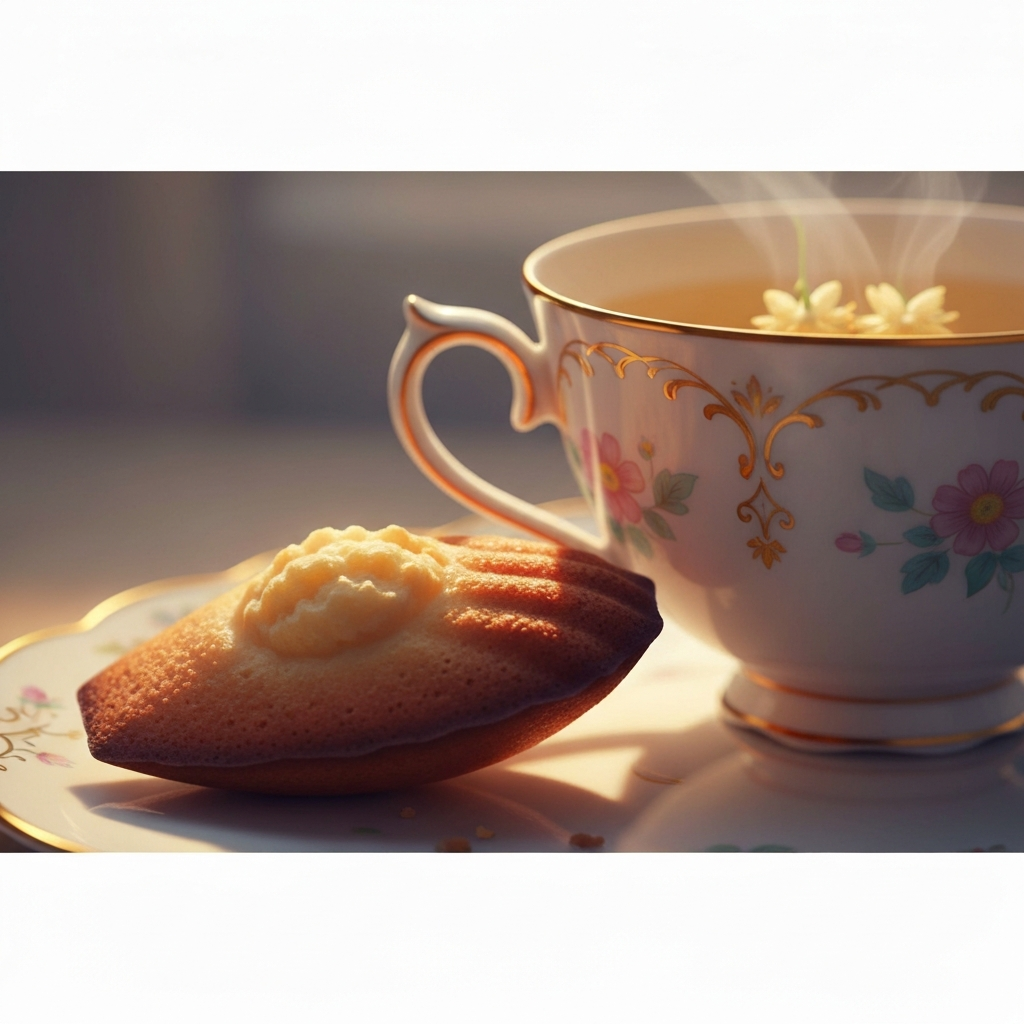
No discussion of food in literature is complete without acknowledging Marcel Proust’s monumental work, In Search of Lost Time. In one of the most famous passages in literary history, the narrator dips a petite madeleine into a cup of linden tea. The taste of the cake instantly transports him back to his childhood in Combray, unlocking volumes of repressed memories. This phenomenon, often referred to as ‘Proustian memory’ or involuntary memory, perfectly captures the psychological connection between gustatory sensation and the hippocampus, the brain’s center for memory and emotion.
Proust used food not merely as a prop, but as the master key to his protagonist’s identity. The madeleine scene demonstrates how authors use culinary triggers to establish character depth. A character’s reaction to a specific dish can reveal their geographical origins, their socioeconomic background, and their unresolved traumas. When a hardened detective in a modern thriller meticulously prepares a complex, traditional recipe from their immigrant grandmother, the author is wordlessly communicating layers of cultural identity, internal discipline, and a hidden vulnerability. The food acts as an anchor to a past the character may otherwise refuse to articulate.
Feasts and Famines: Social Commentary and Power Dynamics
Food—or the distinct lack thereof—is one of the most effective methods for establishing setting and delivering social commentary. The psychological impact of deprivation is famously captured in Charles Dickens’ Oliver Twist. When Oliver holds up his bowl and says, “Please, sir, I want some more,” the thin, watery gruel becomes a powerful symbol of institutional cruelty and societal neglect. Dickens uses the physical reality of starvation to force the reader to confront the psychological degradation of the working class. The gruel builds a bleak, unforgiving setting, contrasting sharply with the comfortable lives of the Victorian readers consuming the novel.
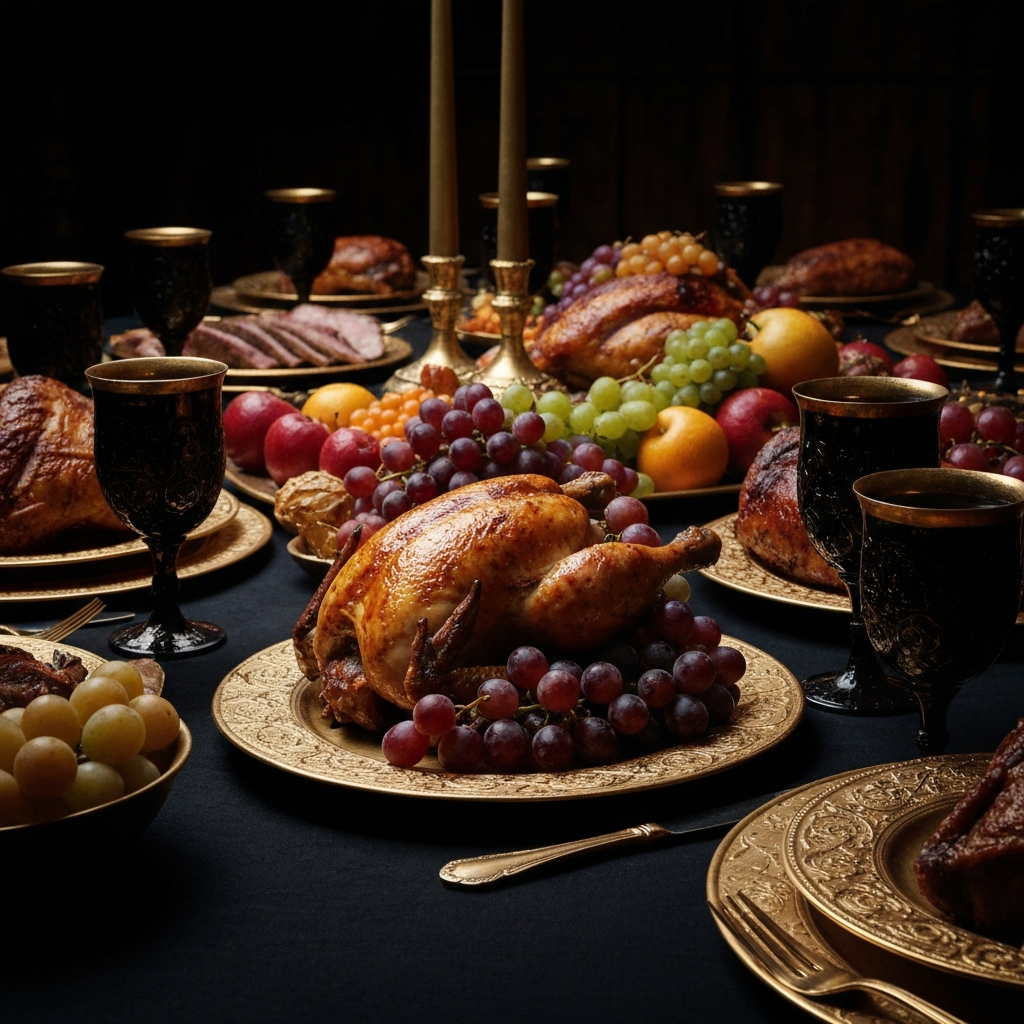
Conversely, excessive abundance is frequently weaponized to illustrate power, decadence, and moral decay. In Suzanne Collins’ The Hunger Games, the lavish, artificially colored feasts of the Capitol stand in grotesque opposition to the starvation rations of District 12. The psychological dissonance Collins creates is intentional; the reader feels disgusted by the Capitol’s gluttony precisely because they have viscerally experienced Katniss Everdeen’s desperate hunger. Here, food is a metric of control.
Similarly, George R.R. Martin uses elaborate feasts in A Song of Ice and Fire to mask political maneuvering. The infamous ‘Red Wedding’ subverts the ancient, deeply ingrained psychological concept of ‘guest right’—the universal human tradition that sharing food guarantees safety. By turning a feast into a slaughter, Martin violates a primal psychological contract with the reader, making the betrayal infinitely more shocking and resonant.
Cooking as Emotional Transference
In many narratives, the act of preparing food serves as a conduit for unspoken emotions, transforming the kitchen into a psychological battleground or a sanctuary. Laura Esquivel’s magical realism masterpiece, Like Water for Chocolate, literalizes this concept. The protagonist, Tita, is forbidden from marrying her true love and is relegated to the family kitchen. Unable to express her intense passions and deep sorrows verbally, she channels them into her cooking.
When Tita weeps into the batter of her sister’s wedding cake, the guests who consume it are overcome with a profound, inexplicable melancholy, leading to mass weeping. Esquivel uses food to bypass the boundaries of the physical body, allowing characters to ingest the psychological states of others. This narrative technique highlights the emotional labor inherent in feeding others. It suggests that cooking is an intimate act of vulnerability, where the chef’s psychological state is transferred to the consumer. For the reader, it reinforces the theme that repressed emotions will always find a way to manifest, often through the most mundane daily rituals.
Temptation and the Psychology of Desire
Food is inherently tied to survival, making it a potent symbol of temptation and the loss of rational control. Authors frequently use specific foods to test a character’s morality and psychological fortitude. C.S. Lewis masterfully employs this in The Lion, the Witch and the Wardrobe through the White Witch’s offering of enchanted Turkish Delight to Edmund Pevensie.
The Turkish Delight is not merely a sweet treat; it is an addictive substance designed to exploit Edmund’s greed, insecurity, and desire for superiority over his siblings. The psychological brilliance of this scene lies in how Lewis portrays the mechanics of addiction and betrayal. Edmund does not sell out his family for a grand ideological cause; he does it for a sugar craving. This aligns with the psychological reality that human beings are frequently undone by their basest, most immediate desires. By using food as the instrument of temptation, Lewis grounds a high-stakes magical betrayal in a deeply relatable human weakness.
Building Worlds Through Culinary Landscapes
Beyond character and plot, food is essential for establishing the psychological reality of a fictional world. Speculative fiction, fantasy, and historical fiction rely heavily on culinary landscapes to ground the reader in unfamiliar territory. When J.R.R. Tolkien describes lembas bread—a magical elven waybread where one bite can sustain a traveler for a day—he is building the mythology of Middle-earth. The food reflects the ethereal, enduring nature of the Elves.
Furthermore, detailed descriptions of food provide a psychological sense of comfort and safety for the reader. Brian Jacques’ Redwall series is famous for its exhaustive, mouth-watering descriptions of woodland feasts: deeper’n’ever turnip’n’tater’n’beetroot pie, candied chestnuts, and October ale. These feasts serve a distinct psychological purpose. They provide a necessary respite from the tension of the plot. By allowing the characters—and the reader—to sit down and share a bountiful, comforting meal, the author creates a baseline of peace and community. This makes the eventual threats to that community feel much more personal and urgent.
The Enduring Resonance of the Literary Meal
The psychology of food narratives in literature relies on a fundamental truth: eating is a universal human experience. Regardless of a reader’s background, they understand the comfort of a hot meal on a cold day, the sharp bite of hunger, and the intimacy of sharing a table. By tapping into these universal sensory and psychological experiences, authors can ground abstract themes in tangible reality.
Through the careful deployment of culinary imagery, writers reveal the hidden fears and desires of their characters, construct rich and believable worlds, and manipulate the pacing and tension of their plots. The next time a novel pauses to describe the scent of roasting garlic, the bitterness of stale wine, or the delicate crumb of a pastry, pay close attention. The author is not merely setting the table; they are serving up the very psychological core of the story, inviting the reader to consume and digest the narrative on a deeply visceral level.
Do you enjoy the content on Agenda Creativa?
Your contributions help me create new articles, share creative ideas, and keep this platform alive! If you like what I do and want to support my work, you can buy us a coffee.
Every cup of coffee means more than just a gesture – it's direct support for my passion to create inspiring and useful content. Thank you for being part of this journey!
☕ Buy me a coffee
