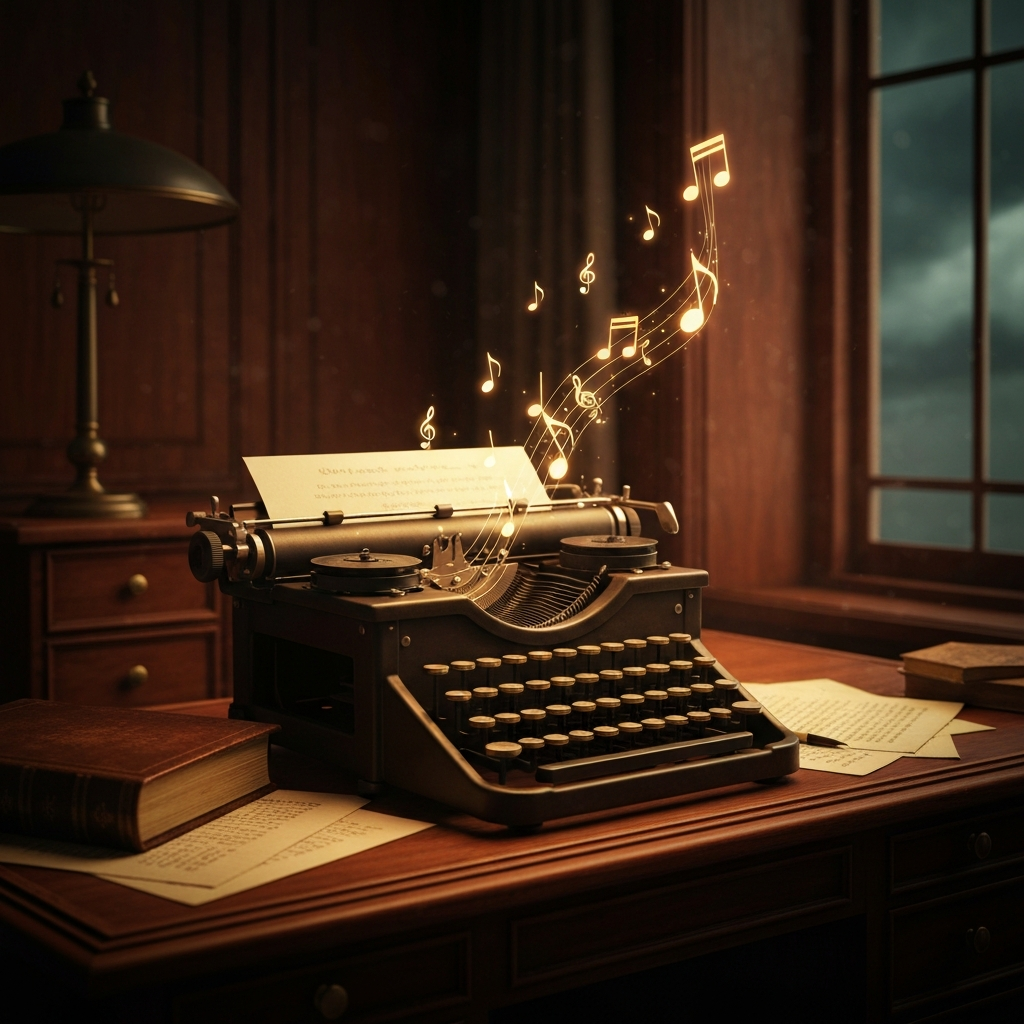
The Silent Acoustics of the Written Word
Reading is, by its very physical nature, a silent act. The eyes scan black ink pressed into white paper, or pixels illuminated on a screen, without a single decibel entering the room. Yet, when we immerse ourselves in a masterfully crafted novel, our minds are flooded with sound. We hear the sharp crunch of heavy boots on crystalline frost, the distant, mournful wail of a train whistle, and the precise, clipped cadence of a sharp-tongued antagonist. While visual descriptions often dominate discussions of literary craft, auditory imagery and the inherent musicality of prose are what truly breathe life into a narrative.
Sound anchors the reader in the physical reality of the fictional world. It dictates pace, influences emotional responses, and creates an atmospheric density that visual cues alone cannot achieve. Authors who master the acoustics of prose do not merely describe what is happening; they orchestrate a sensory experience, turning the reader’s imagination into a highly sensitive acoustic chamber.
The Hidden Architecture of Prose Rhythm
The most fundamental layer of sound in literature does not stem from the description of noises, but from the rhythm of the words themselves. Sentence length, punctuation, and syntax function as the author’s metronome, establishing a tempo that the internal reading voice instinctively follows.
Consider the breathless panic of a chase scene or a moment of intense psychological terror. An author strips away commas, relies on short, staccato words, and employs asyndeton—the deliberate omission of conjunctions—to force the reader’s internal voice to accelerate. The words hit the mind like rapid footsteps. Conversely, a languid summer afternoon or a moment of deep, melancholic reflection is built on long, winding sentences, heavy with polysyndeton and soft consonant sounds. The prose stretches out, forcing the reader to slow down and absorb the atmosphere.
Virginia Woolf was a master of this rhythmic manipulation. In her work, the rise and fall of the sentences often mimic the physical environment she is describing. The prose crashes and recedes like the ocean waves, utilizing iambic and anapestic meters that we typically associate with poetry. This hidden architecture ensures that the reader feels the momentum of the scene before they even fully process the literal meaning of the words.
Beyond Onomatopoeia: Crafting ambient noise
When writers first attempt to incorporate sound into their work, they often rely heavily on basic onomatopoeia—buzz, click, hiss, bang. While these words are effective, they represent only the percussion instruments of a much larger orchestra. Masterful writers use auditory imagery to create ambient noise, establishing a scene’s atmosphere before a single line of dialogue is spoken or a major action occurs.
In filmmaking, Foley artists recreate everyday sound effects to enhance audio quality and realism. Novelists must act as their own Foley artists, translating the physical world into phonetic experiences. It is not enough to say a room is old; the writer must describe the low, persistent hum of the outdated refrigerator, the sudden settling of the floorboards, or the dry rattle of a loose windowpane against the wind.
In Cormac McCarthy’s post-apocalyptic landscapes, the absence of familiar, comforting sounds—birdsong, the hum of engines, human chatter—is replaced by the howling wind, the brittle snap of dead trees, and the shifting of ash. These auditory cues reinforce the absolute desolation of the world far more effectively than a visual description of a ruined city ever could. The ambient noise of the setting becomes a character in its own right, oppressive and omnipresent.
The Deafening Power of Silence
Just as musicians understand that the rests between the notes are as important as the notes themselves, skilled authors know how to wield silence. True silence is rare and often deeply unsettling. By drawing attention to the sudden cessation of sound, a writer can instantly escalate tension.
Think of the moment a crowded room suddenly goes quiet, or the heavy, suffocating stillness that follows a loud argument. Describing the ringing in a character’s ears, or the sudden, hyper-awareness of their own heartbeat in a quiet room, forces the reader to lean in. The contrast between noise and silence is a powerful tool for manipulating suspense. When a writer deliberately mutes the environment, they signal to the reader that something momentous—or terrible—is about to happen.
Musical Structures in Narrative Design
Some authors take the concept of literary sound a step further by structuring their novels around musical forms. This goes beyond the rhythm of individual sentences and influences the macro-structure of the book itself.
Toni Morrison’s work frequently employs musical structures, most notably in her novel focused on 1920s Harlem. The narrative voice does not follow a traditional linear path; instead, it mimics the improvisational, syncopated rhythms of the era’s definitive music. The narrative perspective shifts fluidly, solos are handed off from one character to another, and recurring thematic motifs act as a chorus that grounds the reader before the next improvisational leap. The result is a book that reads the way a live band sounds—dynamic, unpredictable, and deeply cohesive.
Similarly, James Joyce famously constructed specific episodes of his modernist epics using the techniques of a fugue, introducing a theme, layering counter-themes, and weaving them together in a complex acoustic tapestry. These structural choices prove that the mechanics of music and the mechanics of storytelling are deeply intertwined, relying on the same principles of repetition, variation, and resolution.
Dialogue as a Sonic Fingerprint
A character’s voice should be as distinct as their physical appearance. The cadence, vocabulary, and rhythm of speech form a sonic fingerprint that allows the reader to hear them clearly. Crafting this fingerprint requires a delicate ear for human speech patterns.
This goes far beyond phonetic spellings of regional dialects, which can easily become distracting caricatures. Instead, it involves the arrangement of thoughts and the rhythm of delivery. Does a character speak in clipped, pragmatic fragments, betraying a lack of patience? Do they use flowing, lyrical metaphors that suggest a romantic worldview? Do they hesitate, filling the air with verbal pauses that indicate insecurity?
Furthermore, the interplay of different voices in a scene creates a specific acoustic dynamic. A scene featuring a fast-talking, highly anxious character arguing with a slow, deliberate speaker creates immediate rhythmic friction. The reader hears the clash of tempos, which adds an unspoken layer of conflict to the scene. The subtext of the conversation is carried not just in what is being said, but in the pacing of how it is delivered.
The Psychological Resonance of Auditory Cues
Sound is intimately tied to memory and emotion. A sudden loud noise triggers an instinctual fight-or-flight response, while a rhythmic, repetitive sound—like rain against a tin roof—can induce a hypnotic, reflective state. Writers leverage these psychological realities to manipulate the reader’s emotional state.
Edgar Allan Poe understood this psychological mechanism perfectly. In his classic tales of paranoia, the increasing volume and tempo of a phantom heartbeat, or the slow, rhythmic swinging of a pendulum, serve as masterclasses in auditory tension. The sound becomes a manifestation of the protagonist’s deteriorating mental state. Because the reader is forced to ‘hear’ the sound through the text, they share in the character’s mounting anxiety.
Cultivating the Mind’s Ear
To write with sound in mind requires a fundamental shift in perception. It demands that authors close their eyes and listen to the environments they are creating before they attempt to describe them. It requires a meticulous selection of words, prioritizing phonetic texture just as highly as literal meaning.
For the reader, tuning into the soundtrack of prose enriches the reading experience exponentially. It transforms flat text into a multi-dimensional environment. The next time you open a novel, pay close attention to what you hear. Listen to the vowels and the consonants, the long pauses and the rapid-fire dialogue. You will likely find that the most profound moments in literature are not merely the ones you visualize, but the ones that echo in the quiet space of your imagination long after the book is closed.
Do you enjoy the content on Agenda Creativa?
Your contributions help me create new articles, share creative ideas, and keep this platform alive! If you like what I do and want to support my work, you can buy us a coffee.
Every cup of coffee means more than just a gesture – it's direct support for my passion to create inspiring and useful content. Thank you for being part of this journey!
☕ Buy me a coffee
