
The Allure of the Fictional Sanctuary
We have all experienced the sensation: sitting on a crowded train, surrounded by the noise of the commute, yet completely unaware of our physical surroundings because our mind is traversing the rugged terrains of Middle-earth or navigating the complex social hierarchies of a Jane Austen drawing room. This phenomenon, commonly referred to as getting lost in a book, is far more than a simple leisure activity. It is a profound psychological state known as literary escapism.
For centuries, reading fiction has been viewed primarily as a source of education or entertainment. However, modern psychology recognizes it as a powerful mechanism for emotional regulation and cognitive restoration. By examining why readers seek refuge in fictional worlds, we can uncover the intricate balance between healthy psychological detachment and the potential pitfalls of narrative avoidance.
The Mechanics of narrative transportation
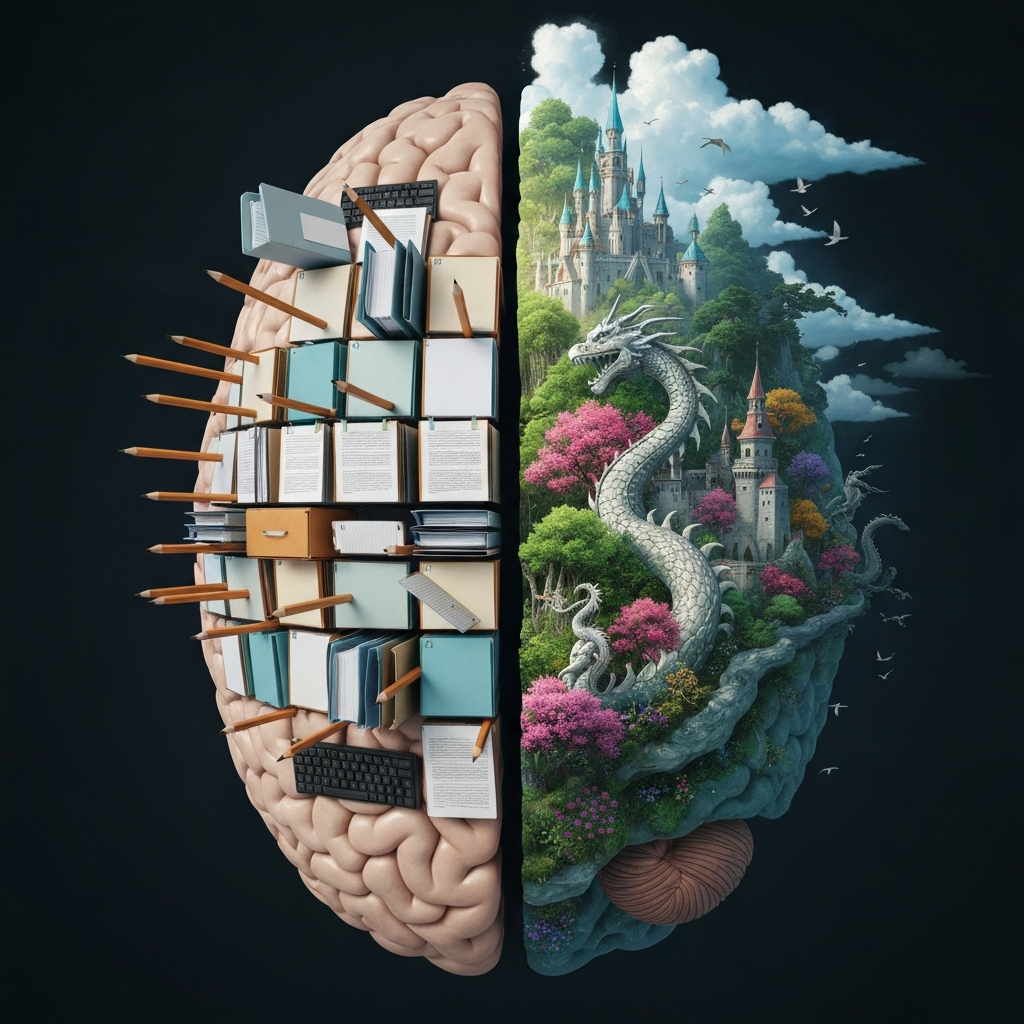
To understand the psychological benefits of literary escapism, we must first examine the cognitive process that allows it to happen. Psychologists refer to this state as “narrative transportation.” Coined by researchers Richard Gerrig, and later expanded upon by Melanie Green and Timothy Brock, narrative transportation is the experience of being cognitively and emotionally absorbed into a story.
When a reader is highly transported, their brain undergoes a distinct shift. The cognitive load required to decode words, imagine settings, and track character arcs demands significant mental bandwidth. Because the brain has a finite capacity for attention, this intense focus leaves little room for rumination on real-world stressors. The anxieties of the day—looming deadlines, financial concerns, interpersonal conflicts—are temporarily pushed out of the working memory.
Furthermore, functional MRI (fMRI) scans have shown that reading highly descriptive fiction activates the same neurological regions that would be stimulated if the reader were actually experiencing the events. When a character runs through a dark forest, the motor cortex of the reader shows increased activity. This neurological mirroring creates a deeply immersive experience that convinces the brain, momentarily, that it has left its immediate, stressful reality behind.
Stress Reduction and the Physiological Reset
The mental departure provided by narrative transportation triggers tangible physiological changes. A well-documented study conducted by cognitive neuropsychologists at the University of Sussex found that reading quietly for just six minutes can reduce stress levels by up to 68 percent. This makes reading more effective for stress reduction than listening to music, having a cup of tea, or taking a walk.
The researchers noted that reading requires active cognitive engagement, which distracts the mind and allows muscle tension to ease and the heart rate to slow down. Unlike passive escapism—such as scrolling through social media or binge-watching television—reading demands active participation from the imagination. This active engagement induces a state akin to meditation. The rhythmic tracking of text across a page and the sustained focus required to follow a narrative arc provide a cognitive reset, lowering cortisol levels and returning the nervous system to a baseline of calm.
Fiction as the Mind’s Flight Simulator
Beyond simple relaxation, literary escapism serves a crucial role in processing complex emotions. Cognitive psychologist Keith Oatley famously described fiction as the mind’s flight simulator. Just as pilots use simulators to practice emergency maneuvers in a safe environment, readers use fiction to navigate intense social and emotional situations without real-world consequences.
Through the safety of a fictional construct, readers can experience grief, terror, heartbreak, and joy. A reader grappling with the loss of a loved one might find solace in a novel dealing with similar themes. The story provides a container for their emotions—a controlled environment where they can project their feelings onto the characters, process the trauma, and eventually close the book when the emotional weight becomes too heavy to bear.
This simulated emotional experience builds psychological resilience. It allows individuals to safely explore the darker aspects of the human condition and practice empathy. By stepping into the shoes of a protagonist, readers expand their emotional intelligence, making them better equipped to handle similar emotional turbulence in their actual lives.
The Shadow Side: When Escapism Becomes Avoidance
While the therapeutic benefits of reading are vast, literary escapism is not without its potential drawbacks. The line between healthy psychological restoration and maladaptive avoidance is thin, and it is entirely possible to use literature as a shield against reality.
Psychologists differentiate between two types of escapism: self-expansion and self-suppression. Self-expansion occurs when an individual engages in an activity to discover new perspectives, learn, and return to reality refreshed. Self-suppression, conversely, is driven by a desire to run away from negative thoughts, responsibilities, or painful emotions.
When reading becomes an exercise in self-suppression, it can morph into maladaptive behavior. A reader might compulsively consume novels to avoid confronting a deteriorating relationship, a stagnant career, or untreated depression. In these instances, the fictional world ceases to be a temporary sanctuary and becomes a permanent hiding place. This compulsive reading can lead to social isolation, the neglect of real-world duties, and an exacerbation of the very anxieties the reader is trying to escape.
Furthermore, an over-reliance on idealized fictional worlds—such as those found in highly romanticized genres or utopian fantasies—can warp a reader’s expectations of reality. When the messy, unpredictable nature of real human relationships fails to measure up to the neatly resolved arcs of fictional narratives, it can foster deep dissatisfaction and chronic disappointment with one’s actual life.
Cultivating Mindful Escapism
To harness the mental health benefits of literary escapism while avoiding its pitfalls, readers must cultivate a practice of mindful reading. Mindful escapism involves an awareness of why one is reaching for a book. Is it to recharge after a demanding day, or is it to actively ignore a pressing problem that requires attention?
Readers can also practice emotional regulation by being intentional about their genre choices. The recent surge in popularity of “cozy fantasy” and low-stakes fiction is a direct societal response to the chronic stress of the modern era. Readers are actively seeking out narratives where the conflicts are manageable and the environments are soothing, using these books as targeted tools for anxiety management. Conversely, reaching for a high-octane thriller might serve as a necessary cognitive distraction for a mind trapped in a loop of lethargic depression.
The Enduring Power of the Page
The human impulse to tell stories and lose ourselves within them is a fundamental aspect of our psychology. Literary escapism, when utilized as a tool for self-expansion, offers a profound mechanism for maintaining emotional balance in an increasingly chaotic world. It provides a sanctuary where the mind can rest, rehearse, and recover.
By understanding the psychological forces at play when we open a novel, we can transform our reading habits from mere pastimes into intentional practices for mental well-being. The fictional worlds we visit do not just offer us an escape from reality; they provide us with the emotional fortitude and cognitive clarity required to face reality upon our return.
Do you enjoy the content on Agenda Creativa?
Your contributions help me create new articles, share creative ideas, and keep this platform alive! If you like what I do and want to support my work, you can buy us a coffee.
Every cup of coffee means more than just a gesture – it's direct support for my passion to create inspiring and useful content. Thank you for being part of this journey!
☕ Buy me a coffee
