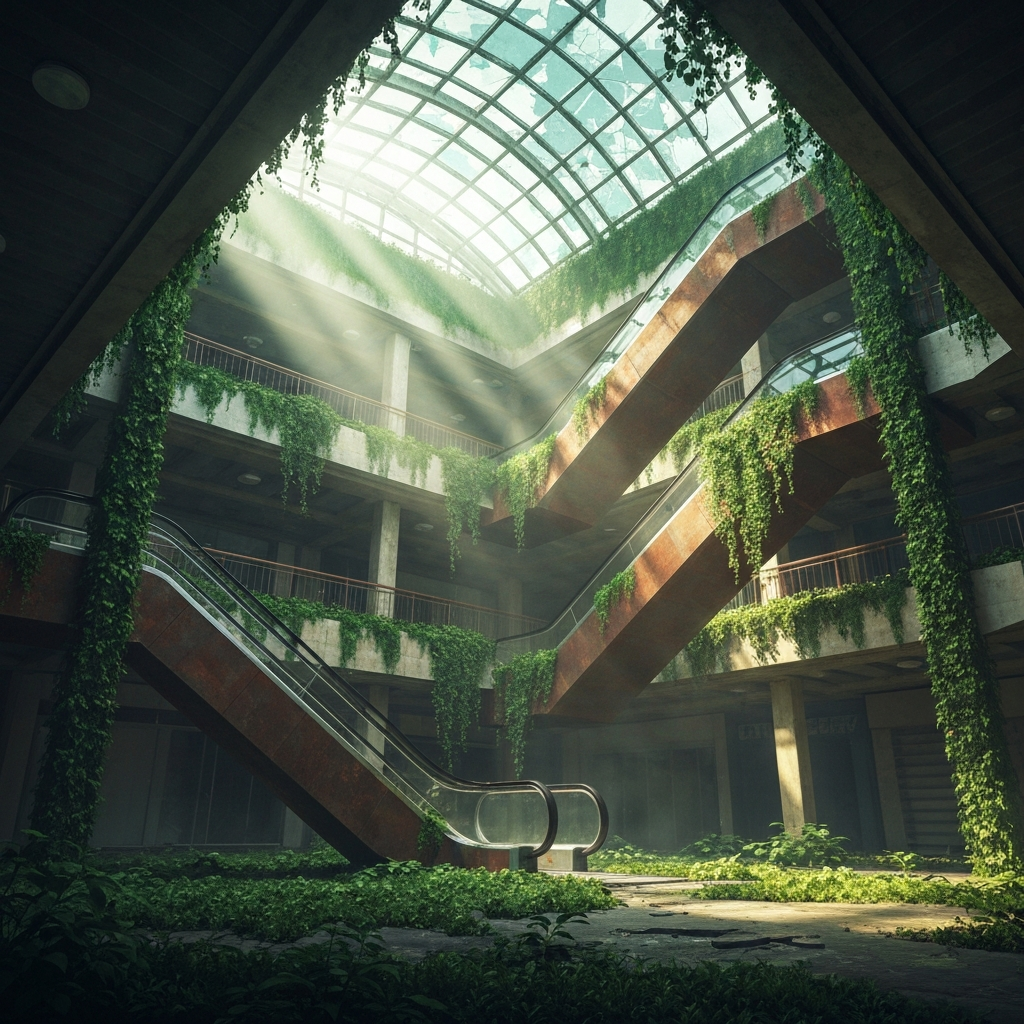
The Allure of the Broken World
There is a profound, unsettling quiet that settles over a space once designed for human habitation but subsequently abandoned. A house with a caved-in roof, a rusted automotive plant, or a drained municipal swimming pool all evoke a specific, haunting melancholy. In modern literature, these decaying spaces are rarely just atmospheric backdrops. They operate as active participants in the narrative, physical manifestations of memory, societal collapse, and psychological entropy.
While the Romantic poets of the nineteenth century fetishized the crumbling stone of ancient abbeys and ivy-choked castles, contemporary authors are drawn to the concrete carcasses of the twentieth and twenty-first centuries. The modern literary ruin does not evoke a distant, mythical past. Instead, it holds up a mirror to our immediate present, asking uncomfortable questions about the permanence of our institutions, the fragility of our economic systems, and the inevitable erasure of human endeavor. By examining how novelists deploy the aesthetics of decay, we can uncover a rich subtext about modern anxiety and the paradoxical beauty found in destruction.
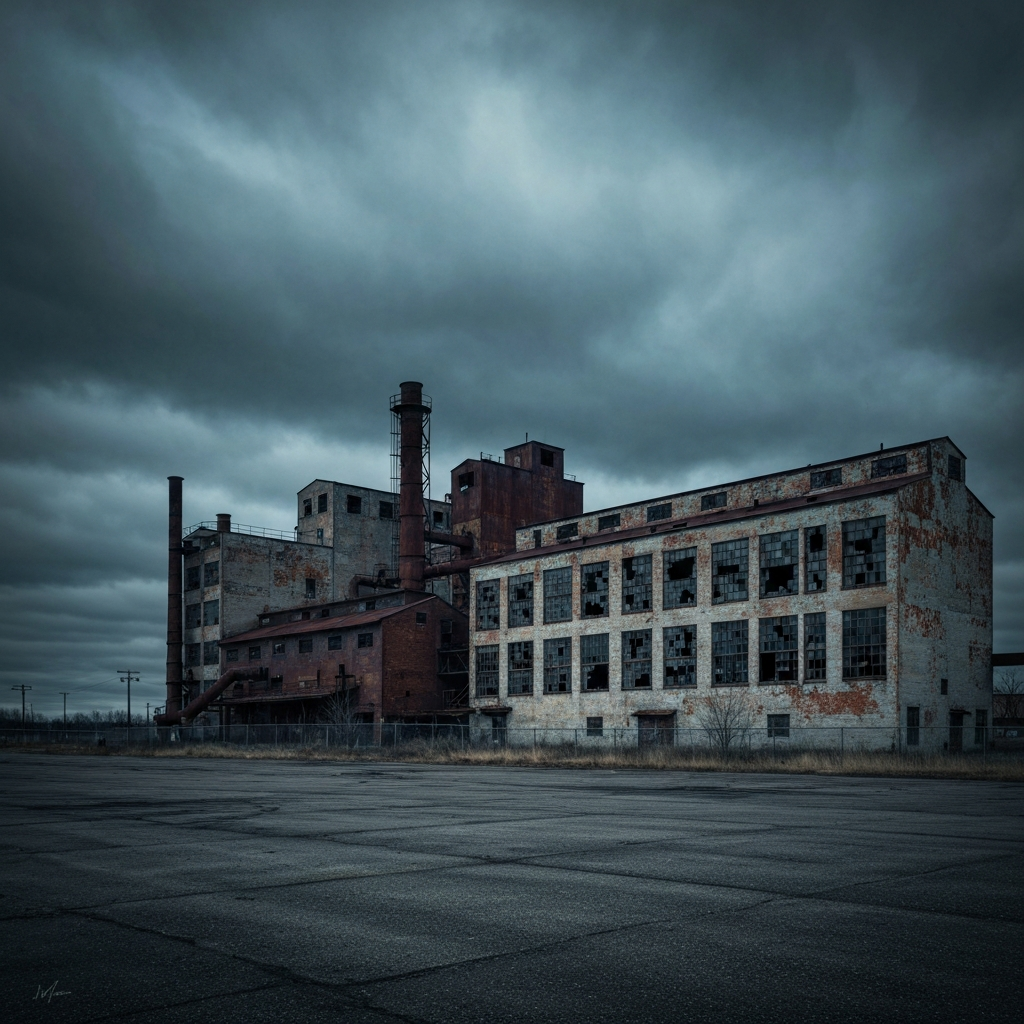
From Romantic Rubble to Brutalist Carcasses
To understand the modern fascination with abandoned spaces, one must recognize the shift from the Gothic ruin to the industrial wasteland. Early literary ruins were often designed to induce a sense of the sublime—a feeling of awe mixed with terror at the vastness of time. Today’s literary ruins are decidedly more localized and brutalist. They are the strip malls, the foreclosed housing estates, and the empty train stations that dot the modern landscape.
No author captured the weight of modern architectural emptiness quite like W.G. Sebald. In works like Austerlitz, Sebald uses the imposing, often abandoned structures of European fortresses and railway stations to physically represent the voids left by trauma and historical amnesia. His insertion of grainy, black-and-white photographs of these empty spaces alongside the text forces the reader to confront the physical evidence of absence. The architecture in Sebald’s work is heavy with the ghosts of the twentieth century, suggesting that buildings hold onto the memories that human beings actively try to forget.
The Industrial Wasteland and Socioeconomic Anxiety
In contemporary American fiction, the abandoned space frequently serves as a graveyard for the American Dream. The genre of Rust Belt realism relies heavily on the imagery of decay to mirror the economic disenfranchisement of its characters. Philipp Meyer’s American Rust is a masterclass in this technique. The novel is anchored by an abandoned steel mill in a fictional Pennsylvania town, a towering, rusted cathedral of former industry.
For Meyer’s characters, the mill is not just an eyesore; it is a physical reminder of a prosperity that has been stolen from their generation. When characters trespass into the decaying facility, they are navigating a hazardous terrain of collapsing catwalks and jagged metal. The physical danger of the space perfectly mirrors their precarious socioeconomic reality. The factory, once a symbol of upward mobility and blue-collar pride, has mutated into a hostile environment. This use of decay strips away the romanticism of the past, leaving only the sharp, tetanus-laced reality of a society that has moved on, leaving its workers behind in the rubble.
The Uncanny Zone: Where Human Rules Fail
Beyond economic commentary, abandoned spaces in literature often function as thresholds to the uncanny. When human beings vacate a space, human logic and physical laws seem to follow suit, creating a vacuum where the bizarre can take root. This concept was popularized by Arkady and Boris Strugatsky in their seminal 1972 novel Roadside Picnic, which introduced the concept of the “Zone”—a cordoned-off area of abandoned human habitation forever altered by an alien visitation.
In the Zone, empty apartment buildings and rusted cars are imbued with invisible, lethal anomalies. The familiar domestic space becomes terrifyingly alien. This literary tradition of the uncanny ruin has been brilliantly adapted by modern authors like Jeff VanderMeer in his Southern Reach trilogy. In Annihilation, the abandoned villages and the decaying lighthouse within Area X serve as focal points for an incomprehensible ecological transformation. The human structures are not just rotting; they are being actively digested and repurposed by an alien ecosystem. Here, the abandoned space forces the protagonist—and the reader—to realize that human dominance over the environment is entirely conditional. Once we step away, the wild does not just return; it mutates our legacy into something unrecognizable.
Architectural and Psychological Entropy
Perhaps the most visceral use of decaying spaces in fiction is the mirroring of architectural entropy with psychological collapse. As the physical environment breaks down, so too do the moral and social codes of the characters inhabiting it. J.G. Ballard was the undisputed master of this parallel deterioration. In his dystopian masterpiece High-Rise, a luxury, state-of-the-art apartment building slowly descends into chaos.
Ballard meticulously details the failure of the building’s infrastructure: the garbage chutes block, the air conditioning fails, and the elevators stall. As the building rots from the inside out, the affluent residents shed their civilized veneers, forming tribal factions and engaging in brutal violence. The decaying space does not merely reflect their psychological descent; it actively facilitates it. The darkness of the unlit corridors and the stench of the uncollected refuse give the residents permission to act on their darkest impulses. Ballard’s work suggests that our morality is inextricably linked to the maintenance of our physical spaces. When the plaster cracks and the lights go out, the savage underneath is immediately liberated.
Reclaiming the Ruins: The Aesthetics of Botanical Rebirth
While decay is often associated with gloom and destruction, a significant portion of contemporary fiction finds a profound, melancholic beauty in the aftermath of human collapse. This is particularly evident in post-apocalyptic literature that focuses on the botanical reclamation of urban spaces. Instead of barren, ash-covered wastelands, authors are increasingly depicting a world where nature has aggressively and beautifully overgrown our concrete monuments.
Emily St. John Mandel’s Station Eleven offers a striking example of this aesthetic. Decades after a devastating pandemic, characters walk across the rusted hulks of cars trapped in endless traffic jams, now overtaken by wildflowers and creeping vines. Airports, once hubs of frantic global movement, become quiet, self-contained communities. Mandel does not portray this decay as purely tragic. Instead, there is a quiet grace in the way the earth absorbs the scars of human industry. The overgrown ruin becomes a site of rebirth, suggesting that while our specific civilization may be temporary, life itself is endlessly resilient.
This botanical takeover shifts the narrative focus from what has been lost to what is quietly enduring. The image of a skyscraper acting as a vertical forest or a submerged city turning into a coral reef offers readers a complex emotional experience: a mourning for human achievement mixed with a sense of relief that the planet will outlast our mistakes.
The Enduring Power of the Empty Room
The literary fascination with abandoned spaces endures because these environments force a confrontation with our own impermanence. A decaying building is a narrative pause, a physical space where the frantic forward momentum of human progress has stalled. When an author guides a character through a shattered doorway and into a room thick with dust, they are inviting the reader to step outside of time.
These spaces ask us to consider what remains when the noise of daily life fades away. Whether they serve as indictments of unchecked capitalism, psychological battlegrounds, or monuments to nature’s inevitable triumph, literary ruins offer a uniquely powerful canvas. They remind us that every structure we build, both physical and societal, is temporary. Yet, in the hands of a skilled writer, the documentation of that decay becomes a beautiful, lasting art form in itself.
Do you enjoy the content on Agenda Creativa?
Your contributions help me create new articles, share creative ideas, and keep this platform alive! If you like what I do and want to support my work, you can buy us a coffee.
Every cup of coffee means more than just a gesture – it's direct support for my passion to create inspiring and useful content. Thank you for being part of this journey!
☕ Buy me a coffee
