
The Utopian Promise of Seamless Integration
We have engineered a work culture that worships portability. The modern professional is equipped with a suite of cloud-based tools designed to entirely eradicate friction. Your documents sync across three time zones before you can blink. Your communication channels live perpetually in your pocket. You can draft a strategic brief on your laptop, review the comments on your tablet, and approve the final revisions on your smartphone while standing in line for coffee.
This frictionless existence is heavily marketed as the ultimate productivity hack. The logic dictates that if you can work from anywhere, at any time, on any device, you will naturally get more done. But this seamless integration masks a severe cognitive cost. By removing the physical barriers between our tools, our environments, and our tasks, we have accidentally dismantled the psychological boundaries required for high-level execution.
When your work is everywhere, your focus is nowhere. Welcome to the Omnipresence Trap.
The Collapse of Cognitive Context
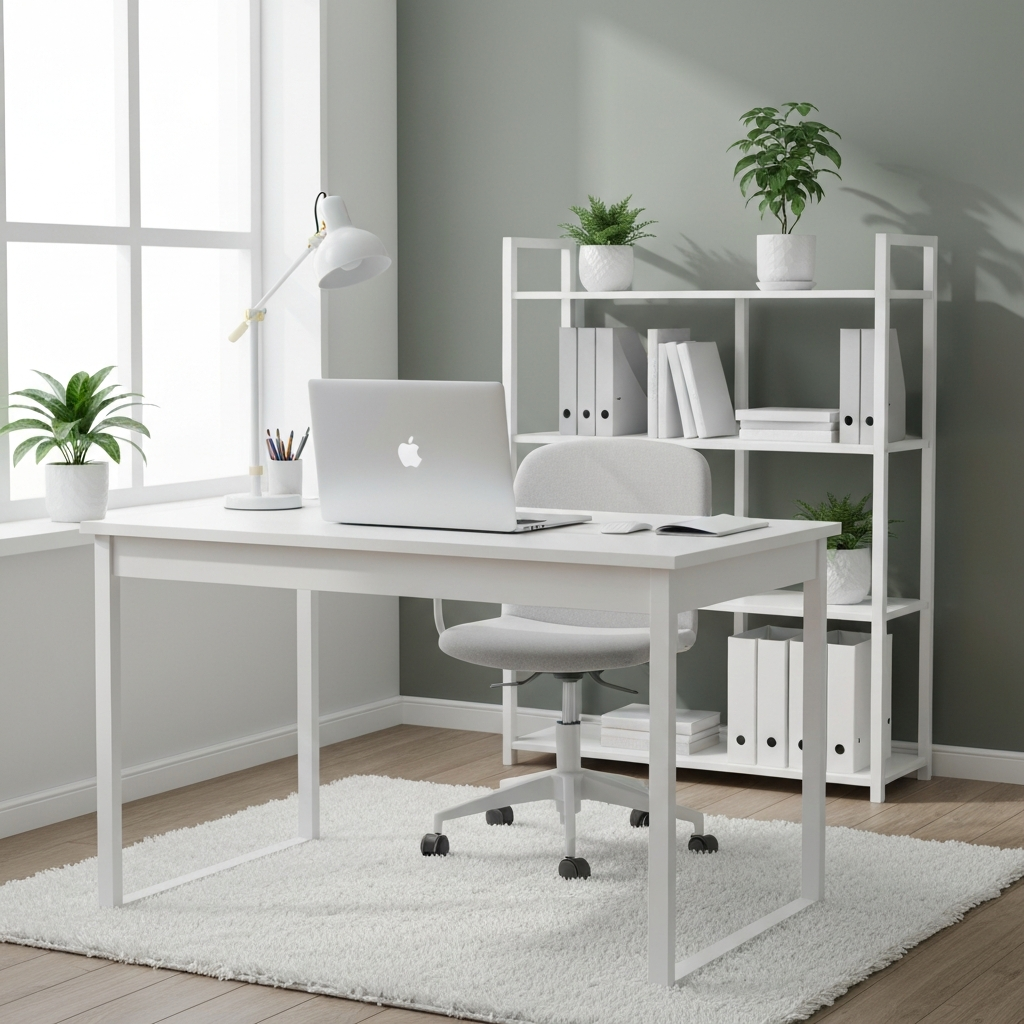
Human psychology is deeply reliant on environmental cues. For thousands of years, our brains evolved to associate specific physical spaces and specific tools with specific modes of thinking. The library was for quiet study; the workshop was for physical labor; the dining table was for social connection. These spatial and tactile triggers tell the nervous system exactly what type of cognitive state to enter.
Modern technology has violently compressed these distinct environments into a single, glowing glass rectangle. When you use the exact same device to doom-scroll social media, watch cinematic entertainment, argue with strangers, and build complex financial models, you destroy those cognitive triggers. The context collapses.
Your brain no longer knows what state it is supposed to be in when you open your laptop or unlock your phone. Because the device represents everything all at once—leisure, stress, deep work, shallow communication, and entertainment—your baseline cognitive state defaults to a state of high-alert distraction. You are demanding that your brain transition seamlessly into deep, focused labor based purely on willpower, rather than leveraging the environmental cues that make flow states automatic.
The Illusion of Responsiveness and the Degradation of Quality
A core driver of the Omnipresence Trap is the false equivalence between responsiveness and productivity. Because we possess the technological capability to reply to a Slack thread from the grocery store aisle, we assume we should. We confuse the speed of our reaction with the quality of our output.
Rapid-fire, mobile-device responses are rarely thoughtful; they are highly reactive. They are optimized for clearing the notification, not for solving the underlying problem. This creates a secondary penalty: the slow degradation of your work quality. When you attempt to review a complex document on a six-inch screen while functionally distracted by your physical environment, you miss critical nuances. You make micro-errors. You approve initiatives that require deeper scrutiny simply because the mobile interface encourages brief, swipe-away interactions.
You are not actually working faster. You are just smearing your attention across a wider surface area, ensuring that neither your work nor your personal life gets your full cognitive capacity.
The Background Processing Penalty
Why does this omnipresence sabotage deep work even when you are not actively using your devices? Because accessibility breeds anticipation. The brain is an incredibly efficient prediction machine. If it knows that your project management dashboard is just two taps away in your pocket, it will unconsciously allocate background processing power to monitor that possibility.
This phenomenon is an aggressive amplification of the Zeigarnik effect—the psychological principle that states we remember uncompleted or interrupted tasks better than completed ones. When your work is perpetually accessible, the loop is never truly closed. The constant background hum of potential emergencies, pending emails, and unread messages drains your executive function. You may think you are relaxing on a Saturday afternoon, but a fraction of your cognitive bandwidth is actively holding the door open for your cloud-based obligations.
How to Engineer Device-Specific Boundaries
The solution to the Omnipresence Trap is not to abandon cloud technology entirely, but to artificially reintroduce the friction that the cloud removed. You must stop relying on willpower to separate your work from your life and start relying on structural engineering. You must build device-specific boundaries.
Protocol 1: Strict Hardware Partitioning
You must assign rigid, non-negotiable roles to your physical devices. Think of your hardware as separate rooms in a house. You would not cook a meal in your bathroom; you should not do deep work on the device you use for casual entertainment.
A standard partition looks like this: Your laptop is exclusively an execution machine. It is for deep drafting, coding, designing, and high-level strategy. Your tablet is a consumption device, reserved for reading research, reviewing long-form documents, and taking analog-style notes. Your smartphone is strictly for logistics, navigation, and personal communication. Once these boundaries are set, you must ruthlessly enforce them. If you need to write a complex email, you do not tap it out on your phone—you wait until you are seated at your execution machine.
Protocol 2: The Cloud Severance
The most immediate way to reclaim your cognitive bandwidth is to sever the cloud connection on your personal devices. Remove the entire work ecosystem from your smartphone. Delete the team chat applications. Remove your professional email account from your phone’s default mail app. Uninstall the project management software.
The anxiety you feel at the thought of doing this is the exact proof of how deeply the Omnipresence Trap has compromised your focus. By forcing a physical barrier to entry—requiring you to literally open your laptop to check on work—you eliminate the unconscious habit of checking your status during every idle moment. You transform work from something that happens to you into something you actively choose to do.
Protocol 3: Software-Level Isolation (The Digital Air-Lock)
If you cannot afford separate hardware for different modes of life, you must isolate your environments at the software level. Create a dedicated ‘Deep Work’ user profile on your computer. This profile should have a different desktop background, a stripped-down dock, and absolutely no communication apps installed.
When you switch to this profile, you are creating a digital air-lock. The visual cues instantly signal to your brain that the context has shifted. Furthermore, utilize full-screen mode for your primary applications. The simple act of hiding the clock, the menu bar, and the peripheral tabs removes the visual triggers that prompt context-switching.
Protocol 4: The Physical Air-Gap
Proximity dictates behavior. If your smartphone is sitting face-up on your desk while you attempt to execute deep work, you are actively burning willpower to ignore it. The ultimate boundary is physical distance.
When you enter a deep work block, physically remove the devices that do not serve the immediate task. Put your phone in a drawer in another room. Leave your tablet in your bag. By introducing physical friction—making it so you have to stand up and walk down the hall to check a notification—you give your brain the necessary space to sink into a state of unbroken concentration.
Reclaiming the Friction of Work
We have been conditioned to view friction as the enemy of productivity. Tech companies spend billions of dollars trying to make the transition between tasks as smooth and invisible as possible. But in the realm of deep, meaningful output, friction is actually a feature, not a bug.
Friction forces intentionality. It requires you to pause and make a conscious decision about where you are directing your attention. By intentionally partitioning your devices and severing the omnipresent tether to your work, you are not making yourself less productive. You are protecting the very asset that makes your work valuable: your capacity for sustained, unbroken thought.
True productivity is not about how easily you can access your work from anywhere in the world. It is about how deeply you can engage with your work when you choose to, and how completely you can detach from it when you are done. Build the boundaries. Reintroduce the friction. Reclaim your mind.
Do you enjoy the content on Agenda Creativa?
Your contributions help me create new articles, share creative ideas, and keep this platform alive! If you like what I do and want to support my work, you can buy us a coffee.
Every cup of coffee means more than just a gesture – it's direct support for my passion to create inspiring and useful content. Thank you for being part of this journey!
☕ Buy me a coffee
