The Atelier Pricing Dilemma: Why Skilled Tailors Undercharge
In the quiet concentration of a professional sewing workroom, the truest test of craftsmanship is rarely construction from scratch; it is the surgical deconstruction, structural re-engineering, and invisible reassembly of an existing garment. Yet, throughout independent ateliers, bridal workrooms, and bespoke tailoring houses, talented dressmakers consistently fall into an insidious financial trap: pricing by surface-level perception rather than structural reality.
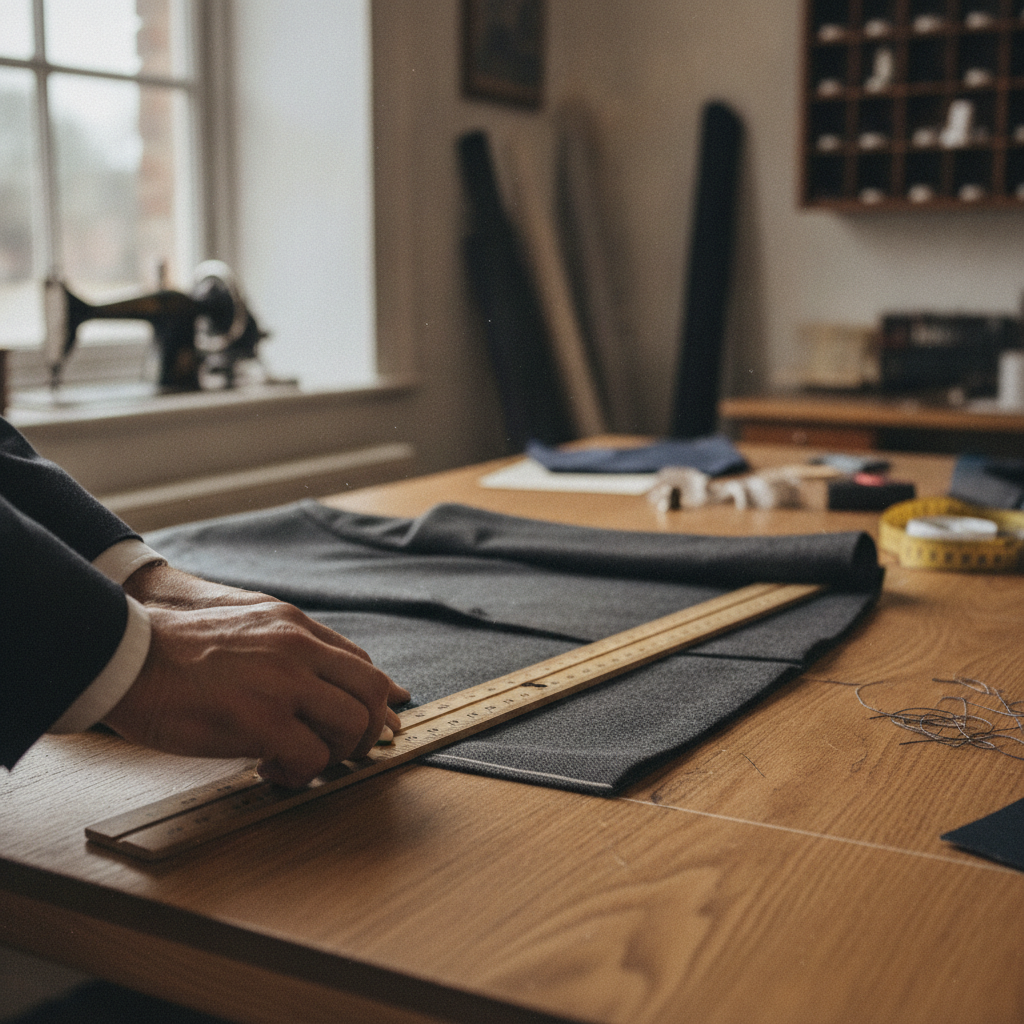
When a client walks into a fitting room requesting that a pair of trousers be taken in at the waist, they perceive a simple five-minute stitch down the center back. They do not see the necessity of splitting the waistband, releasing the belt loops, tapering the seat through the fork, grading the heavy wool seam allowances, matching topstitch thread weights, and pressing the curvature on a tailor’s ham. When an artisan estimates alteration fees based on client expectation rather than bench time, technical skill becomes subsidized labor.
To build an enduring, profitable garment atelier, you must treat pricing as an exacting science governed by labor formulas, deconstruction overhead, machine depreciation, and textile physics.
The Anatomy of Alteration Labor: Deconstruction vs. Reconstruction
In custom dressmaking and bespoke tailoring, reconstruction is only half the equation. The greatest sink of unbilled bench hours is unintended deconstruction. Amateur quotes often account exclusively for stitching the new seam line, entirely neglecting the meticulous unpicking required to access the interior architecture of the garment.
Every garment category carries hidden labor liabilities dictated by ready-to-wear production methods:
- Chain-Stitched Construction: While factory chain stitches can unravel quickly if pulled correctly, lockstitched and bar-tacked zones (such as belt loop anchors, pocket welts, and fly shields) require razor-sharp seam rippers or surgical scalpels to avoid severing delicate warp and weft yarns.
- Fusing and Interfacing: Heavy industrial resin interfacings along hems and waistbands resist steam separation, necessitating gentle solvent application or heat pressing before any structural alteration can begin.
- Lining and Under-Structure Re-anchoring: Altering an exterior shell invariably disturbs the interior drop lining, interlining, shoulder pads, or horsehair canvas. A three-centimeter reduction at the side seams of a tailored jacket demands identical reductions across four separate pattern layers, followed by hand-basting and slip-stitching the vents back into place.
Fabric Behavior and Technical Complexity Modifiers
Never quote a flat rate without physically handling the textile. Different cloth compositions fundamentally dictate your feed dog tension, needle choice, and handling speed:
- High-Twist Worsteds & Raw Denim: Forgiving and stable under the iron, allowing predictable feed rates and standard pressing times.
- Silk Crepe, Chiffon, & Bias Silks: Highly fluid textiles that warp when unpinned. Tapering or hemming a bias skirt requires resting the garment on a dress form for 24 to 48 hours to let the bias settle before re-marking, truing, and hand-rolling the hem.
- Beaded, Sequined, & Embroidered Lace: Demands localized bead removal along seam allowances prior to sewing to avoid shattering needles or cutting the thread, followed by hand-replacing the beads over the finished seam. This work must carry a 1.5× to 2.5× complexity multiplier over standard flat goods.
🛠️ Interactive Atelier Tool: Alteration Price Estimator
Skip manual math and cutting guesswork. Use our free interactive tool to instantly calculate your exact measurements, fabric yield, and project specifications:
The Atelier Cost-Plus Pricing Formula
To establish transparent, repeatable, and profitable rates, replace intuitive estimates with the master tailor’s cost-plus equation:
Quote Price = (Estimated Bench Hours × Target Hourly Rate) + Direct Notions Cost + Studio Overhead Markup (15–20%)
1. Defining Your Target Hourly Rate
Your target hourly rate is not your net personal wage; it is the gross operational cost of your specialized hands. Tailoring requires high-precision machinery (industrial lockstitchers, compound-feed walking foots, differential-feed sergers, and vacuum steam pressing tables) alongside decades of spatial pattern knowledge.
For professional ateliers, an entry-level professional rate begins between $35 and $50 (£28–£40) per hour, while high-end tailoring, tailoring masterclasses, and couture bridal alteration rates range between $65 and $120+ (£50–£95+) per hour depending on metropolitan overhead.
2. Tracking Bench Hours vs. Consultation Time
Bench hours encompass every touchpoint of direct garment handling:
- Initial pinning and balance diagnosis during fitting.
- Marking grainlines, thread basting, and deconstruction.
- Machine stitching, grading allowances, and under-pressing.
- Final presentation pressing, garment bagging, and handover fitting.
If an alteration requires two fitting sessions, factor at least 30 to 45 minutes of non-sewing client management into the direct labor calculation.
3. Factoring Overhead and Machinery Depreciation
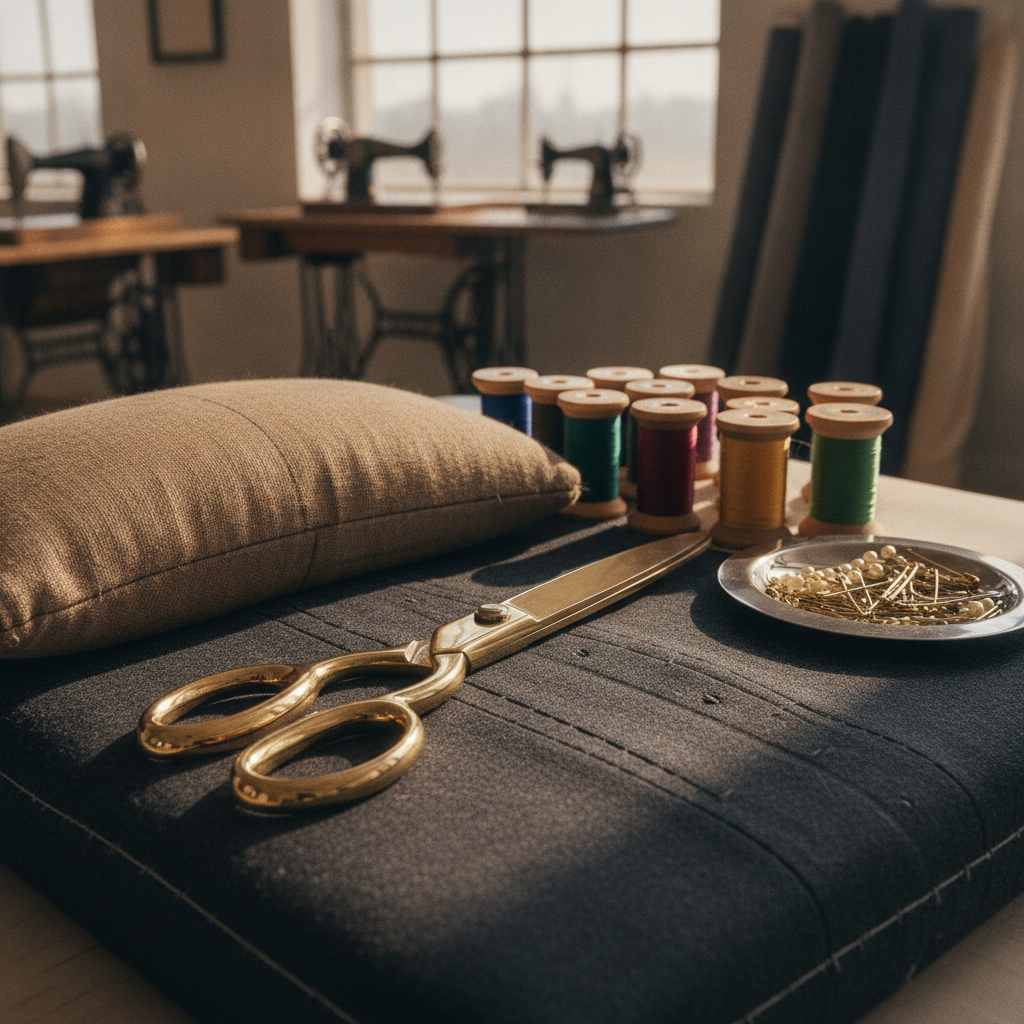
Every meter of Gutermann Mara thread, every strip of stay tape, pattern drafting paper, tailor’s chalk, and every replacement rotary blade represents non-labor operational costs. Furthermore, steam generators scale with mineral buildup, and industrial cutting shears require frequent professional sharpening. Adding a 15% to 20% overhead surcharge guarantees that consumable supplies and studio leases do not silently drain your net profits.
Standardizing Garment Classes and Complexity Benchmarks
Establishing baseline operational tiers eliminates quote fatigue during busy fitting appointments:
Trousers and Skirts (The Volume Engine)
Trouser alterations form the cash-flow foundation of everyday alterations. A plain machine topstitched hem requires 15 to 20 minutes of labor. However, preserving the distressed factory edge via an original (Euro) hem requires splitting the hem fold, cutting away excess leg length, nesting the original cuff with a zipper foot, serging, and topstitching down the allowance—demanding 30 to 45 minutes of precision work.
Jackets and Outerwear (Structural Tailoring)
Shortening jacket sleeves with functional buttonholes is one of the ultimate diagnostic tests. Shortening from the bottom disrupts buttonhole spacing relative to the cuff edge. Therefore, sleeves must be shortened from the shoulder: opening the armscye lining, removing shoulder pads, releasing the sleeve head, recutting the sleeve cap crown according to the new armhole circumference, and setting the sleeve back into balance with hand basting. Quoting this as a standard hem will result in a substantial net loss on the project.
Bridal and Evening Wear (High-Liability Handling)
Formal gowns combine extensive hem circumferences (often spanning 6 to 12 meters of rolled hem across four layers of silk, crinoline, and lining) with extreme liability. A single iron scorch or oil stain on ivory silk faille can destroy a $4,000 gown. Formal pricing structures must reflect this financial liability by building an automatic risk premium into the baseline labor rate.
Professional Intake Systems: The Line-Item Solution
Vague verbal estimates inevitably invite client friction. Professional ateliers implement disciplined intake protocols:
- Diagnostic Garment Pinning: Always pin with the garment balanced along the wearer’s center front, center back, and true grainline. Explain out loud why an alteration is necessary (e.g., “We must raise the shoulder seam to correct the balance of the collar roll”).
- Itemized Quoting: Break each service into discrete line items. Do not quote $90 for “fixing a dress”; quote $35 for “Shorten Hem (Double Layer),” $30 for “Take in Bodice Side Seams through Armscye,” and $25 for “Reset Invisible Zipper.”
- Clear Policy on Rush Fees and Cleanliness: Standardize a 25% to 50% surcharge for turnarounds under 72 hours, and mandate that all garments must arrive freshly laundered or dry-cleaned to protect equipment from grit, starch buildup, and fabric distortion.
Expanding Your Atelier Workflow
Pricing your work accurately is only one piece of running an efficient cutting table. When executing custom finishing along raw edges, use our Bias Binding Calculator to determine continuous strip yardage and cutting angles from fabric remnants. Similarly, when cutting replacement linings or sourcing structural interfacings across varying bolt dimensions, calculate your yardage adjustments using our Fabric Width Converter.
By grounding your bespoke craftsmanship in transparent mathematics and structured pricing rules, your studio will not only honor the art of custom tailoring, but will also thrive as a profitable, sustainable business.
Do you enjoy the content on Agenda Creativa?
Your contributions help me create new articles, share creative ideas, and keep this platform alive! If you like what I do and want to support my work, you can buy us a coffee.
Every cup of coffee means more than just a gesture – it's direct support for my passion to create inspiring and useful content. Thank you for being part of this journey!
☕ Buy me a coffee