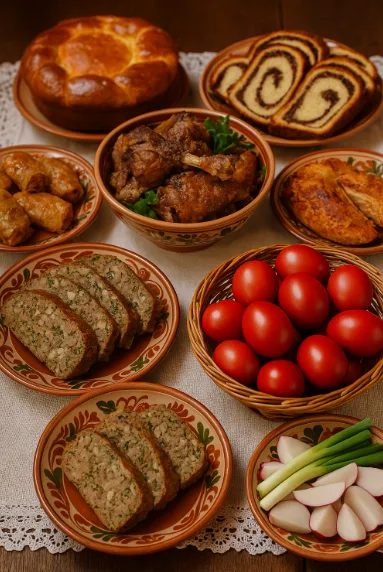
Holidays are magical moments that bring the family together, and traditional sweets play an essential role in creating these priceless memories. Sweet home stories become even more special during festive events, when recipes passed down through generations find their place on the holiday table, imbued with meaning and emotion.
The Story of the Holiday Sweet: Grandma’s Cozonac
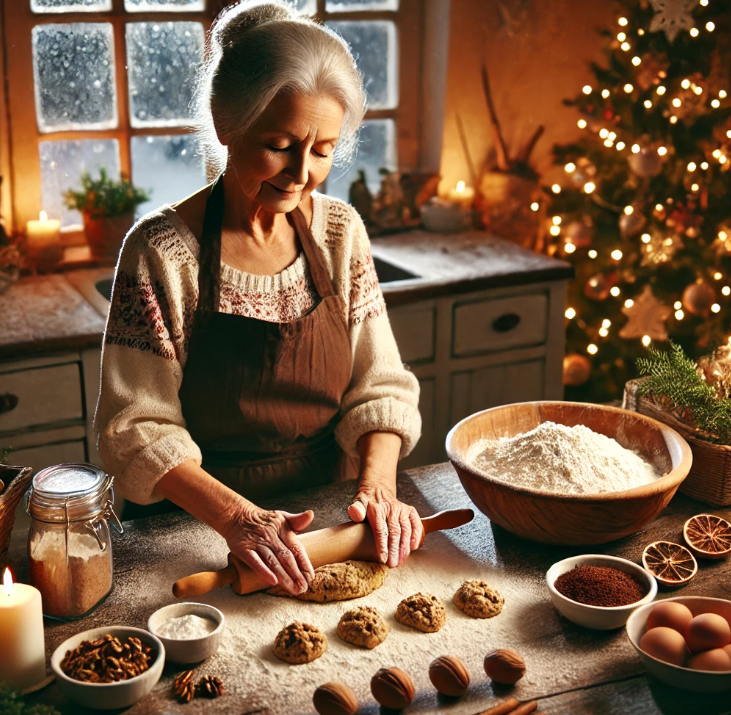
It was Christmas Eve, and Grandma’s house was filled with scents that comforted the soul. The air was steeped in the aroma of freshly baked cozonac, cinnamon, walnuts and vanilla. Every corner of the kitchen felt like a story in itself—flour covered the table, baking pans dried on racks, and Grandma sat at the head of the table, kneading the dough with a skill only years of experience could bring.
As a child, I hovered around her, trying to “help,” but mostly tasting rather than working. “Don’t eat the walnuts before we put them in the cozonac!” she’d say with a warm smile. Yet Grandma knew those little ingredient “thefts” were part of the charm of preparations.
Beside the cozonac, Grandma always had a story to tell. “You know, dear,” she would say, “I learned this recipe from my mother. She told me the secret to a successful cozonac isn’t just the ingredients, but the joy with which you make it. If you knead it with love, it will be fluffy. If you put your heart into it, those who taste it will feel the warmth of your heart.”
Her words made sense. As I watched the dough rise under the thick cloth, I realized that it wasn’t just the ingredients that made home desserts so special. It was the love woven into every movement, every story told by the oven, and the laughter that filled the room.
After a few hours, when the cozonaci came out of the oven, we all gathered around the table. Arranged on a large plate, golden and fragrant, they were more than a dessert—they were the symbol of holidays spent together. When I took my first slice, its warmth seemed to embrace my soul.
This story repeats year after year, but each Christmas adds a new shade. Now, when I knead cozonac in my own kitchen, I think of Grandma. I try to pass on the recipe, but above all the love with which I was raised.
For me, cozonac is not just a cake. It is a thread linking generations, a symbol of family, a moment of magic born in the home kitchen.
So every time I smell baked cozonac, I don’t just sense the holiday aroma—I feel the sweet stories that bind us, with loved ones, in a dance of memories that will endure forever. ?
Christmas: Cozonac and the Scent of Winter Holidays

Cozonac is Romania’s uncontested symbol of Christmas. The scent of freshly kneaded dough, filled with walnuts, cocoa or raisins, fills the house with warmth and anticipation.
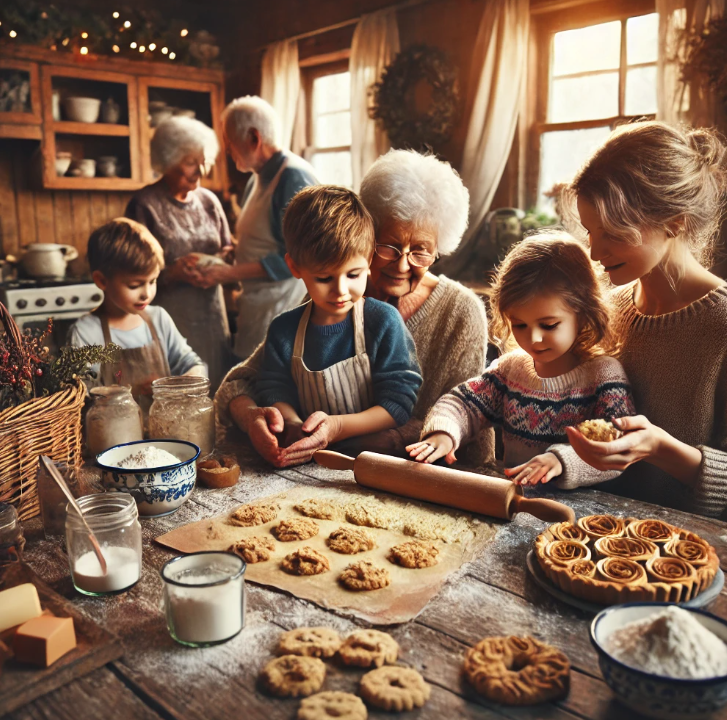
- The Preparation Ritual: The entire family takes part in kneading the dough, an activity that unites and forges strong bonds.
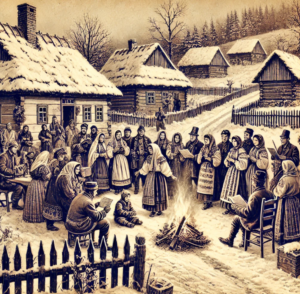
- Fireside Tales: While the cozonaci bake, grandparents share youthful anecdotes, bringing smiles and nostalgia.
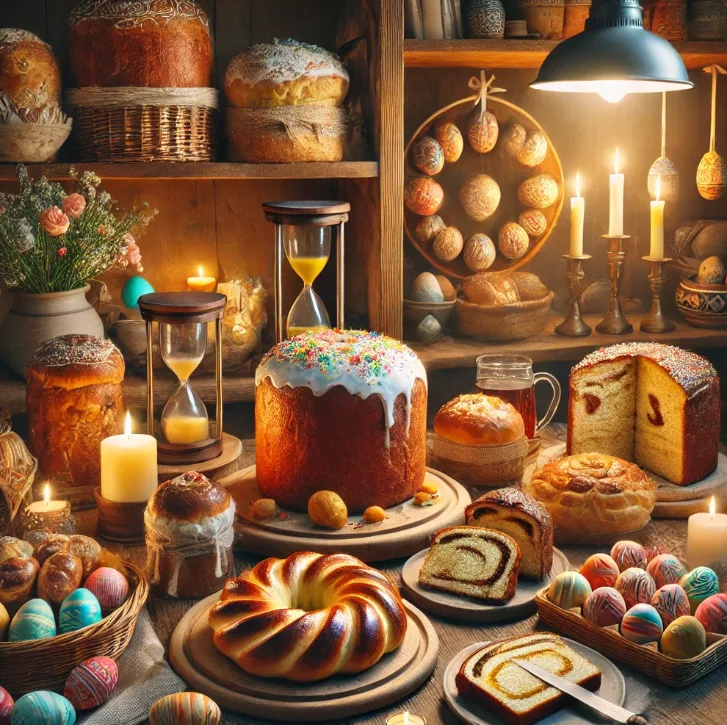
Easter: Pasca and the Red Eggs
Pasca: Sweet cheese and raisin pasca is the traditional Easter dessert, symbolizing joy and renewal.
Decorating Eggs: Children and adults paint eggs together, each design carrying its own meaning.
Easter Table: Sweets are carefully arranged alongside other delights, creating a colourful festive tableau.
Local Celebrations and Sweet Customs

Dragobete: Heart-Shaped Cookies
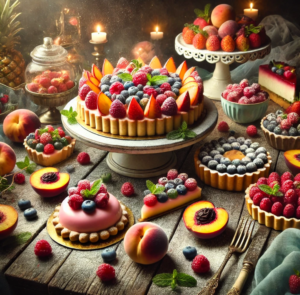
- Dessert Ideas: Jam-filled heart-shaped biscuits, cakes decorated with red fruits
- Significance: Romania’s celebration of love, Dragobete, is the perfect occasion to prepare special desserts for loved ones.
- St. Andrew: Gingerbread and Home Protection
- Tradition: It is said that gingerbread prepared for St. Andrew brings luck and protection.
- Family Activity: Making and decorating gingerbread becomes a joyful family moment.
- Traditional Festivals and Fairs
- Poale-n Brâu Pies: A Moldavian speciality savoured at summer festivals.
- Kürtőskalács (Chimney Cake): Fire–spun dough coated with sugar and cinnamon, a staple at Transylvanian events.
Modern Holiday Recipes
Although traditions endure, many families adapt recipes to be healthier or to include new ingredients:
- Cozonac with Dark Chocolate and Orange: A modern twist blending classic tastes with fresh notes.
- Crustless Pasca: A lighter option, equally delicious for those wishing to reduce carbohydrate intake.
The Importance of Sweets in Creating Holiday Memories

Sweets are not merely culinary creations but symbols of love and care for loved ones:
- Sweet Gifts: A homemade cozonac or jar of jam can be the most heartfelt holiday gift.
- Uniting Traditions: Baking desserts becomes an opportunity to pass down family customs and stories to new generations.
Conclusion: Holidays and Sweet Home Stories—a Perfect Combination
Festive events enrich sweet home stories, adding extra magic and joy. Whether it’s Christmas cozonac, Easter pasca or special cakes for other occasions, these desserts remind us of the importance of family, tradition and time spent together.
Encourage your family to keep and pass on these sweet customs so that home stories remain alive and full of flavour.
Wishing you flavourful holidays and unforgettable moments! ?
Why do traditional sweets play an important role during the holidays?
Answer: Traditional sweets are an expression of cultural and family traditions.
They unite generations through recipes passed down from grandparents to grandchildren.
The aromas and flavors of these desserts evoke memories and create strong emotional bonds.
For example, Christmas cozonac symbolizes the joy of being together, while Easter pasca represents renewal and hope.
How do desserts contribute to the holiday atmosphere?
Answer: The scent of freshly baked cozonac or cakes fills the home with warmth and anticipation.
Preparing desserts becomes a family activity, bringing laughter and storytelling into the kitchen.
Their presence on the festive table adds visual and gustatory charm, completing the event’s joy.
What is the significance of cozonac in Romanian traditions?
Answer: Cozonac is more than a dessert:
- It symbolizes prosperity and family unity.
- Its preparation involves rituals and techniques transmitted through generations.
- Each family has its unique recipe, and kneading the dough with love is essential to achieve a fluffy result.
What role do stories told during dessert preparation play?
Answer: Stories shared by grandparents or parents create an emotional context for the recipes.
They transform the kitchen into a place of memory and knowledge.
For example, a tale about how Grandma learned to make pasca adds cultural and historical value to the dessert.
How have traditional desserts adapted in the modern context?
Answer: Traditional recipes have been modified to include new ingredients or meet dietary needs.
Examples include cozonac with dark chocolate and orange or crustless pasca.
These variations preserve the essence of tradition while offering a contemporary interpretation.
How do sweets influence family unity?
Answer: Dessert preparation involves all family members, creating moments of closeness.
For instance, children can decorate cakes or learn to knead dough alongside parents.
These activities become precious memories that strengthen family bonds.
What are the most popular traditional desserts for holidays in Romania?
- Christmas: Cozonac with walnuts, cocoa or Turkish delight.
- Easter: Pasca with sweet cheese and raisins.
- St. Andrew’s Day: Gingerbread decorated with colorful icing.
- Festivals: Kürtőskalács (chimney cake) and plăcinte poale-n brâu (Moldavian pies).
How can desserts pass tradition to new generations?
Answer: By involving children in the preparation of traditional recipes.
Sharing the meaning of desserts in the holiday context gives them a cultural and emotional framework.
For example, decorating red Easter eggs together creates a learning experience.
Why are sweets considered special gifts during the holidays?
Answer: A cozonac, homemade cake or jar of jam is more than a gift—they are tokens of affection.
Each dessert carries the time and love invested in its making.
Moreover, they create a greater emotional impact than commercial gifts.
How do holiday markets influence culinary traditions?
Answer: Markets offer the chance to experience local desserts and learn about region-specific customs.
For example, kürtőskalács is indispensable at Transylvanian fairs, while plăcinte poale-n brâu symbolize Moldavian festivals.
These events help keep traditions alive and promote them to new generations.

Do you enjoy the content on Agenda Creativa?
Your contributions help me create new articles, share creative ideas, and keep this platform alive! If you like what I do and want to support my work, you can buy us a coffee.
Every cup of coffee means more than just a gesture – it's direct support for my passion to create inspiring and useful content. Thank you for being part of this journey!
☕ Buy me a coffee