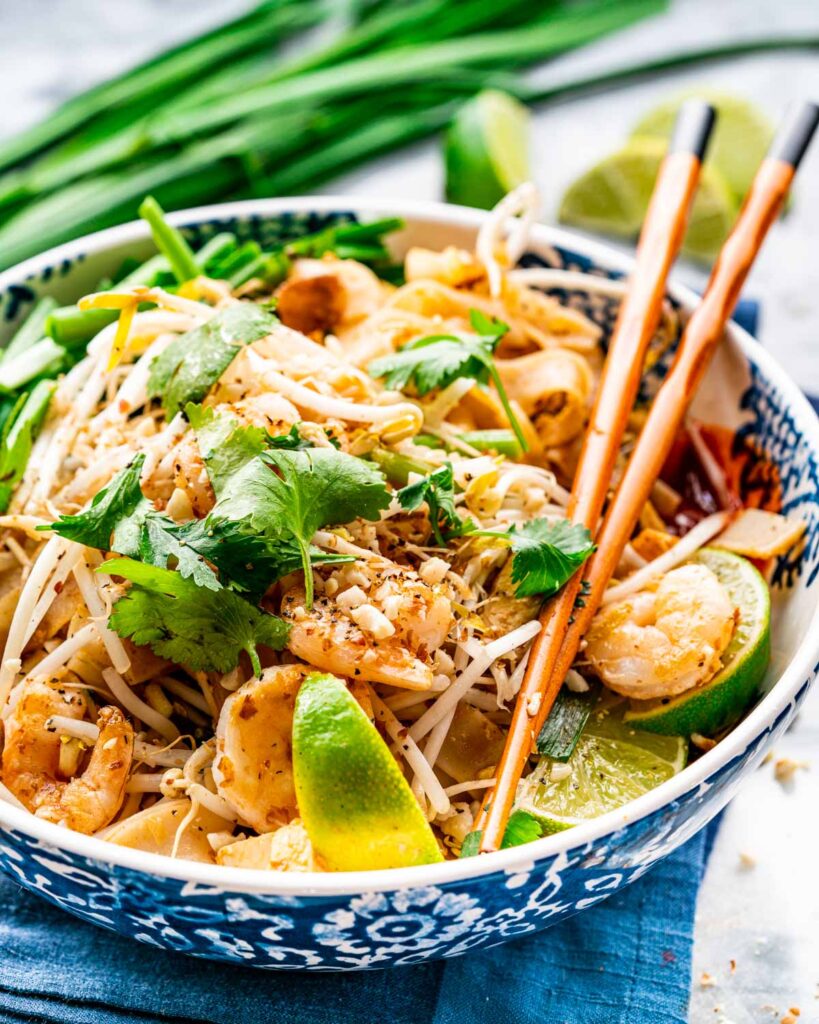
Ingredients:
- 200 g rice noodles
- 200 g shrimp or chicken (optional)
- 2 eggs
- 2 garlic cloves, chopped
- 1 carrot, julienned
- 1 spring onion, chopped
- 1/2 cup bean sprouts
- 3 tablespoons fish sauce
- 2 tablespoons soy sauce
- 1 tablespoon brown sugar
- 1 teaspoon rice vinegar
- 1/4 teaspoon chili powder (optional)
- 1 tablespoon sesame oil
- 1 lime, for squeezing
- 2 tablespoons roasted peanuts, for garnish
Instructions:
- Cook the noodles according to package instructions, then set aside.
- In a large wok or frying pan, heat the sesame oil and sauté the garlic and chili (if using) for about 30 seconds until fragrant.
- Add the shrimp or chicken and stir-fry until fully cooked.
- Push the protein to one side, pour in the beaten eggs, and scramble until just set.
- Add the cooked noodles, carrot, fish sauce, soy sauce, brown sugar, and rice vinegar. Toss well and cook over low heat for another 2–3 minutes.
- Serve topped with bean sprouts, spring onion, roasted peanuts, and a generous squeeze of lime.
What is Pad Thai and where does it originate?
Pad Thai is one of Thailand’s most beloved dishes, featuring stir-fried rice noodles in a balance of sweet, sour, and salty flavours. It was popularised in the 1930s as a national dish to promote Thai cultural identity and has since become a versatile street-food favourite.
What are the key characteristics of the Pad Thai sauce?
The sauce strikes a perfect harmony of salty, sweet, sour, and mildly spicy: fish sauce (umami), soy sauce (salt), brown sugar (sweet), and rice vinegar or lime (acid). This unique blend defines Pad Thai’s signature taste.
What proteins can be used in Pad Thai?
- Shrimp for an authentic coastal twist
- Chicken for an accessible, crowd-pleasing option
- Tofu for a vegetarian or vegan version
- Beef or pork for a heartier, though less traditional, variation
How do you properly prepare rice noodles for Pad Thai?
Soak rice noodles in hot water for 5–10 minutes or cook per package directions al dente to avoid over-softening. After draining, toss with a little oil to prevent sticking.
What role do eggs play in Pad Thai?
Eggs add creaminess and extra protein. They’re scrambled quickly in the wok, creating little curds that coat the noodles and help bind the sauce.
How can Pad Thai be adapted for special diets?
- Gluten-free: Swap regular soy sauce for a gluten-free alternative.
- Vegan: Use tofu instead of shrimp/chicken and replace fish sauce with soy sauce or a miso-water mix.
- Low-carb: Substitute rice noodles with zucchini noodles or shirataki noodles.
What equipment is ideal for making Pad Thai?
A wok is preferred for its high-heat, quick-stir capacity that locks in texture and flavour. A deep frying pan will also work if well-heated before adding ingredients.
Why are roasted peanuts essential in Pad Thai?
Peanuts contribute a satisfying crunch and nutty flavour that balances the soft noodles and vibrant sauce, completing the dish’s texture profile.
How do you balance the flavours in Pad Thai?
- If too salty: add a pinch of brown sugar or extra lime.
- If too sweet: stir in more fish sauce or rice vinegar.
- If too sour: mellow with additional brown sugar or soy sauce.
Adjust gradually, tasting often, until the umami balance is just right.
What can be served alongside Pad Thai?
- Green papaya salad (Som Tam) for a refreshing contrast
- Tom Yum soup for extra spice and depth
- Wedges of lime and extra chilies for personalised seasoning


Do you enjoy the content on Agenda Creativa?
Your contributions help me create new articles, share creative ideas, and keep this platform alive! If you like what I do and want to support my work, you can buy us a coffee.
Every cup of coffee means more than just a gesture – it's direct support for my passion to create inspiring and useful content. Thank you for being part of this journey!
☕ Buy me a coffee