The Foundation of Romanian Hospitality
In Romanian culture, a meal is never just a biological necessity; it is a profound social ritual. Whether it is a quiet Sunday lunch with the family, a festive holiday gathering, or an impromptu visit from a neighbor, the table is the center of the household. And no Romanian table is complete without the “gustări”—the appetizers. The art of Romanian appetizers lies in their rustic simplicity, robust flavors, and the sheer generosity of their presentation.
Unlike the delicate, bite-sized canapés of Western European cuisines, Romanian starters are hearty and grounded. They reflect a deep connection to the land, the changing of the seasons, and centuries of agricultural tradition. A traditional Romanian appetizer spread is designed to awaken the palate, stimulate conversation, and, crucially, lay a solid foundation for the strong spirits that inevitably accompany the beginning of a feast.
The Quintessential Peasant Platter (Platou Țărănesc)
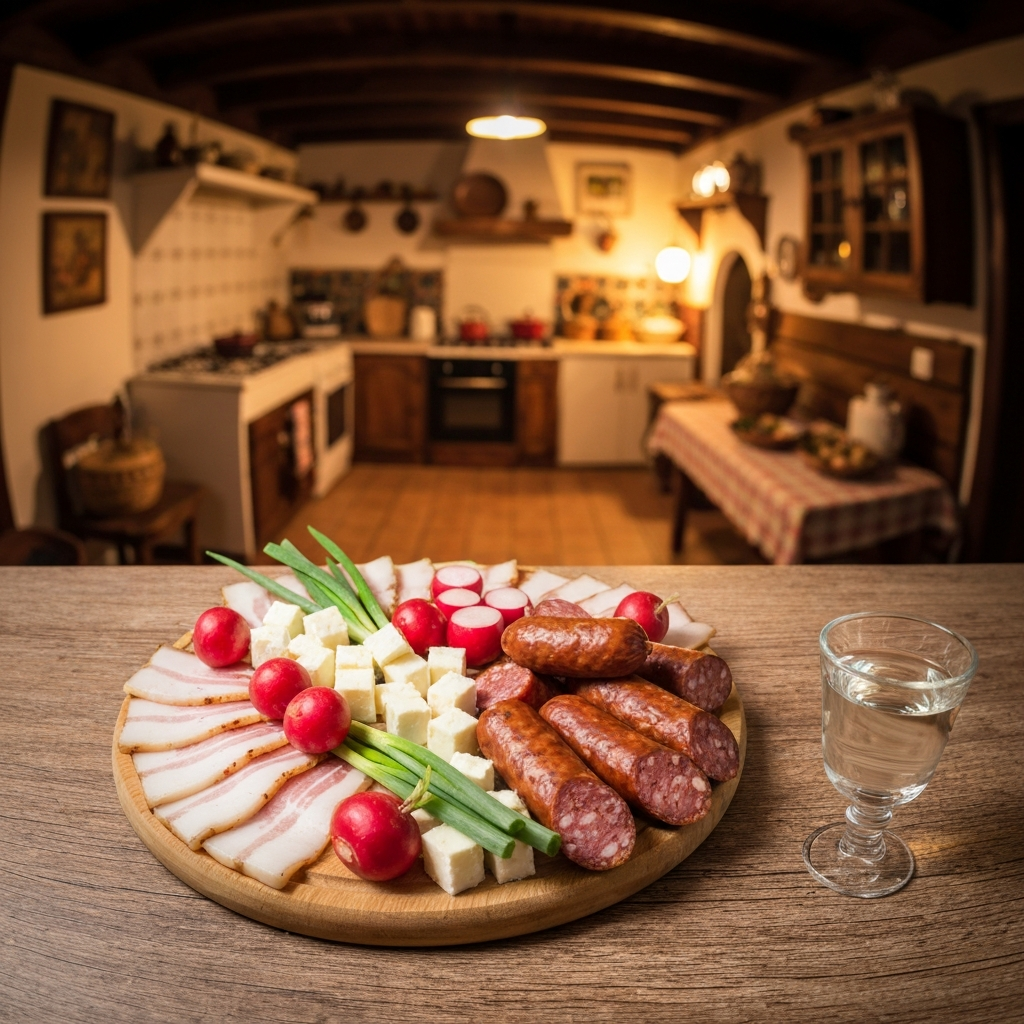
If there is one image that encapsulates the beginning of a traditional Romanian meal, it is the “platou țărănesc” or peasant platter. This wooden board is a masterclass in balancing textures and flavors—fatty, salty, crisp, and sharp.
Cured Meats and Charcuterie
At the heart of the platter are the pork products. Romanians have a historical reverence for pork, traditionally sacrificing a pig just before Christmas and utilizing every part of the animal. You will almost always find “slănină,” a cured and sometimes smoked pork fatback. When prepared correctly, slănină melts in the mouth, offering a rich, smoky flavor that pairs perfectly with sharp raw onions. Alongside the fatback, expect to see thick slices of dried, smoked sausages (cârnați afumați), often heavily seasoned with garlic and paprika. Depending on the region and the season, the board might also feature “tobă” (a rustic head cheese) or “lebăr” (a liver sausage similar to liverwurst, but coarser and more robust).
Traditional Cheeses
To cut through the richness of the meats, Romanian platters rely on an array of local cheeses. “Telemea” is the most ubiquitous—a salty, crumbly white cheese made from sheep’s or cow’s milk, somewhat similar to feta but with a distinct, tangier profile. For a stronger flavor, “brânză de burduf” is a must. This is a sharp, fermented sheep’s milk cheese traditionally aged in a sheep’s stomach or pine bark, giving it a pungent, earthy aroma and a creamy, spreadable texture. Finally, “cașcaval,” a semi-hard yellow cheese, provides a milder, slightly sweet contrast to the salt-heavy telemea.
The Fresh Crunch
A peasant platter would be overwhelming without fresh, crisp vegetables to cleanse the palate. Wedges of juicy tomatoes, crisp green onions (ceapă verde), raw red onions, and spicy radishes are scattered generously across the board. These vegetables are rarely dressed; their purpose is to provide raw, hydrating crunch and a sharp bite that perfectly complements the fatty meats and salty cheeses.
The Holy Trinity of Romanian Spreads
While the meat and cheese board is a staple, the true soul of Romanian appetizers is found in the “salate aperitiv”—the savory dips and spreads. These dishes transform humble, seasonal vegetables into creamy, deeply flavorful starters.
Salată de Vinete (Roasted Eggplant Salad)
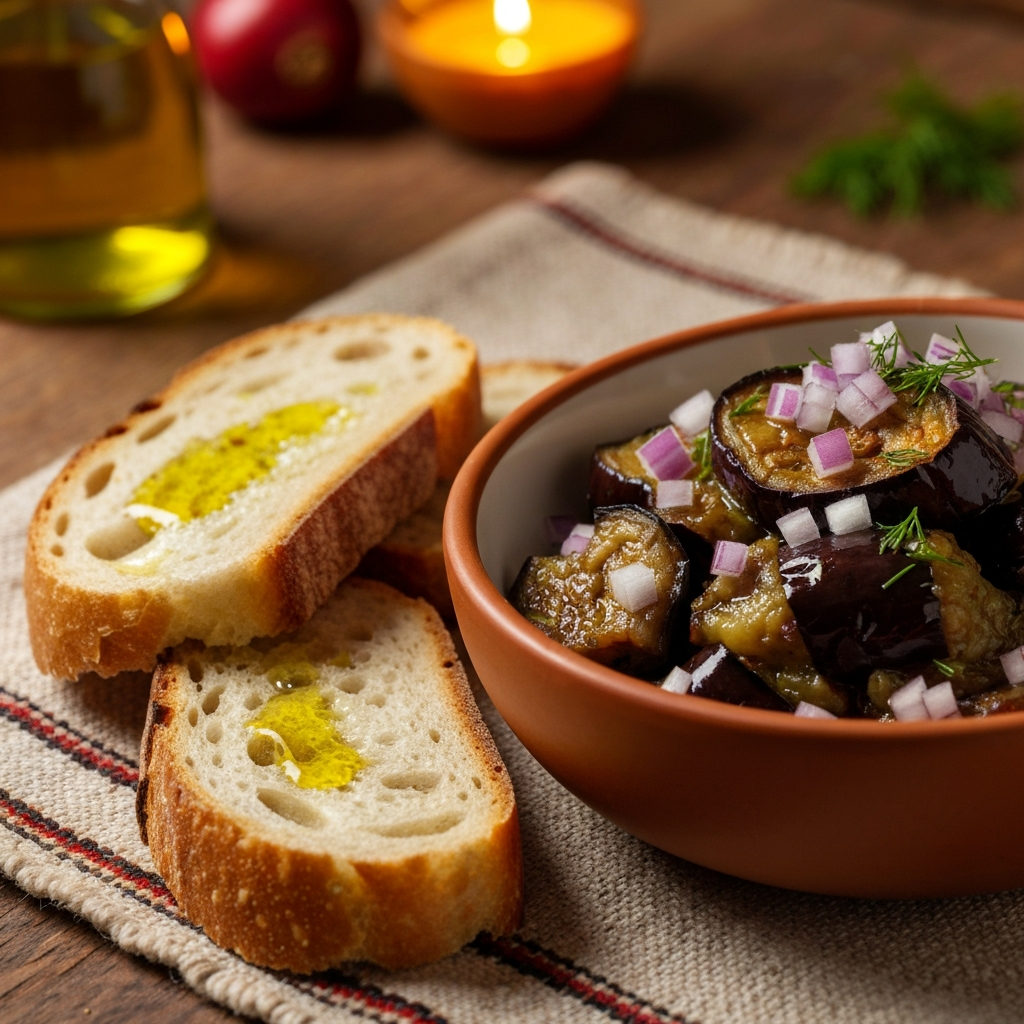
This is perhaps the most beloved of all Romanian appetizers. Salată de vinete is an exercise in patience and technique. Whole eggplants are roasted over an open wood fire or directly on a gas burner until their skins are completely charred and the flesh inside collapses into a soft, smoky pudding. The charred skin is painstakingly peeled away, and the flesh is chopped with a wooden knife (tradition dictates that metal knives oxidize the eggplant and alter the taste). The chopped eggplant is then whipped with sunflower oil—never olive oil, which alters the traditional flavor profile—until it emulsifies into a light, creamy spread. It is finished with finely diced onions or a touch of garlic and a squeeze of lemon. Served on thick slices of crusty country bread and topped with a slice of garden tomato, it is a smoky, savory masterpiece.
Zacuscă (Vegetable Spread)
Zacuscă is the taste of Romanian autumn, preserved in a jar. It is a slow-cooked vegetable spread with a base of roasted eggplants, roasted red bell peppers (specifically the sweet, fleshy kapia variety), caramelized onions, and tomato paste. Some regional variations include wild mushrooms (zacuscă de ciuperci) or beans. The vegetables are simmered gently in a cauldron for hours until they break down and meld into a rich, sweet, and savory paste. While it is made in large batches in the fall to last through the winter, zacuscă is enjoyed year-round as a staple appetizer, deeply comforting and packed with umami.
Fasole Bătută (Mashed Beans with Caramelized Onions)
Often referred to humorously as “icre de fasole” (bean caviar), fasole bătută is a brilliant example of peasant ingenuity. White beans are boiled until completely tender, then mashed or blended into a smooth, thick puree. The magic happens with the seasoning: a generous amount of raw, crushed garlic is folded into the beans, giving the puree a sharp, spicy kick. The dish is then spread onto a plate and topped with a thick layer of onions that have been slowly caramelized in oil with a touch of sweet paprika. The contrast between the pungent, garlicky beans and the sweet, jammy onions is extraordinary.
Seafood and River Delicacies
Given Romania’s access to the Black Sea and the expansive Danube Delta, fish-based appetizers hold a special place on the table, particularly on holidays and during fasting periods when meat is forbidden but fish is allowed.
Salată de Icre (Carp Roe Dip)
Salată de icre is a fluffy, creamy emulsion made from salted fish roe (typically carp or pike), sunflower oil, lemon juice, and a splash of carbonated water. The preparation is similar to making mayonnaise; the oil is added drop by drop while whisking vigorously, causing the roe to absorb the oil and whip into a pale, airy mousse. Finely minced shallots or white onions are usually folded in for texture and bite. It is spread thickly on bread, often garnished with black olives. The popping texture of the roe combined with the rich, tangy emulsion makes it an incredibly addictive starter.
Warm Bites: Chiftele and Pastries
Not all Romanian appetizers are served cold. Warm starters often make an appearance, bridging the gap between the initial cold spreads and the heavy soups or main courses to follow.
“Chiftele” are Romanian meatballs, but they differ significantly from their Italian counterparts. Made from a mixture of ground pork (or a pork and beef blend), grated potatoes, garlic, and an abundance of fresh herbs like dill and parsley, they are rolled into small balls or flattened into patties and deep-fried until deeply browned and crispy on the outside. While they can be a main course when simmered in tomato sauce, they are frequently served plain, at room temperature or slightly warm, as a finger-food appetizer.
Savory pastries also play a role, particularly “pateuri cu brânză” (puff pastries filled with salty cheese) or “plăcinte” (pan-fried flatbreads stuffed with dill and telemea). These warm, carbohydrate-rich bites are comforting and universally loved by all ages at the table.
The Ritual of Serving and Pairing
Understanding the art of Romanian appetizers requires understanding the ritual of how they are consumed. The appetizers are placed on the table before the guests sit down, creating an immediate atmosphere of abundance. There is no formal plating; guests pass the bowls and boards around, tearing off chunks of bread and building their own perfect bites.
The bread is crucial. A true Romanian spread demands “pâine de casă”—a dense, rustic, wood-fired bread with a thick, chewy crust and a soft crumb, capable of supporting heavy spreads without crumbling.
Finally, the pairing. You cannot discuss traditional Romanian starters without mentioning “țuică” or “palincă.” These are traditional plum brandies (palincă being double-distilled and significantly stronger, prevalent in Transylvania). A small glass of this clear, potent spirit is poured for every adult at the table. The host raises a glass, wishing everyone “Noroc!” (Good luck/Cheers) or “Sănătate!” (Health). The sharp, fiery alcohol cuts straight through the rich fats of the slănină and the heavy garlic of the spreads, cleansing the palate and, according to tradition, “opening the stomach” to prepare it for the feast ahead.
Bringing the Tradition Home
The beauty of Romanian appetizers lies in their accessibility. They do not require expensive ingredients or advanced culinary degrees; they require quality produce, patience, and a willingness to share. Whether you are charring eggplants on a summer evening for salată de vinete or arranging a simple board of cured meats and sharp cheeses, recreating a Romanian appetizer spread is an invitation to slow down. It is about gathering around the table, pouring a strong drink, and celebrating the simple, robust flavors of a culinary tradition built on warmth and hospitality.
Do you enjoy the content on Agenda Creativa?
Your contributions help me create new articles, share creative ideas, and keep this platform alive! If you like what I do and want to support my work, you can buy us a coffee.
Every cup of coffee means more than just a gesture – it's direct support for my passion to create inspiring and useful content. Thank you for being part of this journey!
☕ Buy me a coffee