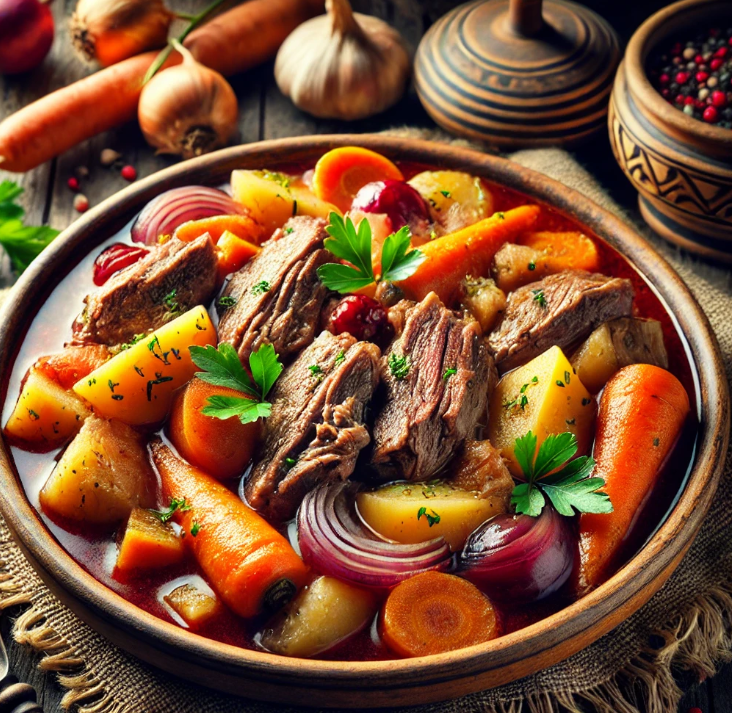
Goose stew with vegetables and red wine is a traditional dish that brings together the rich, natural tastes of Romanian cuisine. Tender goose meat, slowly cooked with fresh vegetables, develops an intense aroma and delicate texture, perfected by the red wine sauce, which adds a note of elegance and depth to the dish. This stew is ideal for autumn and winter meals, when warm, hearty dishes are essential to bring a touch of comfort to the family table.
Every ingredient plays its part in this authentic recipe: carrots, potatoes, and onions absorb the flavors of the meat and wine, while garlic and thyme add a rustic note, turning the stew into a feast of aromas. Cooked slowly over low heat, this goose stew reminds you of traditional Romanian family meals, full of warmth and savor, just as our grandparents prepared them.
Served hot with homemade bread or polenta, goose stew with vegetables and red wine is perfect for gathering the family around the table, offering an authentic culinary experience steeped in tradition.

Ingredients:
- 1 kg goose meat (legs and wings)
- 1 large onion, chopped
- 2 carrots, sliced
- 2–3 potatoes, cubed
- 3 garlic cloves, chopped
- 200 ml dry red wine
- 300 ml chicken broth
- 2 tablespoons olive oil
- 1 teaspoon dried thyme
- 1 bay leaf
- Salt and pepper, to taste
Preparation:
- Heat the olive oil in a large pot and brown the goose pieces on all sides, then remove them from the pot.
- In the same pot, sauté the onion and garlic until golden. Add the carrots and potatoes and cook for a few minutes.
- Return the goose meat to the pot, pour in the red wine, and let it reduce by half.
- Add the chicken broth, thyme, bay leaf, salt, and pepper. Cover the pot and simmer the stew over low heat for 1.5–2 hours, until the meat is tender and the flavors are well combined.
- Serve the stew hot, with bread or polenta on the side.
These recipes are perfect for highlighting the rich flavor of goose meat, making them ideal for special occasions. Enjoy your meal!
1. Why Is Goose Stew with Vegetables and Red Wine Considered a Traditional and Authentic Dish?
Goose stew with vegetables and red wine highlights essential ingredients in traditional Romanian cuisine: goose meat, seasonal vegetables like carrots and potatoes, and local red wine. The slow cooking over low heat, combined with specific aromas (garlic, thyme, bay leaf), gives the dish a rustic identity, evoking hearty family meals and the techniques used by our grandparents. This blend of simplicity and intense flavor preserves the charm and authenticity of Romanian gastronomy.
2. How Does Red Wine Contribute to the Final Taste and Texture of the Stew?
Red wine serves to enrich the sauce with a subtle acidity and fruitiness, while also helping to tenderize the goose meat. Its flavors gradually integrate into the stew during the long cooking process, intensifying the taste and forming a velvety, dense sauce. Additionally, the wine’s tannins contrast with the richness of the meat, balancing the flavor profile and adding a touch of refinement to the final dish.
3. Why Is It Important to Brown the Goose Meat Before Adding Vegetables and Wine?
The initial browning ensures the formation of an appetizing crust on the meat’s surface and seals in the juices. This keeps the meat juicier and gives the sauce a richer flavor, as the meat develops a slightly caramelized aroma. Furthermore, browning in olive oil releases fat and natural juices that later combine with the vegetables and wine, adding an extra depth of flavor.
4. What Role Do Seasonings like Thyme and Bay Leaf Play in This Recipe?
Thyme and bay leaf enhance the aromas and balance the sweetness of the carrots and potatoes, as well as the flavor of the goose meat. Thyme adds a mild peppery note, while bay leaf provides a subtle, bitter undertone. Together, they enliven the stew, creating a harmonious blend of flavors that resonates with the specific character of traditional Romanian cooking.
5. What Are the Essential Tips for Achieving Tender, Flavor-Packed Goose Meat in a Stew?
First, brown the meat to seal in the juices and develop flavor. Then, allow the meat to simmer slowly over low heat in a sufficient liquid (wine and chicken broth) so it gradually tenderizes. Temperature control and patience are key; slow, covered cooking ensures optimal flavor blending and prevents the meat from drying out.
6. How Can You Adapt This Recipe According to Preferences or Ingredient Availability?
If you don’t have chicken broth on hand, use vegetable broth or plain water, adjusting the seasonings accordingly. As for vegetables, you can add mushrooms, celery, bell peppers, or even zucchini for extra variety. For a bolder flavor, choose a full-bodied red wine or partially replace the wine with a bit of balsamic vinegar. The essential principle is slow cooking and maintaining a balance between the sweetness of the vegetables and the acidity of the wine.
7. Are There Recommendations for Choosing the Red Wine for This Stew?
It’s best to use a dry red wine with fruity aromas and moderate tannins, such as Merlot, Pinot Noir, or a Romanian blend. A too-strong wine may overpower the meat’s flavor, while one that’s too light might lack depth. Also, using a quality cooking wine is beneficial, as its aroma will be directly reflected in the stew.
8. What Other Side Dishes Can Accompany Goose Stew with Red Wine, Besides Potatoes Already Included?
You can pair the stew with mashed potatoes, rice, or even pasta, depending on preference. Polenta is a traditional option that complements the rich taste of the meat well, while fresh green salads or pickles add a refreshing contrast. Steamed or grilled vegetables (broccoli, cauliflower) can also enrich the stew’s texture and flavor palette.
9. Which Beverages Best Complement Goose Stew, and How Can They Enhance the Culinary Experience?
A dry or semi-dry red wine (for example, Merlot or Cabernet Sauvignon) harmonizes perfectly with the stew’s rich flavors and the wine notes in the sauce. If you prefer something lighter, a Pinot Noir can highlight the fruitier aspect without overwhelming the dish. For non-wine drinkers, a natural grape juice or honey-sweetened lemonade offers freshness without overpowering the stew’s flavor.
10. How Can We Maintain the Recipe’s Authenticity While Introducing Modern Improvements?
Adhering to the slow-cooking technique and core ingredients (goose meat, root vegetables, red wine) preserves authenticity. Modern improvements can include adding extra herbs (rosemary, basil) or novel vegetables (e.g., zucchini, wild mushrooms). Using modern cookware (nonstick pots, precise temperature stovetops) can streamline the process without compromising the traditional taste. This way, the recipe remains faithful to its origins while adapting to contemporary culinary preferences.



Do you enjoy the content on Agenda Creativa?
Your contributions help me create new articles, share creative ideas, and keep this platform alive! If you like what I do and want to support my work, you can buy us a coffee.
Every cup of coffee means more than just a gesture – it's direct support for my passion to create inspiring and useful content. Thank you for being part of this journey!
☕ Buy me a coffee