Ingredients
For the roast:
- 4 rabbit legs
- Sea salt and freshly ground pepper
- 50 ml off-dry white wine
- 2 tablespoons olive oil
- A pinch of nutmeg
- 2 tablespoons Tex-Mex seasoning (or meat spices)
- A generous handful of bay leaves
- 1 cup of broth from the rabbit’s cooking water
For the potato garnish:
- 6–8 potatoes, peeled and cut into thick slices
- Sea salt, to taste
- 2 tablespoons olive oil
- Optional (for serving): tomato, cucumber, and zucchini salad, drizzled with olive oil and sea salt
1. Preparing the Rabbit Legs
Thoroughly rinse the rabbit legs under cold running water. Place them in a pot of cold salted water and bring just to a boil; cook until the meat turns opaque. Drain the legs and allow them to cool slightly before proceeding.
2. Oven Preparation
Preheat your oven to setting 3 (approximately 160 °C). Grease a baking dish with olive oil and arrange the rabbit legs inside. Season the meat evenly with sea salt, pepper, a pinch of nutmeg, and Tex-Mex seasoning. Scatter bay leaves over and around the legs, then pour in the white wine and a cup of the cooking broth. Cover the dish with aluminum foil and place in the oven.
3. Baking
Bake the legs covered for 30–40 minutes, until tender. Remove the foil and increase the oven temperature to about 200 °C, allowing the rabbit to brown beautifully. Occasionally baste the meat with the pan juices to maintain its succulence, and turn the legs for an even crust.
4. Preparing the Crispy Potato Garnish
Peel, wash, and slice the potatoes thickly. Place them in a pot of cold water with salt, bring to a boil, and cook for 6 minutes. Drain and transfer the slices to a well-oiled baking tray. Season with sea salt and toss gently so each piece is coated in oil and salt. Roast at 200 °C until the potatoes are golden and crispy, stirring occasionally to prevent sticking.
5. Serving
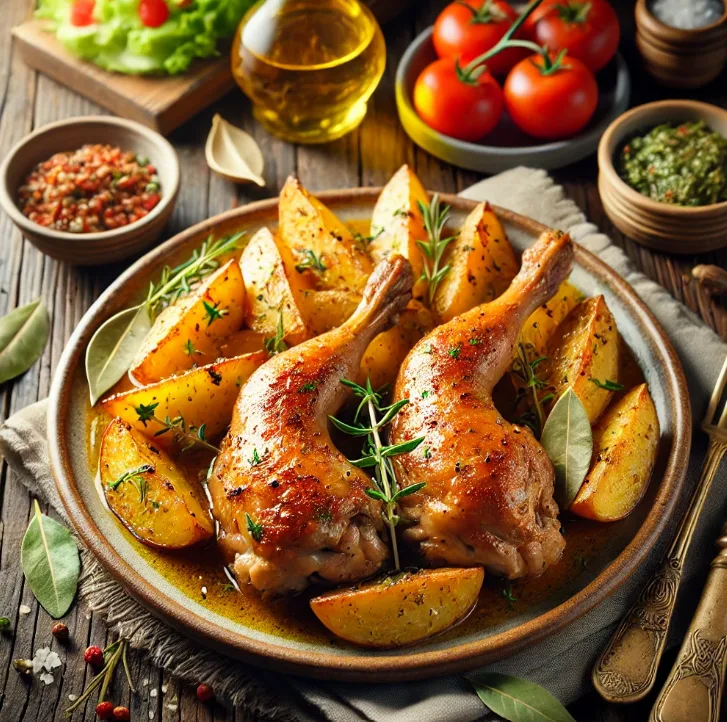
Serve the aromatic rabbit legs alongside the crispy potatoes. Complement the dish with a fresh salad of tomato, cucumber, and zucchini, drizzled with olive oil and a pinch of sea salt.
Suggestions
Rabbit legs can be substituted with skinless, lightly scored turkey legs for an alternative twist. Reserve a few bay leaves for garnish to give a rustic appearance. Enjoy your meal!
How do we prepare the rabbit legs before cooking?
The rabbit legs are washed thoroughly under cold water to remove impurities. They are then briefly simmered in salted water until the meat turns opaque, which helps tenderize the flesh in preparation for roasting.
Why is white wine important in this recipe?
White wine adds a note of freshness and balances the seasoning flavors while gently tenderizing the rabbit legs during cooking, resulting in a subtler taste.
How does bay leaf influence the meat’s flavor?
Bay leaves impart an earthy, slightly bitter note that pairs excellently with rabbit. As they cook, the leaves release essential oils that deepen the overall seasoning profile.
Why do we baste the legs with pan juices during roasting?
Basting with the pan juices prevents the meat from drying out and keeps it moist, while also helping form a beautifully crisp, browned crust.
How do we achieve golden, crispy potatoes?
Parboiling the potatoes speeds up cooking. After draining, they’re tossed in olive oil, breadcrumbs, sesame seeds, and paprika. Roasting at 200 °C yields a crunchy exterior and a tender inside.
What role does the Tex-Mex seasoning play?
Tex-Mex seasoning adds a spicy, aromatic dimension, complementing the delicate rabbit flavor and creating a savory crust.
What other sides pair well with rabbit legs?
Besides potatoes, serve with vegetable rice, celeriac puree, sautéed vegetables, or polenta. Fresh bread also makes an excellent traditional accompaniment.
How can this recipe be adapted for other meats?
Substitute rabbit legs with turkey or chicken legs, adjusting cooking time based on thickness. Maintain the same method for a similar, delicious result.
Why is moderate oven temperature important?
Cooking at 160–180 °C allows the meat to roast slowly and evenly, preserving juiciness. Higher temperatures risk drying out the meat before it’s tender.
How can we enhance the accompanying salad?
Boost a simple salad with olive slices, feta cheese, or a dressing of olive oil, lemon juice, and fresh herbs. These additions create a pleasant contrast to tender rabbit and crispy potatoes.


Do you enjoy the content on Agenda Creativa?
Your contributions help me create new articles, share creative ideas, and keep this platform alive! If you like what I do and want to support my work, you can buy us a coffee.
Every cup of coffee means more than just a gesture – it's direct support for my passion to create inspiring and useful content. Thank you for being part of this journey!
☕ Buy me a coffee