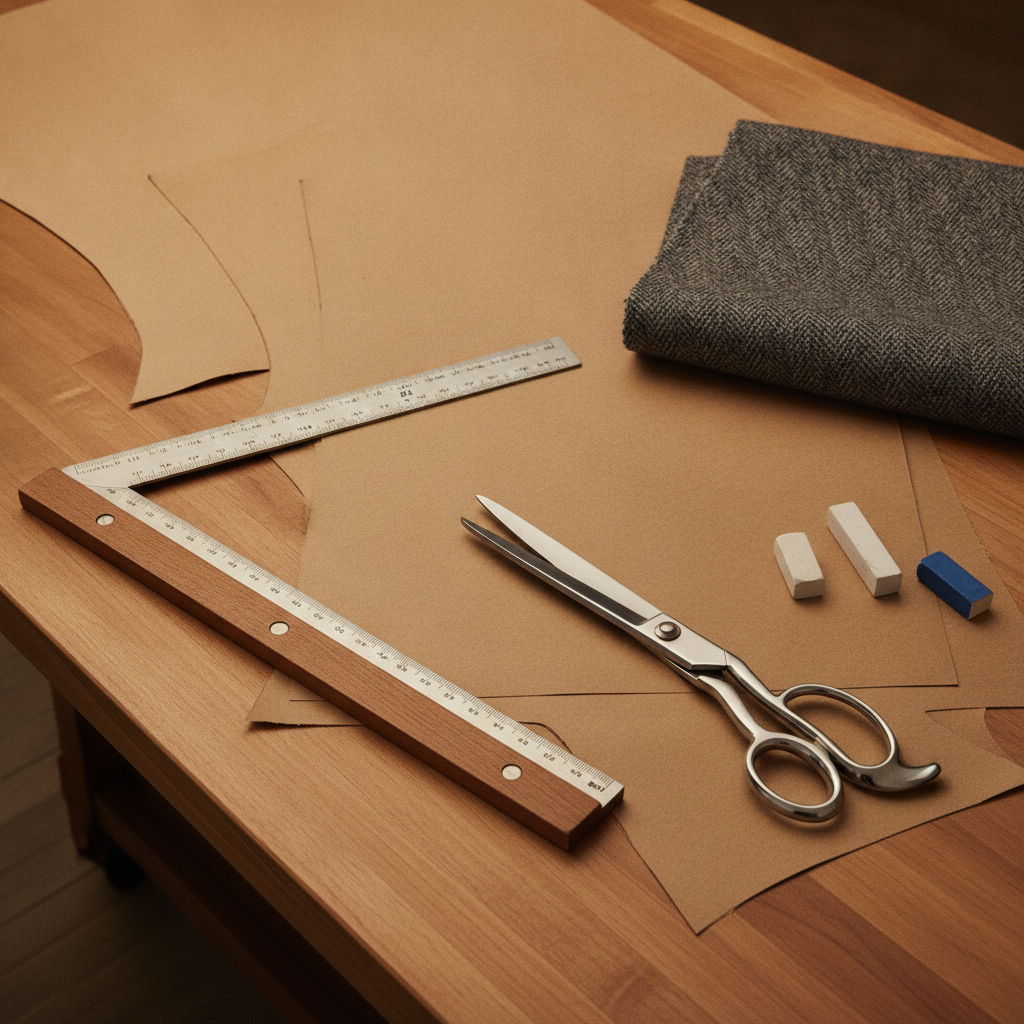
In custom dressmaking and small-batch garment manufacturing, technical mastery behind the cutting table is only half the battle. You can master every bespoke skill—from rolling a hand-padded lapel and achieving immaculate balance lines across a sloping shoulder, to mitering corners on silk charmeuse linings—yet still watch your studio balance sheet bleed red each quarter.
The root problem is not a lack of technical excellence, but an incomplete accounting methodology. Most garment artisans price their bespoke creations or capsule runs using a rudimentary craft-fair equation: Cost of Fabric + Notions + Estimated Hourly Labor = Selling Price. This formula routinely omits the hidden structural operating costs that keep an atelier alive: industrial machine servicing, pattern drafting paper, shears sharpening, studio rent, pattern grading software, cutting table depreciation, and marketing overhead. When you fail to account for fixed overhead, you are not running a business; you are funding an expensive, exhausting artisanal hobby.
The Anatomy of Atelier Expenses: Fixed vs. Variable Costs
To establish sustainable pricing for custom garments or small-batch runs, every penny spent within your studio must be categorized into two distinct buckets: Variable Costs and Fixed Overhead.
1. Variable Costs (Per-Garment Expenses)
Variable costs exist strictly when a garment is cut, assembled, and packaged. If you close your studio doors for a month, these costs drop to absolute zero. Key variables include:
- Cut-Make-Trim (CMT) Materials: Primary yardage (wool crepe, linen, silk organza), fusible and horsehair canvas interfacings, bemberg lining, shoulder pads, stays, and underwires.
- Notions & Fasteners: Gutermann Mara or silk threads, horn buttons, concealed zippers, hook-and-eye closures, and bias binding tapes.
- Direct Labor: The precise hours dedicated to muslin fittings, manual flat-pattern alterations, cutting along the true grainline, tailor-tacking, assembly, and hand-finishing, multiplied by your target hourly production rate.
- Finishing & Packaging: Bespoke woven labels, garment bags, acid-free tissue paper, custom hangers, and outbound courier delivery.
2. Fixed Costs (Operating Overhead)
Fixed costs are the ruthless, unchanging expenditures required to keep your creative studio open, regardless of whether you produce fifty bespoke gowns or zero skirts in a given month. These include:
- Workspace & Facilities: Commercial atelier rent, heating, electrical lighting for cutting tables, and contents insurance.
- Equipment Depreciation & Servicing: Amortization of industrial lockstitch machines, 4-thread overlockers, gravity-feed steam irons, rotary cutters, and routine maintenance (such as professional shears sharpening).
- Digital Infrastructure: Pattern design subscriptions, CAD drafting tools, cloud storage, web hosting, and accounting software.
- Sample Drafting & Sloper Development: R&D hours spent drafting master block slopers and testing toile muslin silhouettes that cannot be directly billed to a single client.
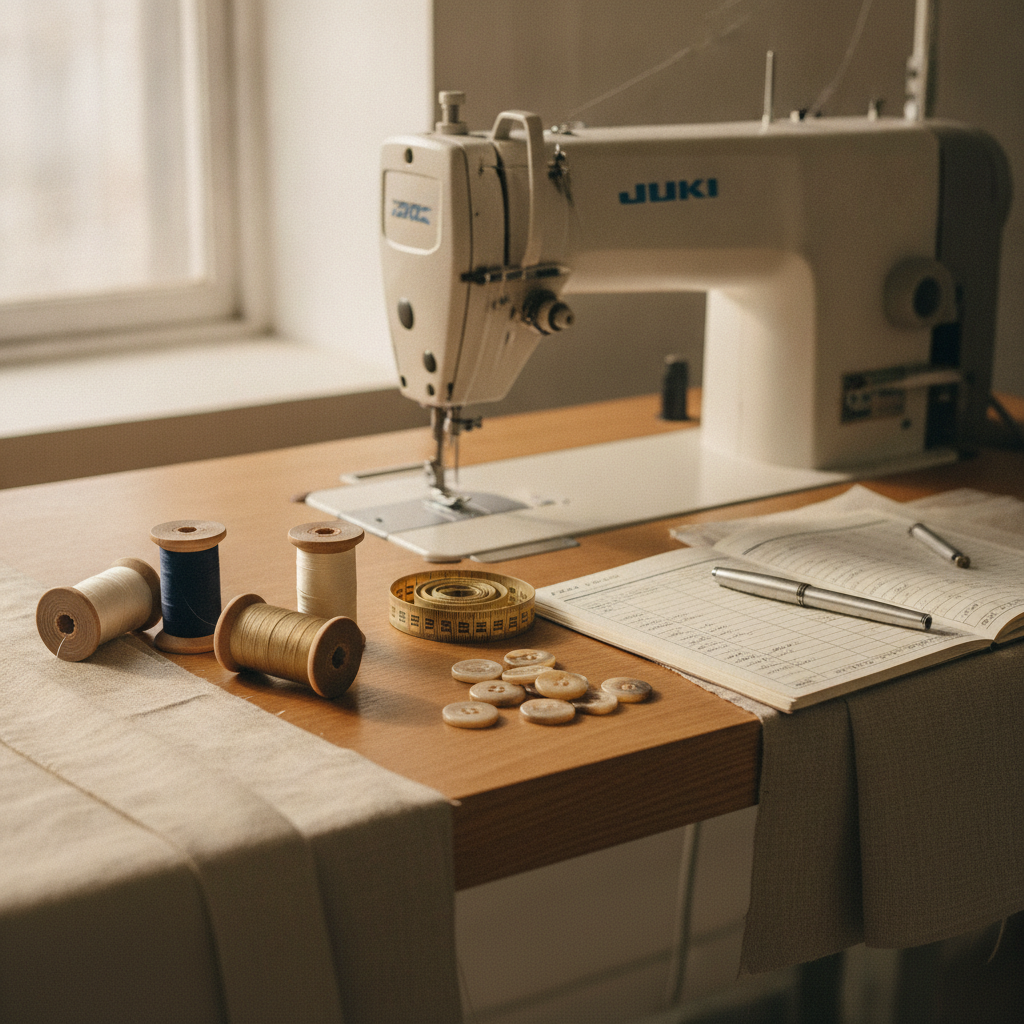
The Mathematical Engine: Contribution Margin and Break-Even Point
Once you separate your studio expenditures, you must determine your Unit Contribution Margin (CM). The Contribution Margin is the absolute amount of currency left behind from every individual piece sold to liquidate your studio’s fixed overhead:
Unit Contribution Margin = Selling Price per Unit − Variable Cost per Unit
Every garment sold does not instantly generate free cash profit. Instead, each sale transfers cash toward retiring your monthly fixed overhead. Only when your collective Contribution Margins equal your Total Fixed Costs have you reached the sacred Break-Even Point (BEP).
Break-Even Point (Units) = Total Fixed Costs / Unit Contribution Margin
🛠️ Interactive Atelier Tool: Craft Business Break-Even Calculator
Skip manual math and cutting guesswork. Use our free interactive tool to instantly calculate your exact measurements, fabric yield, and project specifications:
Step-by-Step Atelier Costing Walkthrough: A Tailored Linen Blazer
Let us ground this managerial accounting logic in a real garment construction scenario: drafting and manufacturing a structured, unlined summer linen blazer with bound Hong Kong seams.
Step 1: Calculate Real Variable Costs
- Primary Shell Fabric: 2.5 meters of heavy Belgian linen (150cm width) at $32/m = $80.00
- Interfacing & Stays: 0.8 meters of fusible weft-insertion interfacing and cotton stay tape = $12.00
- Notions & Trims: 1 spool spun polyester thread, 3 natural horn buttons, 8 meters of rayon seam binding tape = $14.00
- Packaging & Hanger: Molded wooden coat hanger, garment dust cover, and branded tag = $11.00
- Cutting & Assembly Labor: 4.5 hours of dedicated pattern cutting, pressing, pad-stitching, and machine assembly at an internal artisan wage of $30/hour = $135.00
- Total Variable Cost per Blazer: $252.00
Step 2: Calculate Atelier Monthly Fixed Overhead
Assessing the monthly carrying costs of your workspace:
- Studio Lease & Utilities: $1,200.00
- Equipment Depreciation (Juki industrial DDL-8700, Consew blindstitcher, iron station): $150.00
- Digital Software, Web Domain & Admin: $90.00
- Marketing & Photography: $260.00
- Total Monthly Fixed Overhead: $1,700.00
Step 3: Analyze the Break-Even Volume Across Pricing Tiers
Let us evaluate two distinct retail pricing strategies for this blazer:
- Scenario A: Modest Retail Pricing ($380.00)
Contribution Margin = $380 − $252 = $128 per blazer.
Break-Even Point = $1,700 / $128 = 13.28 blazers per month.
Reality check: Constructing 14 blazers requires 63 direct production hours per month, excluding client fittings, consultations, marketing, and packing. This volume pushes an independent single-maker atelier to near-maximum capacity simply to yield zero net profit. - Scenario B: Premium Bespoke Pricing ($520.00)
Contribution Margin = $520 − $252 = $268 per blazer.
Break-Even Point = $1,700 / $268 = 6.34 blazers per month.
Reality check: At 7 blazers per month (roughly 31.5 sewing hours), your fixed costs are retired. Every blazer constructed beyond unit 7 delivers $268 in liquid pre-tax profit straight into the atelier’s retained earnings.
Atelier Production Risk Diagnostics
When running break-even calculations for your upcoming collections, evaluate your volume threshold against practical sewing capacity:
- Low-Risk Atelier Capacity (Under 10 Units/Month for Bespoke): A low break-even unit volume gives your studio resilience. Fitting cancellations, fabric delivery delays, or illness will not push the business into immediate insolvency.
- Sustainable Small-Batch Run (10 to 25 Units/Month): Achievable if your cutting layouts are optimized, patterns are pre-graded, and repetitive operations (like serging or buttonholing) are streamlined using industrial equipment.
- High-Risk Volume Warning (30+ Units/Month for a Solo Maker): If your break-even analysis requires 35 or 40 complex tailored garments each month simply to pay base studio rent, your selling price is dangerously low. You are entering a classic burn-out trap where manual fabrication limits prevent you from ever achieving real financial viability.
Refining Your Cutting Layouts for Maximum Material Yield
Variable costs can be aggressively curbed without compromising garment quality by eliminating yardage waste during the layout phase. When drafting markers, align grainlines rigorously parallel to the fabric selvage to avoid garment torquing, but interlock pattern pieces like puzzle segments.
Before committing to production yardage, use our Fabric Pattern Repeat Calculator to calculate the precise extra yardage required when working with plaids, checks, and directional prints. Precise layout planning prevents you from running short at the cutting table or over-purchasing costly deadstock textiles. Similarly, if your production run involves gathered waistlines or structured athletic components, balance your pattern tension accurately with our Elastic Calculator to eliminate scrap testing.
The Professional Path to Atelier Longevity
Artisanship thrives when sustained by clinical financial clarity. Do not leave the survival of your dressmaking business to optimistic guesswork. Accurately measure your cut yardage down to the centimeter, track your labor hours with honesty, catalog your fixed overhead ruthlessly, and set prices that honor both the high craft of tailoring and your long-term creative independence.
Do you enjoy the content on Agenda Creativa?
Your contributions help me create new articles, share creative ideas, and keep this platform alive! If you like what I do and want to support my work, you can buy us a coffee.
Every cup of coffee means more than just a gesture – it's direct support for my passion to create inspiring and useful content. Thank you for being part of this journey!
☕ Buy me a coffee