
The Paradox of Creative Freedom
There is a specific kind of terror reserved for the blank page. For generations, writers have romanticized the concept of absolute creative freedom, treating the boundless expanse of imagination as the ultimate goal of the artistic process. Yet, seasoned authors know that limitless possibilities often lead to creative paralysis. When you can write about anything, in any style, from any perspective, the sheer volume of choices becomes overwhelming. This psychological hurdle is where the fascinating practice of constrained writing enters the literary stage.
Constrained writing is a literary technique wherein the author deliberately adopts a strict, often arbitrary set of rules that dictate how a text must be composed. Rather than stifling creativity, these imposed boundaries force the mind to bypass cliché and conventional phrasing. By narrowing the corridor of acceptable words or structures, the writer must perform syntactic acrobatics to communicate their narrative. The result is rarely a gimmick; more often, it produces highly original, striking prose that would never have materialized under the conditions of absolute freedom.
The Birth of Oulipo: When Mathematics Meets Literature
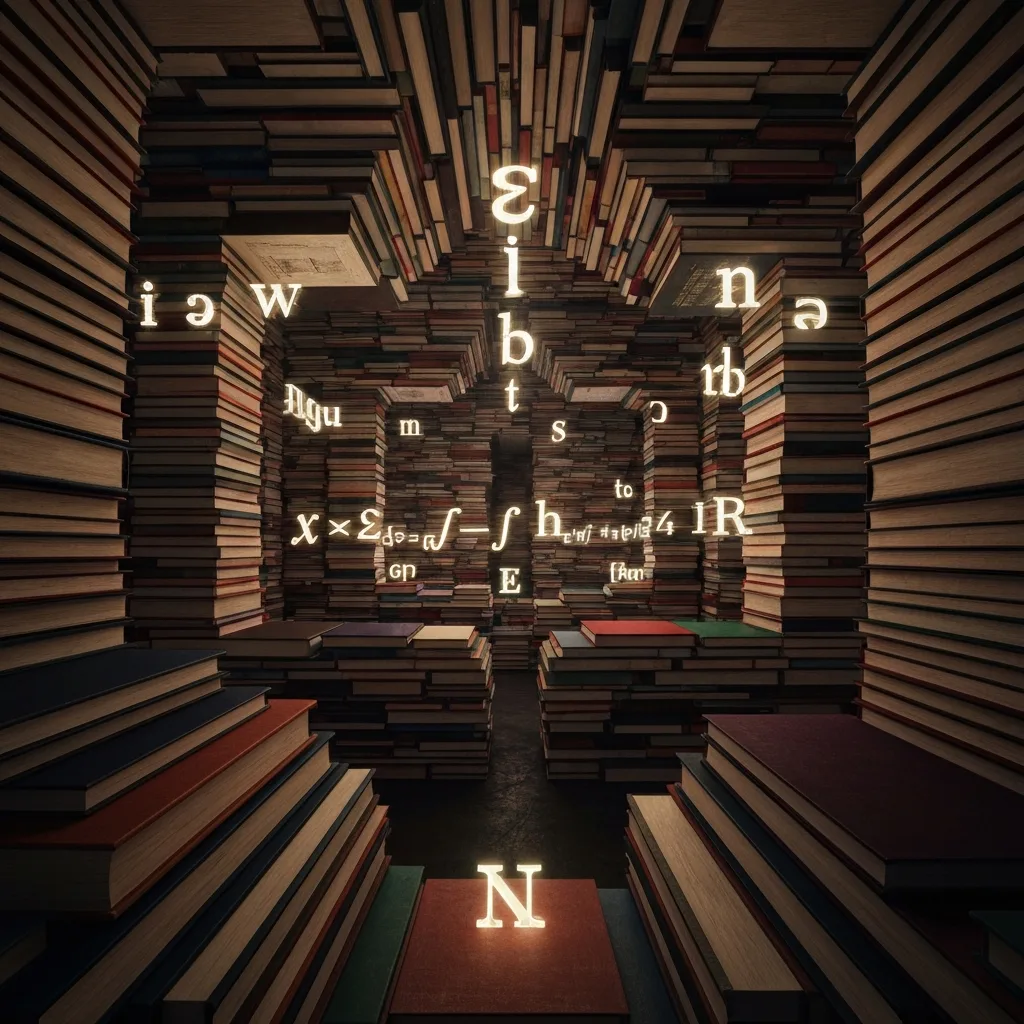
To understand the formalization of constrained writing, one must look to 1960s France and the founding of the Ouvroir de littérature potentielle, or Oulipo. Established by writer Raymond Queneau and mathematician François Le Lionnais, this collective sought to explore the intersection of mathematical structures and literary creation. The Oulipians did not view themselves as traditional novelists or poets. Instead, they described themselves as “rats who construct the labyrinth from which they plan to escape.”
The Oulipo movement introduced a variety of mechanical constraints designed to bypass the author’s subconscious habits. One of the most famous is the N+7 algorithm. To perform an N+7 exercise, a writer takes an existing text and replaces every noun with the seventh noun that follows it in a standard dictionary. Applied to familiar texts, this mathematical substitution creates surreal, unexpected imagery that challenges the reader’s understanding of context and meaning. While N+7 is largely an exercise in generating fresh perspectives, other Oulipian constraints have birthed massive, enduring works of fiction.
Georges Perec and the Weight of the Missing Letter
Perhaps the most famous achievement of the Oulipo movement is Georges Perec’s 1969 novel La Disparition. At first glance, it is a playful, fast-paced detective story. However, it harbors a monumental structural secret: the entire 300-page novel was written without using the letter ‘e’, the most common vowel in the French language. This specific type of constraint is known as a lipogram.
Writing a novel without the letter ‘e’ requires an extraordinary vocabulary and a willingness to twist sentences into entirely new shapes. But Perec’s constraint was not merely a parlor trick. Born to Polish-Jewish parents who perished during World War II, Perec used the lipogram to echo a profound sense of absence. The missing ‘e’ (which sounds like eux, meaning ‘them’ in French) represents the unspoken void left by the Holocaust. The constraint itself becomes a thematic pillar of the narrative, proving that arbitrary rules can carry immense emotional weight. The novel was later translated into English by Gilbert Adair as A Void, a herculean task that required Adair to maintain the exact same lipogrammatic constraint while preserving the plot.
Beyond the Avant-Garde: Constraints in Popular Fiction
While the Oulipo group formalized the practice, constrained writing is not limited to French experimentalists. Some of the most beloved works in modern literature were born from strict limitations. Consider the realm of children’s literature, where vocabulary constraints are often used for educational purposes but occasionally result in masterpieces of pacing and rhythm.
In 1960, publisher Bennett Cerf bet author Theodor Geisel fifty dollars that he could not write an entire book using only fifty unique words. Geisel accepted the challenge and produced Green Eggs and Ham under his pen name, Dr. Seuss. The strict limitation forced Seuss to rely on relentless rhythm, repetition, and highly expressive illustrations to drive the narrative forward. The result is one of the best-selling children’s books in history, demonstrating that severe constraints can produce universally accessible art.
Vowel Isolation: The Exhaustion of the English Language
A more contemporary and extreme example of constrained writing is Canadian poet Christian Bök’s 2001 book Eunoia. The title, meaning ‘beautiful thinking’, is the shortest English word containing all five vowels. Bök spent seven years writing the book, which is divided into five chapters. In each chapter, only a single vowel is permitted. Chapter ‘A’ uses only the vowel ‘a’, Chapter ‘E’ uses only ‘e’, and so forth.
To achieve this, Bök had to exhaustively categorize the English dictionary. The constraint dictates the tone and subject matter of each section. The ‘A’ chapter naturally adopts a rhythm of staccato, percussive sounds, often focusing on themes of war and Arabian banquets. The ‘I’ chapter takes on a clinical, biting tone. Eunoia stands as a monument to the elasticity of language, showing how the phonetic limitations of a text can organically dictate its atmosphere and narrative direction.
Structural Constraints: The Architecture of the Novel
Constraints do not always occur at the level of individual letters or words; they are frequently applied to the macro-structure of a novel. Historical and contemporary authors alike use mathematical or chronological rules to shape their narratives, creating a sense of hidden order that readers can subconsciously feel even if they cannot immediately identify it.
Eleanor Catton’s Booker Prize-winning novel The Luminaries is a masterclass in structural constraint. Set during the New Zealand gold rush, the novel is governed by astrological principles. Each of the twelve main characters represents a sign of the zodiac, and their interactions are dictated by the actual astronomical movements of the stars in 1866. Furthermore, Catton imposed a mathematical constraint on the book’s pacing: each of the twelve sections is exactly half the length of the preceding one. The first section is massive, establishing the complex mystery, while the final section is merely a few pages long, mimicking the waning of the moon and accelerating the narrative momentum to a breakneck speed.
Similarly, David Mitchell’s Cloud Atlas utilizes a nested doll structure, consisting of six distinct narratives. The first five stories are interrupted precisely at their midpoint, moving forward in time until the sixth story, which is told in its entirety. The novel then works backward chronologically, concluding the interrupted halves of the previous five stories. This precise, symmetrical architecture reinforces the novel’s themes of eternal recurrence and the interconnectedness of human souls across time.
The Psychology of the Literary Puzzle
Why do authors subject themselves to these agonizing limitations, and why do readers seek them out? For the writer, constraints silence the inner critic. When you are struggling simply to find a word that does not contain the letter ‘e’, or trying to fit a thought into exactly seventeen syllables for a haiku, you do not have the mental bandwidth to worry about whether the writing is “good.” The focus shifts entirely from subjective quality to objective problem-solving. This shift circumvents perfectionism and allows raw, unexpected ideas to flow onto the page.
For the reader, constrained literature operates as a collaborative puzzle. Engaging with a text like A Void or The Luminaries requires active participation. The reader becomes acutely aware of the author’s presence, observing the tightrope walk of narrative construction. There is a distinct intellectual thrill in watching a writer paint themselves into a corner and then ingeniously construct a trapdoor to escape.
Furthermore, constraints mirror the human experience. Life itself is lived under strict limitations—bound by time, physical laws, and societal rules. We do not operate in a realm of absolute freedom. By imposing artificial boundaries on a text, authors replicate the friction of existing in the real world. They prove that beauty, meaning, and profound emotional resonance do not require limitless resources; they require only the ingenuity to make the most of what is available.
The enduring appeal of constrained writing serves as a powerful reminder for creators across all disciplines. Whether it is a poet wrestling with the rigid meter of a villanelle, a novelist outlining a mathematically precise chapter structure, or a modern writer participating in a daily word-count challenge, the lesson remains the same. Boundaries do not imprison the imagination. They give it a shape, a surface to push against, and ultimately, a reason to soar.
Do you enjoy the content on Agenda Creativa?
Your contributions help me create new articles, share creative ideas, and keep this platform alive! If you like what I do and want to support my work, you can buy us a coffee.
Every cup of coffee means more than just a gesture – it's direct support for my passion to create inspiring and useful content. Thank you for being part of this journey!
☕ Buy me a coffee