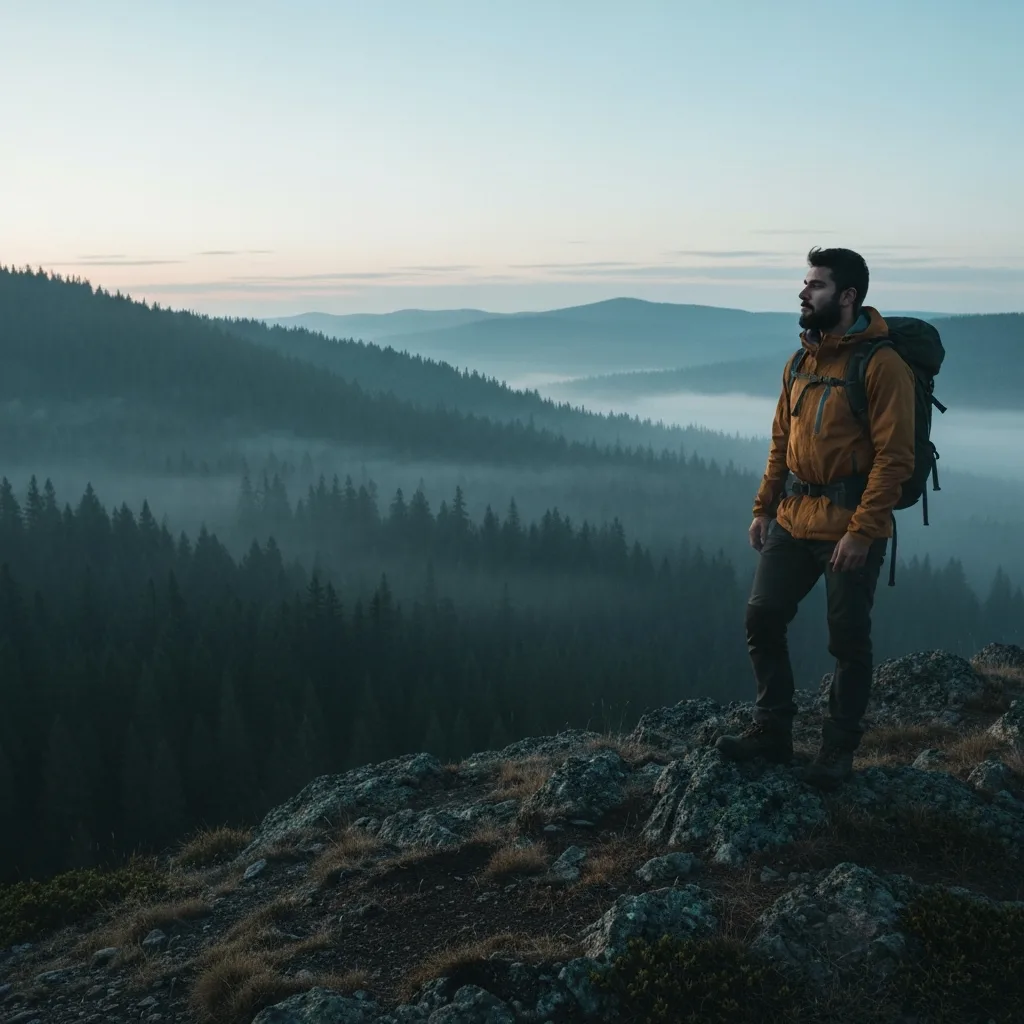
The Quiet Rebellion of the Wilderness Narrative
There is a distinct, quiet rebellion happening on the shelves of bookstores worldwide. As our daily routines become increasingly digitized, enclosed, and detached from the physical earth, readers are seeking out the dirt, the wind, and the unpredictable wild through literature. The modern resurgence of nature writing and the wilderness memoir represents more than just a passing literary trend; it is a collective yearning for grounding. We are turning to authors who have traded the hum of servers for the silence of the treeline, searching their pages for a sense of scale and perspective that modern living frequently obscures.
Nature writing is by no means a new phenomenon, but its current iteration has evolved significantly. It has shifted from the objective, often detached biological observations of the nineteenth century into a deeply intimate, highly vulnerable exploration of the human psyche mirrored against the natural world. Today’s wilderness memoirs do not just describe the landscape; they interrogate our relationship to it, asking what we lose when we pave over our wild spaces, and what we might gain by walking back into the woods.

The Roots of the Wild: From Walden to the Desert
To understand the contemporary wilderness memoir, one must look at the bedrock upon which it was built. Long before the genre became a staple of bestseller lists, the foundation was laid by writers who viewed the wild not as an exploitable resource, but as a philosophical mirror. Henry David Thoreau’s retreat to Walden Pond remains the cultural touchstone for the deliberate life, establishing the archetype of the solitary thinker retreating from society to distill existence down to its essential facts.
A century later, writers like Edward Abbey took that foundational philosophy and injected it with a fierce, protective radicalism. In Desert Solitaire, Abbey’s cranky, beautiful defense of the American Southwest, the landscape is not merely a backdrop for self-improvement; it is a sacred entity deserving of defense against industrial encroachment. These early works established the dual mandate of nature writing: to look inward at the self, and to look outward at the environment with a protective, reverent gaze.
Modern authors carry this lineage forward, but they are writing for an audience facing unprecedented ecological anxiety. The contemporary nature narrative is inherently colored by the reality of climate change, making the act of documenting the wild feel both like a celebration and an elegy.
The Wilderness Memoir as a Crucible for Healing
Walking Off the Trauma
Perhaps the most prominent evolution of the genre in recent decades is the fusion of nature writing with the memoir of trauma and recovery. The physical landscape frequently acts as a crucible for emotional processing. In these narratives, the protagonist is often broken by grief, addiction, or profound loss, turning to the unforgiving wilderness when societal safety nets have failed.
Cheryl Strayed’s Wild is the most culturally ubiquitous example of this subgenre. By chronicling her grueling hike along the Pacific Crest Trail, Strayed demonstrated how physical exhaustion can act as a catalyst for emotional repair. The trail strips away pretense, forcing the narrator to confront her grief without the distractions of modern conveniences. The blisters, the lost boots, and the terrifying encounters with wildlife become physical manifestations of internal struggles.
Similarly, in Raynor Winn’s The Salt Path, the wilderness serves as a refuge of last resort. After losing their home and discovering her husband’s terminal illness, Winn and her partner decide to walk the 630-mile South West Coast Path in England. Their journey is a testament to the restorative power of forward motion. In these memoirs, the wilderness is not a gentle therapist; it is an indifferent, demanding force that requires presence, thereby pulling the traumatized mind out of the past and into the immediate, visceral present.
Reconnecting with the Non-Human World
The Science of Observation
While the trauma-recovery narrative focuses heavily on the human experience, another vital branch of contemporary nature writing decenters the human narrator entirely. This approach asks readers to look closer at the non-human world, blending scientific rigor with lyrical prose to foster a deeper ecological empathy.
Robin Wall Kimmerer’s Braiding Sweetgrass is a masterclass in this approach. As a botanist and a member of the Citizen Potawatomi Nation, Kimmerer bridges the gap between indigenous wisdom and modern scientific methodology. She writes about the animacy of plants, teaching readers to view flora not as objects, but as subjects and teachers. Her writing shifts the reader’s perspective from one of extraction to one of reciprocity, fundamentally altering how we perceive the green blur outside our windows.
Likewise, writers like Robert Macfarlane and Helen Macdonald utilize intense, almost obsessive observation of the natural world to anchor their narratives. In H Is for Hawk, Macdonald channels her overwhelming grief over the death of her father into the ancient, demanding art of falconry. The goshawk she trains is not a metaphor for her grief; it is a literal, bloodthirsty creature that demands her total attention. Through her meticulous descriptions of the bird’s mechanics and instincts, Macdonald highlights the profound relief of stepping outside the human mind and aligning with the raw, uncompromising rhythms of nature.
Solitude vs. Isolation in the Deep Woods
It is crucial to acknowledge that the wilderness memoir does not solely traffic in romanticized epiphanies. The wild is inherently indifferent to human survival, and contemporary literature frequently explores the dangerous allure of complete isolation. There is a fine line between seeking solitude for clarity and seeking isolation out of misanthropy or mental illness.
Jon Krakauer’s Into the Wild remains a seminal text exploring this darker edge. By piecing together the final months of Christopher McCandless, Krakauer examines the fatal consequences of underestimating the wilderness. McCandless’s journey into the Alaskan bush was driven by a pure, almost literary idealism, heavily influenced by Tolstoy and London. Yet, nature does not care about our literary ideals. The narrative serves as a sobering counterweight to the idea that the wilderness is a benevolent force waiting to cure our modern malaise.
These darker narratives remind readers that while the natural world can be a source of profound inspiration, it demands respect, preparation, and an acknowledgment of our own physical fragility.
The Mechanics of the Trail: Pacing and Prose
From a stylistic perspective, the wilderness memoir demands a unique approach to narrative structure. The arc of these books is rarely driven by rapid-fire plot twists, sudden betrayals, or manufactured suspense. Instead, the pacing of the prose often mimics the physical act of walking—steady, rhythmic, and cumulative.
Authors in this genre must rely heavily on sensory language to maintain engagement. Without the crutch of heavy dialogue or complex interpersonal drama, the writer must make the changing weather, the topography of a mountain pass, or the behavior of a solitary animal feel urgent and compelling. The tension comes from the elements: an impending storm, a dwindling water supply, or the psychological weight of isolation. When executed well, this rhythmic pacing induces a meditative state in the reader, mirroring the very peace the author sought in the wild.
Why We Need the Wilderness Narrative Now
The enduring appeal of nature writing and the wilderness memoir lies in their dual capacity to ground us and elevate us. They offer a vicarious escape for the desk-bound reader, providing the sensory thrill of a mountain summit or a dense forest without the accompanying physical toll. More importantly, however, they serve as a vital cultural corrective.
By immersing ourselves in these narratives, we are reminded of our proper place within the broader ecological system. We are reminded that our modern anxieties, while valid, are incredibly small when placed against the backdrop of a glacial valley or ancient redwood grove. The wilderness memoir does not tell us to abandon society; rather, it teaches us how to return to it with a clearer mind, a stronger spirit, and a renewed reverence for the earth we inhabit.
Do you enjoy the content on Agenda Creativa?
Your contributions help me create new articles, share creative ideas, and keep this platform alive! If you like what I do and want to support my work, you can buy us a coffee.
Every cup of coffee means more than just a gesture – it's direct support for my passion to create inspiring and useful content. Thank you for being part of this journey!
☕ Buy me a coffee