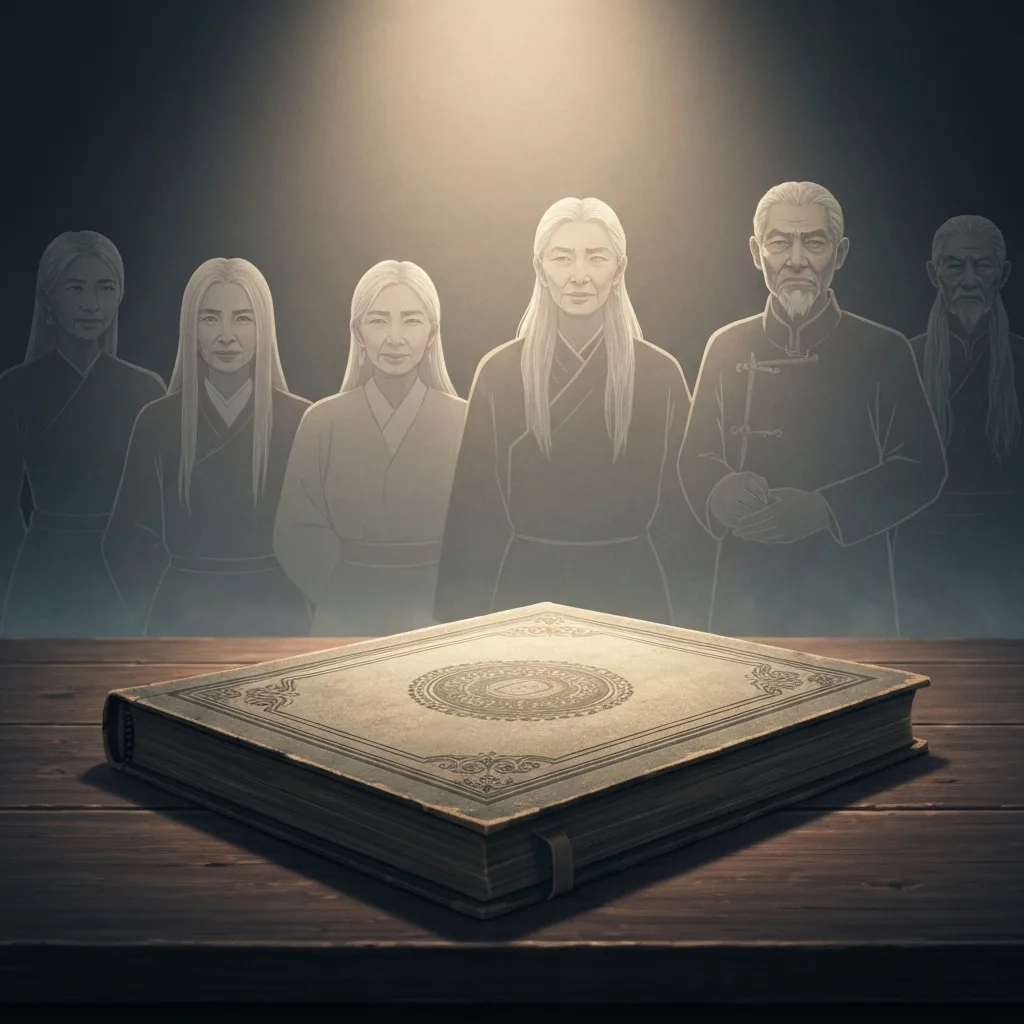
The Shift from Wealth to Wounds: Redefining the Family Saga
The family saga has long served as a cornerstone of literary fiction. Historically, these sprawling narratives functioned as vehicles for chronicling social mobility, economic shifts, and the rise and fall of dynasties. Early pioneers of the genre mapped bloodlines through the lens of inheritance, focusing heavily on physical property, status, and societal reputation. However, contemporary literature has witnessed a profound transformation in how authors approach the multi-generational narrative. Modern writers are no longer strictly concerned with who inherited the estate or how a family fortune was squandered. Instead, they are excavating a much more insidious and invisible inheritance: generational trauma.
This shift reflects a broader cultural awakening to the lasting impacts of historical atrocities, displacement, and systemic oppression. Contemporary authors recognize that trauma does not end with the individual who experienced it; it echoes through the bloodstream, subtly altering the psychological and emotional landscapes of descendants who may never fully understand the origin of their pain. By charting these inherited wounds across decades or centuries, the modern family saga offers a profound exploration of how history lives actively within the present.

Narrative Architecture: How Authors Structure Inherited Pain
Writing about trauma that spans generations requires a specific kind of narrative architecture. Linear storytelling often falls short when attempting to illustrate the cyclical nature of inherited grief. Consequently, modern authors frequently employ complex, non-linear structures to mirror the disruption that trauma causes within a family line.
The Power of Fragmented Timelines
One of the most effective techniques in the contemporary family saga is the use of fragmented or alternating timelines. By placing a narrative set in the 19th century adjacent to one set in the present day, authors force the reader to draw immediate connections between cause and effect. This structural choice mimics the intrusive nature of traumatic memory, where the past constantly interrupts the present. It allows writers to bypass the slow march of chronological time and instead focus on thematic resonance. A grandfather’s sudden silence in one chapter becomes the context for a granddaughter’s inexplicable anxiety in the next. The fragmentation of the timeline becomes a physical manifestation of the family’s severed history.
Artifacts and Heirlooms as Emotional Anchors
In stories where communication between generations is broken by silence or death, objects often carry the weight of memory. A recurring motif in modern sagas is the presence of an artifact—a piece of jewelry, a recipe, a scarred piece of furniture, or a photograph—that survives the passage of time. These objects act as emotional anchors, absorbing the unspoken grief of one generation and passing it silently to the next. They serve as tangible evidence of survival, linking descendants to ancestors they never met, and providing a focal point for the unearthing of buried family secrets.
Landmark Novels Shaping the Modern Trauma Narrative
Several recent works have masterfully utilized the family saga to explore the long tail of historical trauma, setting new benchmarks for how these stories are told.
Homegoing by Yaa Gyasi
Yaa Gyasi’s debut novel is perhaps the most striking modern example of the generational trauma narrative. The novel opens in 18th-century Ghana with two half-sisters: one is married off to a British slaver and lives in comfort, while the other is captured and sold into slavery, held in the dungeons beneath her sister’s feet. From this brutal point of divergence, Gyasi dedicates each subsequent chapter to a different descendant, alternating between the two bloodlines over three hundred years. The structure itself is a brilliant representation of inherited legacy. The descendants of the enslaved sister navigate the horrors of American chattel slavery, the convict lease system, and the crack epidemic, while the descendants of the other sister grapple with the fallout of complicity and colonization in West Africa. Gyasi does not explicitly diagnose her characters with generational trauma; instead, she shows the compounding weight of history pressing down on each new child born into the lineage.
Pachinko by Min Jin Lee
Min Jin Lee’s epic narrative follows four generations of a Korean family living in Japan, beginning in the early 20th century. The novel opens with the famous line, “History has failed us, but no matter.” This sentiment acts as the thesis for the entire saga. Lee meticulously details the systemic discrimination, poverty, and cultural erasure faced by the Korean diaspora (Zainichi) in Japan. The trauma here is not a singular explosive event, but rather the chronic, grinding reality of displacement and second-class citizenship. As the generations progress, the younger family members achieve financial stability, yet they remain haunted by the sacrifices and enduring shame of their forebears. Lee illustrates how the survival mechanisms developed by the older generation—stoicism, secrecy, and an obsession with respectability—often become psychological prisons for their modern descendants.
The Intersection of Displacement and Identity
A recurring theme in the modern family saga is the profound impact of physical displacement. Whether driven by war, colonization, economic necessity, or enslavement, the act of being uprooted severs a family’s connection to their ancestral identity. This severance creates a vacuum that subsequent generations struggle to fill.
Contemporary authors deeply explore the tension between assimilation and cultural preservation. The first generation often focuses purely on survival, burying their trauma and their native language to protect their children in a new, often hostile environment. The second generation, caught between two worlds, frequently experiences a profound sense of alienation—alienated from the host culture by xenophobia, and alienated from their parents by a language and cultural barrier. It is often the third generation, possessing the privilege of stability, that turns backward to excavate the past. This dynamic creates a rich narrative friction, where the desire to uncover the truth directly conflicts with the older generation’s desperate need to keep the past buried.
Furthermore, authors are increasingly exploring the concept of epigenetic inheritance—the scientific theory that severe trauma can alter genetic expression, meaning the physiological markers of stress are literally passed down to offspring. While novelists rarely use clinical terms, they translate this science into visceral prose. Characters in these novels often describe feelings of phantom grief, irrational fears, or a pervasive melancholy that they cannot trace to their own lived experiences. The literature suggests that the body remembers what the mind was never taught.
The Role of Silence as a Destructive Force
In older literary traditions, silence was often equated with strength and stoicism. The “strong, silent type” was a revered archetype. However, the modern family saga reframes silence as a highly destructive force. When trauma is unspeakable, it becomes a ghost that haunts the domestic space.
Writers carefully map out the architecture of family secrets. They demonstrate how the things left unsaid—the true identity of a father, the reality of a miscarriage, the violence endured in a homeland—create invisible walls between family members. Love is often present, but it is distorted by the weight of what is hidden. The climax of these narratives rarely involves a dramatic battle between hero and villain; rather, the climax is the breaking of the silence. It is the moment when the truth is finally spoken aloud, allowing the infected wound to finally be exposed to the air.
Why We Read the Unspeakable
The rising popularity of these heavy, emotionally taxing narratives speaks to a collective desire for understanding and catharsis. In an era marked by rapid social change and a growing awareness of historical injustices, readers are turning to fiction to make sense of the present through the lens of the past. These novels offer a unique form of empathy. They allow us to inhabit the lived reality of systemic oppression and witness its long-term fallout in a way that textbooks and historical documentaries cannot achieve.
Moreover, these stories resonate on a deeply personal level. Every family carries its own version of inherited wounds, even if they are not born of grand historical tragedies. The mechanics of family secrets, the misunderstandings between parents and children, and the desire to break negative cycles are universal human experiences. By witnessing characters navigate and ultimately survive the crushing weight of their ancestral history, readers are offered a blueprint for resilience. The modern family saga does not just map the transmission of trauma; it also charts the arduous, necessary path toward healing, proving that while we may inherit our ancestors’ pain, we are not forever bound by it.

Do you enjoy the content on Agenda Creativa?
Your contributions help me create new articles, share creative ideas, and keep this platform alive! If you like what I do and want to support my work, you can buy us a coffee.
Every cup of coffee means more than just a gesture – it's direct support for my passion to create inspiring and useful content. Thank you for being part of this journey!
☕ Buy me a coffee