The Birth of the Urban Observer
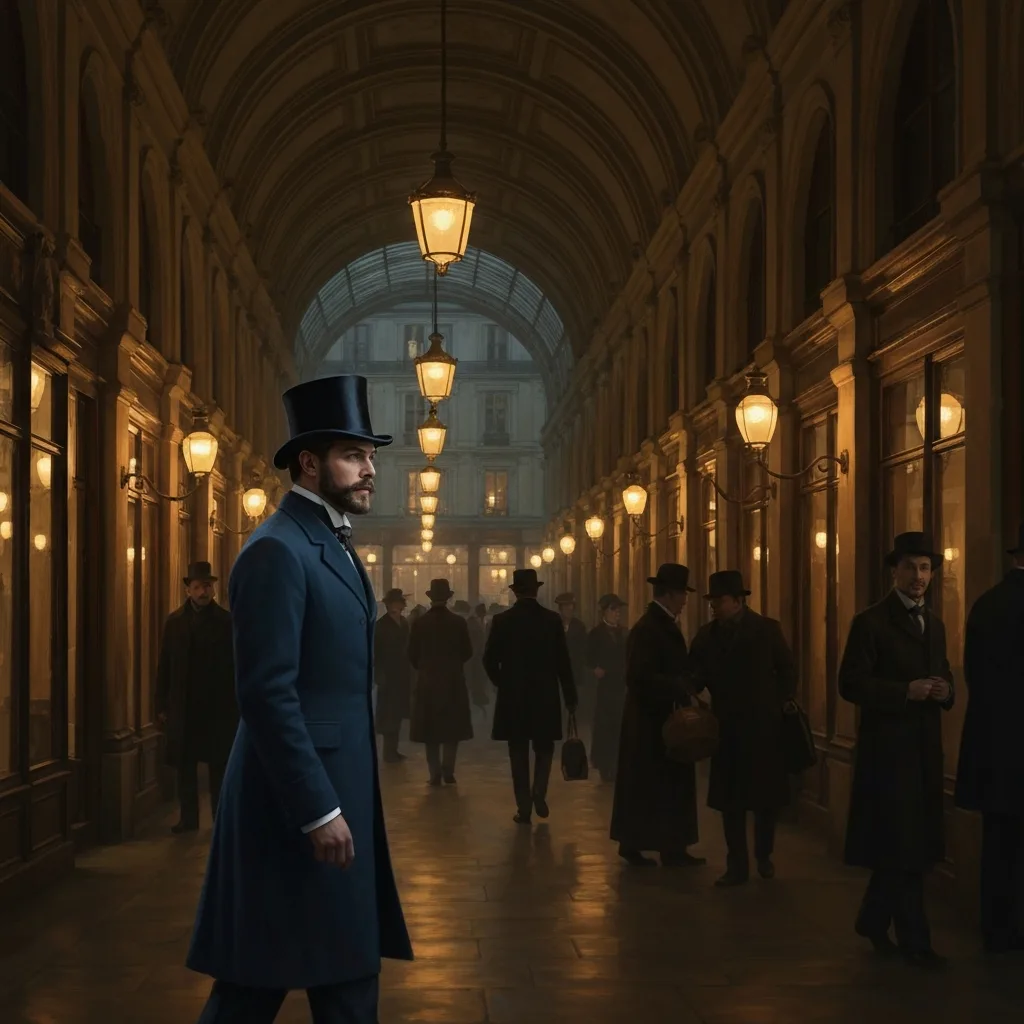
The simple act of putting one foot in front of the other has long been intertwined with the act of thinking, but in the realm of literature, walking takes on a profound narrative weight. Enter the flâneur—a figure born in the bustling, gas-lit streets of nineteenth-century Paris. Literally translating to “stroller” or “saunterer,” the flâneur is much more than a casual pedestrian. They are the ultimate urban observer, a detached but highly attentive wandering soul who reads the city streets as if they were the pages of a sprawling, chaotic novel. Over the past century and a half, this archetype has evolved from a specific historical curiosity into one of the most enduring and adaptable narrative devices in modern fiction.
To understand the modern literary wanderer, we must first look to the poet who gave the archetype its defining characteristics: Charles Baudelaire. In his seminal essay, The Painter of Modern Life, Baudelaire described the perfect flâneur as a passionate spectator who sets up house in the heart of the multitude, amid the ebb and flow of movement. For Baudelaire, the city was a theater, and the flâneur held the ultimate front-row seat. They remained anonymous, hidden in plain sight, absorbing the beauty, the squalor, and the fleeting moments of modern urban life.
This concept was later expanded upon by cultural critic Walter Benjamin, who viewed the flâneur through the lens of the Parisian arcades—those glass-roofed corridors of commerce that served as the stomping grounds for the observant wanderer. Benjamin recognized that the flâneur was a product of the industrial age, a figure who resisted the frantic, mechanized pace of capitalism by deliberately slowing down. In a society obsessed with productivity and destinations, the flâneur’s aimless strolling was a quiet act of rebellion.
The Modernist Shift: Walking the Mind and the City
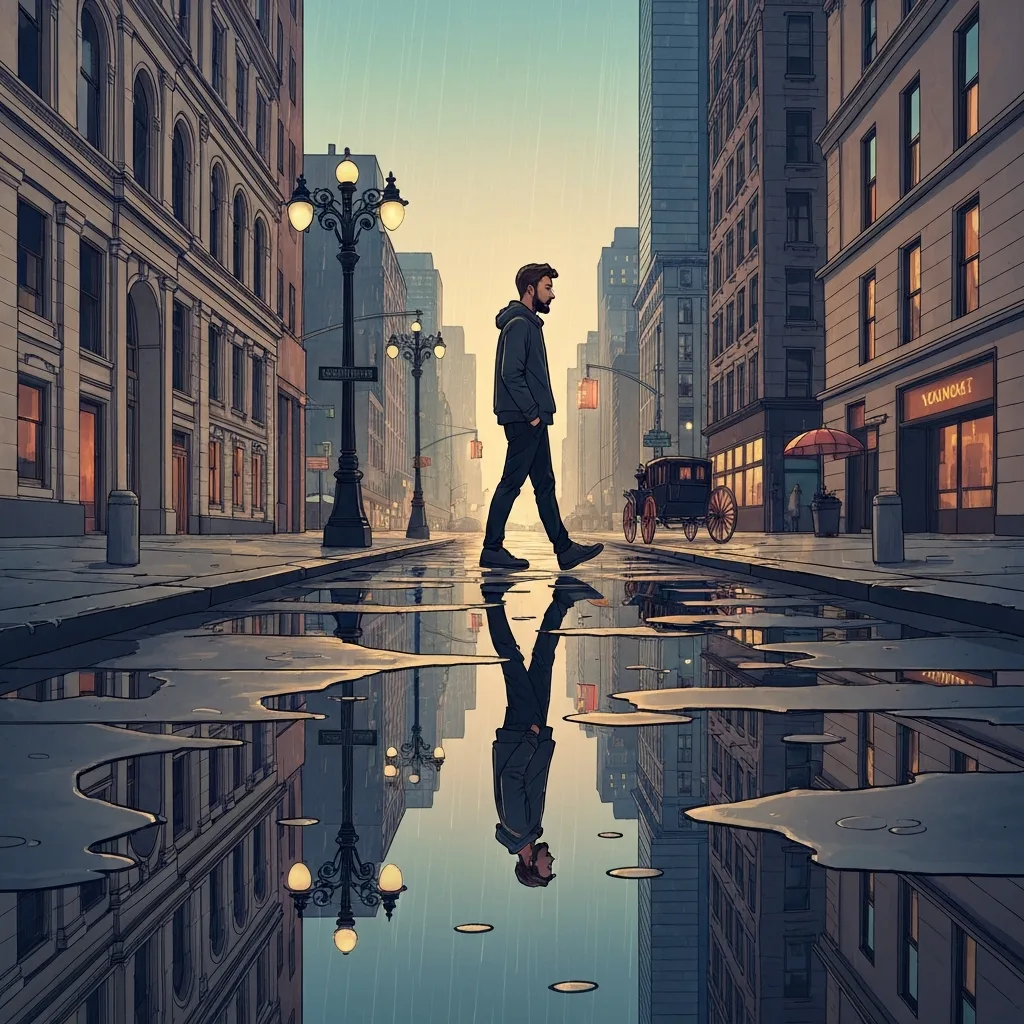
As literature moved into the modernist era, the role of the flâneur underwent a significant transformation. The detached observer of the nineteenth century became deeply internalized. The physical act of walking the city streets became a mirror for the psychological landscape of the characters. Writers like Virginia Woolf and James Joyce utilized the rhythm of footsteps to pace the stream of consciousness that defined their groundbreaking works.
In Woolf’s Mrs. Dalloway, Clarissa Dalloway’s journey through London to buy flowers is not merely a logistical errand; it is a profound navigation of memory, regret, and the passage of time. The sights and sounds of Westminster act as triggers for her internal monologue. The tolling of Big Ben anchors her wandering mind to the present, while the faces in the crowd pull her back to her youth at Bourton. London, in Woolf’s hands, becomes a living, breathing entity that shapes the psychological contours of her protagonist.
Dublin as a Labyrinth
Similarly, James Joyce’s Ulysses is arguably the ultimate chronicle of the modernist flâneur. Leopold Bloom’s odyssey across Dublin on June 16, 1904, elevates the mundane act of walking the city to mythic proportions. Bloom is the quintessential urban wanderer, his mind absorbing the advertisements, the conversations overheard in pubs, and the detritus of the streets. Through Bloom, Joyce maps not just the physical geography of Dublin, but the cultural and political anxieties of early twentieth-century Ireland. The city is a labyrinth, and the wanderer is both lost in it and deeply embedded within its fabric.
Psychogeography and the Postmodern Wanderer
By the late twentieth and early twenty-first centuries, the concept of the flâneur merged with the idea of psychogeography—the study of the precise laws and specific effects of the geographical environment on the emotions and behavior of individuals. Contemporary literature uses urban wandering to explore deeper themes of historical trauma, globalization, and displacement. The modern flâneur is often a solitary figure trying to make sense of a fragmented world.
W.G. Sebald’s masterpieces, though often taking his narrators through rural or coastal landscapes as well as cities, perfectly capture this postmodern wandering. In books like Austerlitz and The Rings of Saturn, the narrator’s physical journey triggers an excavation of European history, the Holocaust, and the decay of civilization. The landscape is haunted, and the wanderer acts as a medium, channeling the ghosts of the past through their deliberate, melancholic pacing.
The City as a Palimpsest
A more strictly urban example is found in Teju Cole’s acclaimed novel Open City. The protagonist, Julius, is a young Nigerian-German psychiatrist who wanders the streets of New York City. Julius is the ultimate contemporary flâneur. His walks are seemingly aimless, yet they form a complex web of cultural critique, historical reflection, and personal avoidance. As he walks, Julius reads the city as a palimpsest—a manuscript where the original text has been effaced to make room for later writing, but where traces of the past remain visible. He sees the shadow of the World Trade Center, the forgotten African burial grounds, and the invisible borders drawn by race and class. Cole uses the flâneur to demonstrate how the modern city is built atop layers of erased histories, visible only to those who take the time to look closely.
The Rise of the Flâneuse: Reclaiming the Streets
For much of literary history, the concept of the flâneur was inherently male. The privilege of wandering the streets anonymously, observing without being observed, and lingering in public spaces without suspicion was not afforded to women. A woman walking alone in the nineteenth century was often subjected to scrutiny, harassment, or moral judgment. However, as societal norms shifted, literature saw the rise of the flâneuse—the female urban wanderer who reclaims the streets and reshapes the narrative of the city.
Author Lauren Elkin explicitly tackles this in her cultural history Flâneuse: Women Walk the City in Paris, New York, Tokyo, Venice, and London. Elkin argues that the female wanderer has always existed, though she had to navigate the urban environment differently than her male counterparts. In fiction, we see the flâneuse emerge powerfully in the works of writers like Jean Rhys. In Rhys’s Good Morning, Midnight, the protagonist Sasha Jansen drifts through the streets and cafes of Paris. Her wandering is not the confident, detached observation of Baudelaire’s gentleman; it is a vulnerable, desperate navigation of poverty, aging, and alienation.
More recently, writers like Vivian Gornick in The Odd Woman and the City have used urban walking as a framework for exploring female independence, friendship, and the intellectual life. For the modern flâneuse, the city street is a space of liberation—a place to assert one’s presence in a world that often tries to render older or unconventional women invisible. The female wanderer challenges the traditional gaze, turning her observant eye back onto the society that seeks to confine her.
The Architecture of Isolation
Another fascinating dimension of the contemporary literary flâneur is the exploration of urban isolation. As cities have grown into sprawling megalopolises, the nature of the crowd has changed. The flâneur of the twenty-first century often experiences a profound sense of loneliness despite being surrounded by millions of people. This paradox is a central theme in the works of Haruki Murakami, whose protagonists frequently wander the neon-lit streets of Tokyo.
In Murakami’s fiction, the city is vast and indifferent. The wandering characters are often searching for something intangible—a missing person, a lost memory, or a sense of purpose. The urban environment, with its late-night diners, jazz bars, and endless subway networks, acts as a liminal space where reality and surrealism blur. The act of walking becomes a meditative practice, a way to maintain sanity in an alienating, hyper-modern world. The flâneur here is not just observing society; they are actively trying not to be swallowed whole by it.
Why We Still Need the Literary Wanderer
In an era dominated by GPS navigation, ridesharing apps, and smartphones that constantly demand our attention, the concept of aimless urban wandering might seem like an anachronism. We are rarely lost anymore, and our journeys through the city are usually optimized for speed and efficiency. Yet, this is precisely why the literary flâneur remains so vital to contemporary fiction.
The flâneur reminds us of the profound value of slow observation. By moving at the speed of a footstep, the literary wanderer forces us to look up from our screens and truly see the environment around us. They teach us that a city is not just a collection of buildings and roads, but a living archive of human experience. Every street corner holds a story; every stranger passing by is a universe of complexities.
Furthermore, the literature of wandering champions the importance of serendipity. When a character sets out without a fixed destination, they open themselves up to chance encounters, unexpected beauty, and sudden revelations. The flâneur embraces the unknown, trusting that the city will provide exactly what is needed, even if it is not what was sought. In a highly structured and optimized world, this surrender to the flow of the streets is a powerful narrative antidote.
Ultimately, the evolution of the flâneur—from the Parisian arcades to the diverse, globalized streets of modern fiction—reflects our ongoing attempt to understand our place within the urban landscape. Whether mapping the internal labyrinth of the mind, uncovering the erased histories of a metropolis, or reclaiming the right to public space, the observant wanderer continues to be one of literature’s most compelling guides. As long as there are cities, there will be writers walking their streets, translating the chaotic rhythm of the pavement into the enduring poetry of the page.

Do you enjoy the content on Agenda Creativa?
Your contributions help me create new articles, share creative ideas, and keep this platform alive! If you like what I do and want to support my work, you can buy us a coffee.
Every cup of coffee means more than just a gesture – it's direct support for my passion to create inspiring and useful content. Thank you for being part of this journey!
☕ Buy me a coffee