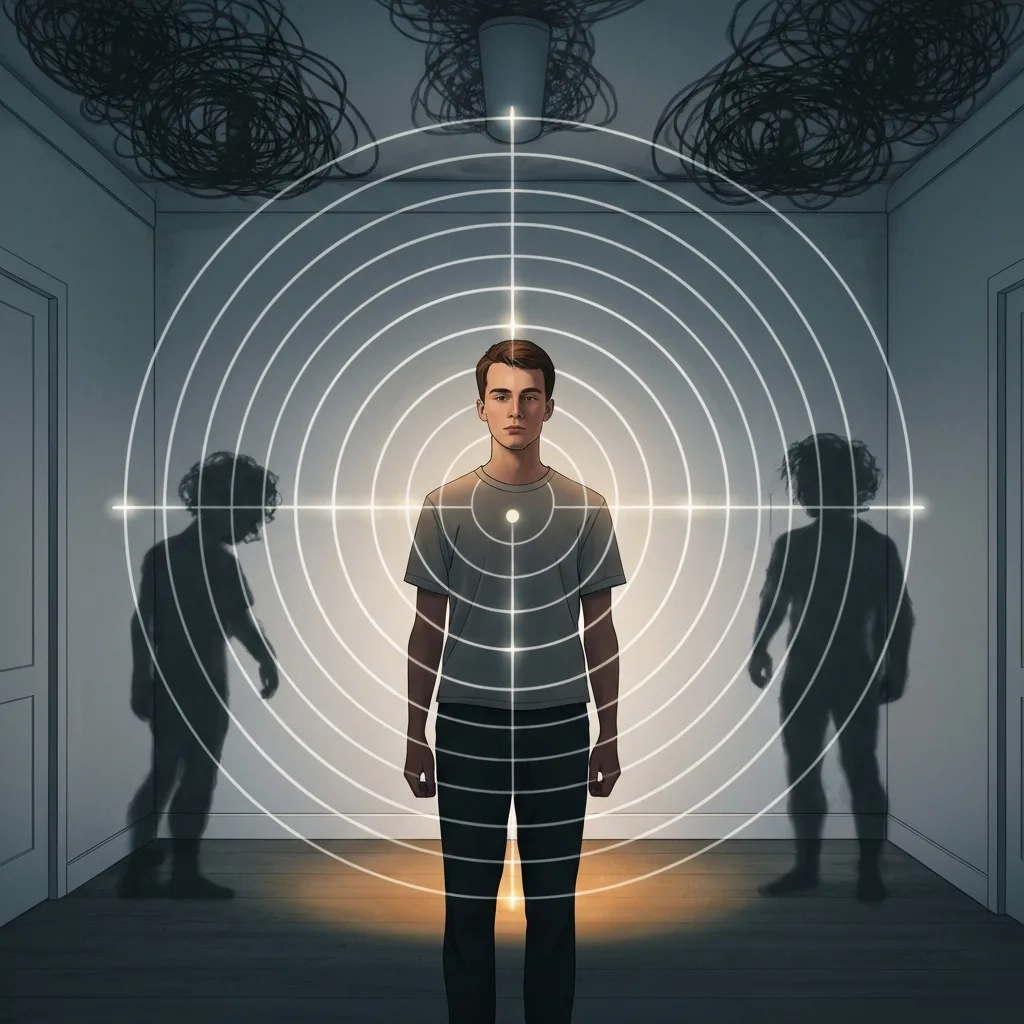
The Exhaustion of the Emotional Radar
Have you ever walked into a room and instantly mapped the emotional temperature of everyone in it? You notice the slight tightening of a colleague’s jaw, the heavy sigh of a partner, or the subtle, almost imperceptible shift in a friend’s texting cadence. Before they even consciously realize they are upset, your nervous system has already mobilized to fix it, soothe it, or brace for impact. We often label this acute, razor-sharp interpersonal sensitivity as being highly empathetic. But in reality, it is something entirely different: hyper-vigilant empathy.
Hyper-vigilant empathy is not born from a place of grounded compassion; it is a survival mechanism. It is the subconscious act of continuously scanning your environment for emotional shifts so you can preemptively manage them. While true empathy allows you to connect with others from a place of internal stability, hyper-vigilance forces you to abandon your own emotional center to manage someone else’s. Over time, this chronic over-monitoring bankrupts your emotional reserves, leaving you exhausted, resentful, and entirely disconnected from your own needs.

The Mechanics of Hyper-Vigilant Empathy
The Difference Between Empathy and Hyper-Vigilance
To dismantle this trap, we must first distinguish between healthy empathy and trauma-informed hyper-vigilance. Healthy empathy requires a psychological boundary. It is the ability to say, ‘I see that you are in pain, and I care about your pain, but your pain is not my responsibility to fix.’ It allows for emotional resonance without emotional enmeshment.
Hyper-vigilant empathy, on the other hand, erases the boundary between self and other. It operates on a flawed internal algorithm: ‘If you are upset, I am unsafe.’ This response is often rooted in the psychological concept of fawning—a trauma response where an individual seeks safety by appeasing others and anticipating their needs. When you are hyper-vigilant, you are not actually trying to comfort the other person out of pure altruism; your nervous system is trying to neutralize a perceived threat in your environment so that you can feel safe again.
How the Brain Wires for interpersonal threat detection
This dynamic does not develop in a vacuum. It is usually forged in environments where emotional unpredictability was the norm. If you grew up with a caregiver whose moods were volatile, or if you have navigated a relationship with a highly reactive partner, your brain adapted. The amygdala—the brain’s threat detection center—learned that subtle shifts in tone, body language, or facial expression were precursors to conflict or abandonment.
Through a process called neuroception, your autonomic nervous system became exceptionally skilled at detecting micro-cues of dysregulation in others. While this adaptation may have kept you safe in the past, carrying it into your present relationships creates a state of chronic allostatic load. Your brain is constantly burning cognitive and emotional glucose to solve emotional puzzles that do not belong to you.
The Hidden Costs of Managing Other People’s Nervous Systems
Emotional Burnout and the Loss of Self
The most immediate consequence of hyper-vigilant empathy is profound psychological exhaustion. When your primary focus is externally fixated on the emotional states of those around you, you lose contact with your own internal landscape. You may find it incredibly difficult to answer a simple question like, ‘What do I want right now?’ or ‘How am I feeling?’ because your internal bandwidth is entirely occupied by processing external data.
This chronic externalization leads to emotional burnout. You become a sponge for the dysregulation of the world, absorbing the stress, frustration, and anger of others without a filtration system. Because you are constantly preempting other people’s discomfort, you never allow them to self-soothe, and you never allow yourself to rest.
The Illusion of Interpersonal Control
At its core, hyper-vigilant empathy is driven by an illusion of control. It is the subconscious belief that if you can just say the exact right thing, modulate your tone perfectly, or anticipate a need before it is voiced, you can prevent another person from experiencing negative emotions. But human emotions are inherently uncontrollable.
When you try to micromanage someone else’s internal state, you are taking on an impossible task. When they inevitably experience a bad mood—which is a normal part of the human experience—your nervous system interprets it as a personal failure. This creates a vicious cycle of anxiety, over-functioning, and inevitable disappointment.
How to Dismantle Hyper-Vigilant Empathy
Practice Benevolent Detachment
The antidote to hyper-vigilant empathy is a practice known as benevolent detachment. This involves intentionally stepping back from the urge to manage another person’s emotional state, while still maintaining a baseline of care and respect. When you notice someone sighing, pacing, or acting distant, benevolent detachment requires you to acknowledge the behavior without making it your assignment.
You can silently remind yourself: ‘They are allowed to be in a bad mood. Their mood is not a threat to my safety. I do not need to fix this.’ By allowing others to experience their own emotional weather without your intervention, you return the responsibility of emotional regulation back to its rightful owner.
Recalibrate Your Interoceptive Awareness
Because hyper-vigilance forces your attention outward, recovery requires intentionally turning the spotlight inward. Interoception is your brain’s ability to perceive physical sensations inside your body. When you feel the familiar spike of anxiety that urges you to fix someone else’s mood, pause and redirect your focus to your own physical state.
Notice the tension in your shoulders, the depth of your breath, or the sensation of your feet on the floor. By anchoring your attention in your own somatic experience, you interrupt the brain’s external threat-scanning loop. You send a powerful signal to your nervous system that you are present, grounded, and safe within your own physical boundaries.
Establish the ‘Wait and See’ Protocol
Hyper-vigilance creates a false sense of urgency. It demands immediate action to neutralize the perceived emotional threat. To break this habit, implement the ‘Wait and See’ protocol. When you detect a shift in someone’s mood, enforce a mandatory pause before you react, ask ‘Are you mad at me?’, or attempt to soothe them.
Give the situation ten minutes, an hour, or even a full day. More often than not, the other person will process their own frustration, or the mood will pass entirely without your intervention. This pause builds your tolerance for interpersonal ambiguity. It teaches your nervous system that other people’s negative emotions are not emergencies that require your immediate triage.
Reclaiming Your Emotional Bandwidth
Stepping out of hyper-vigilant empathy is not about becoming cold, callous, or uncaring. It is about recognizing that your emotional bandwidth is a finite resource. When you stop spending all your energy trying to manage the internal worlds of everyone around you, you reclaim the capacity to inhabit your own life.
True emotional balance does not come from creating a perfectly frictionless environment where no one is ever upset. It comes from developing the psychological resilience to stand in the presence of someone else’s distress without losing your own footing. By putting down the exhausting job of managing other people’s nervous systems, you finally create the space required to heal your own.
Do you enjoy the content on Agenda Creativa?
Your contributions help me create new articles, share creative ideas, and keep this platform alive! If you like what I do and want to support my work, you can buy us a coffee.
Every cup of coffee means more than just a gesture – it's direct support for my passion to create inspiring and useful content. Thank you for being part of this journey!
☕ Buy me a coffee