
The modern wellness industry has successfully branded “calm” as the ultimate psychological achievement. We are told to breathe through our anger, meditate away our stress, and observe our anxiety from a distance. While these practices are foundational to emotional balance, this relentless pursuit of serenity often leads to a hidden psychological trap: false equanimity.
False equanimity occurs when we mistake emotional blunting—or mild dissociation—for mindful peace. On the surface, you might appear incredibly grounded. You don’t yell when provoked; you don’t spiral when things go wrong. But beneath this placid exterior, you aren’t actually processing your experiences. You have simply learned how to sever the connection between your conscious awareness and your emotional reality.
Understanding the difference between genuine mindfulness and emotional numbing is crucial. When we use mindfulness as an anesthetic rather than an instrument of awareness, we inadvertently sabotage our psychological resilience and disconnect from the vitality of our own lives.
The Anatomy of False Equanimity
True equanimity is a state of profound psychological balance. It is the ability to stand in the center of an emotional storm and allow the winds to howl without being blown over. You feel the grief, the anger, or the joy intensely, but you do not lose your center of gravity. You remain anchored in the present moment, fully experiencing the physical and mental sensations of the emotion without being hijacked by them.
False equanimity, conversely, is refusing to step into the storm at all. It is a defense mechanism dressed up as enlightenment. Instead of expanding your capacity to hold difficult emotions, you shrink your emotional bandwidth so that nothing can disturb you. You become untouchable, but at the cost of your human experience.
This phenomenon frequently happens to dedicated mindfulness practitioners or individuals who have spent years in therapy. You learn the vocabulary of emotional regulation and the techniques of cognitive detachment, but you begin applying them prematurely. The moment a spike of distress registers in your nervous system, you immediately deploy a deep breathing exercise or a cognitive reframe to neutralize it. You don’t allow the emotion to complete its natural physiological cycle. You abort the feeling in the name of “staying calm.”
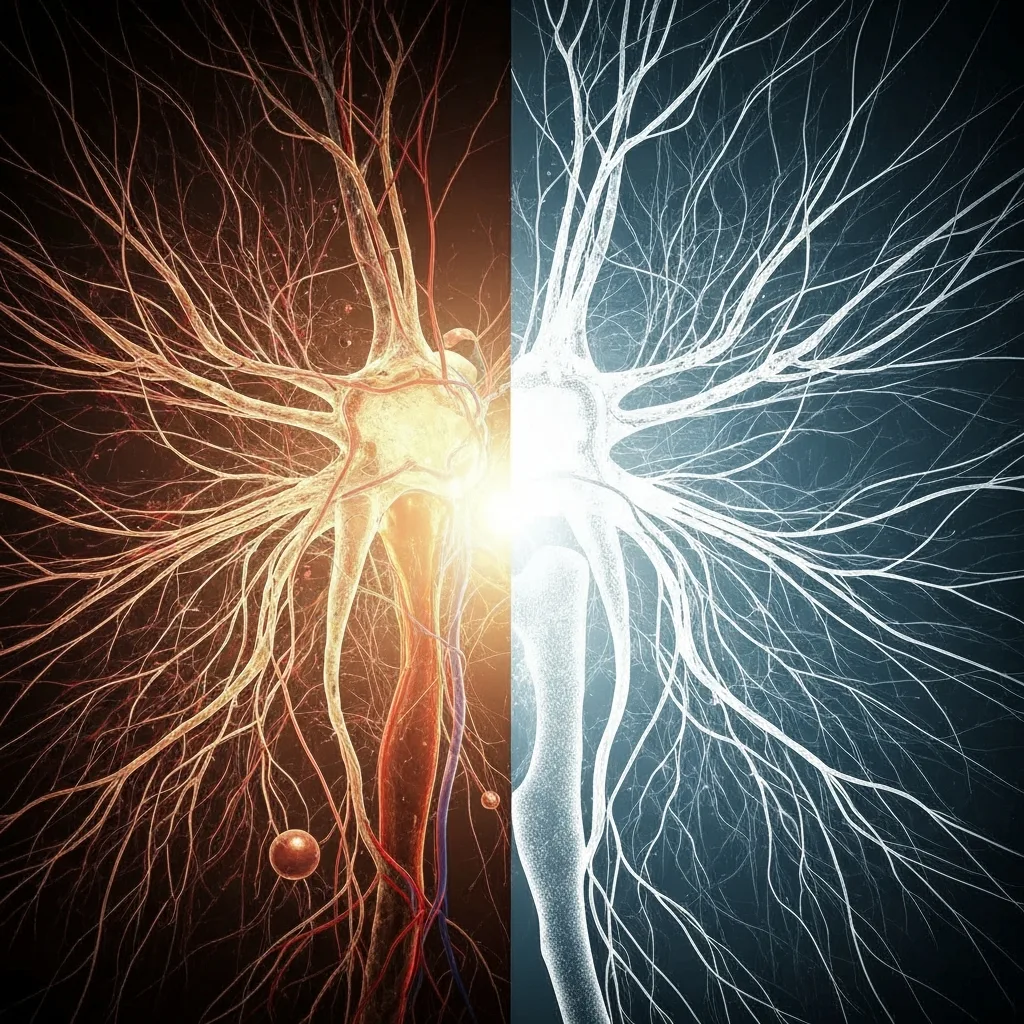
The Nervous System’s Disguise: Freeze vs. Calm
To understand why false equanimity is so deceptive, we have to look at the mechanics of the autonomic nervous system. When we face a stressor, our sympathetic nervous system activates, pushing us into fight-or-flight mode. We feel agitated, anxious, or angry. If the stressor feels too overwhelming for our current bandwidth, our nervous system might instinctively drop into a dorsal vagal response—often referred to as the “freeze” or “shutdown” state.
In a dorsal vagal state, your heart rate slows, your emotional affect flattens, and a profound sense of detachment sets in. It is a biological preservation strategy designed to help us survive unbearable situations by numbing us to the psychological pain.
The danger lies in how remarkably similar the freeze state can feel to a deep meditative state, especially to the untrained observer. Both involve stillness. Both involve a lack of outward reactivity. But their internal landscapes are entirely different. Genuine calm (the ventral vagal state) is characterized by connection, warmth, and a feeling of safety. You are relaxed but highly alert and engaged. In the freeze state, you are immobilized and disconnected. You aren’t peaceful; your system has simply gone offline.
Recognizing the Signs of Emotional Dissociation
How can you tell if your hard-won zen is actually a sophisticated form of hiding? Look for these psychological markers in your daily life:
The Absence of Positive Affect: False equanimity doesn’t just blunt negative emotions; it flattens everything. If you find that you rarely get angry or anxious, but you also rarely feel spontaneous bursts of joy, awe, or deep love, you are likely numbing. True mindfulness enhances your capacity for joy just as much as it expands your tolerance for distress.
A Sense of Superiority or Isolation: When you are chronically detached, you might start viewing other people’s emotional reactivity as a sign of weakness or a lack of personal evolution. You might feel like you are floating above the messy reality of human relationships, which ultimately leads to profound social isolation and a lack of empathy.
Chronic Fatigue: Suppressing emotions requires an immense amount of metabolic energy. If you constantly feel drained despite getting enough sleep and appearing “stress-free” to the outside world, your brain may be working overtime to keep your emotional reality locked away.
Delayed Somatic Symptoms: Because the emotions aren’t being processed consciously, they often manifest physically. You might be completely calm in your mind, but suffer from unexplained tension headaches, digestive issues, or chronic jaw clenching.
The Danger of “Zen Bypassing”
Using mindfulness techniques to avoid feeling is a form of psychological bypassing. When we bypass, we use higher-level cognitive concepts or meditative practices to skip over the messy, uncomfortable work of basic emotional processing.
For example, imagine a colleague deeply betrays you. The healthy, human response is to feel a surge of anger and hurt. These emotions contain vital data—they tell you that a boundary has been crossed, that trust has been broken, and that action needs to be taken to protect yourself. If you immediately jump to, “I observe my anger, I send this person compassion, I am letting this go,” you are stripping the emotion of its utility. You are using mindfulness to bypass the necessary confrontation and boundary-setting that the anger was trying to facilitate.
Over time, zen bypassing teaches your brain that your raw, unfiltered emotions are dangerous and must be sanitized immediately. This weakens your self-trust. You stop relying on your internal compass because you are constantly overriding it with enforced tranquility.
How to Cultivate Authentic Equanimity
Moving from false equanimity to genuine emotional balance requires a willingness to get messy. It means redefining what a “successful” mindfulness practice looks like. Calm is not the goal; presence is the goal. Here is how to begin dismantling your defenses and building true emotional resilience.
Delay the “Fix”
When an uncomfortable emotion arises, your instinct might be to immediately regulate it. You might reach for a breathing exercise, a distraction, or a cognitive reframe to make the discomfort stop. Instead, practice the art of the pause. Give the emotion 90 seconds to simply exist without trying to change it, soften it, or breathe it away. Let the physical sensations wash over you. Notice where the emotion lives in your body. By delaying the impulse to regulate, you teach your nervous system that the raw feeling itself is not a threat.
Re-engage the Body’s Felt Sense
Because false equanimity is a state of mild dissociation, the antidote is somatic re-engagement. You have to bring your awareness back down from the theoretical space of your mind and into the dense, physical reality of your body. When you feel “calm,” check in with your physical form. Are your muscles actually relaxed, or are they braced? Is your breathing deep and fluid, or is it shallow and restricted to your upper chest? Practices like progressive muscle relaxation, body scans, or mindful movement can help bridge the gap between your mental state and your physical reality.
Welcome the “Ugly” Emotions
Authentic equanimity requires radical inclusion. You must be willing to invite the socially unacceptable emotions into your awareness. Anger, jealousy, pettiness, and despair are all part of the human condition. When these feelings arise, do not rush to dress them up in mindful language. Let them be raw. You do not have to act on them—true equanimity gives you the space to choose your behavior—but you must allow yourself to feel them fully and without judgment.
Track Your Window of Tolerance
The concept of the window of tolerance refers to the optimal zone of nervous system arousal where you can function and process information effectively. If you are pushed outside this window, you either become hyper-aroused (anxious, reactive) or hypo-aroused (numb, disconnected). False equanimity is a state of chronic hypo-arousal. To cultivate true balance, you must learn to recognize when you are slipping into numbness and actively stimulate your nervous system to come back online. This might involve splashing cold water on your face, doing a short burst of vigorous exercise, or engaging in a highly sensory, grounding activity.
True emotional balance is not a flatline. It is a dynamic, living state of being. It is the profound trust that you can handle the full spectrum of human experience without breaking. When you let go of the need to be perpetually calm, you open the door to something much more powerful: the ability to be completely, unapologetically alive. Mindfulness was never meant to be a shield against the world; it is a lens through which we can experience the world more deeply. By abandoning the trap of false equanimity, you reclaim your vitality and step into a truer, more resilient version of yourself.
Do you enjoy the content on Agenda Creativa?
Your contributions help me create new articles, share creative ideas, and keep this platform alive! If you like what I do and want to support my work, you can buy us a coffee.
Every cup of coffee means more than just a gesture – it's direct support for my passion to create inspiring and useful content. Thank you for being part of this journey!
☕ Buy me a coffee