The Anatomy of Cognitive Tunneling
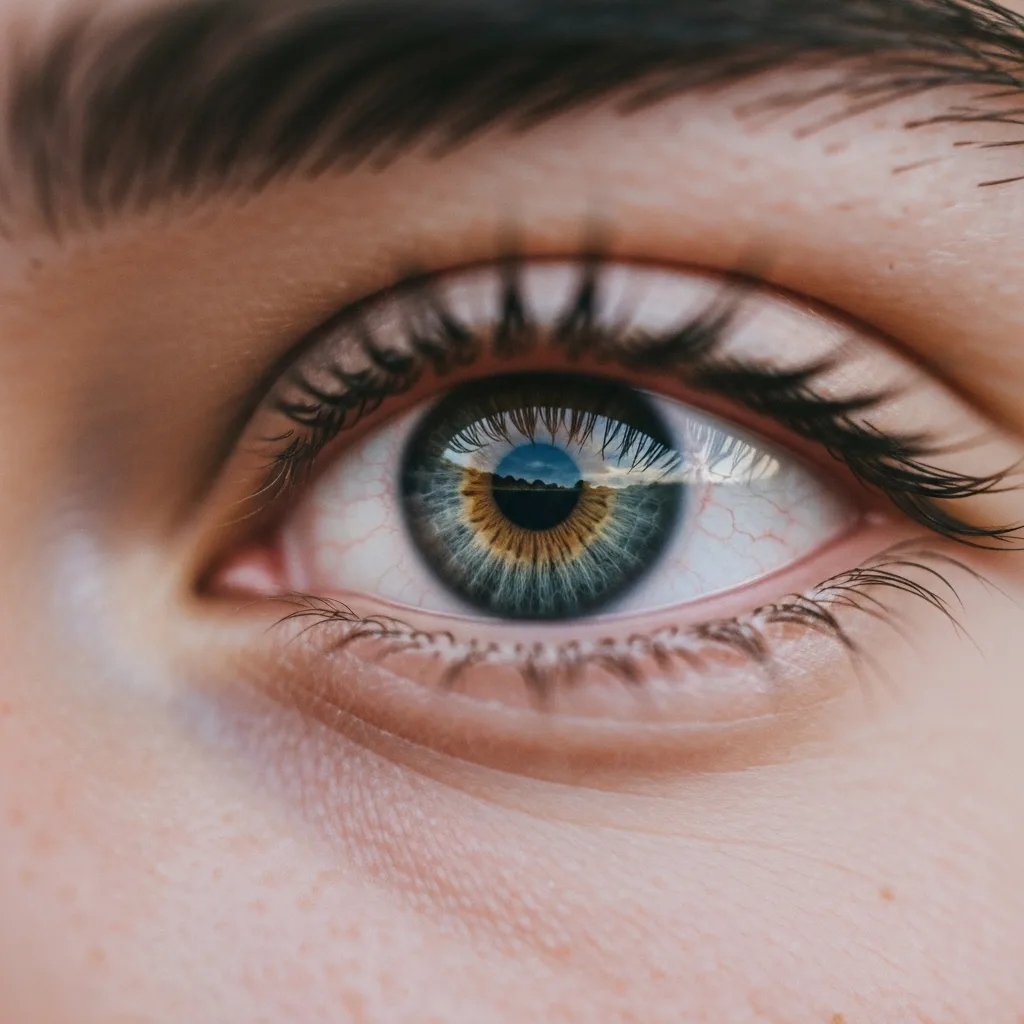
Notice what happens to your eyes the exact moment panic sets in, or when a wave of acute anxiety washes over you. Your gaze locks. Your peripheral vision drops away. You become intensely, almost painfully, fixated on a single point in space. This is not a metaphor; it is a highly conserved physiological response known as visual and cognitive tunneling. When the brain perceives a threat, it immediately alters the shape of the lens in your eye, forcing you into sharp, foveal vision. It is an evolutionary mechanism designed to help you track a predator or lock onto an escape route.
However, the modern nervous system cannot differentiate between the threat of a physical predator and the threat of a passive-aggressive email, a looming deadline, or a sudden intrusive thought. When you experience psychological distress, your visual field narrows just as it would in the wild. You stare intensely at your phone screen, glare at the floor, or fixate on a spot on the wall while your mind races. This visual narrowing sends a continuous feedback loop to your brainstem, confirming that danger is present and sustaining the release of adrenaline and cortisol.
The Evolutionary Mechanics of Foveal Vision
To understand why this happens, we have to look at the architecture of the human nervous system. Your eyes are not just connected to your brain; developmentally and anatomically, they are outward extensions of the brain itself. The optic nerve provides a direct, high-speed connection to the amygdala, the brain’s fear center. When you shift into foveal vision—sharp, highly focused, narrow-field sight—you are engaging the sympathetic nervous system. This is the physiological state of ‘fight or flight.’
In short bursts, foveal vision is highly adaptive. It allows for intense concentration, problem-solving, and threat assessment. But when you remain stuck in this visual state due to chronic stress, you are essentially keeping your foot on the gas pedal of your nervous system. You become trapped in a state of hyper-arousal, scanning for threats that do not exist in your immediate physical environment.
The Modern Hijacking of the Visual Field
Modern environments are perfectly designed to trap us in foveal vision. We spend the majority of our waking hours staring at two-dimensional screens positioned mere inches from our faces. We walk down the street looking at our phones. We work in small, enclosed spaces. Our visual world has shrunk dramatically. Consequently, our baseline level of sympathetic arousal has skyrocketed. We are constantly feeding our brains the visual cues of a threat state, which makes emotional regulation exponentially more difficult. When your visual field is chronically restricted, your emotional bandwidth follows suit.

The Psychological Mirror: Mental Tunneling
The physical act of visual tunneling has a direct psychological counterpart: cognitive tunneling. When your vision narrows, your thinking narrows. You lose the ability to see the ‘big picture.’ Your mind fixates obsessively on a single problem, a single perceived slight, or a single potential future disaster. You lose access to lateral thinking, creativity, and emotional perspective.
Think about the last time you were deeply anxious. It likely felt impossible to remember the good things in your life or to rationally assess the actual probability of your fears coming true. Your psychological aperture had closed. You were mentally staring through a keyhole, entirely consumed by the tiny, frightening fragment of reality you could see, completely unaware of the vast, safe room surrounding you. This is why trying to ‘think’ your way out of anxiety rarely works. You cannot use a tunneled mind to logic your way out of a tunneled state.
Panoramic Awareness: The Somatic Antidote to Anxiety
If narrow, foveal vision triggers the sympathetic nervous system, the reverse is also true. Expanding your visual field—shifting into what is known as panoramic awareness or optic flow—directly stimulates the parasympathetic nervous system, the ‘rest and digest’ state. This is a profound, bottom-up approach to emotional regulation. By changing how you use your eyes, you can actively alter your brain chemistry and halt the anxiety loop in its tracks.
The Neuroscience of the Soft Gaze
Panoramic vision involves softening your gaze and expanding your awareness to include your peripheral vision. When you do this, you are engaging a different set of visual circuits. You are no longer tracking a specific object; instead, you are taking in the totality of your environment. This visual shift sends an immediate, powerful signal to the brainstem: ‘We are not being hunted. There is no immediate focal threat. It is safe to stand down.’
When you soften your gaze, your breathing naturally slows. Your heart rate variability improves. The muscles in your face and neck begin to release their tension. It is a biological override switch for the anxiety response, bypassing the slow, often ineffective process of cognitive reasoning and speaking directly to the primal centers of the brain.
Practical Protocols for Cultivating Panoramic Awareness
Integrating panoramic awareness into your daily life does not require hours of meditation. It requires frequent, intentional micro-shifts in your visual and cognitive field. Here are specific protocols to help you break the habit of cognitive tunneling.
The Horizon Reset Protocol
The most effective way to trigger panoramic awareness is to look at a distant horizon. When you feel the physical symptoms of anxiety building—a tight chest, shallow breathing, racing thoughts—immediately step away from whatever you are focusing on. Go to a window or step outside. Do not focus on a specific tree or building. Instead, let your eyes relax and take in the widest possible view. Notice the space between objects rather than the objects themselves. Maintain this soft, broad gaze for two to three minutes. You will physically feel the sympathetic arousal begin to drain from your body.
The Peripheral Anchoring Technique
You can practice panoramic awareness even when you cannot look at a horizon. If you are in a meeting, sitting at your desk, or lying in bed trapped in an anxiety spiral, pick a point on the wall straight ahead of you. Keep your eyes resting softly on that point, but consciously expand your attention to your peripheral vision. Notice the walls to your left and right. Notice the ceiling above you and the floor below you. Try to perceive the entire room at once without moving your eyes. This forces the brain out of the foveal threat-state and immediately dampens the activity of the amygdala.
Cognitive Broadening: Expanding the Mental Field
Once you have physically shifted into panoramic awareness, you can apply the same principle to your mind. When you catch yourself obsessing over a single distressing thought, pause and mentally ‘zoom out.’ Ask yourself: ‘What else is true right now?’ Acknowledge the distressing thought, but place it within the wider context of your life. You are not trying to toxic-positively ignore the problem; you are simply refusing to let it occupy 100 percent of your mental visual field. You are restoring psychological peripheral vision.
Overcoming the Brain’s Resistance to Letting Go
When you first attempt to soften your gaze during a moment of high anxiety, you will likely encounter intense internal resistance. Your brain will scream that it is unsafe to look away from the ‘threat’—even if that threat is just a stressful email. The survival brain believes that intense fixation is what keeps you safe. It feels counterintuitive, even irresponsible, to relax your focus when you feel overwhelmed.
This resistance is entirely normal. The key is to titrate the practice. Do not try to hold a panoramic gaze for ten minutes if it makes you feel vulnerable. Start with ten seconds. Prove to your nervous system that you can soften your focus and survive. Over time, your brain will learn that panoramic awareness is not a vulnerability, but a profound source of physiological safety.
The Long-Term Impact on Emotional Baseline
Mindfulness is often misunderstood as the practice of controlling your thoughts. In reality, true emotional balance is largely about managing your physiology. By understanding the deep, biological link between your visual field and your nervous system, you gain a powerful tool for self-regulation. You no longer have to be a victim of cognitive tunneling. By consciously choosing to widen your gaze, you can step out of the narrow confines of anxiety and re-enter the vast, expansive reality of the present moment.

Do you enjoy the content on Agenda Creativa?
Your contributions help me create new articles, share creative ideas, and keep this platform alive! If you like what I do and want to support my work, you can buy us a coffee.
Every cup of coffee means more than just a gesture – it's direct support for my passion to create inspiring and useful content. Thank you for being part of this journey!
☕ Buy me a coffee