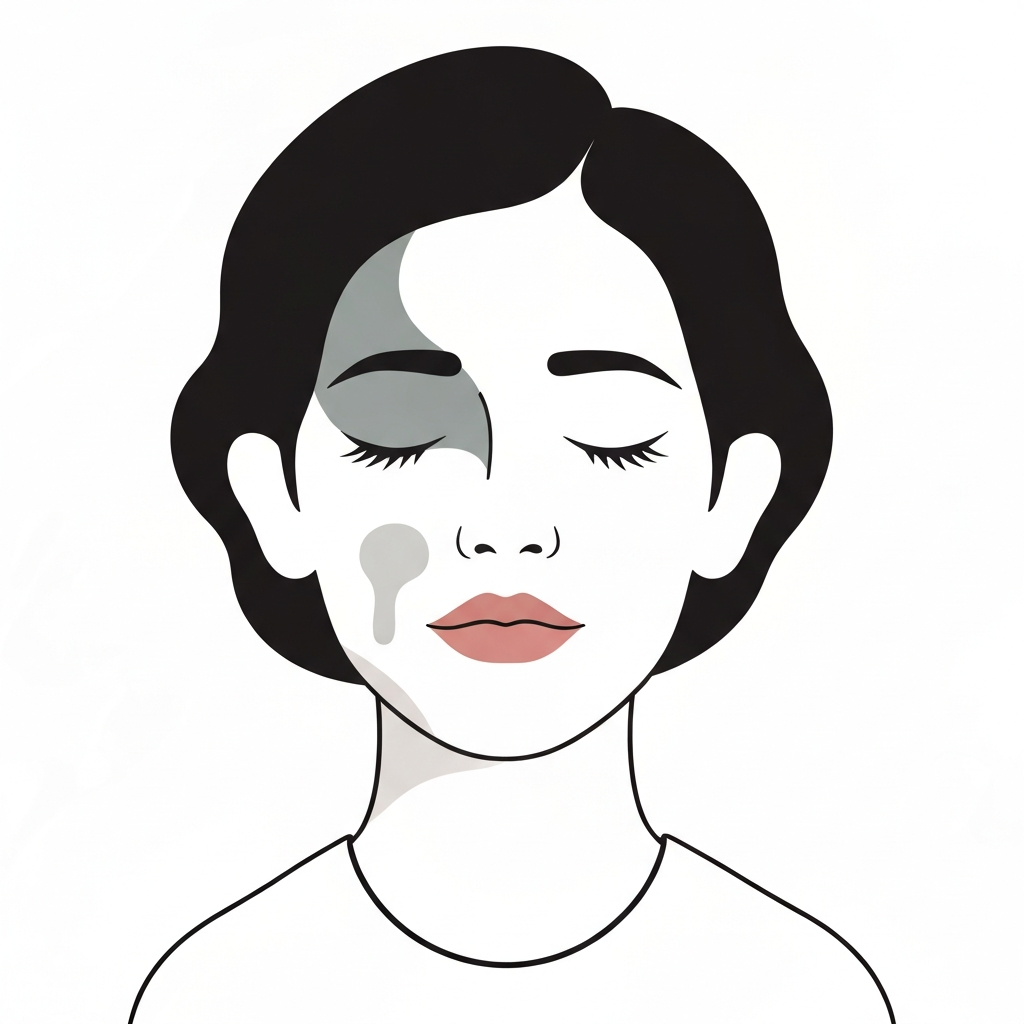
The Sudden Drop After the Brave Act
You know the exact feeling. You finally send the text setting a firm boundary with a demanding relative. You sit on a therapist’s couch and voice a painful truth you swore you would take to the grave. You pitch a creative idea that reveals a tender, unguarded part of your soul to your colleagues. Consciously, you expect a rush of catharsis. You anticipate a profound sense of psychological liberation.
Instead, twenty minutes later, your stomach drops. Your heart rate accelerates. A hot flush of shame crawls up the back of your neck, followed by an overwhelming, frantic urge to take it all back. You are suddenly convinced you have made a catastrophic mistake.
Welcome to the vulnerability hangover.
Coined in popular psychology to describe the acute regret that follows emotional risk-taking, the vulnerability hangover is often deeply misunderstood. We tend to interpret this intense discomfort as an intuitive warning sign. We tell ourselves, “I feel terrible, therefore I must have done something wrong. I overshared. I was too harsh. I ruined the relationship.”
But this is a dangerous misinterpretation. The vulnerability hangover is not a sign of a moral failure, nor is it a genuine intuition of impending disaster. It is a predictable, mechanical response of your autonomic nervous system reacting to a sudden loss of psychological camouflage.

The Evolutionary Mechanics of Emotional Exposure
To understand why your body reacts to honesty with sheer panic, we have to look at the evolutionary wiring of the human brain. For our ancient ancestors, survival was entirely dependent on group cohesion. Belonging to the tribe meant safety, warmth, and shared resources. Being cast out of the tribe meant certain death.
Consequently, the primitive structures of our brain—specifically the amygdala—evolved to constantly monitor our social standing. The safest way to remain in the tribe was to blend in, adapt to the group’s expectations, and hide any traits that might make us a target for rejection. Psychological armor was quite literally a survival mechanism.
When you choose to be vulnerable in the modern world—when you drop your armor, state a contradictory need, or reveal a hidden flaw—your prefrontal cortex knows you are simply having an honest conversation. But your primitive brain registers a life-threatening emergency. By stepping out of line or dropping your camouflage, you have made yourself visible. To the nervous system, visibility equals vulnerability to predators or exile from the tribe.
The physical symptoms of the vulnerability hangover—the racing heart, the nausea, the cold sweat, the racing thoughts—are the exact same physiological markers of the sympathetic nervous system going into a fight-or-flight response. Your brain is not punishing you for being honest; it is trying to keep you alive based on outdated hardware.
The Anatomy of the Hangover: Three Distinct Phases
Recognizing the vulnerability hangover as a biological event rather than a personal failing is the first step toward emotional stabilization. The experience typically unfolds in three predictable phases.
Phase 1: The Adrenaline Drop
During the actual moment of vulnerability, your body is often flooded with adrenaline and cortisol. It takes immense energy to push past the psychological friction of fear. While you are speaking your truth, you are effectively running on autonomic high gear. Once the event is over and the immediate threat has passed, those stress hormones sharply drop. This sudden biochemical crash leaves your nervous system feeling raw, depleted, and highly sensitized to the environment.
Phase 2: The Rumination Loop
As the adrenaline recedes, the brain scrambles to assess the “damage.” Because the nervous system feels unsafe, the brain assumes there must be a tangible threat nearby. It begins obsessively scanning the recent interaction for evidence of danger. This is where the rumination loop begins. You will replay the conversation on an endless loop, agonizing over your tone of voice, the specific words you used, and the micro-expressions on the other person’s face. Did they look annoyed? Was I too aggressive? Did I sound stupid?
Phase 3: The Retraction Urge (The Fawn Response)
This is the most dangerous phase for your emotional growth. Overwhelmed by the sensation of being “too seen,” the nervous system demands a return to safety. It compels you to repair the perceived rupture at any cost. This manifests as the frantic urge to send a follow-up text saying, “I’m so sorry, I was just rambling, ignore me!” or “I didn’t mean to sound so serious, it’s totally fine!”
This is a trauma response known as “fawning.” By retracting your truth, you are attempting to appease the other person and reinstate your psychological camouflage. While this might provide immediate relief to your nervous system, it reinforces a devastating subconscious loop: it teaches your brain that your authentic self is indeed dangerous, and that safety can only be found in self-abandonment.
How to Somatically Re-Stabilize Post-Exposure
The core challenge of the vulnerability hangover is that you cannot think your way out of it. Because the prefrontal cortex (the logical part of the brain) goes offline during a sympathetic nervous system spike, trying to cognitively reassure yourself that “everything is fine” will feel hollow and ineffective.
To survive the hangover without retracting your truth, you must bypass the mind and speak directly to the body. Here is the protocol for re-stabilizing your nervous system after emotional exposure.
1. Implement the 24-Hour No-Repair Rule
When the Retraction Urge hits, you will feel a false sense of urgency. Your brain will tell you that you must fix the situation immediately. You must override this impulse. Commit to a strict 24-hour moratorium on follow-up texts, apologies, or “clarifications.” Tell yourself, “I am allowed to feel panicked right now, but I will not take any action for 24 hours.” By the time a day has passed, your nervous system will have metabolized the stress hormones, and the urge to self-abandon will have largely evaporated.
2. Use Heavy Somatic Containment
When the nervous system feels excessively exposed, it needs physical boundaries to feel safe again. This is known as somatic containment. Wrap yourself tightly in a heavy blanket, or use a weighted blanket if you have one. Hold a hot mug of tea in both hands, focusing entirely on the sensation of the heat against your palms. Sit in a small, enclosed space, like a comfortable chair in the corner of a room, rather than the middle of an open space. These physical cues of weight, warmth, and enclosure signal to the brain stem that you are physically protected from external threats.
3. Label the Physiology, Not the Story
When the rumination loop starts spinning, immediately stop engaging with the content of your thoughts. Do not debate whether you were too harsh or too emotional. Instead, shift your attention entirely to your physical sensations. Say out loud, “My chest is tight. My stomach is dropping. My heart is beating fast. I am experiencing a vulnerability hangover.” By labeling the physiological experience, you strip the fear of its narrative power. You remind your brain that this is just a temporary chemical state, not a permanent reality.
4. Discharge the Residual Energy
A fight-or-flight response generates massive amounts of kinetic energy designed to help you run or defend yourself. If you simply sit still while feeling a vulnerability hangover, that energy turns inward, fueling anxiety and panic. You must give the energy a physical exit route. Shake your hands vigorously for sixty seconds. Do ten rapid push-ups. Push your hands as hard as you can against a solid wall. Give the nervous system the physical completion it is looking for.
Building Vulnerability Tolerance
The goal of emotional regulation is not to never feel the vulnerability hangover. If you are doing meaningful psychological work, setting necessary boundaries, and building authentic relationships, the hangover is an unavoidable side effect of growth. It is the growing pain of an expanding identity.
The true goal is to build vulnerability tolerance—the capacity to sit in the fire of emotional exposure without burning your own house down. Every time you speak your truth, endure the subsequent autonomic panic, and refuse to apologize for your existence, you are rewiring your brain. You are slowly teaching your nervous system that you can be seen, you can be exposed, and you can survive it.
The next time the hangover hits, do not panic. Do not reach for your phone to apologize. Wrap yourself in a blanket, feel the discomfort, and recognize it for what it truly is: the physical sensation of your psychological walls coming down.
Do you enjoy the content on Agenda Creativa?
Your contributions help me create new articles, share creative ideas, and keep this platform alive! If you like what I do and want to support my work, you can buy us a coffee.
Every cup of coffee means more than just a gesture – it's direct support for my passion to create inspiring and useful content. Thank you for being part of this journey!
☕ Buy me a coffee
