The Modern Epidemic of Blurred Lines
Imagine sitting on your living room couch at eight in the evening. Your laptop is balanced on your knees, a half-written email open on the screen. The television is playing softly in the background, and your smartphone is vibrating with a mix of text messages from friends and notifications from a work messaging app. Physically, you are resting. Psychologically, you are everywhere at once. You are simultaneously an employee, a friend, a partner, and a consumer of entertainment. This is not just a scheduling problem; it is a profound psychological phenomenon known as context collapse.
Originally coined by social scientists to describe the way different social circles merge on digital platforms, context collapse has evolved. It now perfectly describes the modern physical and emotional landscape. For many of us, the distinct environments that once separated our roles have dissolved. The bed has become the boardroom; the dining table has become the dispatch center; the phone is an infinite portal to every obligation we possess. While this lack of boundaries is often sold to us as flexibility or convenience, it comes with a severe biological cost. When the environments of our lives collapse into a single space, our nervous system loses the external cues it relies on to regulate our internal state.
How Context Collapse Confuses the Autonomic Nervous System
Your brain is a prediction machine. It continuously scans your environment for cues to determine which physiological state is most appropriate for your current situation. This process, known as neuroception, happens entirely below the level of conscious thought. When you step into a gym, the smell of rubber and the sound of weights clanking signal your sympathetic nervous system to prepare for exertion. When you walk into a dimly lit bedroom, the softness of the mattress and the drop in temperature signal your parasympathetic nervous system to initiate the rest-and-digest response.
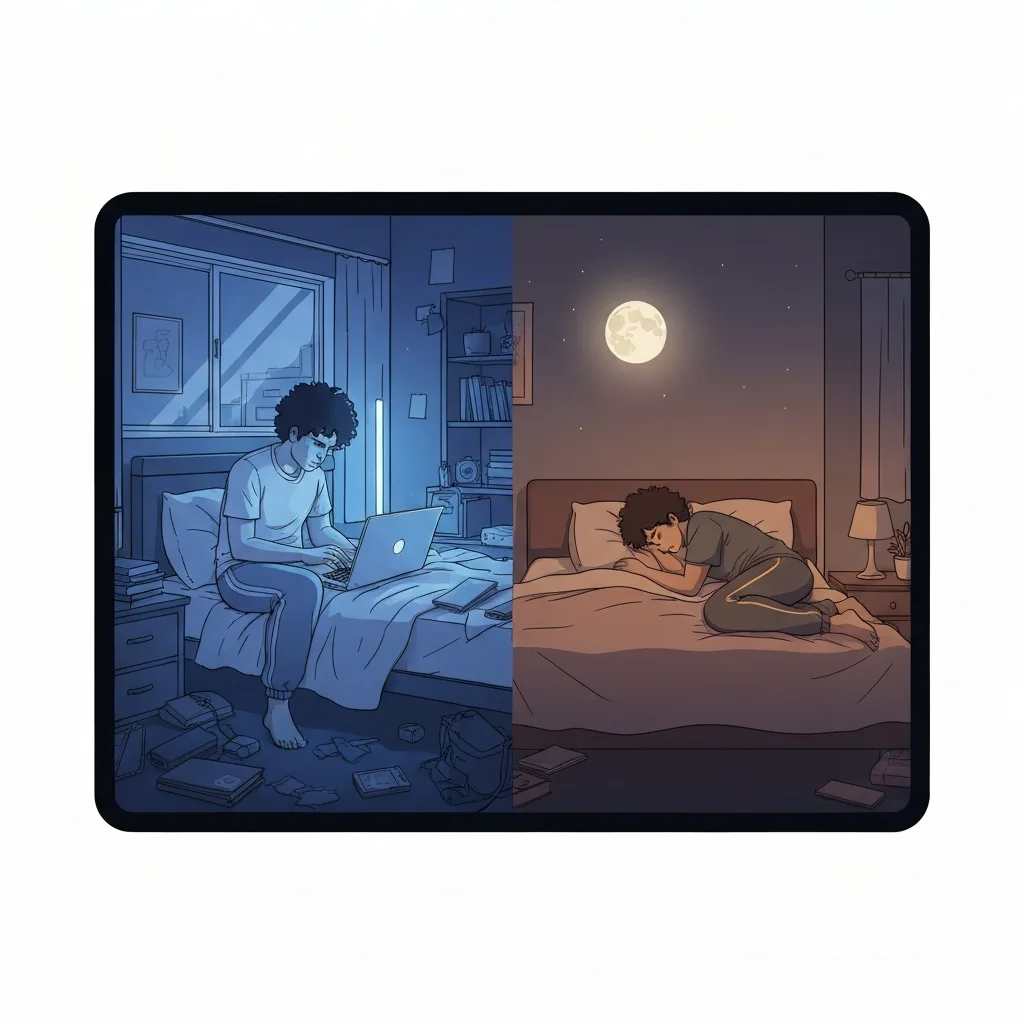
These environmental cues act as somatic anchors. They tell your body what is expected of it. However, when you answer stressful emails from the same bed where you are supposed to sleep, you fundamentally disrupt this biological signaling. The brain becomes confused. It registers the physical location of the bed, which suggests sleep, but it simultaneously processes the cognitive threat of a looming deadline, which demands cortisol and adrenaline.
The result is a state of autonomic co-activation. Your nervous system attempts to press the gas pedal and the brake at the exact same time. You become tired but wired. You experience the physical heaviness of exhaustion alongside the rapid heartbeat and shallow breathing of anxiety. Over time, because the brain prioritizes survival over rest, the environment loses its calming association entirely. The bed simply becomes another trigger for hyper-vigilance.
The Somatic Cost of Perpetual Availability
When contexts collapse, the psychological boundaries that protect our emotional reserves disintegrate. Without clear beginnings and endings to our roles, we enter a state of perpetual availability. This chronic low-grade alertness forces the body into continuous somatic bracing—a subconscious tensing of the muscles, particularly in the jaw, neck, and pelvic floor, as the body prepares to respond to an unseen demand.
This is why you can spend an entire Sunday lounging on the couch and still wake up on Monday feeling completely depleted. If your phone was beside you, periodically injecting work anxieties or social obligations into your awareness, your nervous system never actually transitioned into a restorative state. You were resting physically, but your autonomic nervous system remained in a state of suspended mobilization. True rest requires an environment that signals absolute safety from external demands, something that is impossible to achieve when your resting space is entirely contaminated by your working space.
The Illusion of Multitasking Recovery
Many attempt to cope with context collapse by layering relaxation over productivity. We listen to a mindfulness podcast while drafting a report, or we watch a comforting television show while organizing our calendar. While this might feel like an efficient use of time, it is a disaster for emotional regulation. Emotional processing requires dedicated cognitive bandwidth. When you layer tasks, you dilute your attention, preventing your brain from fully engaging in either the stress cycle of the work or the recovery cycle of the rest. You are left in a psychological purgatory—never fully stressed enough to complete the biological stress response, and never fully relaxed enough to recover from it.
Rebuilding the Architecture of Separation
Healing from context collapse does not necessarily require a large home or a remote cabin in the woods. It requires the intentional reconstruction of psychological and spatial boundaries. You must teach your nervous system how to differentiate between states by providing it with reliable, predictable cues.
Spatial Anchoring in Micro-Environments
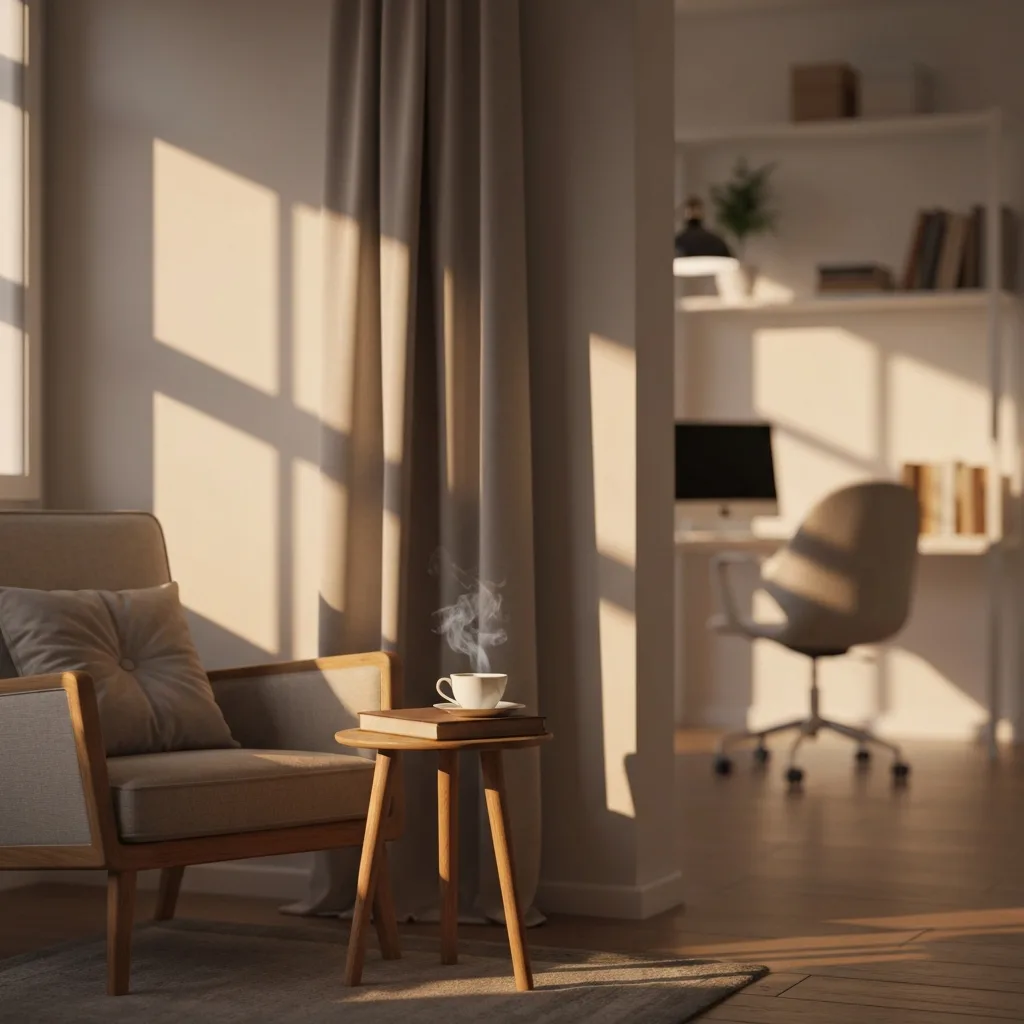
Even if you live in a tiny apartment, you can create distinct micro-environments. The key is strict association. If you must work in your bedroom, designate a specific chair for work. Never sit in that chair to relax, and never take your laptop into the bed. If you work at the dining table, sit in a different seat for work than you do for meals. By rigidly enforcing these micro-boundaries, you slowly rebuild the Pavlovian associations your brain needs to shift gears. You are essentially drawing invisible lines in the sand, telling your nervous system, ‘When I cross this line, I am safe to power down.’
Sensory Scaffolding
When physical space is limited, sensory cues become your most powerful tool for state regulation. You can use light, sound, and scent to manufacture context. During the day, utilize bright, cool-toned lighting and listen to instrumental focus music. When the workday ends, dramatically shift the sensory environment. Turn off the overhead lights, switch to warm lamps, and light a candle with a specific scent, like cedar or lavender. This sensory shift acts as a biological switch. After a few weeks of consistency, the mere smell of that candle will prompt your vagus nerve to increase parasympathetic tone, signaling to your body that the threat-assessment portion of the day is over.
Transitional Friction
In the past, the commute home from work provided a natural period of transitional friction—a buffer zone that allowed the nervous system to decelerate. Without a commute, we often close a laptop and immediately expect to be present, patient partners or parents. This is biologically unreasonable. The nervous system needs time to metabolize the adrenaline of the day. You must manufacture your own transitional friction. This could be a ten-minute walk around the block, a brief stretching routine, or simply sitting in silence for five minutes before changing your clothes. This intentional delay short-circuits the carryover of stress and allows your autonomic state to catch up to your physical reality.
Cultivating Psychological Geography
Ultimately, overcoming context collapse is about reclaiming your psychological geography. It is the radical act of refusing to be everything, everywhere, all at once. By clearly defining where one role ends and another begins, you stop demanding that your nervous system navigate conflicting realities. You give yourself permission to fully inhabit a single state of being.
When you sit down to work, you can allow the sympathetic energy to drive your focus, knowing it has a defined endpoint. And when you finally lie down to rest, in an environment carefully curated to signal safety, your brain can completely release its grip on the day. In a world that constantly demands our fragmented attention, building sturdy walls around our contexts is not an act of rigidity. It is the ultimate act of self-preservation, ensuring that when we finally have the opportunity to rest, our nervous system actually believes us.

Do you enjoy the content on Agenda Creativa?
Your contributions help me create new articles, share creative ideas, and keep this platform alive! If you like what I do and want to support my work, you can buy us a coffee.
Every cup of coffee means more than just a gesture – it's direct support for my passion to create inspiring and useful content. Thank you for being part of this journey!
☕ Buy me a coffee