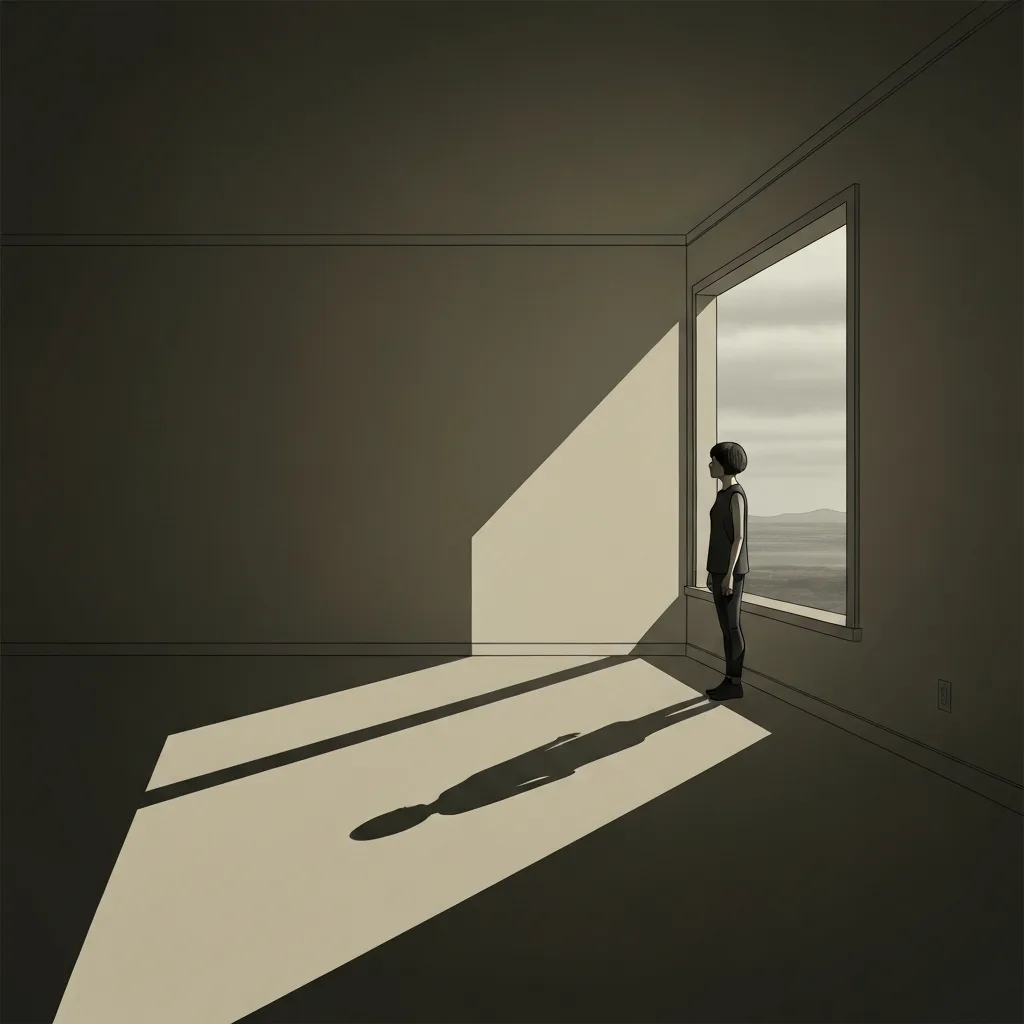
The Crucible of Solitude in Fiction
Human beings are fundamentally social creatures, wired for connection, community, and shared experiences. Because of this inherent drive, the concept of total isolation remains one of the most terrifying and narratively rich scenarios a writer can explore. When an author strips away the supporting cast, the bustling cityscapes, and the safety net of societal norms, what remains is the raw, unvarnished core of the protagonist. The literature of isolation is not merely a genre or a specific trope; it is a profound narrative crucible. By forcing characters into solitude or physical confinement, authors create a pressure cooker that accelerates psychological unraveling, intense self-discovery, and, frequently, a complete reconstruction of reality.
Historically, isolation in literature was often framed as a survival test—think of Daniel Defoe’s stranded protagonist fighting the elements. However, contemporary fiction has shifted the focus inward. The modern narrative of isolation is less about surviving the physical elements and more about surviving the self. Whether a character is locked in a single room, stranded on a remote outpost, or completely alienated within a crowded metropolis, isolation serves as the ultimate mirror, reflecting the protagonist’s deepest fears, flaws, and desires back at them without the mitigating filter of other people.
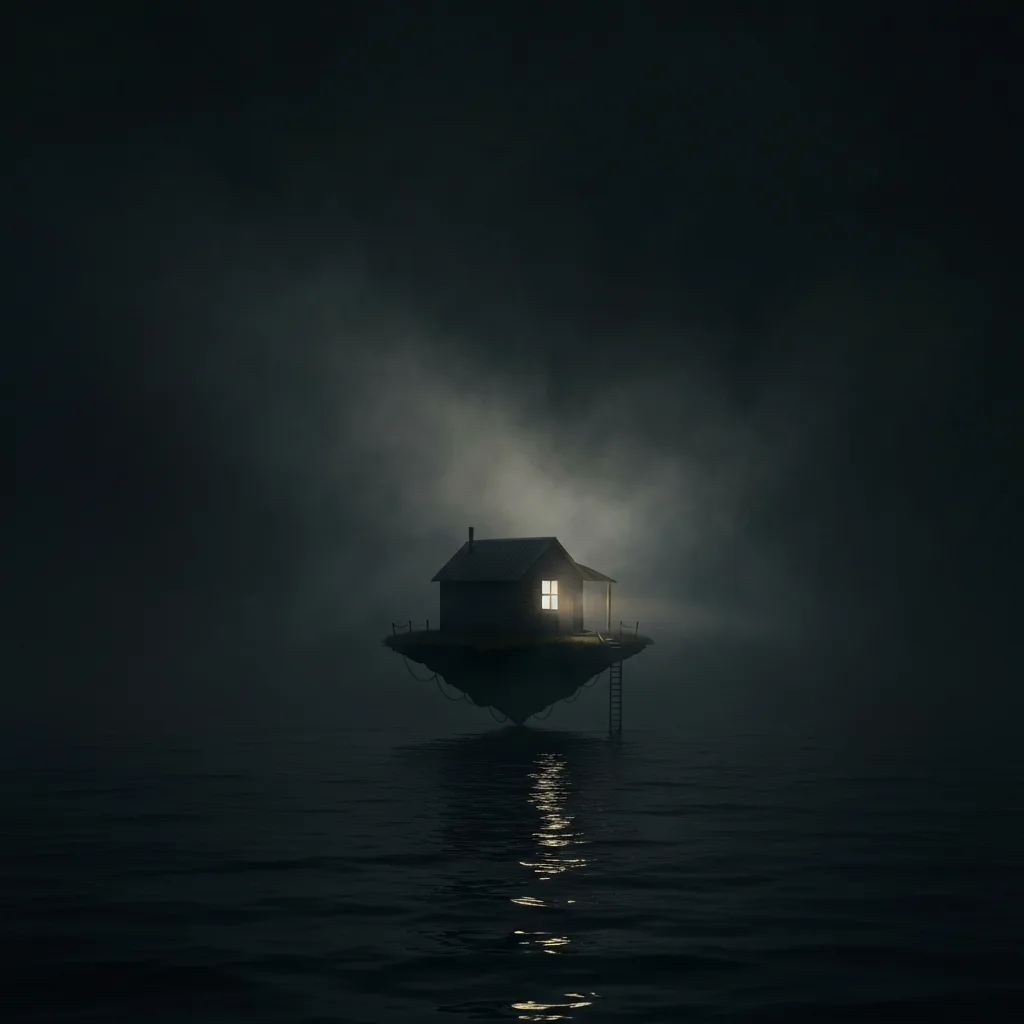
Physical Confinement: The World Shrunk to a Room
Physical confinement forces a radical shift in narrative scope. When a character cannot move freely through the world, the author must make the immediate environment infinitely complex. A prime example of this is Emma Donoghue’s acclaimed novel, where a mother and her young son are held captive in a single, soundproofed room. For the child, the room is not a prison; it is the entire universe. The author brilliantly uses this extreme physical confinement to explore the boundless nature of the human imagination and the fierce, protective bonds of maternal love. The physical boundaries of the setting do not limit the story; rather, they magnify every interaction, every object, and every emotion.
Similarly, in Susanna Clarke’s masterful fantasy, the protagonist is confined to an infinite, labyrinthine House filled with ocean tides and statues. The isolation here is absolute, yet the protagonist does not view his confinement with despair. Instead, his solitude fosters a deep, almost religious reverence for his environment. The physical isolation strips away the noise of the modern world, allowing the narrative to explore themes of innocence, memory, and the corrupting influence of ambition. In both examples, physical confinement acts as a magnifying glass. Without the distraction of a wider world, the minutiae of daily existence become epic, and the internal landscape of the character takes center stage.
Psychological Solitude: Alone in a Crowded Room
While physical confinement is a powerful narrative tool, psychological isolation is often more insidious and relatable. A character does not need to be locked away to be entirely alone. Psychological solitude occurs when a character is severed from meaningful connection, alienated by trauma, mental illness, or profound disillusionment with society. This form of isolation forces the narrative into a tight, often claustrophobic psychological space.
Consider the protagonist of Ottessa Moshfegh’s recent contemporary fiction, who deliberately attempts to sleep away a year of her life in an apartment in New York City. Surrounded by millions of people, she enforces her own extreme isolation through pharmaceuticals and apathy. Her solitude is a rejection of a hyper-commercialized, superficial society. The narrative becomes a dark, biting exploration of grief and the desperate desire to hit the reset button on one’s own consciousness. The isolation is self-imposed, serving as both a shield against a world she finds intolerable and a weapon turned against her own psyche.
This echoes the classic psychological isolation found in Fyodor Dostoevsky’s underground man, who retreats from society out of spite and an overwhelming sense of intellectual alienation. In these narratives, the lack of external validation causes the character’s internal monologue to spiral. Without other people to act as sounding boards or reality checks, the protagonist’s worldview becomes increasingly distorted, leading to unreliable narration that challenges the reader to decipher the truth hidden within the character’s self-deception.
The Setting as the Ultimate Antagonist
In the literature of isolation, the setting inevitably ceases to be mere background and elevates to the role of an active antagonist or a demanding co-star. When characters are isolated, the environment presses in on them. The silence becomes deafening; the shadows become threats. The setting must carry the narrative weight usually distributed among a cast of secondary characters.
In Shirley Jackson’s seminal haunted house narrative, the isolation of the architectural anomaly is precisely what allows it to prey on the vulnerable protagonist. The physical distance from the rest of civilization ensures that the psychological pressure applied by the house remains uninterrupted. The setting manipulates the protagonist’s pre-existing feelings of loneliness, weaponizing her desire for belonging against her. The isolation is the mechanism through which the horror operates.
Even outside of the horror genre, isolated settings dictate the rhythm of the narrative. A remote cabin buried in snow, a solitary lighthouse battered by the sea, or a spacecraft drifting lightyears from Earth—these settings impose strict rules on the characters. They dictate the resources available, the daily routines required for survival, and the inescapable reality that help is not coming. This environmental pressure forces characters to confront problems head-on, stripping away the option of flight and leaving only the agonizing necessity of the fight.
Narrative Mechanics: Writing the Void
Crafting a compelling story around an isolated character requires specific, highly disciplined narrative techniques. Without dialogue to break up the text or interpersonal conflict to drive the plot, the author must rely heavily on internal monologue, memory, and intense sensory detail. The pacing of an isolation narrative often mimics the character’s psychological state—time may dilate, with entire chapters dedicated to a single, agonizing hour, or time may compress, with months passing in a blur of repetitive routine.
First-person, present-tense narration is frequently employed to create a sense of immediate, inescapable claustrophobia. The reader is locked inside the protagonist’s head, experiencing their sensory deprivation and their psychological spirals in real-time. Stream of consciousness becomes a vital tool, mapping the erratic, unpredictable pathways of a mind that has been left entirely to its own devices. The author must carefully balance the mundane realities of isolation with the vivid, often surreal internal life of the character.
Furthermore, authors often use inanimate objects to fulfill the character’s desperate need for connection. A volleyball named Wilson, a beloved piece of furniture, or even a specific stain on the wall can become a confidant. This anthropomorphism highlights the devastating impact of solitude, demonstrating the human brain’s relentless, desperate search for social interaction, even when none exists.
The Paradox of Connection Through Disconnection
Why are readers so drawn to stories of profound isolation? The answer lies in the paradox of the reading experience itself. Reading is, by definition, a solitary act. When we open a book about an isolated character, we are matching our physical state with their psychological state. This alignment creates an incredibly deep, intimate bond between reader and protagonist.
Furthermore, reading about extreme isolation allows us to safely explore our own fears of abandonment and loneliness. In a modern era characterized by hyper-connectivity and the constant, exhausting performance of social media, the idea of total isolation is simultaneously terrifying and deeply alluring. The literature of isolation offers a quiet, albeit often harrowing, respite from the noise of the crowd. It strips away the superficial layers of human interaction and asks the most fundamental question: Who are we when absolutely no one is watching?
Ultimately, narratives of solitude and confinement are not truly about being alone. They are about the fierce, enduring struggle to maintain one’s humanity in the absence of humanity. They remind us that the mind is an expansive, dangerous, and wondrous landscape, entirely capable of building its own prisons, but equally capable of forging its own salvation.
Do you enjoy the content on Agenda Creativa?
Your contributions help me create new articles, share creative ideas, and keep this platform alive! If you like what I do and want to support my work, you can buy us a coffee.
Every cup of coffee means more than just a gesture – it's direct support for my passion to create inspiring and useful content. Thank you for being part of this journey!
☕ Buy me a coffee