The Boundaries of Genre Are Collapsing
For decades, bookstores and libraries relied on a comfortable system of categorization. Fantasy featured dragons, prophecies, and pastoral landscapes. Science fiction concerned itself with starships, physics, and the distant future. Horror existed to terrify, relying on ghosts, demons, or psychological decay. These boundaries were neat, predictable, and heavily policed by publishing conventions. But at the turn of the 21st century, a literary rebellion began to take shape, rejecting these rigid classifications in favor of something far more unsettling. This movement became known as the New Weird.
The New Weird is not merely a blending of genres; it is an active subversion of them. It takes the world-building rigor of epic fantasy, the speculative edge of science fiction, and the visceral dread of horror, stripping away their most tired clichés. Gone are the chosen ones, the faster-than-light travel, and the haunted houses. In their place are decaying, industrialized cities, grotesque biological mutations, and narratives that refuse to offer the reader easy answers. It is a genre defined by its commitment to the bizarre, the grotesque, and the fundamentally unknowable.
Roots in the Shadows: From the Old Weird to the New
To understand the New Weird, one must first look back to its predecessor. The “Old Weird” refers primarily to the pulp fiction of the early 20th century, most notably the stories published in the magazine Weird Tales. Writers like H.P. Lovecraft, Clark Ashton Smith, and Algernon Blackwood pioneered a type of cosmic horror that emphasized humanity’s insignificance in the face of ancient, incomprehensible forces.
However, the Old Weird was heavily burdened by the prejudices and fatalism of its time. The protagonists were almost always passive observers driven mad by the unknown, and the narratives frequently relied on xenophobia and racism to generate fear of the “other.” The New Weird reclaims the aesthetic of the bizarre while aggressively discarding these outdated ideologies.
Modern authors of the New Weird embrace the “other.” Rather than fleeing from the monstrous, they invite the reader to live alongside it. The unknown is no longer a source of inevitable madness; it is a complex reality to be navigated, studied, and sometimes even sympathized with. This shift transforms the weird from a tool of cosmic terror into a lens for exploring sociology, politics, and ecology.
The City as a Living Organism
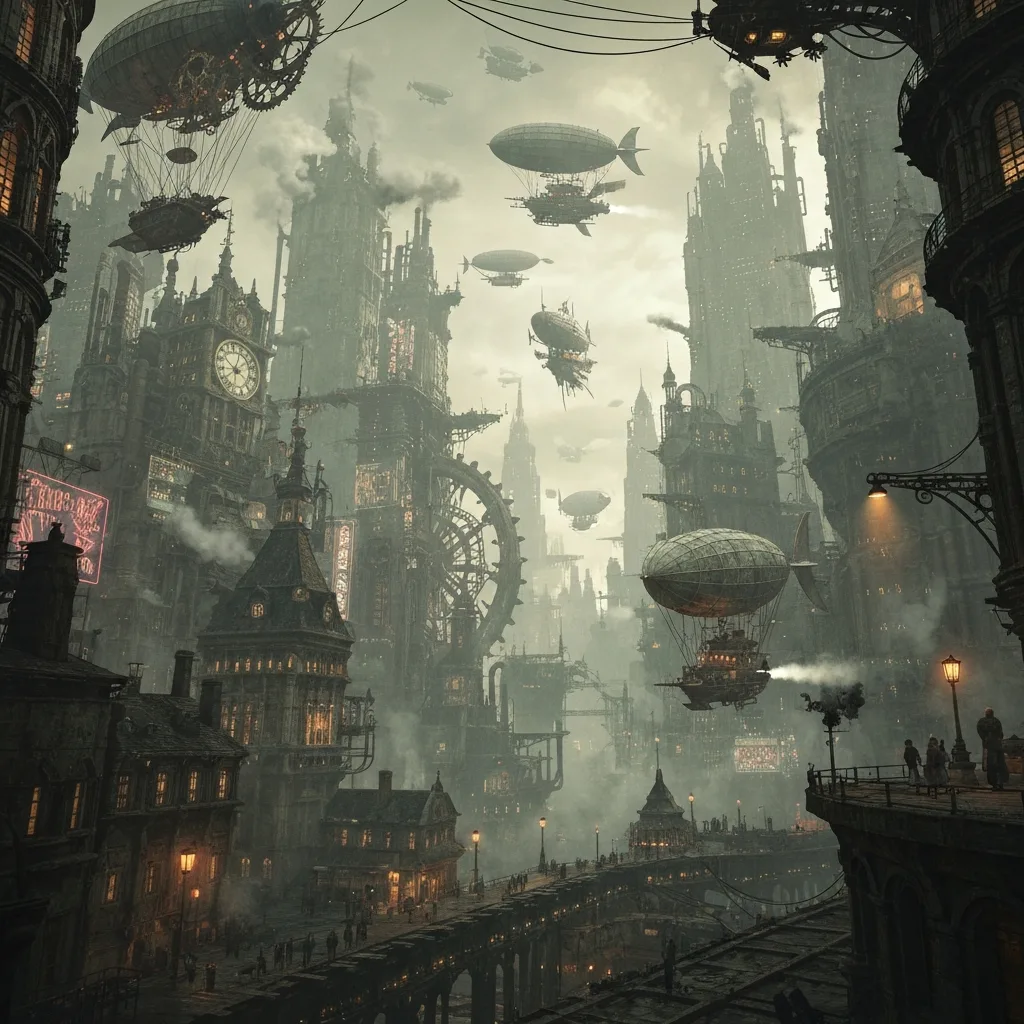
If traditional fantasy is defined by the sweeping journey across a map, the New Weird is defined by claustrophobia. The setting is rarely pastoral. Instead, the genre is obsessed with the urban environment. These are not the shining metropolises of utopian sci-fi, nor are they the quaint villages of high fantasy. They are sprawling, grimy, industrial nightmares.
China Miéville and the Grime of New Crobuzon
No author exemplifies the New Weird’s urban obsession quite like China Miéville. In his seminal novel Perdido Street Station, Miéville introduces readers to New Crobuzon, a city that feels less like a backdrop and more like a diseased, breathing organism. The city is a chaotic melting pot of humans, insectoid Khepri, avian Garudas, and Remade—criminals whose bodies have been grotesquely altered by industrial magic as punishment.
Miéville’s world-building rejects the clean lines of Tolkien-esque fantasy. Magic in New Crobuzon, known as “thaumaturgy,” is treated as a hard science, complete with industrial waste and bureaucratic regulation. The horror does not come from a dark lord in a distant tower, but from corrupt militias, organized crime syndicates, and interdimensional predators that feed on human dreams. By grounding the bizarre in gritty, socio-political realism, Miéville forces the reader to treat the absurd with absolute seriousness.
Ecological Dread and the Uncanny
While Miéville dominates the urban landscape of the New Weird, other authors have taken the genre into the wilderness, swapping industrial grime for mutated ecosystems. This sub-sect of the genre focuses on “eco-weird,” where nature itself becomes an alien, hostile, and deeply fascinating force.
Jeff VanderMeer and the Southern Reach
Jeff VanderMeer is perhaps the most prominent architect of the eco-weird, primarily through his acclaimed Southern Reach Trilogy, beginning with Annihilation. The novel follows a scientific expedition into Area X, an expanding, quarantined coastal region where the laws of nature, physics, and biology have begun to break down.
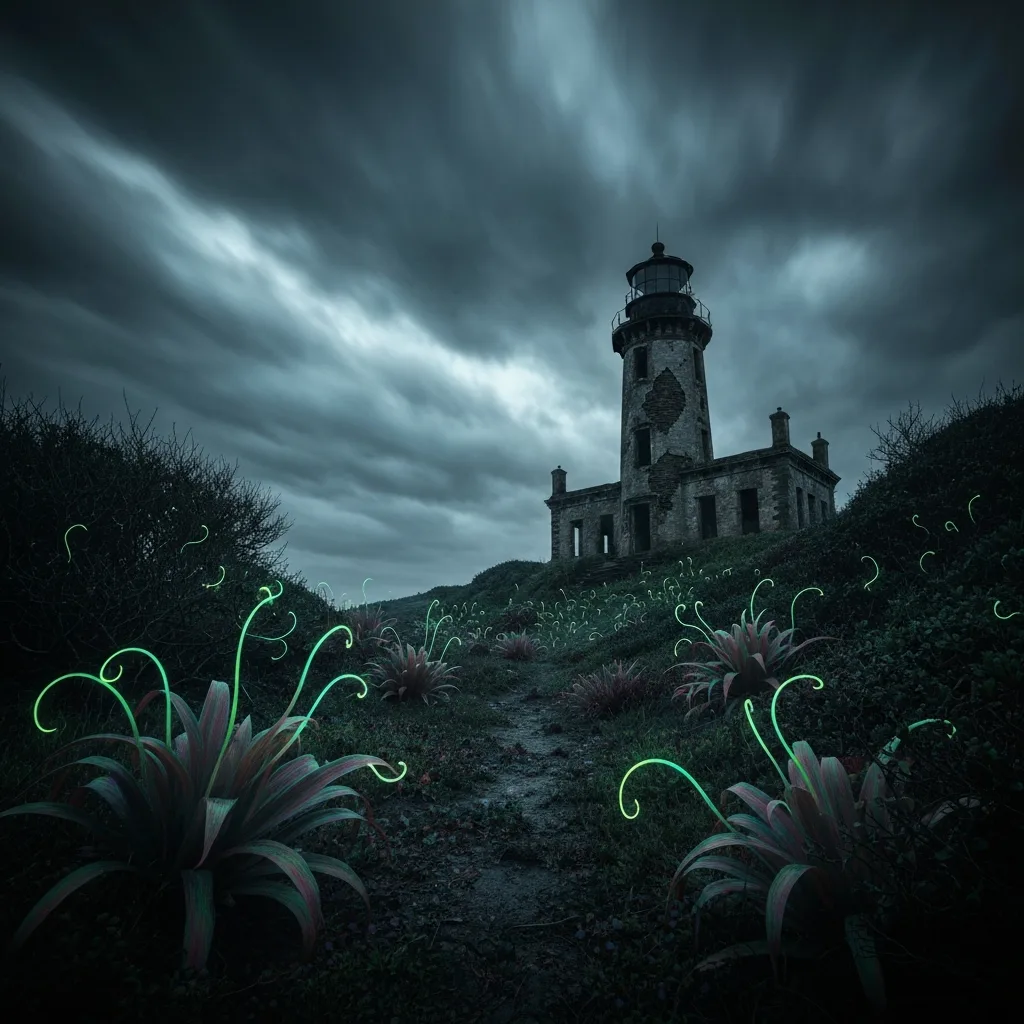
VanderMeer’s approach to the weird is intensely psychological and atmospheric. Instead of confronting his characters with easily definable monsters, he subjects them to an environment that actively rewrites their reality. Plants grow in the shape of human organs, a subterranean tower descends into the earth, and a mysterious entity writes biblical, apocalyptic poetry in glowing fungi on the walls. The horror of Annihilation is not about being hunted; it is about the terrifying realization that human consciousness is entirely incompatible with the natural world it seeks to understand.
This ecological focus resonates deeply with modern anxieties about climate change and environmental collapse. VanderMeer uses the weird to articulate the very real fear that the planet is changing into something hostile and unrecognizable, making the New Weird an essential genre for contemporary ecological discourse.
The Rejection of Comfort
One of the most defining characteristics of the New Weird is its refusal to comfort the reader. Mainstream speculative fiction often operates on a contract of resolution: the mystery will be solved, the villain will be defeated, and the world will return to a state of equilibrium. The New Weird tears this contract to shreds.
In these narratives, the bizarre events are rarely fully explained. The origins of Area X in Annihilation remain fundamentally opaque. The strange, dream-feeding Slake Moths in Perdido Street Station are dealt with, but the systemic corruption of the city remains entirely intact. The New Weird demands that readers accept ambiguity. It argues that the universe is not a puzzle waiting to be solved by human intellect, but a vast, chaotic system that we can only ever partially comprehend.
This lack of resolution can be jarring for readers accustomed to traditional story arcs, but it is also the source of the genre’s enduring power. By denying easy answers, the New Weird forces the narrative to linger in the mind long after the final page is turned. It leaves a residue of the uncanny, a lingering suspicion that the world outside our window is far stranger than we pretend it to be.
Prose as a Visceral Experience
The thematic complexity of the New Weird is matched by its distinct approach to prose. Authors in this space frequently employ dense, highly sensory language designed to disorient and overwhelm. Because they are describing things that have no real-world equivalent, they must rely on unexpected metaphors and visceral imagery.
The language is often tactile, focusing on smells, textures, and bodily sensations. When a New Weird author describes a creature, they do not merely list its physical attributes; they describe the wet sound of its movement, the metallic tang it leaves in the air, and the primal revulsion it triggers in the observer. This commitment to sensory detail grounds the surreal elements of the story, making the impossible feel uncomfortably real.
The Mainstream Bleed
While the New Weird began as a niche rebellion against commercial publishing, its influence has steadily bled into mainstream media. The aesthetic and philosophical markers of the genre can now be seen across various forms of entertainment.
Hollywood adaptations, such as Alex Garland’s film version of Annihilation, have proven that mainstream audiences are hungry for narratives that prioritize atmospheric dread over traditional action. In the realm of video games, titles like Control, Bloodborne, and Disco Elysium draw heavily on New Weird tropes, dropping players into incomprehensible worlds and asking them to navigate the absurdity without holding their hands.
Even literary fiction, which historically kept speculative elements at arm’s length, has begun to embrace the weird. Authors who might previously have been shelved strictly as “literary” are increasingly incorporating surreal, grotesque, and inexplicable elements into their work, recognizing that realism alone is sometimes insufficient to capture the complexities of modern existence.
A Literature for an Unknowable Future
The rise of the New Weird is not a historical accident. It is a direct literary response to an increasingly complex, chaotic, and frightening world. We live in an era defined by invisible algorithms, unprecedented ecological shifts, and global systems that feel entirely beyond human control. Traditional narratives of heroes conquering evil feel inadequate, even naive, in the face of such systemic, incomprehensible challenges.
The New Weird offers a different kind of catharsis. It does not promise that we can conquer the unknown, nor does it guarantee that everything will make sense in the end. Instead, it provides a space to explore the anxiety of living in an unpredictable universe. By dragging the bizarre into the light and forcing us to look at it, the New Weird teaches us how to exist alongside the incomprehensible. It is challenging, grotesque, and deeply unsettling—and that is exactly why it is one of the most vital literary movements of the 21st century.
Do you enjoy the content on Agenda Creativa?
Your contributions help me create new articles, share creative ideas, and keep this platform alive! If you like what I do and want to support my work, you can buy us a coffee.
Every cup of coffee means more than just a gesture – it's direct support for my passion to create inspiring and useful content. Thank you for being part of this journey!
☕ Buy me a coffee