The Story of the Dish:
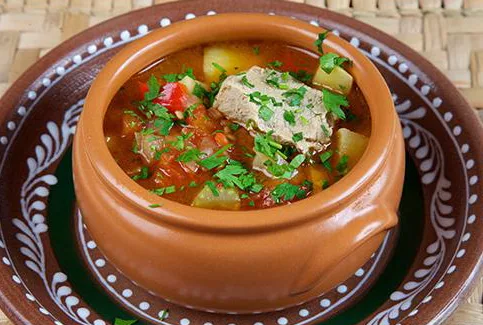
Slow-Reduced Romanian Soup is a traditional Romanian soup that combines simplicity with the authentic flavors of natural ingredients. This dish was often prepared in peasant households, where every fresh vegetable from the garden added a distinct note of savor. It is a nourishing soup, perfect for family meals, bringing together the tastes of childhood and culinary traditions passed down through generations. The addition of sour cream and fresh herbs gives it a touch of freshness and refinement, transforming it into a dish that delights both in flavor and presentation.
Ingredients:
- 6 cups of water
- 500 g beef brisket
- 3 potatoes
- 2 onions
- 2 tomatoes
- 1 parsley root
- 2 carrots
- ½ cup sour cream
- 2 cups borș (or a bit of citric acid)
- 4 cloves of garlic
- Bay leaves
- Salt, to taste
- Black peppercorns
- 1 tablespoon finely chopped lovage
- 1 tablespoon finely chopped dill
Preparation Method:
Preparing the Vegetables and Meat:
- In a large pot, place the diced potatoes, carrots, and parsley root.
- Add the beef pieces, cut into serving-size portions.
- Pour in enough water to cover the ingredients and simmer over low heat, skimming off any foam that forms on the surface.
Adding the Aromas:
- When the meat and vegetables are half-cooked, add the finely chopped onions and the tomatoes, peeled and diced.
- Season with bay leaves, peppercorns, and salt to taste.
- Continue cooking for another 7–8 minutes.
Finishing the Dish:
- Five minutes before removing the pot from the heat, stir in the strained borș.
- Add the crushed garlic, sour cream, and chopped dill. Mix well and let the soup heat through for 2–3 more minutes.
Serving:
Serve the soup hot, garnished with fresh lovage, alongside a slice of homemade bread or mămăligă (polenta).
Serving Recommendations:
Slow-Reduced Romanian Soup is ideal for family lunches, being both nourishing and light. The rich beef flavor and the freshness of the herbs make it a perfect choice for any season. You can add fresh or pickled hot peppers for an extra kick.
Why is it called “Slow-Reduced Romanian Soup” and what sets it apart from other soups?
Answer: The term “Slow-Reduced” refers to the cooking method, which involves gently reducing the liquid to obtain a more concentrated and thicker consistency. Unlike typical soups, this version has less broth and a heartier texture, thanks to ingredients like potatoes and sour cream.
How does the beef influence the final flavor?
Answer: Beef, especially brisket, adds a deep, rich flavor due to its fat and collagen content. As it simmers, it releases juices that enrich the soup, making it more nourishing and satisfying.
What is the role of borș in this recipe?
Answer: Borș provides a tangy note that balances the natural sweetness of the vegetables and the richness of the meat. It is essential for authenticity, giving the soup its characteristic Romanian taste.
Why is it important to add garlic at the end of cooking?
Answer: Adding garlic toward the end preserves its intensity and freshness. If cooked too long, garlic becomes bitter and loses its distinctive flavor, upsetting the soup’s balance.
How can the recipe be adapted for other meats?
Answer: You can use chicken, pork, or lamb, adjusting cooking times accordingly. For example, chicken requires less time, while lamb imparts a stronger, distinctive flavor.
What are the best accompaniments for this soup?
Answer: Slow-Reduced Romanian Soup pairs wonderfully with homemade bread, warm polenta, or pickled hot peppers. These sides add texture and additional flavors, completing the culinary experience.
How can you lighten the soup for a diet?
Answer: Substitute sour cream with fat-free Greek yogurt, reduce the meat portion, and emphasize vegetables. You can also replace borș with lemon juice for a milder acidity.
What other vegetables can enrich the dish?
Answer: Add zucchini, peas, or green beans for extra color and freshness. Add these toward the end of cooking to preserve their texture and nutrients.
How do bay leaves and peppercorns affect the soup’s aroma?
Answer: Bay leaves and peppercorns impart a subtle, earthy aroma that complements the vegetables’ sweetness and the meat’s richness. These spices are vital for a well-rounded flavor.
Why is decorating the soup with fresh herbs important?
Answer: Garnishing with fresh herbs like lovage and dill not only enhances visual appeal but also intensifies the freshness of the dish. Fresh herbs add a flavor contrast and balance the soup’s richness.


Do you enjoy the content on Agenda Creativa?
Your contributions help me create new articles, share creative ideas, and keep this platform alive! If you like what I do and want to support my work, you can buy us a coffee.
Every cup of coffee means more than just a gesture – it's direct support for my passion to create inspiring and useful content. Thank you for being part of this journey!
☕ Buy me a coffee