The Departure from Chronological Constraints
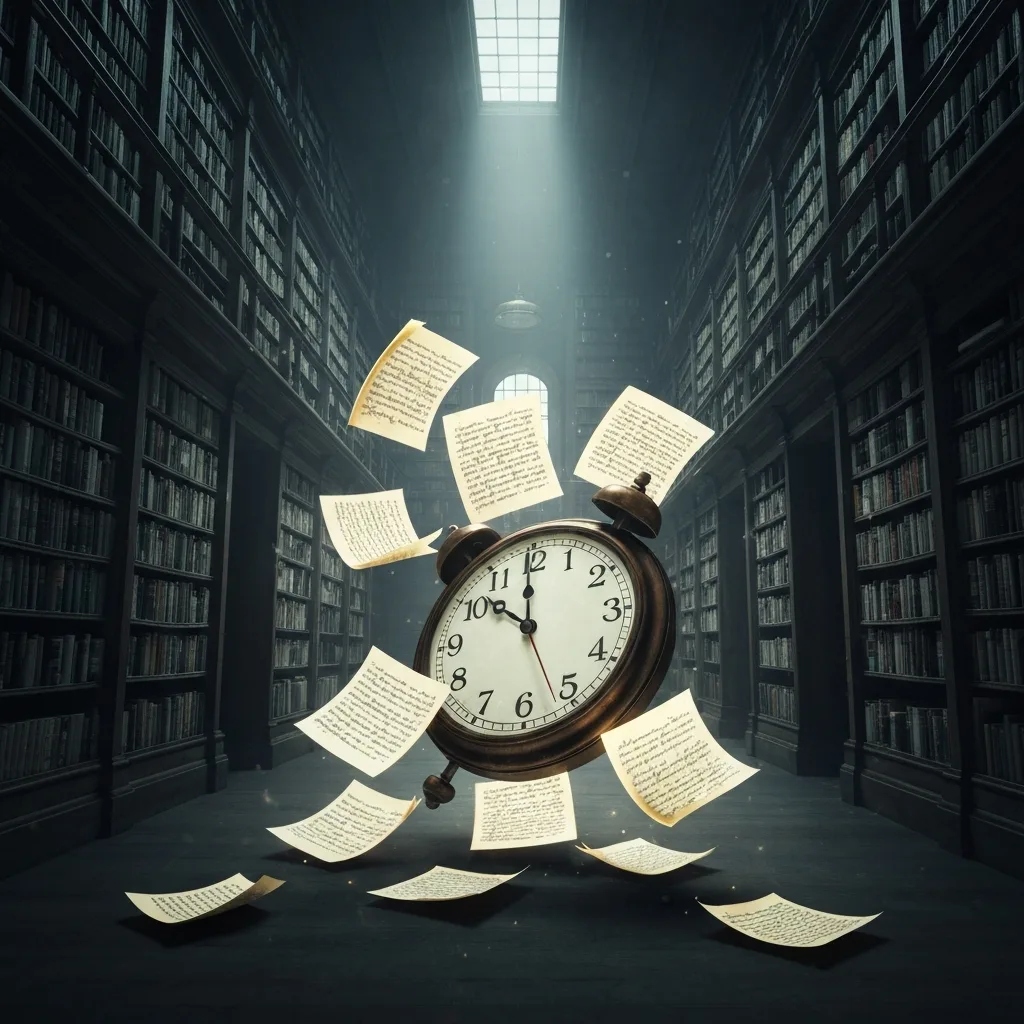
For centuries, the fundamental agreement between author and reader was built on the steady, predictable march of time. A story began at the beginning, navigated the turbulent waters of the middle, and arrived safely at the end. This linear progression, while deeply satisfying and structurally sound, represents a sanitized version of human experience. In reality, we do not experience life as a neat sequence of events. Our minds are messy, associative, and constantly slipping the moorings of the present to drift into the past or project into the future. Recognizing this, modern literature has increasingly embraced the non-linear narrative, dismantling the traditional timeline to construct stories that behave less like historical records and more like the human mind itself.
The rejection of strict chronology is not entirely new—Laurence Sterne played with narrative time in the 18th century with Tristram Shandy, and modernists like Virginia Woolf and William Faulkner shattered temporal boundaries to capture the stream of consciousness. However, what was once considered experimental avant-garde technique has evolved into a central pillar of contemporary storytelling. Today’s authors utilize fragmented timelines, overlapping perspectives, and reverse chronologies not merely to disorient the reader, but to achieve a profound psychological realism. By breaking the clock, writers are able to map the intricate, often chaotic architecture of human memory.
Mimicking the Mechanics of Remembrance
To understand the power of the non-linear narrative, one must examine the mechanics of memory. When we recall an event, we rarely retrieve a seamless, start-to-finish video recording. Instead, memory is triggered by sensory associations—a specific scent, a sudden drop in temperature, a passing melody. These triggers cause us to leap across decades in a fraction of a second. Contemporary authors replicate this cognitive process on the page, using associative transitions rather than chronological ones to move a story forward.
This technique demands a high level of trust between the writer and the audience. The author presents a mosaic of moments, trusting that the reader will hold the disparate pieces in their mind until the larger picture comes into focus. This structural choice transforms reading from a passive act of receiving information into an active process of cognitive assembly. The reader becomes a co-creator of meaning, piecing together the timeline to understand not just what happened, but why it matters in the context of the character’s entire life.
Trauma, Grief, and the Shattered Timeline
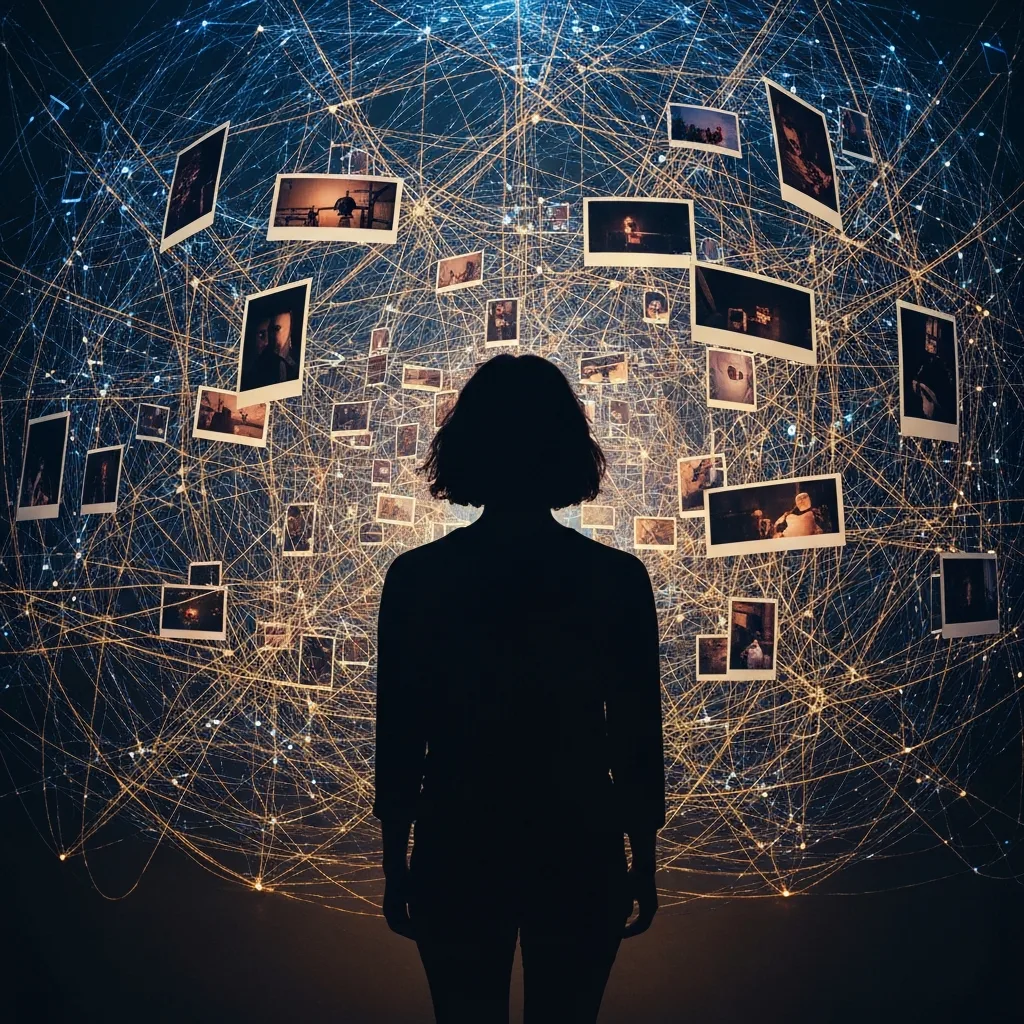
One of the most compelling applications of the non-linear narrative is in the exploration of trauma and grief. Psychological trauma fundamentally alters an individual’s relationship with time. For those suffering from post-traumatic stress, the past is not a closed chapter; it is an active, intrusive force that bleeds into the present. A traditional, linear narrative is ill-equipped to convey the cyclical, inescapable nature of a traumatized mind.
By fracturing the timeline, authors can simulate the experience of being trapped in a memory loop. The narrative might circle a central, devastating event, approaching it from different angles and different points in time, much like a mind trying to process the incomprehensible. Kurt Vonnegut famously utilized this structure in Slaughterhouse-Five, where the protagonist, Billy Pilgrim, has become ‘unstuck in time.’ The erratic jumping between the horrors of the Dresden bombing, post-war domestic life, and alien abduction perfectly encapsulates the disorientation of PTSD. In more recent literature, authors use similar temporal distortions to illustrate how grief stretches and compresses time, making a loss that occurred years ago feel as immediate as a fresh wound.
The Reader as the Narrative Architect
When a story is told out of order, the burden of comprehension shifts significantly toward the reader. This might seem like a barrier to engagement, but it actually fosters a deeper, more intimate connection with the text. As we navigate a fragmented narrative, we are forced to constantly re-evaluate our understanding of the characters and their motivations. A seemingly innocuous action in chapter one might be entirely recontextualized by a flashback in chapter ten.
This structural puzzle-solving creates a unique sense of narrative tension. Instead of wondering ‘what happens next,’ the reader is often left wondering ‘how did we get here?’ or ‘what crucial piece of the past is missing?’ The satisfaction derived from a well-executed non-linear novel comes from the sudden, illuminating moments of connection—the ‘aha’ moments when two disparate narrative threads finally weave together, revealing a hidden truth that a linear telling would have obscured.
Reverse Chronology: The Weight of Inevitability
Among the various forms of non-linear storytelling, reverse chronology stands out as one of the most emotionally devastating. By beginning at the end and working backward, the author fundamentally alters the emotional stakes of the narrative. The reader is stripped of the comfort of hope regarding the plot’s outcome; the tragedy, the breakup, or the death has already occurred. The tension is no longer about the destination, but the journey.
This technique forces the reader to focus on the subtle, incremental choices that led to the inevitable conclusion. It highlights the tragic irony of human existence—how often we are unaware of the significance of a moment until it has passed. When we read a romance that begins with a bitter divorce and works backward to the dizzying heights of first love, the initial joy is colored by our knowledge of its eventual decay. The reverse structure demands that we look at cause and effect through a different lens, emphasizing the fragility of happiness and the profound impact of seemingly minor decisions.
Contemporary Masterpieces of Temporal Distortion
The landscape of modern fiction is rich with masterful examples of non-linear storytelling. David Mitchell’s Cloud Atlas pushes the boundary of temporal structure, nesting six distinct narratives across centuries like Russian dolls, only to resolve them in reverse order. This structural audacity underscores the novel’s thematic focus on the interconnectedness of human souls across time. Similarly, Emily St. John Mandel’s Station Eleven weaves seamlessly between the days preceding a global pandemic and the decades following it, using the juxtaposition of past and present to explore the enduring nature of art and humanity.
Even in genre fiction, the fragmented timeline has become a powerful tool. Psychological thrillers frequently employ shifting timelines and alternating perspectives to obscure the truth and build suspense, while modern science fiction uses temporal distortion to explore the philosophical implications of memory and identity. These authors understand that manipulating time is not just a stylistic flourish, but a profound way to deepen character development and thematic resonance.
The Cinematic Influence on Literary Timelines
It is impossible to discuss the rise of non-linear literature without acknowledging the influence of cinema. The visual language of film—with its jump cuts, flashbacks, and montage sequences—has deeply informed how contemporary authors structure their novels. As audiences became fluent in the visual shorthand of cinematic time manipulation, readers grew more comfortable with sudden temporal shifts on the page.
Writers have adapted cinematic techniques to prose, using scene breaks and chapter divisions the way a director might use an abrupt cut to black. This cross-pollination between mediums has resulted in a more dynamic, visually evocative style of writing. A paragraph can zoom in on a microscopic detail in the present, then immediately pan out to a sweeping summary of a childhood decade, mimicking the fluid, unrestricted movement of a camera lens through time.
The Enduring Appeal of the Fragmented Novel
In an era defined by constant distraction and fragmented attention spans, it might seem counterintuitive that novels demanding such intense cognitive focus are thriving. Yet, the popularity of non-linear narratives speaks to a deep human desire for stories that reflect the complexity of our inner lives. We live in a hyper-connected, multi-tabbed reality where the past is constantly archived and accessible, and the future is perpetually looming.
Non-linear fiction validates this modern experience. It acknowledges that we are all walking collages of our past experiences, present anxieties, and future hopes. By abandoning the artificial neatness of the chronological timeline, contemporary authors are able to capture the beautiful, chaotic, and profoundly non-linear reality of what it means to be human. They remind us that our stories are not defined solely by where they end, but by the intricate, tangled web of moments that hold them together.
Do you enjoy the content on Agenda Creativa?
Your contributions help me create new articles, share creative ideas, and keep this platform alive! If you like what I do and want to support my work, you can buy us a coffee.
Every cup of coffee means more than just a gesture – it's direct support for my passion to create inspiring and useful content. Thank you for being part of this journey!
☕ Buy me a coffee