The Neon Genesis of a Literary Rebellion
Science fiction has always served as a mirror reflecting the anxieties and aspirations of its time. During the Golden Age of the genre, narratives were largely characterized by a profound optimism regarding technological progress. Humanity was destined to conquer the stars, eradicate disease, and build utopian societies governed by reason and chrome-plated efficiency. But by the late 1970s and early 1980s, the cultural mood had shifted. The post-war economic boom was fracturing, urban decay was highly visible, and the nascent personal computing revolution hinted at a future that was less about exploring distant galaxies and more about navigating complex digital networks.
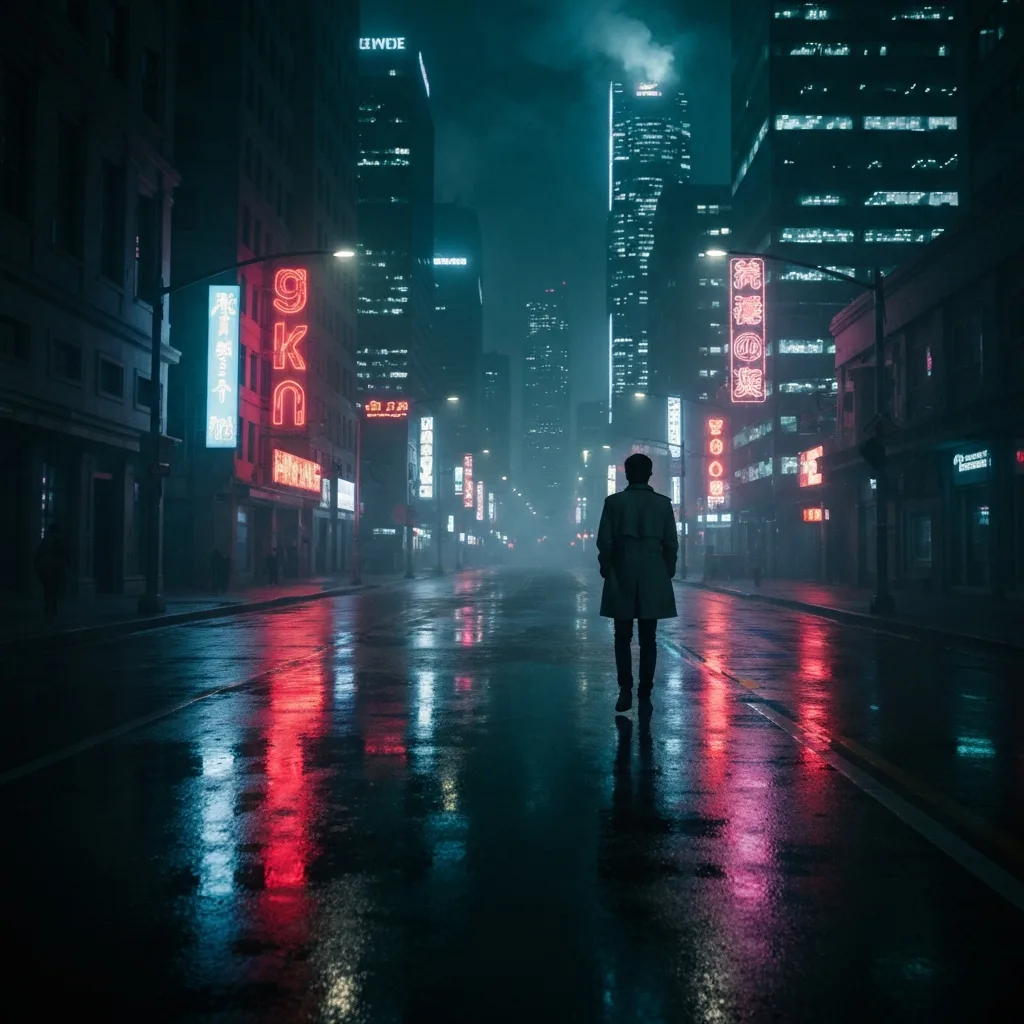
Out of this cultural friction emerged a radical new literary movement: cyberpunk. Coined by writer Bruce Bethke and popularized by editor Gardner Dozois, the term perfectly encapsulated the movement’s core philosophy. It was a collision of high-tech futurism and underground, street-level rebellion. The protagonists of these stories were not square-jawed astronauts or noble scientists; they were hackers, drug addicts, mercenaries, and outcasts scraping by in the shadows of monolithic mega-corporations. Cyberpunk stripped science fiction of its sterile utopianism and dragged it down into the rain-slicked, neon-lit gutters of the near future.
The Architects of the Sprawl
No discussion of cyberpunk literature can begin without acknowledging William Gibson. His 1984 debut novel, Neuromancer, is widely considered the definitive text of the genre. Gibson famously coined the term ‘cyberspace’ to describe a consensual hallucination experienced daily by billions of legitimate operators, creating a visual and spatial metaphor for the internet years before the World Wide Web existed. Neuromancer introduced readers to Case, a washed-up computer hacker hired for one last heist, and Molly Millions, a cybernetically enhanced street samurai. Gibson’s prose was startlingly original—a dense, lyrical, and hard-boiled fusion of noir detective fiction and dizzying technological jargon.
However, Gibson did not build this subgenre in isolation. He was part of a loose collective of writers who were actively dismantling science fiction tropes. Bruce Sterling, another foundational figure, acted as the movement’s chief ideologue. His editing of the Mirrorshades anthology in 1986 provided a manifesto for the movement, showcasing stories that blended visceral bodily experiences with globalized, corporate-controlled environments. Authors like Pat Cadigan, often referred to as the Queen of Cyberpunk, brought critical perspectives on mind-machine interfaces and the commodification of memory and identity in works like Synners and Mindplayers. Together, these authors crafted a vision of the future where nation-states had crumbled, replaced by ruthless multinational conglomerates (often modeled on Japanese zaibatsus, reflecting 1980s Western anxieties about Japanese economic dominance).
The Satirical Edge and the Metaverse
As the 1980s bled into the 1990s, the initial shock value of cyberpunk began to wane, and the genre required evolution. Enter Neal Stephenson. His 1992 novel Snow Crash took the established tropes of the genre—hyper-capitalism, virtual reality, mercenary protagonists—and injected them with a heavy dose of hyperkinetic satire. Stephenson’s world is one where the United States federal government has effectively ceded all power to private franchises. People live in corporate-owned enclaves, and the Mafia controls pizza delivery with deadly precision.
Snow Crash is particularly notable for its conceptualization of the Metaverse, a fully realized virtual reality successor to the internet where users interact through avatars. While Gibson’s cyberspace was abstract and deeply tied to the physical hardware of the brain, Stephenson’s Metaverse was social, commercial, and recognizable as the precursor to modern virtual reality platforms. Stephenson demonstrated that cyberpunk did not always have to be relentlessly grim; it could also be fiercely funny, using absurdity to highlight the logical extremes of unchecked anarcho-capitalism and consumer culture.
Flesh and Steel: The Transhumanist Question
A recurring thematic pillar of cyberpunk literature is the aggressive interrogation of the human body. In these narratives, the body is no longer a sacred temple; it is a piece of hardware, subject to upgrades, modifications, and obsolescence. This transhumanist element forces readers to confront profound philosophical questions: If you replace your limbs with cybernetics, upload your memories to a server, and alter your neurochemistry with designer software, at what point do you cease to be human?
Richard K. Morgan pushed this concept to its absolute limit in his 2002 novel Altered Carbon. Set in a universe where human consciousness can be digitized and downloaded into new bodies (called ‘sleeves’), Morgan’s work explores the terrifying socioeconomic implications of immortality. In this reality, the ultra-rich can live forever, hoarding wealth and power across centuries, while the poor are forced into substandard bodies or left in digital storage. Through its hard-boiled detective narrative, Altered Carbon uses extreme technological advancement to magnify the inherent inequalities of class and capitalism, proving that the core concerns of cyberpunk remain deeply relevant.
The Shift to Post-Cyberpunk and the Mundane Future
As the actual 21st century arrived, a strange realization settled over the literary world: we were already living in a cyberpunk reality. The internet had become ubiquitous, smartphones connected us to a global data network 24/7, and multinational tech corporations wielded more influence than many sovereign nations. The speculative edge of the 1980s had become the mundane reality of the 2000s.
This realization birthed ‘post-cyberpunk.’ Writers began to move away from the alienated, loner protagonists fighting the system from the outside. Instead, post-cyberpunk often features characters who are integrated into the society they are critiquing—journalists, politicians, or corporate employees trying to enact change from within. Cory Doctorow’s Little Brother is a prime example, utilizing cyberpunk aesthetics to address contemporary issues of homeland security, surveillance states, and digital privacy. The technology in post-cyberpunk is less about gleaming chrome arms and more about algorithmic manipulation, data mining, and the subtle, invisible ways technology dictates human behavior.
Even William Gibson’s later works reflect this shift. His Blue Ant trilogy (beginning with Pattern Recognition) is set in the contemporary world, yet it reads exactly like his early sci-fi. Gibson recognized that the present day was bizarre and technologically saturated enough to be treated as a science fiction setting. His more recent novels, The Peripheral and Agency, explore the concept of the ‘jackpot’—not a single apocalyptic event, but a slow, multi-causal systemic collapse driven by climate change, wealth disparity, and political corruption. It is a chillingly plausible vision of the future that feels entirely rooted in current events.
Global Perspectives and New Voices
Historically, cyberpunk was a predominantly Western genre, heavily influenced by American anxieties and a somewhat fetishized view of Asian aesthetics. However, the modern renaissance of the genre has seen a massive influx of international voices who are reclaiming and redefining the narrative. These authors use the framework of cyberpunk to explore the specific technological and cultural realities of their own regions.
Chen Qiufan’s Waste Tide is a masterpiece of modern global cyberpunk. Set on Silicon Isle (a fictionalized version of Guiyu, China, once the largest e-waste dismantling site in the world), the novel explores the environmental and human cost of the global technology boom. It shifts the focus away from the gleaming corporate towers and virtual reality playgrounds, forcing the reader to look at the toxic reality of where our discarded devices end up. By blending traditional Chinese cultural elements with stark technological critique, Qiufan breathes new life into the genre, proving that the ‘low life’ aspect of cyberpunk is not just an aesthetic choice, but a global economic reality.
Why the Genre Endures
The enduring power of cyberpunk literature lies in its adaptability. It is a genre built on the friction between human nature and technological acceleration. As long as our reality continues to be shaped by algorithms, artificial intelligence, and corporate monopolies, writers will continue to use the tools of cyberpunk to make sense of the chaos.
Cyberpunk no longer feels like a distant, speculative warning; it reads like a heightened documentary of the present. It teaches us that technology is never neutral—it is always shaped by the power structures that create it. Yet, beneath the cynical veneer and the dystopian landscapes, there is a persistent thread of human resilience. Whether it is a hacker subverting a corporate firewall, a cyborg reclaiming their stolen memories, or a community surviving in the toxic ruins of an e-waste dump, cyberpunk literature reminds us that even in a world dominated by machines and money, humanity will always find a way to hack the system.

Do you enjoy the content on Agenda Creativa?
Your contributions help me create new articles, share creative ideas, and keep this platform alive! If you like what I do and want to support my work, you can buy us a coffee.
Every cup of coffee means more than just a gesture – it's direct support for my passion to create inspiring and useful content. Thank you for being part of this journey!
☕ Buy me a coffee