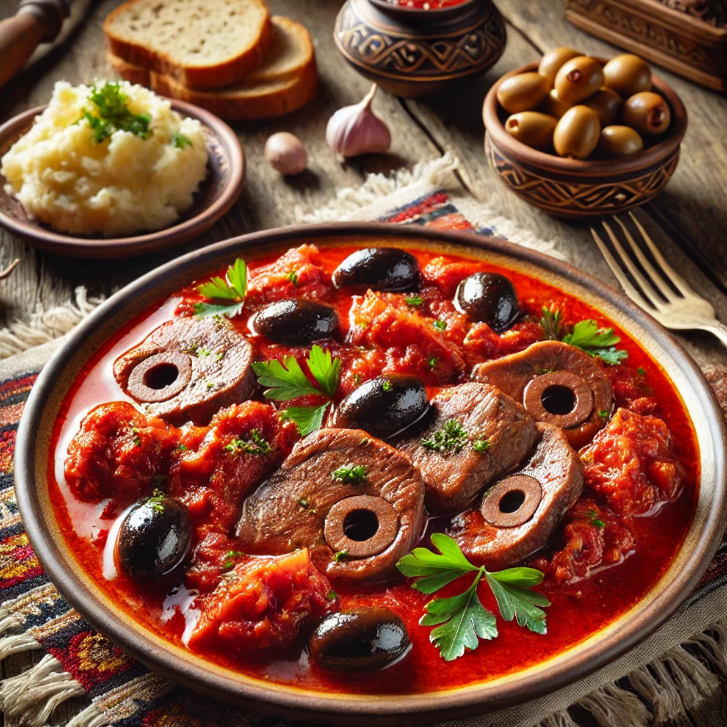
A traditional Romanian recipe, this dish impresses through its combination of aromas and its refined appearance. The slow boiling of the tongue transforms it into a delicate preparation that melts in the mouth, while the rich sauce, slightly tangy thanks to the olives and lemon juice, perfectly completes the whole ensemble.
Ideal for festive meals or special lunches, the tongue with olives is often served alongside mashed potatoes or polenta, so that each bite becomes a complete culinary experience. This recipe brings a touch of elegance to home cooking while preserving the authenticity of Romanian flavors.
Ingredients

- 1 kg beef or pork tongue
- 200 g black olives, pitted
- 1 large onion, finely chopped
- 1 small carrot, thinly sliced
- 2–3 tablespoons oil
- 200 ml tomato juice or 2–3 large tomatoes, finely chopped
- 1 tablespoon tomato paste
- 1 bay leaf
- Salt and pepper, to taste
- Juice of one lemon (for extra acidity)
- Fresh herbs (parsley) for garnish
Instructions
Preparing the tongue:
Wash the tongue thoroughly under cold running water and place it to boil in a large pot with water and a little salt. Boil for about 1–1.5 hours, until it becomes tender.
After boiling, remove the tongue from the water and let it cool slightly. Peel off the white skin from the surface of the tongue, then cut it into suitable slices.
Preparing the sauce:
In a deep pan or pot, heat the oil and add the chopped onion. Sauté the onion until translucent, then add the carrot and cook until it softens.
Add the tomato juice, tomato paste, bay leaf, and mix well. Let the sauce simmer on low heat for 10–15 minutes, until it thickens slightly and becomes aromatic.
Adding the tongue and olives:
Place the slices of tongue into the sauce and add the olives. If the sauce is too thick, you can add a little water or vegetable broth to thin the consistency.
Let the dish simmer on low heat for another 10–15 minutes, until the tongue with olives blends perfectly with the flavors of the sauce.
Adjusting and serving:
Add lemon juice, salt, and pepper to taste, for a pleasant balance of flavors.
Serve the tongue with olives hot, garnished with fresh parsley.
Serving suggestions
This dish is delicious when served with mashed potatoes, rice, or polenta, and the rich flavor of the sauce with olives perfectly complements the tender texture of the tongue. It is a refined traditional Romanian recipe, ideal for special occasions or for a family meal.
Why is it important to boil the tongue before cooking it with sauce?
Boiling the tongue before preparation has two essential roles:
- Tenderizing the meat: The tongue is a dense cut of meat, and boiling softens it, giving it a tender texture.
- Cleaning the skin: After boiling, the thick skin that covers the tongue peels off easily, leaving the meat soft and smooth.
How can you adapt the recipe for a meat-free meal?
You can replace the tongue with thick slices of large mushrooms, such as champignon or portobello. Their texture is firm enough to go well with the rich and aromatic sauce. The olives and lemon juice will complete the dish perfectly.
What type of olives are best suited for this recipe?
- Black olives, pitted, are recommended thanks to their intense, slightly salty taste that complements the tomato sauce.
- For a milder flavor, you can use Kalamata olives or green olives.
How can you reduce the cooking time of the recipe?
If time is an issue:
- Boil the tongue in a pressure cooker: the boiling time is reduced to about 40 minutes.
- Use pre-boiled tongue: Available in some stores, ready to use.
How do you adjust the taste of the sauce for a perfect balance?
- Sweetness: Add a teaspoon of sugar or honey to balance the acidity of the tomatoes.
- Acidity: Lemon juice provides a fresh, vibrant flavor to the sauce. Add gradually, tasting as you go.
- Saltiness: Since olives can add salt, adjust the salt level accordingly.
What side dishes pair best with tongue with olives?
- Mashed potatoes: Its creamy texture balances the tangy sauce.
- Plain rice: A neutral base that absorbs the aromatic sauce.
- Polenta: A traditional Romanian option that adds rusticity to the dish.
How can you transform this recipe into a festive dish?
- Add white wine: Pour 100 ml of dry white wine into the sauce to intensify its flavor.
- Decorate with capers: They add sophistication and a slightly tangy taste.
- Use gourmet olives: Choose Kalamata or stuffed olives for a more elegant presentation.
What mistakes should be avoided when preparing tongue with olives?
- Not fully cleaning the skin: Any remaining skin can make the dish unpleasant to chew.
- Undercooking the tongue: The meat must be completely tender before adding it to the sauce.
- Overcooking the olives: They can become bitter if cooked for too long.
How can you personalize the recipe according to preferences?
- Add garlic: For a stronger flavor, sauté a few garlic cloves along with the onion.
- Use fresh tomatoes: If you prefer a lighter sauce, replace tomato paste with chopped fresh tomatoes.
- Replace lemon with vinegar: If you prefer a sharper acidity, add balsamic vinegar instead of lemon juice.
What drinks go well with tongue with olives?
- Dry red wine: A Merlot or Cabernet Sauvignon complements the rich flavors of the sauce.
- Dry white wine: A Sauvignon Blanc brings freshness to the meal.
- Light beer: An excellent choice for those who prefer a refreshing drink.
- Water with lemon: For a non-alcoholic option, sparkling water with lemon perfectly matches the acidity of the dish.


Do you enjoy the content on Agenda Creativa?
Your contributions help me create new articles, share creative ideas, and keep this platform alive! If you like what I do and want to support my work, you can buy us a coffee.
Every cup of coffee means more than just a gesture – it's direct support for my passion to create inspiring and useful content. Thank you for being part of this journey!
☕ Buy me a coffee