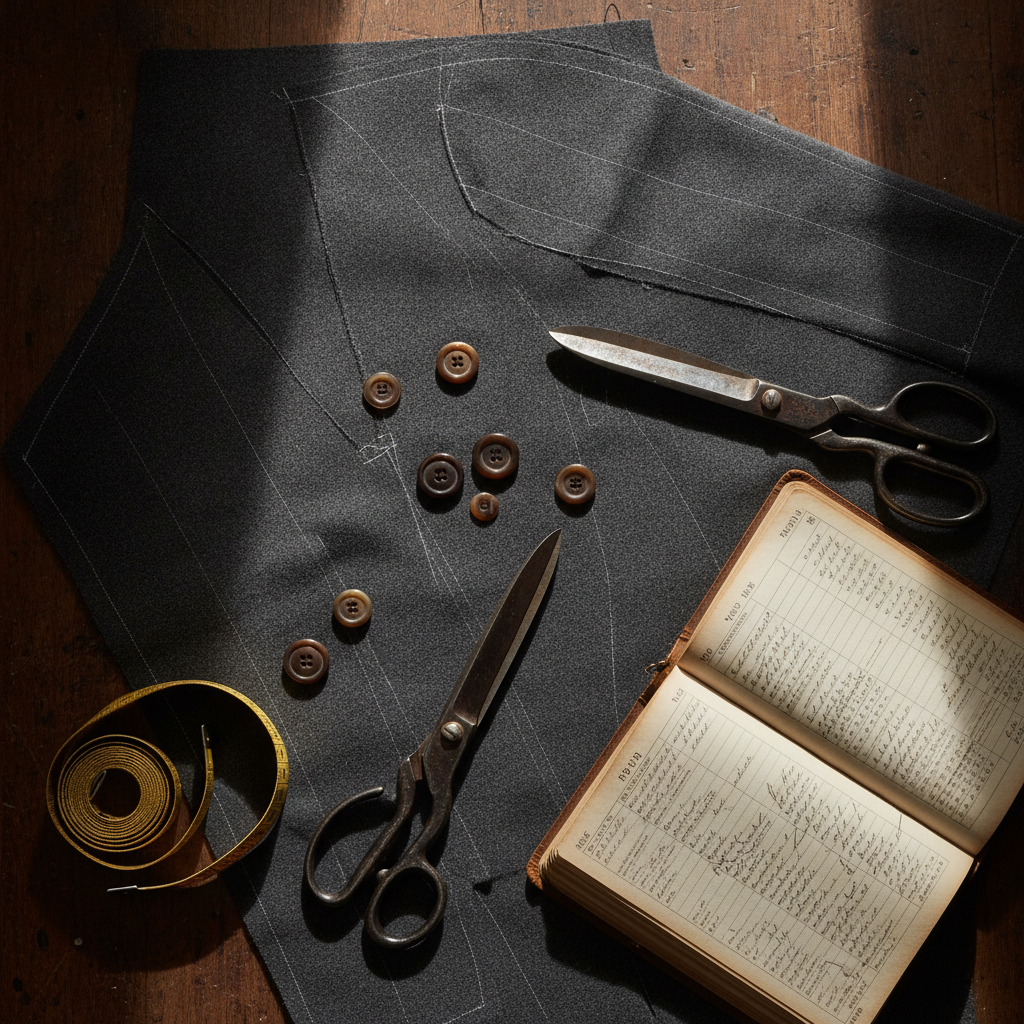
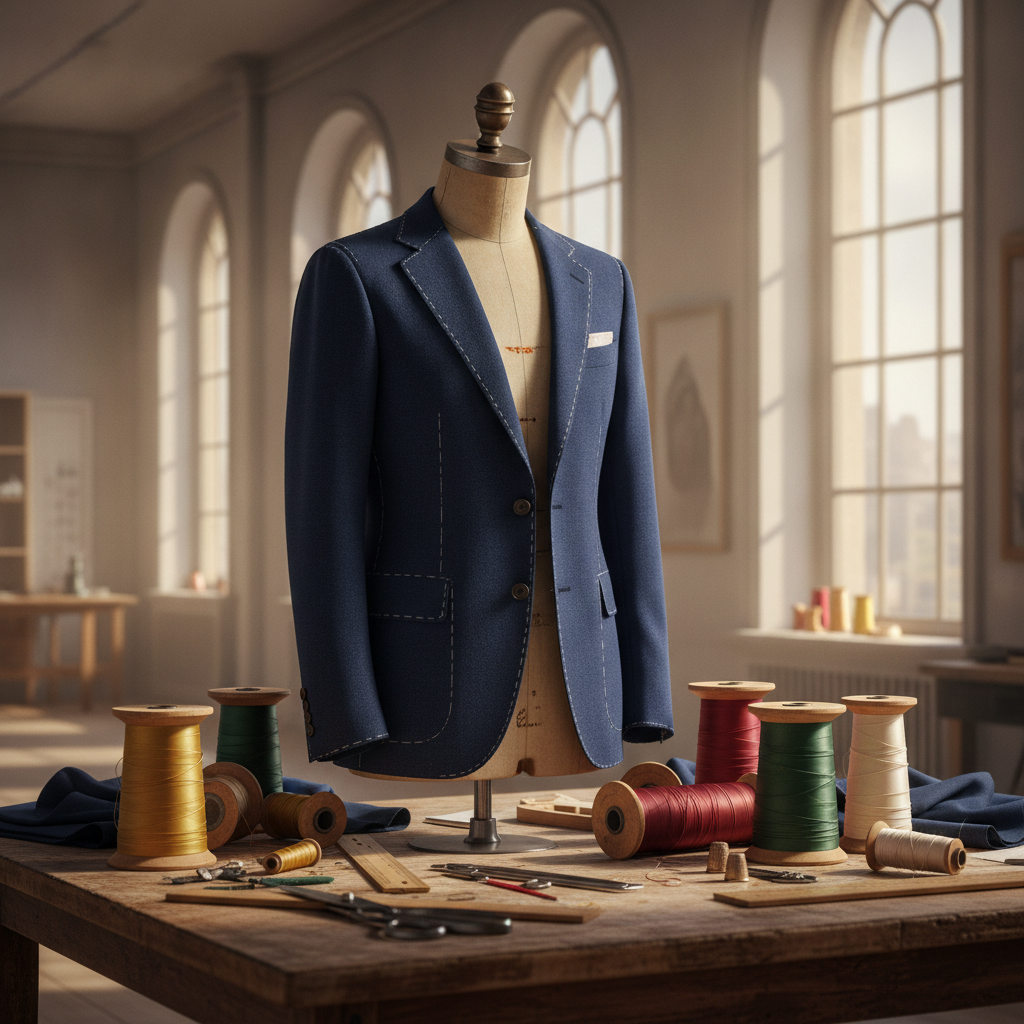
In bespoke tailoring and haute couture, creative mastery is rarely what makes or breaks an independent house. A bespoke tailor can spend eighty hours hand-pad-stitching an interlining of Irish linen and horsehair canvas, hand-rolling silk lapel edges with millimeter precision, and sculpting wool flannel over a tailor’s ham until the balance line falls flawlessly. Yet, at the end of the fiscal quarter, many gifted tailors and independent dressmakers find their bank accounts depleted, operating at an effective loss.
The artisan’s dilemma stems from a single foundational flaw: calculating garment prices based solely on raw yardage and notions, while completely ignoring workshop overheads, tool depreciation, client consultation friction, and an equitable artisan hourly wage. To build a generational atelier rather than an exhausting hobby, you must treat your balance sheet with the exact mathematical rigor you bring to drafting a tailored sleeve cap or establishing the pitch of a jacket.
The Anatomy of Atelier COGS: Beyond the Cutting Table
Cost of Goods Sold (COGS) in an artisan environment encompasses every direct cost incurred to construct a single garment. Amateur makers routinely undercount these inputs, failing to recognize that fabric is merely the vehicle for your expertise.
1. Fashion Textiles and Grainline Cutting Loss
Never budget fabric purely on pattern piece square footage. When cutting tailored pieces—such as a tailored blazer with two-piece sleeves, back vents, and shaped lapels—you must align pattern balance lines strictly with the warp grainline. If working with directional napped wool, patterned tartan, or delicate silk velvet, your layout yield drops significantly.
- Yield Allowance: Standard pattern drafting requires a mandatory 15% to 25% waste buffer for standard solid wools, jumping to 35% or more when pattern-matching checks at the side seams and sleeve crowns.
- Pre-Shrinkage & Preparation: Steaming, sponging, and London-shrinking virgin wools reduces overall yardage by 3% to 5% before the shears ever touch the cloth.
2. Hidden Haberdashery and Structural Notions
A couture garment relies on internal architecture that clients never see, but your ledger certainly does. In a classic bespoke lounge coat, you must account for:
- Wool and goat-hair canvas chest pieces, domette (flannel) chest pads, and stays.
- Shoulder pads sculpted from cotton wadding, collar linen (Hymo or Silesia), and stay tapes applied along the gorge line and roll line.
- Bemburg cupro or silk crepe de Chine lining, matching undercollar melton cloth, horn buttons, pocketing cotton, and multiple weights of silk buttonhole twist and Gütermann polyester thread.
3. True Artisan Labor Time
The most devastating error made by independent makers is treating their own time as zero-cost sweat equity. Artisan bench time must be priced at an executive hourly rate—not minimum wage. If you cut, mark, baste, fit, adjust, and finish a jacket across 45 hours, and your target wage is £35 per hour, your labor cost alone is £1,575. Ignoring this turns your studio into a subsidized charity for your clientele.
Fixed Overhead: The Invisible Silent Drain
Even if your shears do not cut a single meter of cloth this month, your atelier continues to consume financial capital. Fixed overhead is the baseline cost of keeping your doors open, and every garment you deliver must carry its mathematical share of this burden.
A typical artisanal fashion studio carries distinct fixed commitments:
- Studio Facility Costs: Commercial studio lease or workshop space allocation, heating, ventilation, electricity, and clean task lighting.
- Machinery Amortization & Maintenance: Industrial straight-stitch lockstitch machines, 4-thread differential feed overlockers, heavy gravity-feed iron boiler stations, vacuum press boards, and specialized shears that require professional sharpening. An industrial setup costing £6,000 with a five-year service life represents an overhead write-off of £100 per month.
- Subscriptions & Compliance: CAD pattern-drafting software, business insurance, accounting retainers, domain hosting, and baseline payment processing subscriptions.
The Mathematical Blueprint: Calculating True Break-Even Volume
To determine how many garments you must sell before your atelier yields a single unit of net profit, we utilize the classic Cost-Volume-Profit (CVP) relationship adapted for small-batch apparel production.
First, establish your Unit Contribution Margin (CM):
Contribution Margin (CM) = Retail Selling Price – Direct Variable Costs (COGS)
Where Direct Variable Costs include fashion fabric, internal notions, haberdashery, direct seamstress/cutter bench time, packaging, and merchant transaction fees (e.g., 2.9% + 30¢ per card swipe).
Second, calculate your Break-Even Volume (QBE) in physical units:
Break-Even Units (QBE) = Total Monthly Fixed Overheads / Contribution Margin (CM)
If your fixed workshop overheads are £2,400 per month, and each hand-tailored trench coat generates a contribution margin of £400, you must construct and sell exactly 6 trench coats every month simply to achieve a zero balance. The 7th coat represents the very first unit that delivers real net profit into your business reserve.
🛠️ Interactive Atelier Tool: Fashion Atelier Profit & Break-Even Planner
Skip manual math and cutting guesswork. Use our free interactive tool to instantly calculate your exact measurements, fabric yield, and project specifications:
Step-by-Step Atelier Costing Walkthrough
Let us model a concrete bespoke garment: a structured, hand-finished Silk Duchesse Evening Gown crafted to individual measurements.
Step 1: Quantify Direct Textile Requirements
Drafting a full-length circular skirt with a fitted boned bodice requires substantial yardage. Accounting for a 110cm wide fabric layout with matching grainlines:
- Silk Duchesse: 5.5 meters @ £65.00/m = £357.50
- Silk Habotai Lining: 4.0 meters @ £18.00/m = £72.00
- Spiral steel boning, cotton casing, and waist stay tape: £18.50
- Concealed YKK zipper, silk organza underlining, waist hook-and-eyes: £14.00
- Silk thread, tailor’s tacks, tissue packing, garment bag: £22.00
- Subtotal Direct Materials: £484.00
Step 2: Calculate Dedicated Labor Bench Hours
Artisan dressmaking cannot be rushed; precision stitching prevents costly remakes:
- Muslin / Toile drafting and initial client fitting: 4.5 hours
- Pattern adjustments and flat pattern grading: 2.0 hours
- Cutting, marking, and thread-tracing: 3.0 hours
- Bodice construction, bone setting, and hand-understitching: 7.0 hours
- Skirt attachment, hem leveling, hand horsehair braid hem insertion: 6.5 hours
- Final fitting, hand hook-and-eye installation, press and steam: 3.0 hours
- Total Production Labor: 26.0 hours @ £30.00/hr = £780.00
Step 3: Factor Payment Processing and Buffer
Assuming a direct-to-consumer client card transaction fee of 3% on a planned retail price of £1,950 (£58.50), plus a standard 5% studio contingency reserve (£63.20) for needle wear, test steaming, and unexpected seam ripping.
Total Variable COGS: £484.00 + £780.00 + £58.50 + £63.20 = £1,385.70
With a retail price of £1,950, your Unit Contribution Margin is £564.30 (a 28.9% gross margin above labor and materials). If your monthly studio overheads are £1,700, your target break-even quota is precisely 3.01 gowns per month.
The Goal Seeker Engine: Pricing in Desired Net Profit
Operating solely at break-even keeps your studio solvent, but it does not generate corporate retained earnings or wealth. To build financial durability, reverse-engineer your garment prices based on target net income.
If you aim for an atelier monthly net profit of £4,000 beyond all artisan wages:
Target Unit Quota = (Fixed Overheads + Desired Net Profit) / Unit Contribution Margin
Under this formula, (£1,700 fixed costs + £4,000 target profit) / £564.30 margin = 10.1 gowns per month. If your physical hands cannot produce ten couture gowns per month without sacrificing quality, the math presents an indisputable mandate: you must either elevate your retail price point or increase your operational leverage through refined production techniques.
Complementary Atelier Planning Tools
Precision atelier economics relies on harmonious design and drafting workflows. Before setting your financial baseline, curate your silhouette balances, mood palettes, and textile swatches with our Mood Board Studio. When engineering gathered tiers, circle flounces, or pleated hems that heavily dictate your variable fabric yardage and cutting loss, verify your exact yardage parameters using our Gathering Calculator.
Final Thoughts: The Economics of Craft Pride
Undercharging does not democratize fashion; it devalues the craft. When you correctly price your pieces to include high-grade haberdashery, fair artisan compensation, and baseline studio capital, you secure the creative freedom to select superior textiles, execute hand finishes without cutting corners, and deliver garments that stand as timeless monuments to the tailor’s art.
Do you enjoy the content on Agenda Creativa?
Your contributions help me create new articles, share creative ideas, and keep this platform alive! If you like what I do and want to support my work, you can buy us a coffee.
Every cup of coffee means more than just a gesture – it's direct support for my passion to create inspiring and useful content. Thank you for being part of this journey!
☕ Buy me a coffee