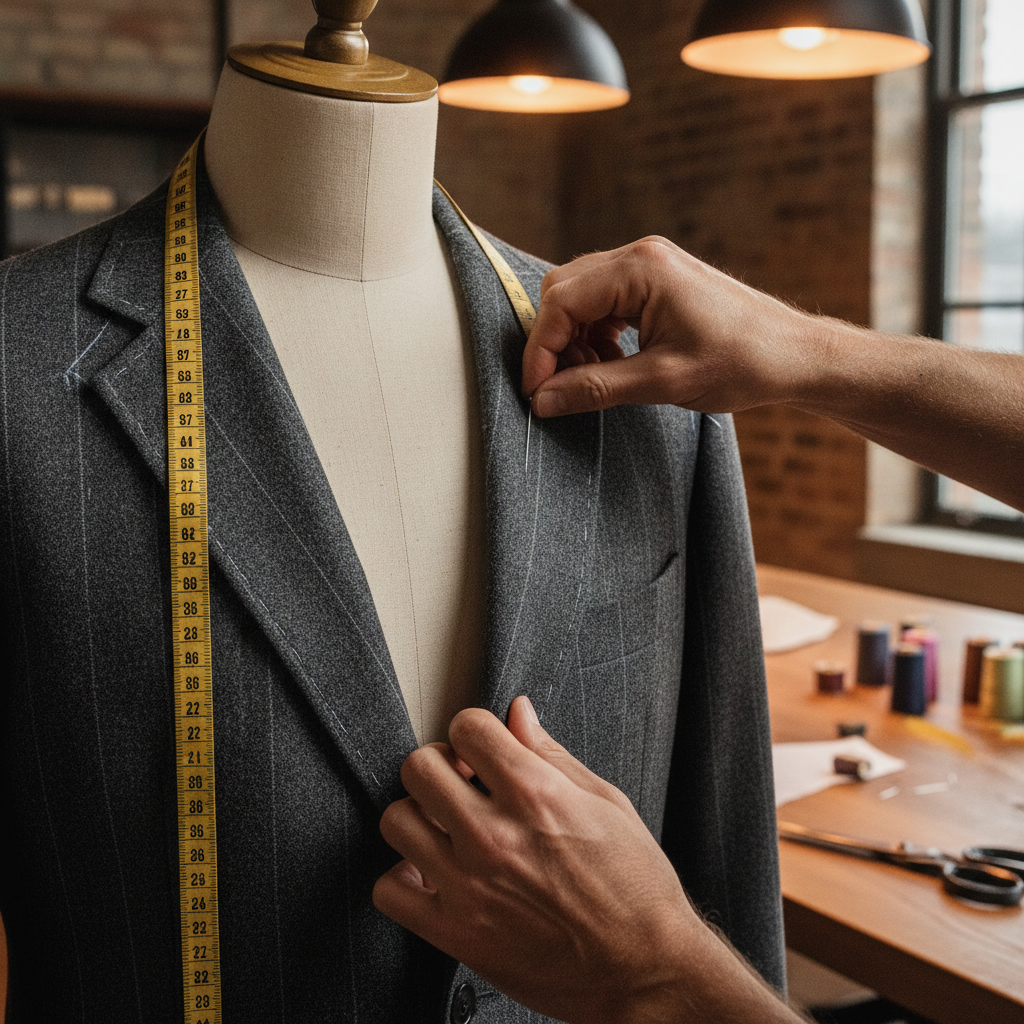
In the bespoke tailoring and haute couture trade, artistic excellence without rigorous financial arithmetic is the quickest path to business insolvency. Independent ateliers, bespoke dressmakers, and bridal alteration specialists frequently fall victim to what economists call the ‘Underpricing Trap.’ A master artisan may invest eighty hours hand-pad-stitching a floating horsehair canvas chest piece, hand-sewing milanese buttonholes, and shaping wool broadcloth with a heavy dry iron, only to bill the client for the basic retail yardage of wool and a nominal hourly rate pegged barely above local minimum wage.
Pricing couture garment construction requires the exact same discipline applied to pattern drafting on the bias or balancing trousers on an asymmetrical posture. If your costing methodology fails to account for auxiliary bench time, micro-notions, utility overhead, fabric shrinkage loss, and capital depreciation on studio machinery, you are paying your clients for the privilege of sewing their clothes. This masterclass deconstructs the proprietary formulas used by Savile Row houses and Parisian couture salons to establish profitable, audit-proof, and commercial-grade garment quotations.
The Anatomy of Couture Costing: The Four Pillars
A professional garment quote is never an intuitive guess; it is an aggregation of four distinct financial pillars. Failing to itemize even one pillar hollows out the net margin of your commission.
- Pillar 1: Direct Materials (Textiles & Structural Foundations). This encompasses not merely the fashion fabric (shell), but the internal skeletal elements: hair canvas, domette, French hymo, pocketings, silk organza underlinings, sleeve heads, shoulder pads, and Cupro or Bemberg linings.
- Pillar 2: Direct Atelier Labor (Bench vs. Auxiliary Hours). Cutting and machine stitching represent less than half of true project duration. Direct labor must accurately capture pattern cutting, drafting adjustments, muslin toile creation, client fitting consultations, basting for fittings, tear-downs, pressing, and hand-finishing.
- Pillar 3: Haberdashery & Hidden Consumables. Micro-consumables silently drain atelier profitability. Silk thread, basting cotton, beeswax, machine needle degradation, stay tapes, pattern paper, tracing carbon, and iron demineralized water must be accounted for on every commission.
- Pillar 4: Studio Overhead & Growth Margin. The operational cost to open your studio doors: commercial rent, heating, electricity for industrial iron boilers, machinery maintenance (overlockers, blind-stitchers, straight-stitch workhorses), merchant processing fees, insurance, and profit reinvestment.
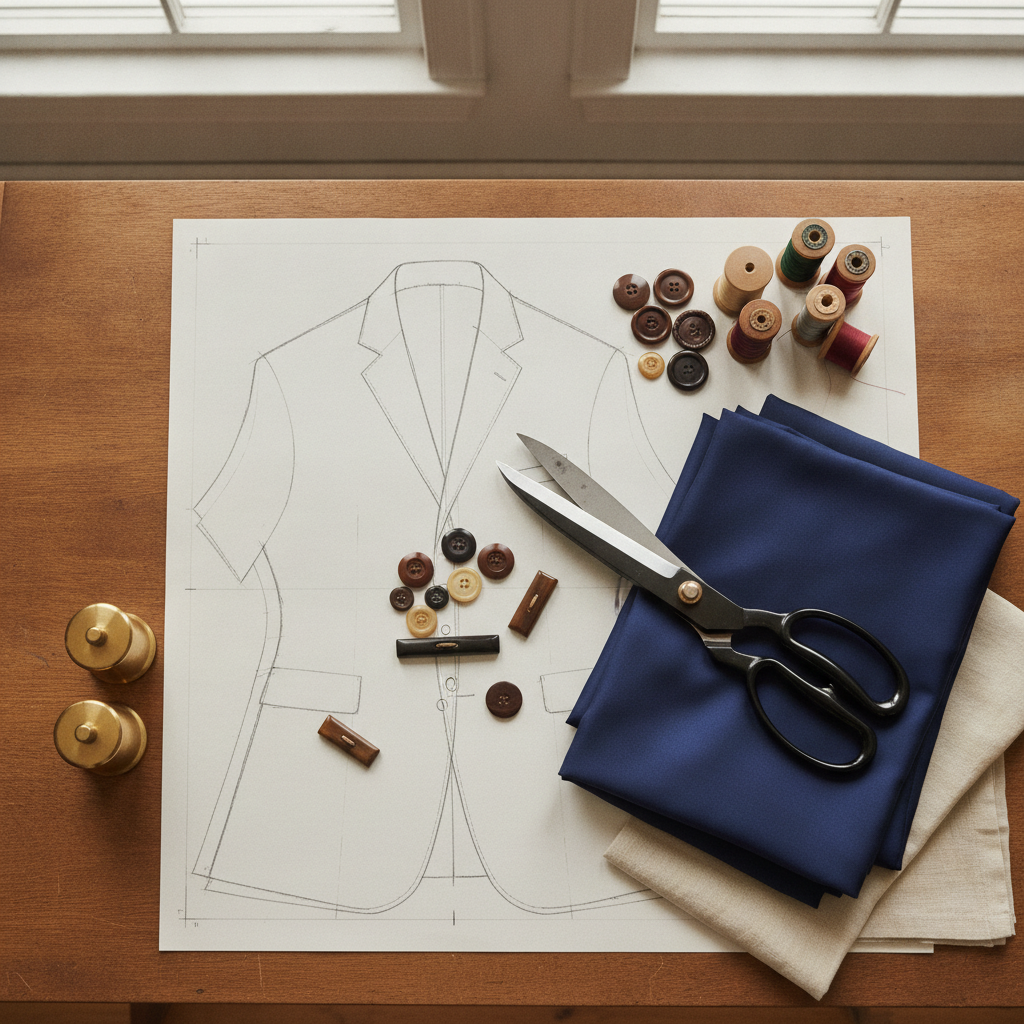
The Myth of the ‘Simple Hourly Rate’ and Billable vs. Auxiliary Time
The fatal flaw in standard artisan pricing is multiplying total perceived sewing hours by an unadjusted wage. If an artisan wants to take home $45 per hour, charging a client $45 per hour for thirty hours of work generates a massive financial loss. Why? Because bespoke work features an exceptional ratio of unbilled auxiliary time.
In a standard bespoke commission, auxiliary hours routinely account for 35% to 45% of total time expenditure:
- Sourcing and Curation: Sourcing swatches from heritage woolen mills or silk merchants, testing fiber burn samples, and pre-treating yardage (sponging, pre-shrinking, decatizing).
- Pattern Engineering & Toile Fittings: Drafting bespoke block patterns from 28 distinct anatomical measurements, assembling the calico toile, conducting the initial basted fitting, adjusting balance lines, and transferring changes back to the master card pattern.
- Fittings Schedule: In couture suiting, an artisan executes a minimum of three distinct fittings: the Skeleton/Basted Fitting (canvas and shell roughly basted without pockets or facings), the Forward Fitting (garment largely assembled, sleeves basted in, balance confirmed), and the Finishing Fitting (finito garment ready for hem and buttonhole verification).
- Pressing and Shaping: Underpressing structural seams with tailor’s hams, sleeve rolls, clappers, and seam boards consumes up to 20% of bench time. Iron manipulation is shaping, not merely flattening.
To capture these variables accurately, your shop hourly rate ($R_H$) must be calibrated using the Atelier Labor Multiplier:
$$text{Effective Hourly Rate} = frac{text{Target Annual Personal Net Income} + text{Annual Fixed Studio Overhead}}{text{True Annual Billable Bench Hours}}$$
Because an artisan working a 40-hour week rarely achieves more than 22 true billable bench hours (the rest being occupied by administration, bookkeeping, studio sanitation, and consultations), the shop hourly rate must reflect that reality.
🛠️ Interactive Atelier Tool: Project Price Estimator
Skip manual math and cutting guesswork. Use our free interactive tool to instantly calculate your exact measurements, fabric yield, and project specifications:
The Atelier Formula: Calculating Commercial Quotations
To maintain solvency and build capital for machinery replacement and studio expansion, calculate each client quotation using the standardized Atelier Pricing Formula:
$$text{Total Project Price} = left[ (M_D + C_H) + (T_B times R_H) right] times (1 + O_F) times (1 + P_M)$$
Where:
- $M_D$ (Direct Materials): Raw cost of shell fabric, contrast, interlinings, linings, zippers, and boning, incorporating a mandatory 10% cutting waste allowance for pattern matching (plaids, stripes, directional nap, or velvet piles).
- $C_H$ (Haberdashery Allowance): Standard flat rate or calculated sum for needles, threads, stay tape, and chalk ($15–$45 depending on garment complexity).
- $T_B$ (Total Bench Hours): All direct construction hours, toile production, and client fitting appointments.
- $R_H$ (Atelier Hourly Rate): The fully loaded baseline cost per hour of labor.
- $O_F$ (Overhead Factor): A percentage allowance (typically 15% to 25%) allocating ongoing studio operating costs directly to production volume.
- $P_M$ (Studio Profit Margin): The business markup (typically 30% to 60%). Note: Labor pays you as an employee; Profit pays the atelier for future growth, tax reserves, and business longevity.
Deconstructing a Couture Case Study: The Bespoke Silk Evening Gown
Let us examine a real-world atelier calculation for an architectural silk crepe evening gown featuring an internal corselette with spiral steel boning, waist stay, French-seamed silk georgette sleeves, and hand-rolled baby hems.
Step 1: Itemized Materials & Haberdashery
- Shell: 4.5 meters 40mm Silk Crepe de Chine @ $55/m = $247.50
- Underlining: 4.5 meters Silk Organza @ $22/m = $99.00
- Corselette: 0.8 meters Cotton Coutil @ $32/m = $25.60
- Spiral steel bones, end caps, and bone casing = $18.50
- Grosgrain ribbon waist stay, hook-and-eye closures = $8.00
- Invisible zipper, silk button loops, hand-covered buttons = $22.00
- Consumables flat fee (Gutermann silk thread, basting thread, microtex needles) = $15.00
- Direct Materials Total ($M_D + C_H$): $435.60
Step 2: Time and Labor Accounting
- Consultation, measurements, and design sketch: 2.0 hours
- Master pattern drafting and muslin manipulation: 4.5 hours
- Toile assembly: 3.5 hours
- First client fitting and pattern alteration: 2.0 hours
- Cutting silk shell and organza underlining (thread trace grainlines): 3.0 hours
- Internal corselette construction & boning: 5.5 hours
- Garment construction (French seams, sleeve insertion, invisible zip): 8.5 hours
- Second fitting (length verification, sleeve balance): 1.5 hours
- Hand finishing (rolled hems, neck facings, pick stitching): 6.0 hours
- Final pressing, steaming, and archival bagging: 1.5 hours
- Total Billable Bench Time ($T_B$): 38.0 Hours
- Labor Cost @ $50/hour shop rate ($T_B times R_H$): $1,900.00
Step 3: Overhead and Profit Margin Application
Prime Production Cost = Materials ($435.60) + Labor ($1,900.00) = $2,335.60.
Applying an Overhead Factor ($O_F$) of 15%:
$$$2,335.60 times 1.15 = $2,685.94$$
Applying an Atelier Profit Margin ($P_M$) of 35%:
$$$2,685.94 times 1.35 = $3,626.02$$
To conclude, the client is quoted $3,625.00 (excluding statutory local sales tax or VAT). If the artisan had merely calculated “$50 x 30 hours of sewing + $250 for fabric,” they would have billed $1,750—resulting in a devastating revenue loss of nearly $1,900 on a single commission.
Protecting the Atelier: Contracts, Change Orders, and Terms
A mathematically sound quote must be reinforced by strict studio policies to prevent profit erosion from client-driven scope creep:
- Fitting Allowances: State explicitly on your estimate that the quoted fee includes a specified number of fittings (e.g., up to three). Any weight fluctuations exceeding 3 cm across bust, waist, or hips necessitating additional pattern alterations are billed at your standard hourly bench rate.
- Fabric Sourcing Policies: If clients provide their own fabric (COM – Customer’s Own Material), charge a handling fee of 15–20%. Customer-supplied textiles frequently arrive off-grain, warped, or inadequate in yardage, demanding corrective stabilization before cutting. For optimal interlining choices across diverse fabrics, reference our technical Interfacing Guide.
- The Non-Refundable Deposit: Secure a 50% non-refundable deposit prior to placing shearing scissors on cloth. This funds direct material outlays and reserves production bench capacity.
- Overhead and Viability Review: Routinely check your atelier capacity against our Break Even Calculator to determine exactly how many commission hours your shop requires each month to maintain operational profitability.
Transparent, itemized pricing elevates the dressmaker from an undervalued hobbyist to an accredited couture professional. When clients observe an audit-ready, itemized quotation reflecting the structural architecture of their bespoke commission, hesitation dissolves into respect for the craft.
Do you enjoy the content on Agenda Creativa?
Your contributions help me create new articles, share creative ideas, and keep this platform alive! If you like what I do and want to support my work, you can buy us a coffee.
Every cup of coffee means more than just a gesture – it's direct support for my passion to create inspiring and useful content. Thank you for being part of this journey!
☕ Buy me a coffee