
The Mind-Body Disconnect in Modern Ambition
Most ambitious people treat their bodies as little more than a vehicle to carry their brains from one meeting to the next. When we want to achieve something significant—launch a company, write a book, overhaul our health—we default to top-down, cognitive strategies. We draft elaborate business plans, build color-coded Notion templates, and set highly specific deadlines. We intellectualize our ambitions, assuming that if the logic is sound and the desire is clear, the action will naturally follow.
Yet, weeks later, despite having a flawless roadmap, we find ourselves paralyzed. The tasks remain undone. The friction feels insurmountable. We label this failure as a lack of discipline or a sudden drop in motivation. We tell ourselves we just need to push harder, read another productivity book, or find a better time-management framework.
This is a fundamental misdiagnosis. The problem is not your schedule, your intellect, or your willpower. The problem is that you are attempting to execute a cognitive plan without biological buy-in. You are suffering from the Somatic Deficit.
Understanding the Somatic Deficit
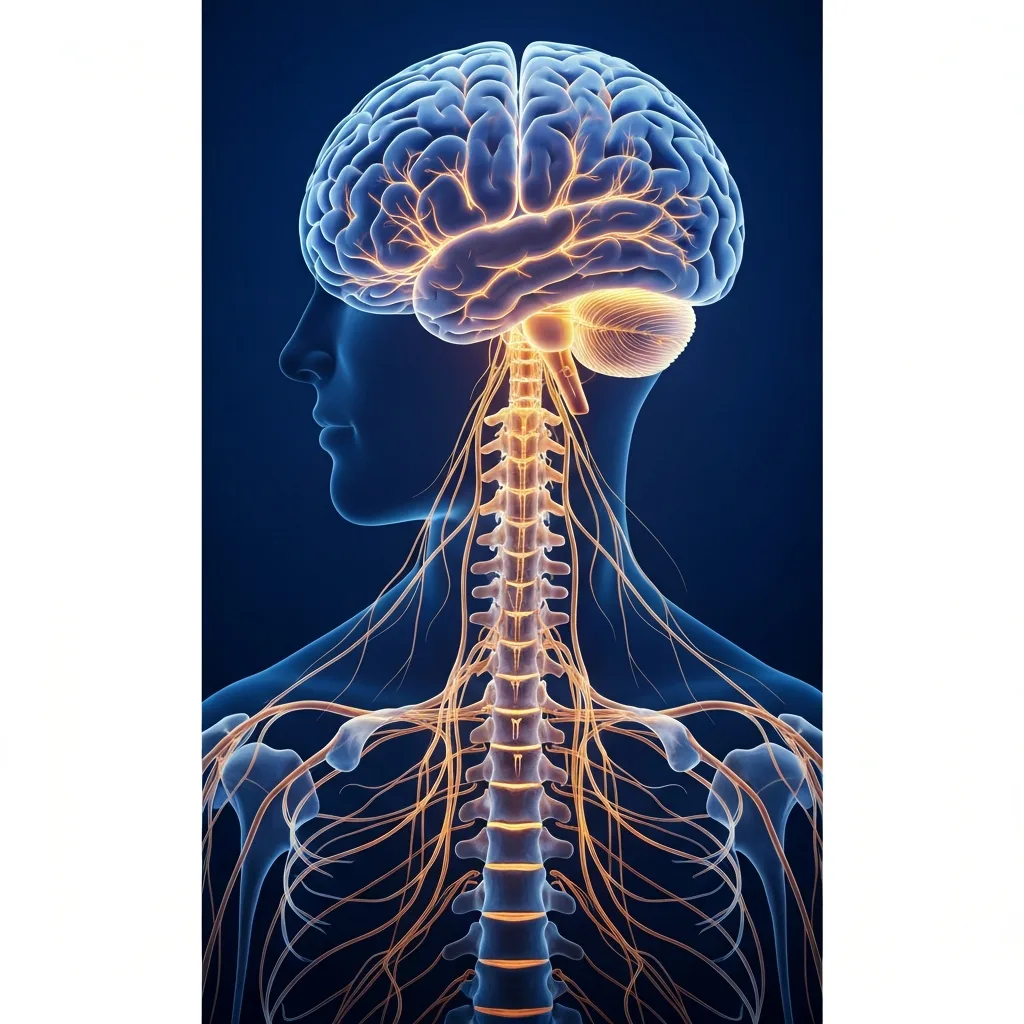
The Somatic Deficit is the vast, silent gap between what your prefrontal cortex desires and what your nervous system is prepared to execute. Your brain can conceptualize a ten-year vision in milliseconds. It can logically deduce that waking up at 5:00 AM to write is the most efficient path to becoming an author. But your nervous system does not speak the language of logic, future projections, or abstract goals. It speaks the language of safety, energy conservation, and immediate physiological state.
When you attempt to force action purely through intellectual reasoning, you bypass the body’s deeply ingrained survival mechanisms. If your nervous system perceives a new, difficult task as a threat—perhaps due to the fear of failure, the uncertainty of the outcome, or simply the sheer energetic cost of deep focus—it will pull the emergency brake. It will flood your system with stress hormones or, conversely, trigger a state of dorsal vagal shutdown, which you experience as heavy, immovable procrastination.
Your intellect says, ‘Go.’ Your biology says, ‘Freeze.’ And in any battle between the conscious mind and the autonomic nervous system, the nervous system wins every time.
The Nervous System’s Veto Power
To understand why intellectualizing goals fails, we have to look at the hierarchy of human action. The prefrontal cortex—the seat of logic, planning, and goal-setting—is an evolutionary newcomer. It is highly sophisticated but easily fatigued and slow to process information compared to the older, deeper structures of the brain and the broader nervous system.
Beneath your conscious awareness, your autonomic nervous system is constantly scanning your internal and external environment, asking one primary question: ‘Am I safe?’ When you sit down to tackle a high-stakes project, the friction you feel isn’t just a mental hurdle; it is a physiological response. Your heart rate might subtly elevate. Your breathing becomes shallow. Muscle tension accumulates in your jaw or shoulders. Your body is preparing for a threat.
Because your intellect is disconnected from this somatic reality, you misinterpret these physical signals as a sign that you lack motivation or that the work is too hard. You retreat to a low-energy, highly predictable activity—like scrolling through social media or answering low-priority emails—because these actions signal safety and predictability to your nervous system. Your biology has effectively vetoed your ambition.
How to Transition from Cognitive to Biological Drive
To build sustainable, relentless drive, you must stop treating motivation as a purely mental exercise. You must learn to recruit your nervous system, turning it from a roadblock into an engine. This requires shifting from top-down intellectualizing to bottom-up somatic anchoring. Here is how to bridge the gap.
1. Practice Somatic Rehearsal
Traditional visualization focuses heavily on the outcome: picturing yourself crossing the finish line, holding the published book, or checking your bank account balance. While this can provide a brief spike of dopamine, it does nothing to prepare your body for the actual work required to get there.
Somatic rehearsal involves visualizing the process while actively engaging the physical sensations associated with it. Before you begin a difficult task, close your eyes and imagine the precise physical actions you are about to take. Feel the texture of the keyboard under your fingertips. Notice the posture you will hold in your chair. Simulate the steady, rhythmic breathing you will maintain while focused. By rehearsing the physical state of execution, you signal to your nervous system that this activity is familiar, safe, and manageable, drastically reducing the friction of starting.
2. Engineer Physiological State Shifts
You cannot think your way out of a biological freeze state. If you feel paralyzed by procrastination, attempting to motivate yourself with harsh internal dialogue or logical arguments will only increase your internal stress, further entrenching the paralysis.
Instead, change your physiological state first. Use your body to send a new signal to your brain. This can be as simple as changing your physical environment, taking ten deep, diaphragmatic breaths to stimulate the vagus nerve and down-regulate the sympathetic nervous system, or engaging in brief, intense physical movement to metabolize stagnant stress hormones. When you change your posture, your breathing, and your physical tension, you change the biological foundation upon which your motivation is built.
3. Anchor Progress in Sensory Feedback
The modern work environment is highly abstract. We move pixels on screens and send digital messages into the ether. The brain struggles to generate sustained motivation for tasks that lack tangible, sensory feedback. To build biological drive, you must physicalize your progress.
Find ways to make your achievements somatic. If you complete a major phase of a project, don’t just quietly check a box on a screen. Engage in a physical ritual—whether it’s a brisk walk, a specific stretch, or even the physical act of moving a heavy token from one jar to another. You need to train your nervous system to associate the completion of hard work with positive, grounded physical sensations. Over time, the body begins to crave the work because it craves the physical resolution that follows.
The Role of Interoception in Sustained Motivation
At the core of biological drive is a concept called interoception—the ability to perceive and understand the internal sensations of your body. People with high interoceptive awareness can feel the subtle, early warning signs of distraction, frustration, or burnout before these states fully hijack their behavior.
If you are disconnected from your body, you will only notice your fatigue when you are entirely exhausted. You will only notice your anxiety when it has morphed into full-blown procrastination. By cultivating interoception—through practices like body scans, breath awareness, or simply pausing to ask yourself, ‘What is my body feeling right now?’—you gain the ability to course-correct in real-time. You can adjust your posture, deepen your breath, or take a strategic break long before your nervous system forces you to quit.
Redefining the Currency of Ambition
We have been conditioned to believe that drive is a product of willpower, discipline, and relentless cognitive force. But willpower is a finite resource, and cognitive force eventually breaks against the hard reality of human biology.
True, unbreakable drive is not found in the mind alone; it is forged in the alignment between what the brain envisions and what the body is prepared to sustain. Sleep, movement, nutrition, and stress regulation are not secondary ‘health’ metrics to be managed when you have free time—they are the literal currency of your ambition. A depleted nervous system cannot fund a high-performance life.
Stop trying to out-think your procrastination. Stop intellectualizing your goals while ignoring the vessel that must execute them. When you respect the biological reality of motivation, you stop fighting yourself. You move from the exhausting grind of forced discipline to the fluid, unstoppable momentum of biological drive.

Do you enjoy the content on Agenda Creativa?
Your contributions help me create new articles, share creative ideas, and keep this platform alive! If you like what I do and want to support my work, you can buy us a coffee.
Every cup of coffee means more than just a gesture – it's direct support for my passion to create inspiring and useful content. Thank you for being part of this journey!
☕ Buy me a coffee