The Allure of the Low-Hanging Fruit
You sit down at your desk, coffee in hand, ready to tackle the strategic project that will actually move the needle in your career. But before you open that daunting blank document, you notice a red notification dot on your messaging app. You click it. Then you see three unread emails that require “just a quick reply.” Next, you realize your desktop is cluttered, so you spend ten minutes dragging files into folders. By the time you finally open your strategic project, an hour has passed. Your peak cognitive energy is depleted, your focus is fractured, and the heavy lifting hasn’t even begun.
This is not a failure of discipline, nor is it a symptom of a poor work ethic. It is an environmental failure. You have fallen victim to what we can call the Proximity Penalty.
In the realm of productivity, the Proximity Penalty dictates that when presented with multiple options, human beings will naturally gravitate toward the task that is spatially, digitally, or cognitively closest to them. We are biologically wired to conserve energy, meaning our brains default to the path of least resistance. When trivial tasks are immediately accessible and high-value tasks require effort to even begin, your environment is actively working against your ambitions.

The Biology of the Proximity Penalty
To understand why we consistently choose the easy over the important, we have to look at how our brains process effort. The human brain operates on a principle of cognitive economy. Throughout evolutionary history, expending unnecessary energy was a survival risk. Consequently, the brain developed a strong preference for actions that yield an immediate reward for minimal caloric output.
In the modern knowledge economy, this biological mechanism betrays us. The tasks that offer the highest long-term leverage—writing a complex proposal, analyzing a dense dataset, or mapping out a new product strategy—demand immense cognitive exertion. They are abstract, difficult, and their rewards are delayed.
Conversely, the tasks that populate the periphery of our workdays—clearing an inbox, responding to instant messages, organizing a spreadsheet—are concrete, highly structured, and offer an immediate dopamine hit upon completion. When these shallow tasks are placed directly in front of us, the brain naturally selects them. They are the cognitive equivalent of junk food: highly accessible, immediately satisfying, and ultimately devoid of nutritional value.
Why ‘Warming Up’ is Sabotaging Your Peak Output
Conventional productivity advice often encourages us to start the day with a few “quick wins” to build momentum. The theory suggests that by knocking out a handful of minor tasks, we generate the psychological velocity needed to tackle larger projects.
In practice, this strategy is disastrous for high performers.
Every decision you make, every email you process, and every context switch you endure consumes a finite resource known as executive function. When you spend the first hour of your workday clearing the low-hanging fruit, you are not warming up; you are burning through your most valuable cognitive hours. You are spending your peak mental clarity on tasks that could be handled by an intern or a basic automation script.
By the time you turn your attention to the work that actually matters, you are operating on a depleted battery. The high-value work feels exponentially harder, leading to frustration, procrastination, and the false belief that you simply lack the willpower to execute.
How to Engineer Strategic Distance
If willpower is an unreliable mechanism for overcoming the Proximity Penalty, the solution lies in environment design. You must manipulate the topography of your workspace so that the right behaviors become the default behaviors. This requires engineering Strategic Distance—making trivial tasks harder to access while making high-value tasks impossible to ignore.
1. Invert the Friction Gradient
The first step is to reverse the current accessibility of your tasks. Right now, your distractions are frictionless, and your deep work is buried behind multiple clicks. You need to flip this dynamic.
If you need to write a major report, that document should be the only thing immediately accessible when you sit at your desk. Conversely, you must introduce artificial friction to your shallow tasks. Log out of your email client at the end of the day so you are forced to manually type your password to check it. Delete instant messaging apps from your phone, restricting them to your desktop. Place your mobile device in another room while you work. By adding just 20 seconds of physical or digital friction to a distracting behavior, you give your prefrontal cortex enough time to override the impulse.
2. Pre-Stage Your Cognitive Environment
Professional chefs rely on mise en place—the practice of gathering and arranging all ingredients and tools before cooking begins. This eliminates the need to search for a knife or chop an onion while a sauce is burning. Knowledge workers must adopt the exact same philosophy.
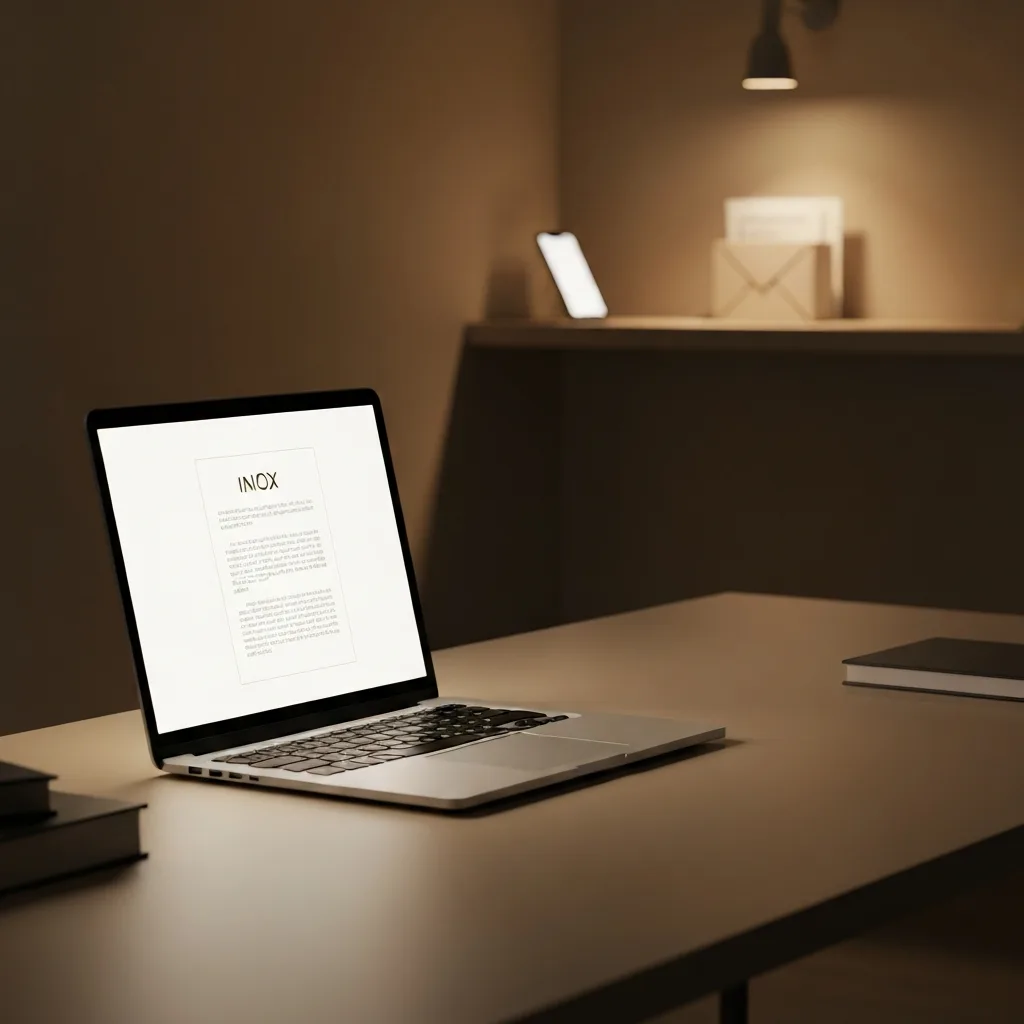
Pre-staging involves setting up your digital and physical workspace the night before. Close every irrelevant browser tab. Shut down your communication tools. Open the specific software, document, or dataset you need for your most important project, and make it full-screen. When you sit down the next morning, the high-value work is the very first thing you see. It is the closest task to you. You have eliminated the cognitive load of deciding what to do and the physical friction of locating the materials.
3. Quarantine the Shallow Periphery
You cannot eliminate shallow work entirely; emails must be answered, and administrative tasks must be completed. However, you can quarantine them to specific, low-energy windows of your day.
Batch processing is a well-known concept, but it only works if you enforce strict geographical or temporal boundaries. Decide that you will only process email at 11:30 AM and 4:30 PM. Outside of those windows, the application remains closed. If you struggle with digital boundaries, enforce physical ones. Do your deep, strategic work at your primary desk, and move to a different room, a kitchen counter, or a coffee shop to handle your administrative backlog. By associating different physical environments with different types of cognitive effort, you train your brain to transition into the appropriate state automatically.
4. Bridge the Cognitive Gap
Sometimes, a task is physically close but cognitively distant. A project titled “Overhaul Marketing Strategy” might be sitting right on your desktop, but the brain rejects it because the next action is too ambiguous. Ambiguity creates cognitive friction, triggering the Proximity Penalty and sending you running back to the comfort of your inbox.
To pull high-value work closer to you, you must relentlessly break it down into ground-level primitives. Never leave a project in a state of abstraction. Instead of “Overhaul Marketing Strategy,” the immediate task should be “Draft three bullet points outlining the current gaps in Q3 lead generation.” This micro-task is concrete, actionable, and requires low activation energy. By making the first step incredibly small, you close the cognitive distance and trick your brain into starting.
Redrawing Your Topography of Work
The modern workplace is a minefield of immediate rewards and accessible distractions. If you rely on raw discipline to navigate this terrain, you will eventually tire and succumb to the easy tasks right in front of you.
Mastering your output is not about becoming a relentless machine of willpower. It is about becoming an architect of your environment. By understanding the Proximity Penalty, you can redraw the topography of your workday. You can push the noisy, trivial periphery into the distance, and pull your most vital, impactful work directly into the foreground. When the right thing to do becomes the easiest thing to do, deep work ceases to be a struggle—it becomes your default state.
Do you enjoy the content on Agenda Creativa?
Your contributions help me create new articles, share creative ideas, and keep this platform alive! If you like what I do and want to support my work, you can buy us a coffee.
Every cup of coffee means more than just a gesture – it's direct support for my passion to create inspiring and useful content. Thank you for being part of this journey!
☕ Buy me a coffee