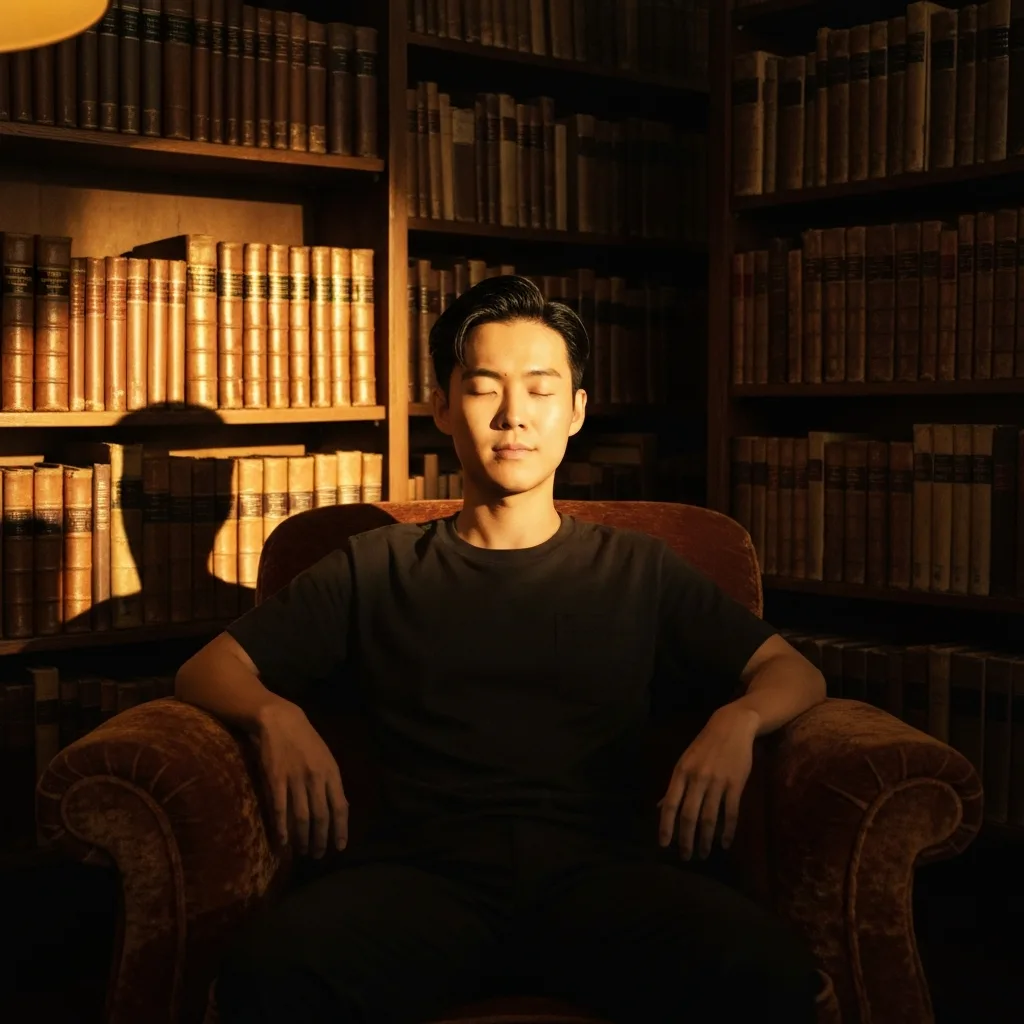
The Trap of Cognitive Overdrive
Have you ever tried to logic your way out of anxiety? You sit there, mapping out exactly why you shouldn’t be stressed, listing the rational facts, and analyzing the root cause of your fear. Yet, your chest remains tight, your breathing is shallow, and your heart races. This frustrating experience highlights a fundamental flaw in how we handle distress: we treat emotions as intellectual problems to be solved, rather than physical experiences to be felt.
Enter somatic mindfulness. While traditional cognitive approaches focus on changing your thoughts to change your feelings, somatic practices take a bottom-up approach. They bypass the endless loops of the analytical mind and go straight to the physical vessel where the emotion actually lives: your body. By shifting your focus from the narrative of your distress to the physical sensation of it, you can process heavy emotions, regulate your nervous system, and achieve a profound state of emotional balance.
Most of us are conditioned to be top-down processors. When an uncomfortable emotion arises—be it grief, anger, or chronic stress—our immediate instinct is to send it up to the brain for analysis. We ask ourselves questions: Why am I feeling this way? Whose fault is this? How do I fix it? We believe that if we can just understand the emotion, we can control it.
However, the analytical mind is not equipped to digest physical emotional energy. When you over-intellectualize your feelings, you often end up feeding them. The brain creates stories and catastrophic projections to justify the physical discomfort you are experiencing, which in turn triggers the body to release more stress hormones. It is a self-perpetuating loop of cognitive overdrive.
True emotional balance requires recognizing that emotions are, first and foremost, physiological events. The word emotion itself implies motion—energy moving through the body. When we stay trapped in our heads, we interrupt this natural movement. The energy stagnates, manifesting as chronic muscle tension, digestive issues, fatigue, and persistent low-grade anxiety.
What is Somatic Mindfulness?
Somatic mindfulness is the practice of directing your conscious awareness to your internal physical landscape. The word somatic comes from the Greek word ‘soma,’ meaning the living body in its wholeness. Rather than analyzing the content of your thoughts, somatic mindfulness asks you to observe the physical sensations occurring beneath the neck.
This practice relies heavily on a sense called interoception. Interoception is your brain’s ability to perceive sensations inside your body, such as your heartbeat, respiration rate, temperature, and muscular tension. People who struggle with emotional regulation often have poor interoceptive awareness; they are entirely disconnected from their physical selves until the pain or panic becomes too loud to ignore.
By cultivating interoception through somatic mindfulness, you learn the unique physical vocabulary of your emotions. You begin to notice the subtle tightening in your jaw before anger fully erupts, or the cold hollowness in your stomach that precedes a wave of sadness. Recognizing these cues allows you to intervene and regulate your nervous system before the emotion completely overwhelms you.
The Nervous System Connection
To understand why somatic mindfulness works, we have to look at the autonomic nervous system. When you experience a stressful event, your sympathetic nervous system activates the fight-or-flight response. Your body gets flooded with adrenaline and cortisol, preparing you to take physical action.
In the wild, an animal completes this stress cycle by physically running or fighting, and then literally shaking off the excess energy once the threat has passed. Humans, however, rarely do this. We sit at our desks, clench our jaws, and pretend everything is fine. The biological stress cycle remains incomplete, and the survival energy gets trapped in the nervous system.
Somatic mindfulness provides a safe container for the nervous system to finally complete these stalled cycles. By paying attention to the physical sensations of an emotion without trying to suppress them, you signal to your brain that the threat has passed, allowing your parasympathetic nervous system (the rest-and-digest state) to come back online.
Core Principles of Somatic Emotional Processing
If you are accustomed to living entirely in your head, shifting into your body can feel foreign or even intimidating. Somatic therapy and mindfulness rely on three core principles to make this process safe and effective.
1. Tracking Sensations
Tracking is the foundational skill of somatic mindfulness. It involves scanning your body and noticing sensations objectively, without judgment. The key is to strip away the emotional labels. Instead of saying, ‘I feel anxious,’ you track the physical reality: ‘I feel a rapid fluttering in my chest, my breathing is shallow, and there is a hot, tight sensation in my throat.’ This subtle shift in language breaks the identification with the emotion and creates a space of pure observation.
2. Pendulation
Emotions move in waves. Pendulation is the practice of consciously moving your attention between an area of discomfort and an area of safety or neutrality in your body. If the tightness in your chest feels overwhelming, you don’t force yourself to stay there. You might shift your focus to your feet resting on the floor, or the neutral feeling of your hands resting in your lap. By swinging your attention back and forth, you teach your nervous system that it is not entirely consumed by distress—that safety and discomfort can coexist.
3. Titration
Titration is a concept borrowed from chemistry, where one substance is slowly added to another drop by drop to prevent an explosive reaction. In somatic mindfulness, titration means processing difficult emotions in small, manageable pieces. You do not need to dive into the deepest well of your grief all at once. You can touch the edge of the sensation for just a few seconds, breathe, and step back. This prevents re-traumatization and safely builds your window of tolerance over time.
A Step-by-Step Somatic Practice for Emotional Balance
When you feel an intense emotion rising, or if you simply feel dysregulated and disconnected, use this step-by-step somatic sequence to process the physical energy.
Step 1: Ground the Physical Vessel
Before you engage with a difficult emotion, you must establish a baseline of physical support. Sit or lie down in a comfortable position. Bring your awareness to the points of contact between your body and the surface beneath you. Feel the gravity pulling you downward. Notice the texture of the fabric against your skin. Take three slow, deep breaths, making your exhales longer than your inhales to gently stimulate the vagus nerve.
Step 2: Locate the Sensation
Ask yourself: ‘Where is this emotion living in my body right now?’ Scan your body from the crown of your head down to your toes. You might find it in a clenched jaw, a heavy weight on your shoulders, a fluttering in your belly, or a tight band around your ribs. Do not analyze why it is there; simply locate its physical address.
Step 3: Describe the Physicality
Once you have located the sensation, zoom in on it like a scientist observing a biological phenomenon. What are its physical characteristics? Does it have a temperature? Is it hot, cold, or lukewarm? Does it have a texture? Is it sharp, dull, prickly, or smooth? Does it feel stationary, or is it moving? Is it heavy or light? By describing the sensation in purely physical terms, you deactivate the story-generating part of your brain and anchor yourself firmly in the present moment.
Step 4: Allow the Completion
As you hold your awareness on the sensation, you may notice it beginning to shift. It might intensify for a moment, change temperature, or move to a different part of your body. Your body might also have a spontaneous physical impulse. You might feel the urge to take a deep, shuddering sigh, to yawn, to stretch, to cry, or to shake your hands. Allow these movements to happen organically. This is your nervous system actively discharging the trapped energy and completing the biological stress cycle.
Overcoming Common Roadblocks
The most common roadblock in somatic mindfulness is encountering numbness. When you scan your body, you might find a blank space, a sense of dissociation, or an inability to feel anything below the neck. This is entirely normal. Numbness is simply the nervous system’s ultimate defense mechanism against overwhelm. If you encounter numbness, do not force a feeling. Instead, track the numbness itself. Acknowledge it gently: ‘I notice a feeling of blankness in my chest.’ Over time, as your body realizes it is safe, the numbness will begin to thaw.
Another roadblock is the fear that if you actually feel the physical sensation of your pain, it will destroy you. This is where the practice of pendulation is vital. Remember that you are in control of your attention. You can always pan back out, open your eyes, look around the room, and ground yourself in your immediate environment if the internal landscape becomes too intense.
Conclusion
Emotional balance is not the absence of difficult feelings; it is the capacity to experience them without being consumed by them. By integrating somatic mindfulness into your daily life, you stop fighting a war in your mind and start partnering with your body. You learn that emotions are not permanent states of being, but temporary waves of physical energy moving through a resilient vessel. When you finally allow yourself to feel them physically, you grant them the freedom to pass, leaving you grounded, regulated, and deeply at peace.

Do you enjoy the content on Agenda Creativa?
Your contributions help me create new articles, share creative ideas, and keep this platform alive! If you like what I do and want to support my work, you can buy us a coffee.
Every cup of coffee means more than just a gesture – it's direct support for my passion to create inspiring and useful content. Thank you for being part of this journey!
☕ Buy me a coffee