The Visceral Power of the Unseen
When we read, our minds are naturally trained to operate as cinematic projectors. We visualize the sweeping landscapes of epic fantasy, we hear the sharp dialogue of a modern thriller, and we feel the cold rain slicking the cobblestones of a historical mystery. Yet, among the five senses available to a writer, the most potent and frequently underutilized tool is the sense of smell. Olfactory imagery possesses a unique biological and psychological mechanism that bypasses the logical processing centers of the brain, striking directly at the amygdala and hippocampus. This direct line to emotion and memory makes scent the ultimate anchor in fiction, transforming a passive reading experience into an involuntary, visceral immersion.
Despite its power, writing about smell is notoriously difficult. The English language suffers from a distinct poverty of olfactory vocabulary. While we have thousands of highly specific words for colors, shapes, and sounds, our descriptions of scent rely almost entirely on comparison. A room smells like dust; a perfume smells like crushed roses; a street smells like ozone and exhaust. This linguistic limitation forces authors to be highly intentional and creative when deploying scent, turning a potential weakness into a profound narrative strength. When an author successfully captures a smell on the page, they do more than describe a setting—they manipulate the reader’s subconscious.

The Anatomy of Involuntary Memory
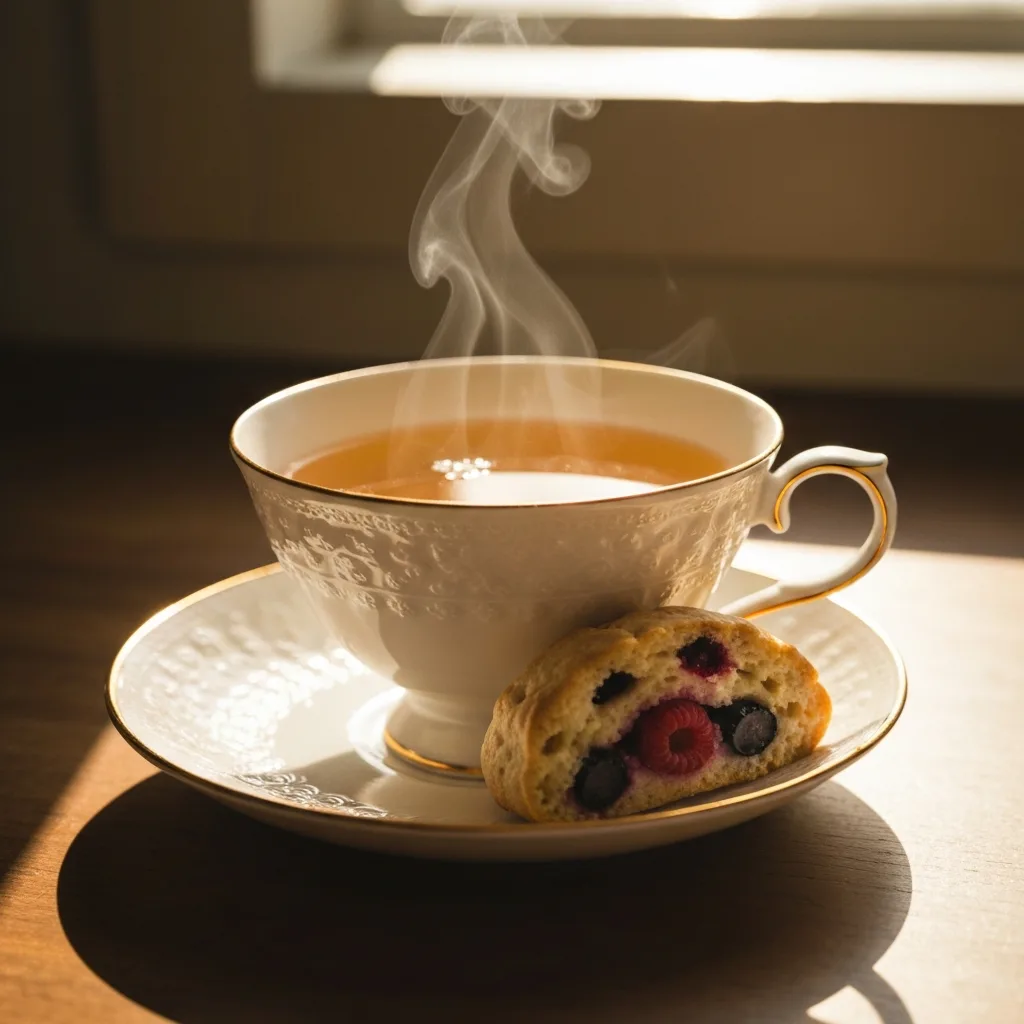
No discussion of olfactory imagery in literature can exist without confronting Marcel Proust. In his monumental work, In Search of Lost Time, Proust established the definitive literary framework for how taste and smell intersect with memory. The famous scene involving the madeleine dipped in linden tea is often reduced to a simple literary trope, but its execution is a masterclass in narrative mechanics. Proust does not merely describe the flavor of the cake; he describes the exact moment the sensory input dismantles the protagonist’s perception of present time.
For Proust, the scent and taste of the tea-soaked crumb act as a skeleton key to a locked psychological door. The sensory experience collapses the boundary between the past and the present, allowing an entire childhood in Combray to unfurl from a single cup of tea. This phenomenon, now scientifically recognized as the Proustian moment, demonstrates how authors can use scent to execute seamless, emotionally resonant time shifts. Instead of relying on clumsy flashbacks or heavy-handed exposition, a writer can introduce the smell of damp wool, floor wax, or burning leaves to instantly transport both the character and the reader to a different era. The scent becomes a bridge across the narrative timeline, proving that memory is not a filing cabinet, but a landscape waiting to be reawakened by the right trigger.
Painting with Stench: The Mastery of Patrick Süskind
While Proust used scent to explore the elegance of memory, Patrick Süskind used it to construct a terrifying portrait of obsession and depravity. His 1985 novel, Perfume: The Story of a Murderer, is arguably the most ambitious olfactory experiment in modern literature. Süskind strips away the visual dominance of the world and forces the reader to navigate eighteenth-century France entirely through the nose of his protagonist, Jean-Baptiste Grenouille.
The Odor of Humanity
Süskind opens his novel with a brutal, unapologetic assault on the reader’s senses. He describes the stench of Paris in forensic, stomach-turning detail—the smell of rotting cabbages, chamber pots, unwashed bodies, and rat-infested alleys. By overwhelming the reader with these foul descriptions, Süskind immediately establishes a setting that feels aggressively real. The historical past is often sanitized in fiction, reduced to pretty gowns and stately architecture. Süskind destroys this romantic illusion by reminding us that the past was, above all things, incredibly malodorous.
Furthermore, Süskind uses scent as the core defining feature of identity. Grenouille possesses the greatest nose in the world, capable of dissecting the exact chemical composition of a glass of water or a passing stranger. Yet, tragically and horrifyingly, Grenouille himself has no personal scent. In the logic of the novel, to lack a scent is to lack a soul. This absence isolates him from humanity and drives his murderous quest to distill the perfect perfume from the bodies of young women. Perfume proves that olfactory imagery is not merely decorative; it can serve as the central thematic engine of a narrative, driving character motivation, world-building, and psychological horror all at once.
Grounding the Speculative: Scent in Fantasy and Science Fiction
If historical fiction uses scent to make the past feel authentic, speculative fiction uses it to make the impossible feel plausible. When an author constructs a world that does not exist, they face the monumental task of convincing the reader to suspend their disbelief. Visual descriptions of alien landscapes or magical systems can sometimes feel sterile or overly academic. Scent bridges the gap between the intellectual understanding of a fictional world and the physical belief in it.
The Spice of Arrakis
Consider Frank Herbert’s science fiction masterpiece, Dune. The desert planet of Arrakis is defined by its harsh environment and its primary export: the spice melange. Herbert does not just explain the economic and political value of the spice; he ensures the reader knows how it smells. The pervasive scent of cinnamon permeates the novel. It is in the air, the food, the sweat of the Fremen, and the deep underground caverns. By assigning a familiar, earthy scent to an alien substance, Herbert anchors his expansive, complex universe in a sensory reality the reader already understands. The smell of cinnamon becomes a constant, subconscious reminder of the planet’s ecology and the inescapable influence of the spice.
Similarly, in fantasy literature, authors use scent to ground the mechanics of magic. Instead of describing magic as a vague, shimmering light, authors like N.K. Jemisin and Brandon Sanderson assign physical, sensory consequences to supernatural acts. The smell of ozone after a spell is cast, the sharp tang of copper in the air, or the scent of decaying leaves when dark magic is used—these details transform magic from a cinematic special effect into a tangible, physical force that interacts with the natural environment.
Character Cartography: The Scent of Persona
Beyond world-building and memory, authors frequently use olfactory imagery as a shorthand for characterization. Because we process smells emotionally before we process them intellectually, assigning a specific scent to a character creates an immediate bias in the reader. This technique is heavily utilized across all genres, from literary fiction to modern romance.
When Charles Dickens introduces a villain, they often carry the scent of stale gin, damp earth, or unwashed linen. These smells evoke an immediate sense of decay and untrustworthiness. Conversely, a protagonist might be associated with the smell of fresh ink, pine needles, or baking bread—scents that evoke comfort, clarity, and safety. F. Scott Fitzgerald famously used sensory details to build the aura of Jay Gatsby, surrounding him with the scents of expensive prohibition liquor, blooming gardens, and the faint, melancholic smell of the ocean. Gatsby’s environment smells of manufactured perfection masking an underlying emptiness.
In contemporary fiction, authors are increasingly using scent to subvert expectations. A charming, physically attractive antagonist might be betrayed by a subtle, unsettling odor—something metallic or overly sweet, like rotting fruit. This creates a psychological dissonance for the reader, an instinctual warning that contradicts the visual evidence. By manipulating the olfactory profiles of their characters, authors can layer subtext into their interactions, allowing the reader to ‘sniff out’ the truth before the protagonist does.
The Craft of Olfactory Prose
For writers seeking to elevate their prose, mastering the invisible landscape of scent requires a departure from lazy adjectives. Telling a reader that a room smelled ‘bad’ or ‘nice’ accomplishes nothing. The magic lies in specificity and association. The scent of ‘rain’ is generic; the scent of ‘hot asphalt suddenly quenched by a summer downpour’ evokes a specific temperature, season, and mood. The scent of ‘smoke’ is flat; the scent of ‘applewood smoke clinging to a damp wool sweater’ tells a story about where a character has been and what they have been doing.
Ultimately, the literature of scent is the literature of intimacy. We cannot smell something from a distance. To smell a person, a room, or an object, we must be close to it. When an author invites us to experience the olfactory dimensions of their story, they are pulling us across the boundary of the page, demanding our proximity, and ensuring that their world lingers in our minds long after the final chapter is closed.
Do you enjoy the content on Agenda Creativa?
Your contributions help me create new articles, share creative ideas, and keep this platform alive! If you like what I do and want to support my work, you can buy us a coffee.
Every cup of coffee means more than just a gesture – it's direct support for my passion to create inspiring and useful content. Thank you for being part of this journey!
☕ Buy me a coffee