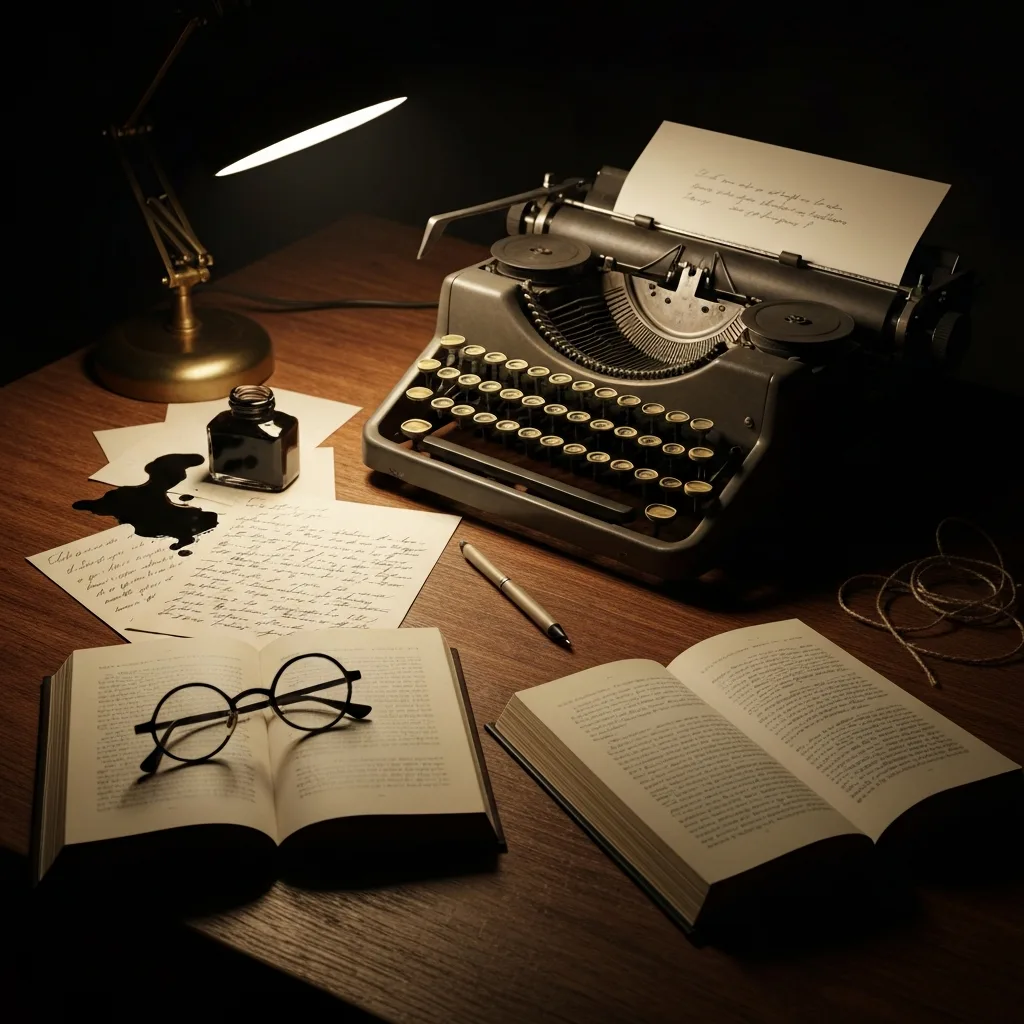
The Allure of the Invisible Creator
In the mid-twentieth century, literary critic Roland Barthes famously proclaimed the “death of the author,” arguing that a text should be interpreted entirely separate from its creator. Yet, the reading public has never quite managed to sever the story from the storyteller. We are inherently fascinated by the minds behind our favorite books, scrutinizing their biographies for clues, inspirations, and hidden meanings. But what happens when the author refuses to be known? Or worse, what happens when the author does not actually exist?
The history of literature is riddled with phantom authors, elaborate pseudonyms, and spectacular hoaxes. Writers have hidden their identities for a multitude of reasons: to bypass systemic prejudice, to escape the crushing weight of their own success, to mock the pretensions of the critical establishment, or simply to execute a profitable con. By examining the history of hidden identities in publishing, we gain a unique perspective on how the literary market operates and what readers truly value when they pick up a book.
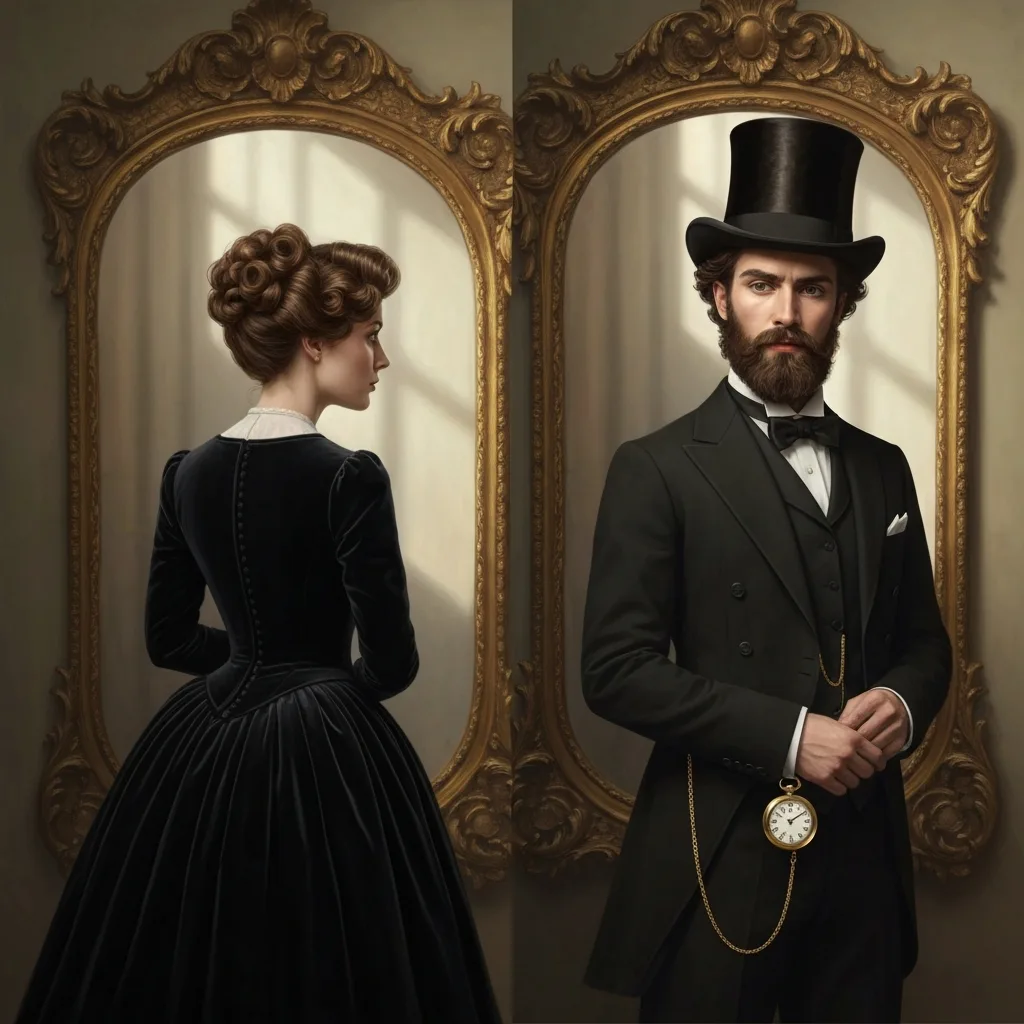
The Shield of Masculinity: Navigating a Patriarchal Press
For centuries, the literary establishment was an exclusive boys’ club. Women who wished to publish their work faced immense systemic barriers. When their manuscripts were accepted, they were often relegated to the patronizing category of “lady novelists,” a label that guaranteed their work would be judged not on its artistic merit, but on its adherence to feminine modesty and domestic themes.
To bypass this prejudice, many female writers adopted male pseudonyms. The Brontë sisters—Charlotte, Emily, and Anne—famously published their early poetry and novels under the names Currer, Ellis, and Acton Bell. They retained their own initials but chose names that were deliberately ambiguous, allowing them to slip past the gendered biases of Victorian critics. The strategy worked. The raw passion of Wuthering Heights and the fierce independence of Jane Eyre shocked reviewers, many of whom assumed the authors must be men due to the “coarseness” and vigor of the prose.
Similarly, Mary Ann Evans adopted the pen name George Eliot to ensure her works were taken seriously. Although female authors were prevalent in nineteenth-century England, Evans wanted to escape the stereotype that women only wrote lighthearted romances. Her masterpiece, Middlemarch, remains one of the greatest novels in the English language, celebrated for its psychological realism and philosophical depth—qualities she feared would be overlooked if she published under her real name. In France, Amantine Lucile Aurore Dupin took the name George Sand, wearing men’s clothing and smoking cigars in public, turning her pseudonym into a fully realized public persona that defied the gender norms of her era.
Escaping the Echo Chamber: The Established Author’s Alter Ego
While early female writers used pseudonyms to get their foot in the door, established writers often use them to find a way out of the very rooms they built. Literary success is a double-edged sword; it brings wealth and recognition, but it also creates rigid expectations. When a writer becomes a brand, publishers and readers demand consistency, making it difficult for an author to experiment with new genres or styles.
Stephen King experienced this claustrophobia in the late 1970s and early 1980s. Wondering if his massive success was a fluke of timing or a true reflection of his talent, King created Richard Bachman. Under this gritty alter ego, King published several novels, including Thinner and The Long Walk. The Bachman books received respectable reviews and modest sales, proving to King that his work could stand on its own without the blockbuster marketing of his real name. The ruse ended when a sharp-eyed bookstore clerk noticed similarities in the writing styles and tracked down publisher records.
A more contemporary example is J.K. Rowling, who adopted the name Robert Galbraith to publish the Cormoran Strike detective series. Following the global phenomenon of Harry Potter, Rowling sought the freedom to write without the intense scrutiny of the world’s media. The first Galbraith novel, The Cuckoo’s Calling, was praised by critics as a brilliant debut by a writer with a military background. Once the true identity of the author was leaked, sales skyrocketed, but Rowling later expressed sadness that the experiment ended so quickly, mourning the loss of the unburdened creative space the pseudonym provided.
The Ultimate Trick: Romain Gary and Émile Ajar
Perhaps the most brilliant execution of the literary alter ego belongs to French novelist Romain Gary. By the 1970s, Gary felt the French critical establishment had written him off as outdated. Seeking revenge, he created Émile Ajar, a young, elusive writer whose vibrant, modern prose took Paris by storm.
The Prix Goncourt is the most prestigious prize in French literature, and its strict rules dictate that an author can only win it once. Gary had already won in 1956. In 1975, the jury awarded the prize to Émile Ajar for The Life Before Us. Gary hired his nephew to pose as Ajar, successfully pulling off the deception until his death. He proved that the critics who dismissed his older work were still entirely captivated by his talent when it was packaged under a new name.
The Art of the Hoax: Selling Trauma and Forging Genius
Pseudonyms are generally harmless, but the literary hoax crosses a distinct ethical line. Hoaxes occur when the fake identity becomes the central selling point of the book, often exploiting the publishing industry’s appetite for sensationalism, trauma, or avant-garde genius.
The most notorious modern literary hoax is the case of JT LeRoy. In the late 1990s and early 2000s, LeRoy became a literary darling. Supposedly a gender-fluid, HIV-positive former teenage sex worker, LeRoy wrote raw, disturbing fiction that captivated the literary elite and Hollywood celebrities alike. The problem? JT LeRoy did not exist. The persona was entirely fabricated by a woman named Laura Albert, who wrote the books and hired her sister-in-law to play LeRoy in public, hidden behind large sunglasses and wigs.
When the truth was exposed in 2005, the backlash was severe. Critics and readers felt betrayed, not just because they had been lied to, but because the “authenticity” of the trauma had been the primary metric of the work’s value. The LeRoy scandal exposed a dark truth about the publishing industry: the market often commodifies marginalized identities and trauma, prioritizing the author’s tragic backstory over the text itself.
The Ern Malley Affair
Hoaxes are not limited to memoirs and contemporary fiction; poetry has its own infamous scandals. In 1943, two traditionalist Australian poets, James McAuley and Harold Stewart, decided to mock the growing trend of modernist poetry, which they viewed as pretentious nonsense. In a single afternoon, they threw together a collection of deliberately absurd poems, pulling random phrases from dictionaries, Shakespeare, and government manuals.
They submitted the collection to a prominent modernist literary magazine under the name Ern Malley, a recently deceased, tragic young poet. The magazine’s editor, Max Harris, was ecstatic, declaring Malley a genius and publishing the work with great fanfare. When McAuley and Stewart revealed the prank, the literary world was thrown into chaos. Yet, in a fascinating twist, many critics argued that despite the authors’ intentions, the Ern Malley poems possessed genuine surrealist merit. The hoax outgrew its creators, proving that once a text is released into the world, it takes on a life of its own.
The Syndicate Ghosts: Corporate Pseudonyms
Not all hidden identities are born of artistic frustration or deception. In the realm of children’s and young adult literature, the collective pseudonym is a standard business practice. Generations of readers grew up loving Nancy Drew and the Hardy Boys, written by Carolyn Keene and Franklin W. Dixon, respectively. Neither author ever existed.
These names were the creation of the Stratemeyer Syndicate, a publishing packager that provided plot outlines to a stable of ghostwriters. The writers were paid a flat fee and sworn to secrecy. This corporate use of the pseudonym ensures brand continuity. If a ghostwriter retires or demands more money, the publisher simply hires a new one, and the fictional author continues to produce books without missing a beat.
The Luxury of Absence in an Overexposed World
Today, authors are expected to be highly visible. They must maintain active social media profiles, engage with fans, and navigate endless promotional tours. In this environment, anonymity has become the ultimate luxury.
The Italian novelist Elena Ferrante, author of the acclaimed Neapolitan Novels, has managed to keep her true identity hidden for decades. She communicates with her publishers entirely through written correspondence, arguing that books, once written, have no need of their authors. Similarly, American postmodernist Thomas Pynchon has avoided the public eye for over half a century, allowing his dense, brilliant novels to speak entirely for themselves.
The enduring appeal of the phantom author reminds us that literature is, at its core, an act of imagination. Whether an author hides behind a pen name to escape prejudice, tests their talent against a biased critical establishment, or orchestrates a massive hoax, the result is the same: the focus is forced back onto the words. In a culture obsessed with celebrity and personal branding, the hidden author proves that a powerful story can still stand alone in the dark.
Do you enjoy the content on Agenda Creativa?
Your contributions help me create new articles, share creative ideas, and keep this platform alive! If you like what I do and want to support my work, you can buy us a coffee.
Every cup of coffee means more than just a gesture – it's direct support for my passion to create inspiring and useful content. Thank you for being part of this journey!
☕ Buy me a coffee