The Shift from Quantum Physics to Human Emotion
The question of “what if” is the foundational engine of all storytelling. Every time a character turns left instead of right, a narrative path is forged while another is permanently abandoned. But what happens when literature refuses to abandon the unchosen path? In recent years, contemporary fiction has increasingly embraced the concept of the multiverse, pulling it from the rigid domain of theoretical physics and hard science fiction into the emotional core of literary storytelling. This structural device—where parallel lives and alternate realities exist simultaneously—has become a dominant framework for exploring regret, agency, and the paralyzing weight of modern choice.

The Literary Ancestry of Forking Paths
While the multiverse feels like a distinctly modern obsession, its literary roots stretch back to the mid-twentieth century. Jorge Luis Borges laid the groundwork with his 1941 short story, “The Garden of Forking Paths.” Borges conceptualized time not as a straight line, but as a sprawling web of diverging, converging, and parallel outcomes. He proposed a universe where all possible outcomes of a decision occur simultaneously, each creating a newly splintered reality.
For decades, this idea remained largely experimental or confined to genre fiction. Science fiction authors used alternate realities to explore divergent historical timelines—what if the Axis powers won World War II, as in Philip K. Dick’s “The Man in the High Castle”? However, the contemporary literary multiverse is less concerned with sweeping geopolitical shifts and far more interested in the intimacy of personal history. The modern alternate reality novel scales down the cosmos to the size of a single human life.
The Anatomy of Regret and the Illusion of the Perfect Choice
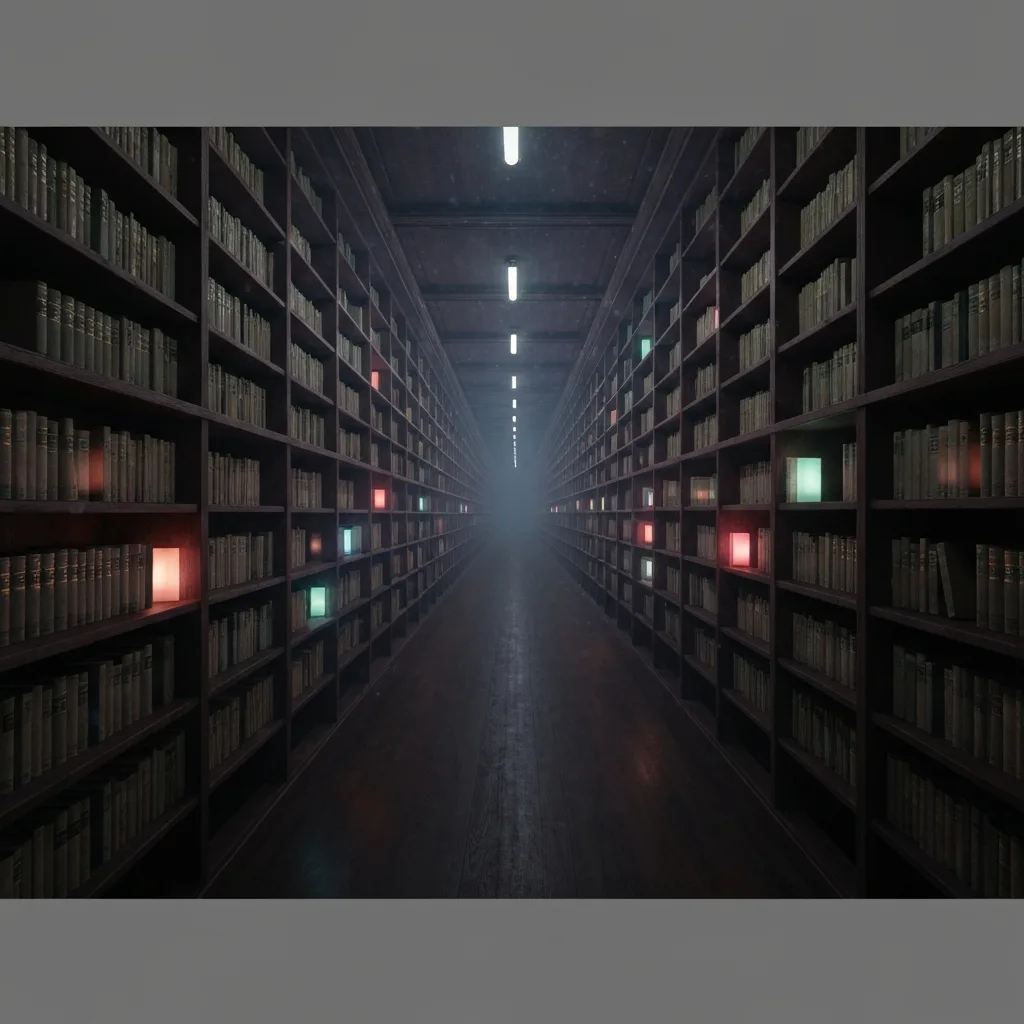
At its core, the contemporary multiverse novel is a forensic examination of regret. It addresses the universal human anxiety that we have somehow ruined our lives through a single, unnoticed misstep. Matt Haig’s “The Midnight Library” is perhaps the most recognizable recent example of this mechanism. The protagonist, Nora Seed, finds herself in a liminal space between life and death, surrounded by endless shelves of books that each contain a version of her life had she made different choices.
Haig uses the multiverse not as a playground for high-concept physics, but as a therapeutic tool. By allowing Nora to inhabit the lives where she stayed with her ex-fiancé, pursued Olympic swimming, or became a glaciologist, the narrative systematically dismantles the illusion of the perfect choice. The alternate reality trope allows authors to make the abstract concept of regret entirely tangible. Readers watch characters confront the reality that different choices do not necessarily guarantee better outcomes—they simply offer different sets of problems and compromises.
Structural Mechanics: Anchoring the Reader in Infinite Space
Writing a novel with multiple, simultaneous timelines presents a significant structural challenge. How does an author maintain narrative momentum and emotional stakes when death or failure can simply be undone by shifting to another reality?
Kate Atkinson solves this brilliantly in “Life After Life.” The novel follows Ursula Todd, who is born in 1910 and dies repeatedly, only to be reborn to live her life again, making slight alterations that allow her to survive longer each time. Atkinson anchors the sprawling narrative through intense, sensory repetition. The reader becomes accustomed to the reset mechanism, but the emotional stakes remain high because Ursula retains a subconscious, visceral memory of her past deaths.
The structural success of these novels relies on establishing strict rules for the multiverse. Without limitations, infinite possibilities destroy narrative tension. Authors must build a rigid architecture—whether it is a mystical library, a technological box, or a magical doorway—that governs how and when characters can cross between lives. This framework keeps the narrative grounded, ensuring that the exploration of infinity does not alienate the reader.
The Erosion of Consequence and the Ethics of Infinity
One of the most complex philosophical hurdles authors face when constructing a literary multiverse is the potential erosion of consequence. If every conceivable action is carried out by an alternate version of the protagonist in a parallel universe, does morality lose its weight? If a character commits a terrible crime in one reality, but remains a saint in a dozen others, how do we judge their core identity?
Contemporary authors navigate this ethical minefield by localizing the narrative focus. Rather than zooming out to view the multiverse as an indifferent cosmic spreadsheet, the camera remains tightly fixed on the subjective experience of the primary protagonist. In Micaiah Johnson’s “The Space Between Worlds,” the multiverse is heavily regulated, and travel is only possible to realities where the traveler’s alternate self has already died. This brilliant structural limitation forces the protagonist, Cara, to confront the sheer volume of realities where poverty, violence, and systemic oppression have killed her. Here, the multiverse is not a tool to erase consequences; it is a magnifying glass that highlights socioeconomic disparities and the fragility of survival. The ethical weight is preserved because the emotional toll on the surviving Cara is immense and irreversible.
The Thriller Element: Pacing and Paranoia in Parallel Worlds
While authors like Haig and Atkinson use the multiverse for philosophical and emotional exploration, others weaponize it for suspense. Blake Crouch’s “Dark Matter” strips away the quiet introspection of the literary multiverse and replaces it with relentless pacing and psychological paranoia.
When protagonist Jason Dessen is abducted, knocked unconscious, and wakes up in a world where his wife is not his wife and his son was never born, the narrative transforms the “what if” concept into a nightmare. Crouch explores the terrifying implications of the multiverse: if every version of you exists, then a version of you exists who is willing to steal your life. The alternate reality becomes a hostile environment. This approach highlights the versatility of the multiverse trope. It can function as a quiet meditation on grief, or it can serve as the engine for a high-stakes psychological thriller, simply by shifting the protagonist’s relationship to their alternate selves from curiosity to violent conflict.
Portals, Thresholds, and the Aesthetics of Transition
A crucial element of the alternate reality narrative is the method of transition. The aesthetic design of the portal often reflects the thematic core of the novel. In V.E. Schwab’s “A Darker Shade of Magic,” the parallel versions of London are accessed through blood magic and physical tokens. The transition is visceral and dangerous, mirroring the decaying magic of the worlds themselves.
In contrast, Alix E. Harrow’s “The Ten Thousand Doors of January” uses the literal concept of doors to represent the transition between childhood and adulthood, conformity and rebellion. The portals in contemporary fiction are rarely just doors; they are manifestations of the protagonist’s internal state. The act of crossing the threshold requires agency. Characters cannot simply stumble into a better life; they must actively choose to open the door, face the transition, and accept the consequences of leaving their original reality behind.
The Cultural Context: Why the Multiverse Resonates Now
The explosion of multiverse narratives in contemporary fiction is not a coincidence. It is a direct reflection of modern psychological and cultural conditions. We live in an era characterized by decision fatigue and the constant curation of alternate lives on social media. Every day, people are bombarded with images of the lives they could be living, the careers they could have pursued, and the places they could reside. This digital environment fosters a persistent, low-grade anxiety that we are missing out on our own potential.
Literature responds to this anxiety by literalizing it. The multiverse novel validates the reader’s feeling of being overwhelmed by choice, while ultimately offering a comforting resolution. By forcing protagonists to navigate their unlived lives, these narratives almost universally conclude with an acceptance of the present. They strip away the romanticization of the path not taken and remind the reader that meaning is not found in the optimization of choices, but in the commitment to the reality one currently inhabits.
Conclusion
The architecture of the multiverse has permanently reshaped contemporary fiction. By merging the speculative mechanics of alternate realities with the deep character study of literary fiction, authors have found a new way to map the human psyche. These novels allow readers to safely explore the darkest corners of their regrets and the wildest reaches of their potential. Ultimately, they do not teach us how to escape our lives, but rather how to look at our singular, flawed, and finite existence and decide that it is enough.
Do you enjoy the content on Agenda Creativa?
Your contributions help me create new articles, share creative ideas, and keep this platform alive! If you like what I do and want to support my work, you can buy us a coffee.
Every cup of coffee means more than just a gesture – it's direct support for my passion to create inspiring and useful content. Thank you for being part of this journey!
☕ Buy me a coffee