The Trap of the Vague Emotion
When someone asks how you are doing, chances are you rely on a familiar rotation of responses: “good,” “bad,” “fine,” or “stressed.” Even in our private internal monologues, we tend to paint our emotional experiences with incredibly broad brushstrokes. We feel a heavy sensation in our chest and label it “anxiety.” We snap at a partner and chalk it up to being “irritated.”

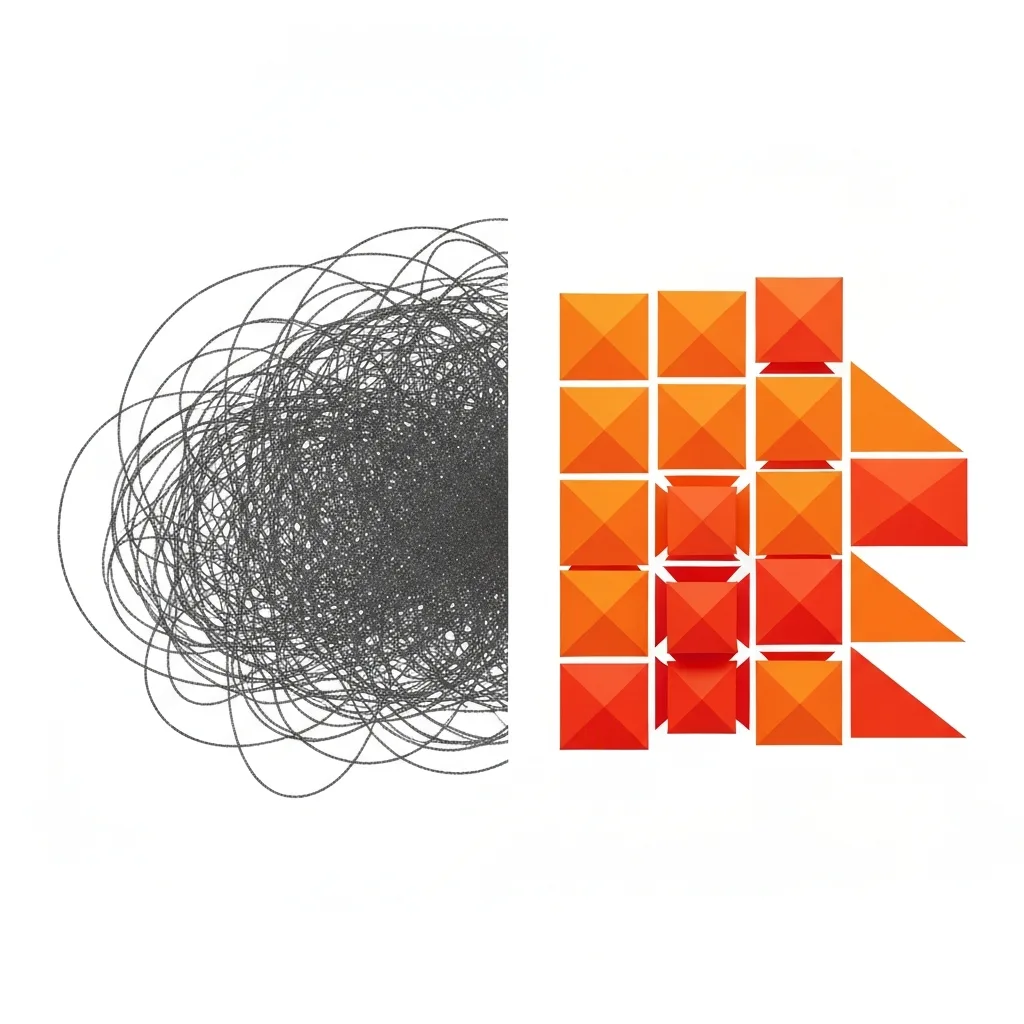
While these summary labels are socially convenient, they are disastrous for our internal emotional balance. When we use vague terminology to describe our inner lives, we deprive our brains of the specific data needed to solve the problem at hand. If every negative emotion is categorized simply as “bad” or “stressed,” your nervous system treats every situation with the same blunt-force fight-or-flight response.
This is where the concept of emotional granularity comes into play. Coined by psychologist and neuroscientist Dr. Lisa Feldman Barrett, emotional granularity is the ability to recognize and label emotions with a high degree of specificity. It is the difference between saying “I feel bad” and recognizing “I feel a mix of disappointment and mild resentment because my efforts were overlooked.” Developing this skill is one of the most effective, evidence-based ways to cultivate lasting emotional balance.
What Exactly is Emotional Granularity?
Imagine going to a doctor and saying, “I feel sick.” The doctor cannot prescribe a treatment based on that statement alone. They need to know if you are nauseous, achy, dizzy, or fatigued. Your emotional health works the exact same way.
Emotional granularity is the practice of expanding your emotional vocabulary so you can diagnose your internal state accurately. A person with low emotional granularity experiences emotions in broad, undifferentiated clusters. They might group anger, sadness, and fear into a single bucket labeled “upset.”
A person with high emotional granularity, however, experiences their inner world in high definition. They can distinguish between feeling envious and feeling jealous. They know the subtle difference between being fatigued, lethargic, and burnt out. This precision is not just an exercise in semantics; it is a fundamental shift in how the brain processes emotional data.
The Neuroscience of Naming Your Feelings
To understand why specific words matter, we have to look at what happens in the brain when we label an emotion. In a landmark study conducted by neuroscientist Matthew Lieberman at UCLA, participants were placed in an fMRI machine and shown images of faces expressing strong emotions. Predictably, viewing these faces triggered activity in the amygdala, the brain’s alarm center.
However, when participants were asked to choose a word that described the emotion they were seeing—a process known as “affect labeling”—the activity in the amygdala significantly decreased. Simultaneously, activity in the right ventrolateral prefrontal cortex increased. This is the area of the brain associated with thinking in words about emotional experiences and regulating behavior.
By simply naming the emotion, the participants effectively hit the brakes on their brain’s emotional reactivity. When you use precise words to describe how you feel, you force emotional data out of the reactive, primitive parts of your brain and into the analytical, conscious parts of your brain. You transition from being consumed by a feeling to observing it.
Why “Stressed” is a Useless Word
Perhaps the most overused and least helpful word in our modern emotional vocabulary is “stressed.” We use it as a catch-all for everything from a looming deadline to existential dread. The problem with “stressed” is that it offers no actionable solution.
If you tell yourself you are stressed, your brain prepares for a generalized threat. But what if you pause and realize that you aren’t actually stressed—you are feeling unequipped for a specific task? The solution to feeling unequipped is to ask for help or gather more information. What if, instead of “stressed,” you are actually feeling unappreciated by your boss? The solution there involves setting a meeting to discuss your contributions. By finding the granular emotion hidden beneath the umbrella of “stress,” you immediately uncover the roadmap to resolving it.
The Tangible Benefits of High Emotional Granularity
People who develop a rich emotional vocabulary experience a wide array of measurable benefits that impact both their psychological and physical well-being.
Faster Recovery from Setbacks: Because granular thinkers can pinpoint exactly what is wrong, they spend less time wallowing in generalized distress. They process the specific emotion, address the root cause, and return to their baseline much faster.
Lower Instances of Destructive Coping Mechanisms: When you feel a massive, vague wave of “bad,” the instinct is to numb it. This leads to doomscrolling, binge eating, or substance use. When you can identify that you are feeling “lonely” or “nostalgic,” you are more likely to choose a coping mechanism that actually addresses the feeling, such as calling a friend or looking through old photos.
Improved Physical Health: Research indicates that individuals with high emotional granularity visit the doctor less frequently, use less medication, and spend fewer days hospitalized. Because their nervous systems aren’t constantly firing off generalized stress responses, they experience lower levels of chronic inflammation and cortisol.
How to Build Your Emotional Vocabulary
Expanding your emotional granularity is a skill, which means it can be practiced and improved at any age. Here are several practical ways to start building a more precise emotional vocabulary.
1. Utilize an Emotion Wheel
An emotion wheel (such as the Junto Emotion Wheel or Plutchik’s Wheel of Emotions) is a visual tool that organizes feelings into concentric circles. The center contains basic emotions like Sad, Mad, Glad, and Afraid. As you move outward, the emotions become more specific. For example, “Mad” branches out into “Frustrated,” “Bitter,” and “Resentful.” Keep an emotion wheel on your phone or desk. When you feel a shift in your mood, look at the wheel and force yourself to find the exact word that matches your internal state.
2. Connect Words to Somatic Sensations
Emotions do not just happen in the mind; they happen in the body. Start tracking how specific feelings manifest physically. Does “dread” feel like a cold weight in your stomach, whereas “nervousness” feels like a fluttering in your chest? By linking physical sensations to specific words, you train your brain to recognize these granular emotions much faster in the future.
3. Separate Identity from Emotion
Pay attention to the phrasing you use when identifying a feeling. Instead of saying, “I am anxious” or “I am angry,” shift your language to “I am experiencing anxiety” or “I am feeling anger right now.” The phrase “I am” ties the emotion to your identity, making it feel permanent. Acknowledging that you are simply experiencing a feeling creates psychological distance, making it easier to analyze the emotion objectively.
4. Track Micro-Emotions Throughout the Day
Do not wait for a massive emotional blowout to practice granularity. Practice on the small, quiet emotions of daily life. Notice the brief flash of “satisfaction” when you finish a difficult email. Acknowledge the “wistfulness” you feel when a certain song plays on the radio. Recognizing these micro-emotions builds the neural pathways you will need when dealing with much larger, more difficult feelings.
5. Read More Fiction
It might sound surprising, but reading literary fiction is one of the most effective ways to build emotional granularity. Fiction forces you to inhabit the minds of characters experiencing complex, layered emotional states. As authors describe these nuanced feelings, you naturally absorb new emotional concepts and vocabulary that you can apply to your own life.
Overcoming the Discomfort of Specificity
It is important to acknowledge that increasing your emotional granularity can be uncomfortable at first. Vague labels offer a certain level of protection. It is much easier to tell yourself you are “annoyed” with a friend than to admit you are feeling “envious” of their recent success. It is easier to say you are “tired” than to admit you are feeling “apathetic” about your career.
Specific words force us to confront uncomfortable truths about our desires, our insecurities, and our relationships. This process requires a great deal of self-compassion. You must be willing to look at your shadow emotions without judging yourself for having them. Remember that an emotion is just a piece of data. Feeling envious does not make you a bad person; it simply gives you data about what you currently value and desire.
The Quiet Power of Being Specific
Emotional balance is not about achieving a permanent state of calm or eradicating negative feelings. True emotional balance is the ability to navigate the full spectrum of human experience without losing your footing. By expanding your emotional vocabulary, you give yourself the tools to do exactly that.
When you stop settling for vague labels, you stop living in a vague emotional landscape. You become the cartographer of your own mind, mapping out every nuance of your joy, your grief, your frustration, and your peace. In doing so, you transform your emotions from overwhelming forces into understandable, manageable experiences.

Do you enjoy the content on Agenda Creativa?
Your contributions help me create new articles, share creative ideas, and keep this platform alive! If you like what I do and want to support my work, you can buy us a coffee.
Every cup of coffee means more than just a gesture – it's direct support for my passion to create inspiring and useful content. Thank you for being part of this journey!
☕ Buy me a coffee