
The Flaw in the Symmetrical Workday
Most traditional productivity advice operates on a fundamentally flawed premise: the idea that all hours are created equal. You sit down with a meticulously color-coded calendar, slotting tasks into neat thirty-minute blocks. You allocate two hours for a deep-dive report at 2:00 PM, and another hour for strategic planning at 4:00 PM. But when the afternoon rolls around, the spreadsheet you scheduled feels insurmountable, and your strategic planning session devolves into staring blankly at a cursor.

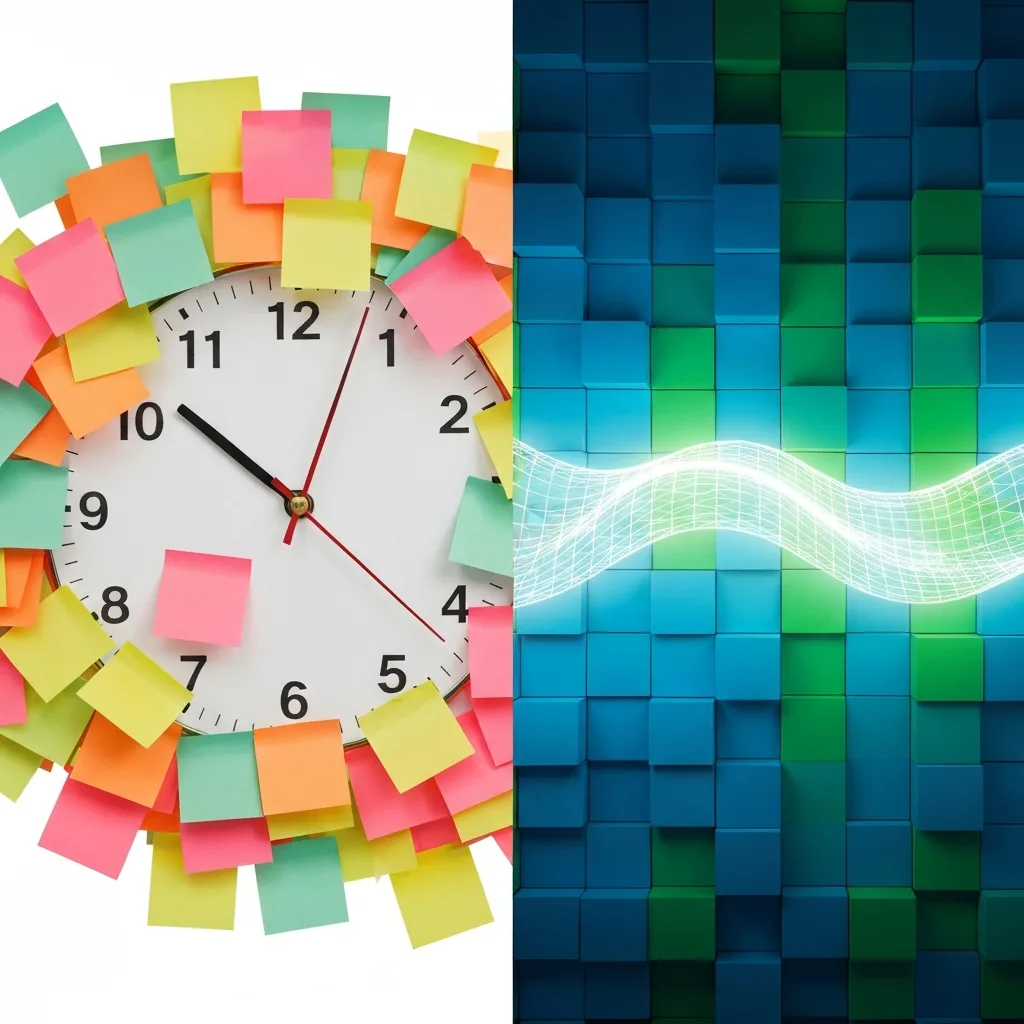
The failure here is not a lack of discipline. The failure is that you attempted to manage your time while entirely ignoring your energy. Time is a finite, static resource; there will always be exactly sixty minutes in an hour. Energy, however, is dynamic. It ebbs, flows, spikes, and crashes based on biological rhythms that no calendar app can override.
Shifting your organizational strategy from time management to energy mapping changes how you approach your workday. Instead of asking, ‘Do I have time to do this?’ you begin asking, ‘Do I have the cognitive capacity to do this right now?’ This subtle shift is the difference between grinding through a task with mediocre results and executing it efficiently during a state of natural flow.
Understanding Your Biological Prime Time
To organize your workload around your energy, you first need to understand your Biological Prime Time (BPT). Coined by productivity researcher Sam Carpenter, your BPT refers to the specific hours of the day when your energy, focus, and motivation naturally peak. For early birds, this might be a sharp window between 7:00 AM and 10:00 AM. For night owls, the peak might not arrive until 4:00 PM or even later.
These peaks are dictated by your circadian rhythm—the internal 24-hour clock running in the background of your brain—and your ultradian rhythms, which are shorter cycles of brain wave activity that occur throughout the day. Ultradian rhythms typically last about 90 to 120 minutes. During the upward slope of an ultradian cycle, you feel alert and capable. As you hit the downward slope, your brain naturally seeks recovery, leading to the familiar mid-task brain fog.
When you force high-level, complex work into the trough of an ultradian cycle, you experience friction. a task that should take forty-five minutes suddenly takes two hours. By mapping your energy, you can stop fighting these biological currents and start swimming with them.
Conducting a Personal Energy Audit
You cannot organize what you have not measured. Before you can map your tasks, you need a clear picture of your personal energy landscape. This requires a brief, week-long energy audit.
For five consecutive workdays, set an alarm to go off every two hours. When the alarm sounds, pause and rate your current energy level on a scale from 1 to 10. Write down what you were doing, what you ate recently, and how focused you feel. By the end of the week, a distinct pattern will emerge. You will see exactly when your cognitive spikes occur and when your inevitable dips happen.
Do not judge the data. If you find that your energy consistently plummets at 1:30 PM, do not view this as a weakness to be fixed with another cup of coffee. View it as a structural reality of your workday that you need to organize around.
The Four Quadrants of Energy Mapping
Once you have identified your Biological Prime Time and your low-energy valleys, you can begin categorizing your to-do list. Traditional organization methods prioritize tasks by urgency and importance. Energy mapping adds a crucial third metric: cognitive demand. You can divide your daily tasks into four distinct quadrants.
1. High-Energy, High-Focus (The Heavy Lifting)
These are the tasks that require deep, uninterrupted thought. Writing, coding, strategic planning, complex problem-solving, and designing fall into this category. These tasks should be fiercely protected and scheduled exclusively during your Biological Prime Time. If your peak is at 9:00 AM, this is not the time to check email or sit in a status update meeting. It is the time to close your office door, put your phone on silent, and tackle the heavy lifting.
2. High-Energy, Low-Focus (The Collaborative Push)
Some tasks require you to be energetic and engaged, but do not require deep, solitary concentration. This includes brainstorming sessions, team meetings, networking events, and client calls. You need to be ‘on,’ but you are reacting to others rather than generating complex work from scratch. Schedule these during secondary energy peaks—perhaps late morning or early afternoon, just before or after your primary deep work block.
3. Low-Energy, High-Focus (The Detail Work)
These tasks require accuracy but not necessarily immense creative energy. Think of data entry, proofreading, organizing files, paying bills, or reviewing standard contracts. You need to pay attention, but the work is straightforward and repetitive. These tasks are perfectly suited for the downward slope of your energy cycle. When you feel your creative drive waning, switch to these necessary administrative duties.
4. Low-Energy, Low-Focus (The Maintenance Mode)
Every job has maintenance tasks: deleting old emails, organizing your physical desk, filling out timesheets, or reading industry newsletters. These require almost no cognitive strain. Reserve these tasks for your absolute lowest energy dips. When the 3:00 PM slump hits, do not try to write a proposal. Instead, clear out your inbox or reorganize your digital folders. You are still being productive, but you are matching the work to your current biological capacity.
Restructuring Your Calendar
With your tasks categorized and your energy patterns identified, you can restructure your calendar. The goal is to create flexible ‘energy blocks’ rather than rigid time blocks.
Instead of scheduling ‘Write Report from 9:00 to 11:00,’ schedule a ‘High-Energy Block’ for that window. Pull from your list of High-Energy, High-Focus tasks based on what is most pressing that day. This allows for flexibility. If you sit down at 9:00 AM and realize the report is blocked waiting on data from a colleague, you do not waste the prime energy window. You simply pull another high-energy task, like drafting a pitch deck, into that slot.
Similarly, block out your low-energy periods as ‘Administrative Windows.’ Communicate these rhythms to your team if possible. Let them know that you are generally unavailable for meetings during your morning deep-work block, but are highly accessible in the afternoon.
The Crucial Role of Strategic Recovery
A true energy mapping system does not just organize work; it organizes rest. In a culture that glorifies continuous output, stepping away from your desk can feel like a failure of productivity. Biologically, however, continuous output is impossible.
When you hit the bottom of an ultradian cycle, your body enters an ‘ultradian healing response.’ Pushing through this phase with caffeine or sheer willpower leads to diminishing returns, increased errors, and eventual burnout. Strategic recovery is the act of intentionally stepping away before you are completely depleted.
When you map your energy, you must schedule recovery blocks. A proper recovery block is not scrolling through social media while eating a sandwich at your desk. It is a genuine cognitive break: a twenty-minute walk outside, a short meditation, stretching, or simply sitting quietly away from a screen. These breaks allow your prefrontal cortex to rest, resetting your focus for the next cycle.
Reclaiming Your Output
Organizing your productivity around energy rather than time requires letting go of the illusion of total control. You cannot force your brain into a state of deep focus at 4:00 PM on a Friday just because a calendar slot is open. By respecting your natural rhythms, you stop treating yourself like a machine and start operating like a strategist.
When you align the cognitive demands of your work with the natural fluctuations of your biology, the friction disappears. You accomplish more in a two-hour peak energy block than you would in four hours of unfocused, fatigued grinding. Ultimately, energy mapping is the realization that true productivity is not about doing more things in less time; it is about doing the right things at the right time.



Do you enjoy the content on Agenda Creativa?
Your contributions help me create new articles, share creative ideas, and keep this platform alive! If you like what I do and want to support my work, you can buy us a coffee.
Every cup of coffee means more than just a gesture – it's direct support for my passion to create inspiring and useful content. Thank you for being part of this journey!
☕ Buy me a coffee