
The Anatomy of a Productivity Breakdown
It happens every Monday morning. You sit down at your desk with a fresh cup of coffee, open your task manager, and stare at a beautifully organized hierarchy of projects. You have nested folders for “Website Redesign,” “Q3 Marketing Push,” and “Client Onboarding.” It looks like the epitome of professional control.
You click into the “Website Redesign” folder. Your eyes scan the list of tasks: Draft the new homepage copy, Email the developer about the broken link, Resize the team headshots, and Review the final wireframes.
Suddenly, that initial wave of morning motivation evaporates. You feel a subtle but distinct sense of friction. Instead of tackling the homepage copy, you resize the headshots. Then you check your email. Thirty minutes later, the most critical work remains untouched. You haven’t just procrastinated; you have fallen victim to the Categorization Penalty.
The Categorization Penalty Explained
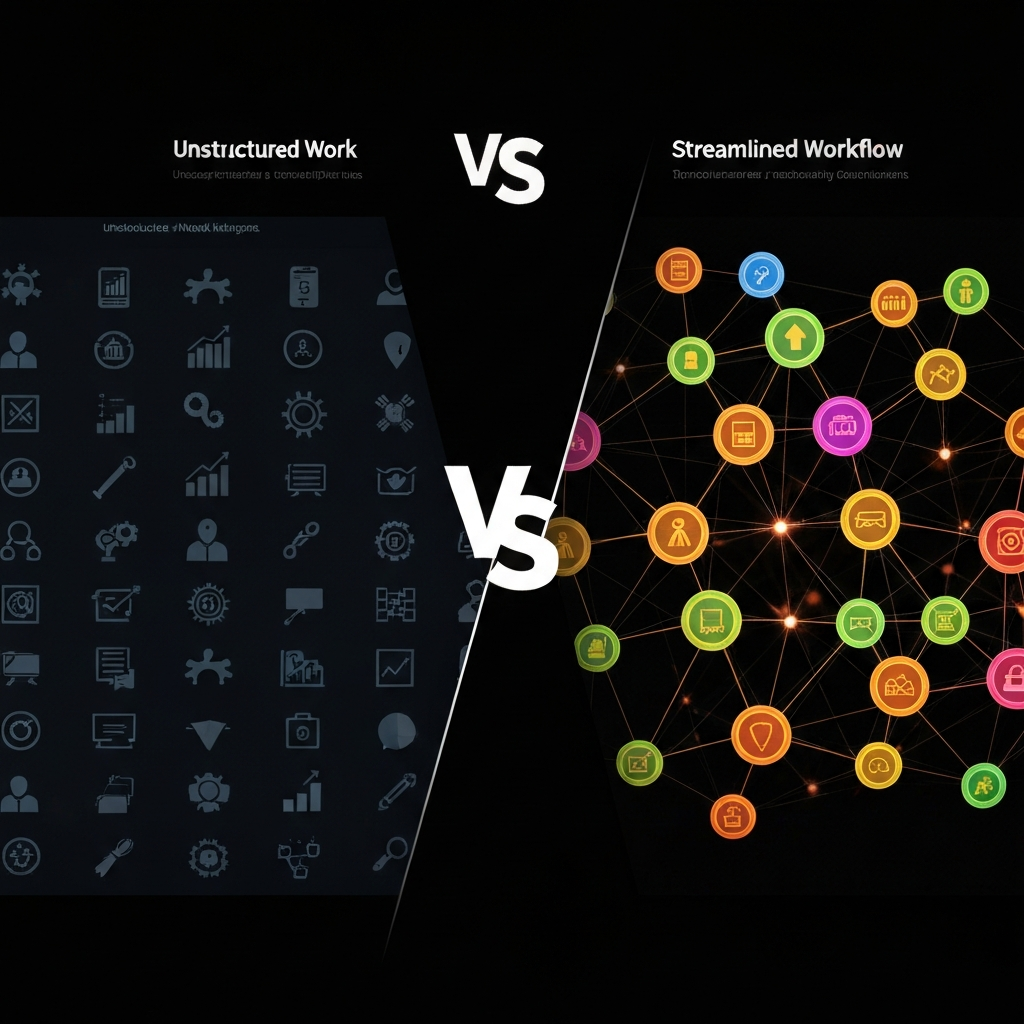
The Categorization Penalty occurs when we organize our daily execution tools using the same architecture we use for high-level planning.
When you are planning your quarter, it makes perfect sense to group tasks by project. You are operating from a 10,000-foot view, evaluating outcomes, deliverables, and timelines. But when you transition into execution mode, your brain no longer cares about the outcome. It cares about the cognitive state required to perform the action.
Looking inside a project folder forces you to confront a chaotic mix of energy requirements. Drafting homepage copy requires intense, deep-focus synthesis. Emailing the developer requires light, interactive communication. Resizing headshots is a mindless, low-fidelity administrative chore.
By placing these tasks next to each other simply because they belong to the same ultimate outcome, you are demanding that your brain constantly shift gears. Context switching between different projects is bad enough, but context switching between different cognitive states is what truly bankrupts your mental energy. Your executive function burns out trying to toggle between deep analytical thought and shallow administrative clicking.
The Planning vs. Execution Divide
To fix this, we have to separate the architecture of planning from the architecture of execution.
Think of your workflow like a restaurant. The project plan is the menu. It tells you what the final dish is going to look like. But the kitchen isn’t organized by the menu items; it’s organized by the method of cooking. You have the grill station, the prep station, and the fry station. The chef doesn’t run around the kitchen gathering everything for a single dish and cooking it all at once. They batch the work by the tools and the environment required.
Your task manager should operate the exact same way. You need a system that allows you to review your work by project, but execute your work by cognitive context.
How to Engineer Energy-Based Contexts
Transitioning to a state-based workflow requires decoupling the action from the project. You will still track your projects, but your daily to-do list will be driven entirely by your current biological capacity. Here is how to build the protocol.
Step 1: Define Your Cognitive Zones
Forget tags like “Urgent” or “Important.” Instead, categorize your tasks based on the type of brainpower they demand. Most knowledge work can be broken down into four distinct energy zones:
- Deep Synthesis (High Energy): These are the heavy-lifting tasks. Writing original code, drafting strategy documents, analyzing complex data, or designing a new system. These require uninterrupted focus and peak mental clarity.
- Interactive/Collaborative (Medium Energy): Tasks that require thought but are inherently fragmented. Replying to complex emails, participating in strategy meetings, reviewing a colleague’s work, or conducting interviews.
- Administrative/Routine (Low Energy): The necessary maintenance of your professional life. Paying invoices, filling out expense reports, scheduling meetings, or organizing digital files.
- The Brain-Dead Zone (Zero Energy): Tasks you can do while listening to a podcast or when you are completely exhausted at 4:00 PM. Resizing images, deleting old emails, formatting spreadsheets, or clearing your physical desk.
Step 2: Implement the Triage Protocol
When a new task enters your ecosystem, it still gets attached to its parent project so nothing falls through the cracks. However, before it hits your daily execution list, it must be assigned an energy tag.
If you use software like Todoist, Notion, or Asana, create a custom field or a tagging system for these four zones. When you do your weekly or daily planning, you aren’t just deciding what to do; you are predicting how it will feel to do it.
Step 3: State-Matching Execution
This is where the leverage kicks in. When you sit down at your desk, you stop asking, “What project should I work on today?” That question is inherently flawed because it ignores your physical reality.
Instead, you ask: “What is my current cognitive capacity?”
If it’s 8:30 AM, you’ve slept well, and the office is quiet, you have peak cognitive capacity. You filter your task manager to show only Deep Synthesis tasks. You might write a section of a grant proposal, then immediately pivot to outlining a new marketing campaign. Even though these belong to entirely different projects, they require the exact same mental state. You are staying at the “grill station.” The momentum is seamless.
If it’s 3:15 PM, you just got out of a grueling two-hour meeting, and your brain feels like static, you do not open the “Website Redesign” folder. You filter your list for Brain-Dead Zone tasks. You spend thirty minutes mindlessly resizing headshots, formatting documents, and clearing out your downloads folder. You are still moving projects forward, but you are doing so in a way that respects your biological reality.
Troubleshooting the Transition
As you implement this protocol, you will encounter a few common friction points. Here is how to navigate them.
The Hybrid Task Trap
You will inevitably find tasks that seem to span multiple energy levels. For example, “Create the monthly analytics report.” The data gathering might be a low-energy administrative task, but writing the executive summary is a high-energy synthesis task.
If a task requires multiple cognitive states, it is not a task; it is a mini-project. You must split it. Break it down into “Pull data for analytics report” (Low Energy) and “Draft insights for analytics report” (High Energy). By splitting the task along cognitive lines, you eliminate the subconscious resistance that causes procrastination.
The Urgency Override
What happens when a high-energy task is urgently due, but you are in a low-energy state? This is the reality of professional life, and no system can eliminate it entirely. However, the energy-based context system acts as a diagnostic tool.
When you are forced to do deep synthesis in a depleted state, the friction you feel is no longer a mystery. You can acknowledge it: “I am doing Tier 1 work with Tier 3 energy.” This awareness allows you to strip away the guilt. You lower your expectations for perfection, get the acceptable draft done, and recognize that the system didn’t fail—the timeline simply demanded a brute-force override.
The Long-Term Leverage of State-Based Work
The Categorization Penalty thrives on the illusion that we are machines, capable of outputting uniform effort regardless of the task type. By dismantling your project-based daily lists and rebuilding them around cognitive states, you stop fighting your own biology.
You will find that your deep work sessions become longer and more profound because you aren’t interrupting them with shallow administrative chores. Conversely, you will find that your administrative work gets done faster because you batch it during the natural lulls in your daily energy cycle.
Stop organizing your days for the person you wish you were—a relentless execution robot. Start engineering your workflow for the human you actually are. Match the work to the state, and the execution will take care of itself.
Do you enjoy the content on Agenda Creativa?
Your contributions help me create new articles, share creative ideas, and keep this platform alive! If you like what I do and want to support my work, you can buy us a coffee.
Every cup of coffee means more than just a gesture – it's direct support for my passion to create inspiring and useful content. Thank you for being part of this journey!
☕ Buy me a coffee
