You know the feeling. A sudden flash of anger prompts you to snap at your partner. A wave of anxiety drives you to compulsively check your work email at 11 PM. A deep sense of boredom, frustration, or sadness pushes you toward mindless scrolling, an unplanned online purchase, or opening the refrigerator for the third time in an hour. These are emotional urges—rapid, intense psychological impulses that demand immediate action.
Most of us operate under the flawed assumption that when an intense emotion strikes, we have only two choices: act on it immediately or aggressively fight it off. We either let the feeling dictate our behavior, or we try to suppress it through sheer willpower. Neither approach fosters long-term emotional balance. But there is a third option, rooted deeply in clinical mindfulness: urge surfing.
Originally developed by the late psychologist Dr. G. Alan Marlatt as a relapse prevention technique for addiction, urge surfing has since been adapted as an incredibly effective tool for managing everyday emotional reactivity. It teaches us how to experience the full, uncomfortable force of an emotional impulse without being swept away by it, allowing us to break destructive habits and respond to life with intention rather than pure reflex.
What Exactly is Urge Surfing?
Urge surfing rests on a fundamental psychological truth: emotions and their accompanying urges are inherently temporary. No matter how intense a feeling is, it cannot sustain its peak indefinitely. The problem is that when we are caught in the middle of a powerful emotional swell, our brains trick us into believing the intensity will last forever unless we do something to relieve the pressure.
The Ocean Metaphor of Human Emotion
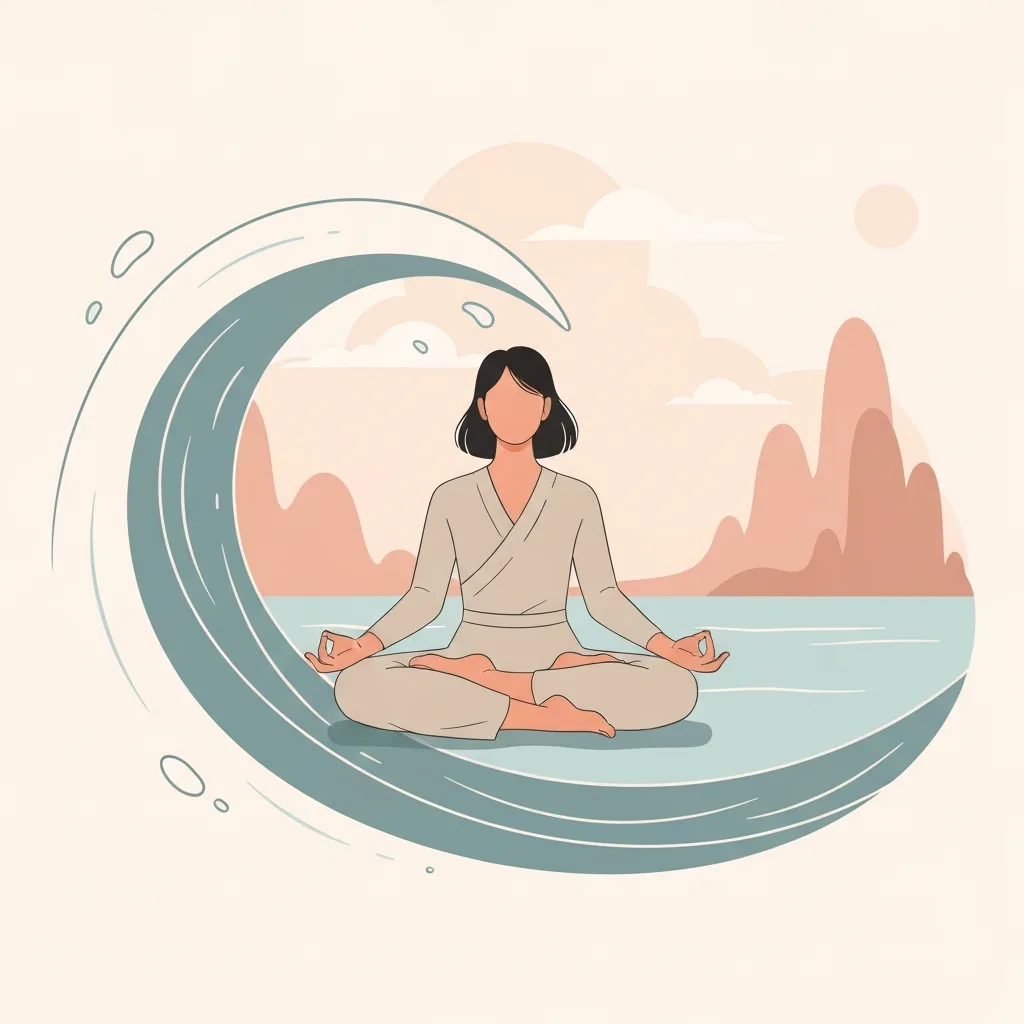
To understand the practice, it helps to visualize your emotions as ocean waves. An urge starts small, gradually builds in momentum, reaches a peak of high intensity, and eventually crashes and dissipates on the shore. When we act on an urge—like yelling when we are angry or seeking constant reassurance when we are anxious—we are essentially feeding the wave, giving it the energy it needs to keep churning.
Urge surfing is the practice of noticing the emotional wave, stepping back, and simply riding it out without giving in to the conditioned response. Instead of fighting the wave (which exhausts you) or letting it pull you under (which leads to regrettable actions), you use mindful awareness as a surfboard. You stay on top of the sensation, observing it with curiosity, until it naturally subsides.

The Neuroscience of the Pause
To understand why this mindfulness technique is so effective, we have to look at what happens in the brain during an emotional spike. When you are triggered by a stressful event, the amygdala—the brain’s primitive threat-detection center—sounds an alarm. This initiates a cascade of stress hormones, including cortisol and adrenaline, preparing your body for a fight-or-flight response.
Bypassing the Amygdala Hijack
During this “amygdala hijack,” the prefrontal cortex—the area of the brain responsible for logic, impulse control, and long-term planning—temporarily goes offline. Your brain prioritizes immediate survival over rational thought. This is why trying to logic your way out of a strong emotional urge rarely works; your rational brain is effectively locked out of the control room.
Urge surfing acts as a neurological reset button. By choosing to observe the urge rather than immediately acting on it, you introduce a critical pause. This pause deprives the amygdala of the immediate behavioral feedback it expects. When you don’t fight or flee, the brain slowly realizes there is no actual emergency. Over a period of about 20 to 30 minutes, the parasympathetic nervous system begins to engage, lowering your heart rate and bringing the prefrontal cortex back online. You aren’t suppressing the emotion; you are simply outlasting the brain’s chemical alarm bell.
How to Practice Urge Surfing: A Step-by-Step Guide
Mastering this technique requires consistent practice. You cannot wait for a massive emotional crisis to try it for the first time. Start with smaller waves—the urge to check your phone while someone is talking to you, or the impulse to complain about a minor daily annoyance. When you feel an urge arising, follow these four steps.
Step 1: Acknowledge the Swell (Mindful Recognition)
The moment you feel the impulse to react, label it internally. Say to yourself, “I am having the urge to yell,” or “I am feeling a strong impulse to shut down and avoid this conversation.” Naming the urge creates immediate psychological distance. In acceptance and commitment therapy, this is known as cognitive defusion. You realize that you are not the urge; you are the consciousness observing the urge.
Step 2: Anchor Your Attention (The Breath as a Surfboard)
You need a surfboard to stay above the water, and your breath is the most reliable anchor you have. Shift your focus to the physical sensation of breathing. Notice the air moving in through your nose, the expansion of your ribs, and the rise and fall of your chest. You do not need to alter your breathing or force it to slow down artificially. Just watch it. This grounds your attention in the present moment, preventing your mind from spinning stories about why you are upset.
Step 3: Map the Physical Sensations
Urges do not just live in the mind; they manifest intensely in the body. Where do you feel this emotional impulse? Is it a tightness in your chest? A buzzing in your hands? A hot knot in your stomach? Direct your attention to these physical sensations with pure, objective curiosity. Do not judge them as good or bad. Simply investigate them as physical data. How much space does the tightness take up? Is the sensation static, or does it move? By focusing on the physical sensation rather than the narrative of the emotion, you strip the urge of its psychological power.
Step 4: Watch the Wave Crest and Fall
As you observe the physical sensations, you will notice them shifting and changing. The urge will likely get stronger before it gets weaker. This is the crest of the wave. Expect it, and do not panic. Remind yourself: “This is just a feeling, and feelings are temporary.” Keep your attention on your breath and the physical sensations until you feel the intensity begin to drop. You are simply watching the wave roll into the shore.
The Danger of Resistance: Why Fighting Urges Fails
A common misconception about emotional regulation is that we need to actively fight our negative feelings. But psychological resistance acts like a dam in a river. When you suppress an urge—telling yourself, “I shouldn’t feel this way,” or “I need to stop being angry right now”—you create immense internal pressure. The water has nowhere to go, so it builds up until the dam inevitably breaks, usually resulting in a much larger emotional explosion or a binge behavior.
Urge surfing entirely removes the dam. By giving the emotion unconditional permission to exist, you remove the secondary layer of distress: the guilt, shame, or panic about having the feeling in the first place. You accept the presence of the wave without feeling obligated to let it dictate your direction. This radical acceptance significantly shortens the lifespan of the emotion.
Common Pitfalls for Beginners
When you first begin practicing urge surfing, it is easy to fall into a few common traps. The most frequent mistake is using urge surfing as a covert way to try and make the feeling go away. If your hidden agenda is to destroy the emotion, you are still practicing resistance. The goal of urge surfing is not to eliminate the urge; it is to prove to yourself that you can tolerate the urge without acting on it. The dissipation of the feeling is a byproduct, not the goal.
Another pitfall is getting caught up in the thoughts surrounding the urge. Your mind will try to justify the impulse. It will tell you, “You have a right to be angry, you should send that text.” When you notice this happening, gently detach from the narrative and return your focus strictly to the physical sensations in your body and the rhythm of your breath.
Applying Urge Surfing to Daily Emotional Challenges
While originally designed for addiction, the applications for urge surfing in daily emotional life are virtually limitless. Here are a few ways to apply the practice to maintain emotional balance.
Anger and Interpersonal Conflict
During a heated argument, the urge to have the last word, to hurl an insult, or to strike back defensively can feel overpowering. Surfing this urge allows you to tolerate the intense heat of anger without doing irreversible damage to your relationship. It buys you the time to stay silent just long enough to formulate a response that is aligned with your core values, rather than reacting out of spite or wounded pride.
Anxiety and the Compulsion for Reassurance
Anxiety almost always comes with an intense behavioral urge to seek immediate reassurance—whether that means texting someone repeatedly to ensure they aren’t mad at you, or endlessly researching physical symptoms online. Surfing the urge to seek reassurance builds your tolerance for uncertainty. It teaches your nervous system that you can survive feeling anxious without needing an immediate external fix.
Numbing and Avoidance Behaviors
When we feel bored, lonely, or overwhelmed, we often experience urges to numb out. This might look like pouring a drink, online shopping, or doomscrolling on social media. By urge surfing these impulses, we force ourselves to sit with the underlying discomfort. Over time, this breaks the automatic cycle of emotional avoidance, allowing us to address the root causes of our distress.
The Freedom of the Pause
Ultimately, urge surfing is about reclaiming your autonomy. It is the profound realization that while you cannot control the emotional waves that life throws at you, you do not have to be at their mercy. Between an emotional trigger and your behavioral response, there is a space. By learning to surf your urges, you actively expand that space.
Every time you successfully ride out an emotional impulse without acting on it, you rewire your brain. You build emotional resilience and prove to yourself that feelings are not facts, and urges are not commands. Through consistent practice, you transform yourself from someone who reacts blindly to internal impulses into someone who responds to life with intention, clarity, and unshakeable emotional balance.

Do you enjoy the content on Agenda Creativa?
Your contributions help me create new articles, share creative ideas, and keep this platform alive! If you like what I do and want to support my work, you can buy us a coffee.
Every cup of coffee means more than just a gesture – it's direct support for my passion to create inspiring and useful content. Thank you for being part of this journey!
☕ Buy me a coffee