
The Illusion of a Rewritten Past
Have you ever noticed that when you are in a state of deep anxiety, frustration, or profound sadness, your brain suddenly seems incapable of recalling a single positive memory? It is as though your entire personal history has been retroactively rewritten. Your past failures take center stage, previous rejections feel agonizingly fresh, and your historical successes are dismissed as mere flukes. In these moments, you are not just experiencing sadness or anxiety in the present; you become entirely convinced that you have always felt this way, and inevitably, always will.
This is not a character flaw, nor is it a sign of psychological regression. It is a well-documented neurological and psychological phenomenon known as state-dependent memory, or state-dependent recall. When left unchecked, this cognitive mechanism acts as an emotional trapdoor, turning a fleeting moment of nervous system dysregulation into a sprawling, inescapable narrative of despair. Understanding the architecture of this cognitive quirk—and learning how to short-circuit it through targeted mindfulness practices—is one of the most critical skills you can develop for maintaining long-term emotional balance.

The Mechanics of the Mood-Memory Loop
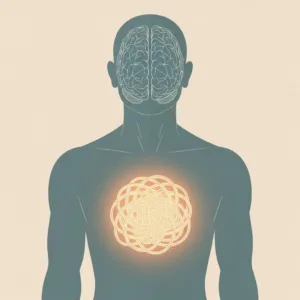
To dismantle the trap of state-dependent recall, we must first understand how the brain indexes our lived experiences. When you go through a significant event, your brain does not merely record the objective facts like a sterile video camera. Instead, it inextricably links the factual data of the event with the physiological and emotional state you were experiencing at that exact moment. The hippocampus, responsible for memory consolidation, works in tandem with the amygdala, the brain’s emotional processing center, to create what is essentially an affective filing system.
How the Brain Indexes Experiences
Imagine your memory as a vast, dimly lit library. The books are not organized by chronological order or by subject matter; they are organized by emotional frequency. When you are feeling joyful, relaxed, and secure, your brain naturally illuminates the section of the library containing memories coded with those exact same frequencies. You easily remember the time you succeeded, the moments you felt deeply loved, and the instances where life flowed effortlessly.
However, the moment your nervous system detects a threat and plunges you into a state of distress, the lighting in the library shifts. The joyful section goes entirely dark, and the spotlight shines harshly on the shelves containing fear, shame, grief, and anger. Your brain, attempting to be helpful, begins pulling these files off the shelf at lightning speed. It assumes that because you are currently feeling threatened, you need historical data on every other time you were threatened in order to survive the current moment.
The Evolutionary Glitch
From an evolutionary standpoint, this mechanism makes perfect sense. If an early human encountered a predator and felt terror, the brain needed instant access to every other memory of terror to recall how to escape. The problem is that our modern psychological threats—a critical email from a boss, an ambiguous text from a partner, or a generalized sense of inadequacy—do not require a life-or-death physical response. Yet, the brain still floods our consciousness with historical evidence of our unworthiness, effectively pouring gasoline on the fire of our current emotional distress.
Why State-Dependent Recall Sabotages Emotional Balance
The primary danger of state-dependent recall is not just that it makes us feel bad; it is that it completely distorts our perception of reality. It creates a powerful cognitive distortion that undermines our emotional stability in two distinct ways: the illusion of permanence and the collapse of identity.
The Illusion of Permanence
When state-dependent memory activates, it strips away our psychological peripheral vision. Because we cannot actively access memories of feeling calm or happy, our brain draws a logical, albeit flawed, conclusion: calm and happiness do not exist. This creates the illusion of permanence. We become trapped in the belief that the current emotional state is our permanent baseline. This is why a sudden bout of depression can feel so terrifyingly endless, even if you were laughing with friends just twenty-four hours prior. The inability to feel the memory of that laughter tricks the brain into believing the laughter was a lie.
The Identity Crisis of a Bad Mood
Furthermore, when our brain constantly feeds us a highlight reel of our worst moments, our self-concept begins to warp. We move from experiencing an emotion to identifying with it. We stop saying, ‘I am experiencing feelings of failure right now,’ and begin believing, ‘I am a failure.’ This fusion of temporary emotion with core identity is the exact friction point where a bad afternoon spirals into a weeks-long depressive or anxious episode. The mood dictates the memories, the memories reinforce the mood, and the identity solidifies around the pain.
The Mindfulness Antidote: Disrupting the Feedback Loop
Breaking free from the trap of state-dependent recall does not require you to aggressively force positive thoughts or engage in toxic positivity. In fact, trying to force yourself to remember happy times when your nervous system is in a state of high alert often creates internal resistance, making you feel worse. Instead, the goal is to use targeted mindfulness techniques to insert a wedge of awareness between the current emotion and the memories it is trying to retrieve.
1. Cognitive De-fusion: Naming the Filter
The first step in neutralizing state-dependent recall is simply recognizing that it is happening. When you notice your mind rapidly pulling up past grievances or historical failures, pause and name the mechanism. You might say to yourself, ‘I am not my past right now; I am just experiencing state-dependent memory. My brain is fetching sad files because I am currently in a sad state.’ By naming the psychological mechanism, you shift your brain from the emotional center (the amygdala) to the logical, observing center (the prefrontal cortex). You step out of the content of your thoughts and become the observer of your cognitive process.
2. The Counter-Indexing Technique
Once you have named the filter, you can begin to gently challenge it, not by forcing joy, but by seeking neutral facts. When your brain insists that ‘everything has always been terrible,’ you do not need to prove that ‘everything has always been wonderful.’ You only need to prove that ‘some things have been neutral.’ Recall what you ate for breakfast three days ago. Remember the color of the last car you drove behind. Recall the exact layout of your childhood living room. This practice, known as cognitive grounding, forces the brain to access memory files that are completely devoid of emotional charge. It disrupts the mood-memory loop by proving to your nervous system that you have access to data outside of the current distress frequency.
3. Somatic Grounding Over Mental Time Travel
Because state-dependent recall is fundamentally an issue of mental time travel—being dragged into the past by the emotions of the present—the most powerful antidote is radical presence in the physical body. When the mind is spiraling through historical pain, drop your attention entirely into your somatic experience. Notice the exact temperature of the air on your skin. Feel the specific texture of the fabric on your clothing. Press your feet into the floor and notice the solidity of the ground. The body cannot time travel; it is always existing in the exact present millisecond. By anchoring your awareness in your physical sensations, you starve the state-dependent memory loop of the cognitive attention it needs to sustain itself.
Building Long-Term Resistance to Memory Hijacking
While in-the-moment interventions are crucial, building long-term emotional balance requires proactive maintenance. You can train your brain to become less susceptible to emotional hijacking by creating external anchors for your positive states.
Documenting the Baseline
Because you cannot rely on your brain to remember your good days when you are having a bad day, you must outsource that memory. Keep a ‘baseline journal.’ On days when you feel regulated, calm, and content, write down exactly how you feel and what you know to be true about your life. Write down the evidence of your resilience, the people who support you, and the successes you have achieved. When state-dependent recall strikes and your brain tries to tell you that you have always been miserable, you can open this journal. You do not have to try to *feel* the truth of those words in that moment; you simply have to read them as objective data left behind by a more regulated version of yourself.
Cultivating Neutral Observation
Ultimately, emotional balance is not the absence of distress; it is the refusal to let distress rewrite your reality. By practicing mindfulness, we learn to treat our emotions like passing weather systems rather than permanent climate changes. A storm may temporarily darken the sky and make it impossible to see the sun, but the storm does not mean the sun has ceased to exist. When you master the awareness of state-dependent recall, you reclaim the narrative of your life. You allow yourself to feel the pain of the present moment without letting it steal the truth of your past or the potential of your future.



Do you enjoy the content on Agenda Creativa?
Your contributions help me create new articles, share creative ideas, and keep this platform alive! If you like what I do and want to support my work, you can buy us a coffee.
Every cup of coffee means more than just a gesture – it's direct support for my passion to create inspiring and useful content. Thank you for being part of this journey!
☕ Buy me a coffee