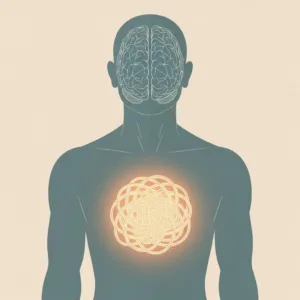
We live in a psychological era that prizes deep self-inquiry. If you feel a sudden spike of anxiety, a wave of sadness, or a flash of irritability, the modern cultural reflex is to immediately ask: Where did this come from? We treat our minds like active excavation sites, grabbing our mental shovels to unearth the childhood wound, the hidden trigger, or the subconscious bias responsible for our current distress. This relentless pursuit of the root cause is what we might call emotional archaeology.
On the surface, this looks like doing the work. It feels productive and highly self-aware. But for many people, this constant internal digging becomes a sophisticated form of self-sabotage. Instead of moving through an emotion, you get trapped inside it, paralyzed by the need to understand its origin before you allow yourself to regulate it.
In the pursuit of emotional balance, we often confuse intellectualizing our feelings with actually processing them. Here is why digging for root causes during a moment of distress sabotages your nervous system, and how to shift from endless analysis to present-moment regulation.
The Allure of Emotional Archaeology
When an uncomfortable emotion strikes, it creates a sense of internal chaos. The human brain hates chaos; it craves predictability, order, and logic. By asking “why,” the brain attempts to regain control over an unpredictable physiological state. If you can trace your sudden bout of imposter syndrome back to a critical comment a teacher made in the third grade, you suddenly have a narrative. The chaos has a name.
But a narrative is not a biological off-switch. Understanding the historical context of your pain does not automatically lower your heart rate, reduce cortisol production, or soothe your amygdala. In fact, emotional archaeology often prolongs the physiological stress response. While you are busy rummaging through your mental archives looking for the original source of your anxiety, your body is still actively experiencing the anxiety. You are essentially ignoring a fire in your kitchen because you are too busy trying to figure out who left the stove on.

Why ‘Why’ Keeps You Trapped
Organizational psychologist Tasha Eurich conducted extensive research on self-awareness and made a startling discovery: people who spend the most time introspecting and asking themselves “why” are often less self-aware, more anxious, and more depressed than those who do not.
The question “why” is inherently backward-looking and problem-focused. When you ask, “Why am I so upset about this minor inconvenience?” your brain treats the question like a search engine query. It will immediately scan your memory banks for every possible flaw, past failure, and unresolved trauma to deliver an answer. This phenomenon often leads to a cascade of negative cognition. You start with a simple feeling of frustration and end up uncovering a dozen unrelated insecurities. The original emotion is no longer just a passing wave; it has been magnified into a referendum on your entire psychological stability.
Furthermore, the answers we find when we ask “why” are rarely objective facts. They are usually heavily biased interpretations colored by our current mood. If you are tired and stressed, your brain will generate a very different “why” than if you are rested and calm. Relying on emotional archaeology during a state of dysregulation guarantees that the artifacts you dig up will be distorted.
The Danger of the Narrative Fallacy
When we engage in emotional archaeology, we frequently fall victim to what psychologists call the narrative fallacy. This is the human tendency to weave unrelated facts into a cohesive story to make sense of the world. When you feel a sudden drop in your mood, your brain desperately wants a story to explain it. You might link your current sadness to a slightly awkward email you sent yesterday, which you then link to your fear of professional failure, which you then link to your parents’ high expectations.
Within minutes, a minor, unexplained dip in neurotransmitters has been transformed into an epic tragedy about your lifelong inadequacy. The narrative fallacy convinces you that this story is the absolute truth. But in reality, your brain simply reverse-engineered a crisis to justify a biological sensation. You might just be dehydrated, sleep-deprived, or reacting to a shift in barometric pressure.
By constantly digging for profound psychological narratives, we ignore the mundane, physiological realities of having a human body. We overcomplicate our distress. Recognizing the narrative fallacy allows you to step back and say, “My brain is telling me a very dramatic story about this feeling right now, but I do not have to accept it as the truth.”
The Difference Between Processing and Intellectualizing
To achieve true emotional balance, we must recognize the sharp distinction between processing an emotion and intellectualizing it.
Intellectualizing is a defense mechanism. It is the act of retreating into the mind to avoid feeling the physical reality of an emotion in the body. Emotional archaeology is the ultimate intellectualization. It keeps you safely detached from the raw, vulnerable sensation of the feeling by wrapping it in psychological jargon and historical analysis. You might spend an hour journaling about how your fear of abandonment was triggered by a delayed text message, yet never once take a deep breath or consciously relax the tension in your jaw.
Mindful emotional processing, by contrast, is entirely experiential. It does not require a backstory. It does not demand a thesis statement. It simply requires you to notice the physical and mental sensations of the emotion as they occur in the present moment, without trying to change them or figure them out. You do not need to know the origin of a storm to put up an umbrella, and you do not need to know the origin of an emotion to offer yourself comfort and regulation.
How to Shift from Emotional Archaeology to Present-Moment Regulation
If you have spent years treating every mood shift as a mystery to be solved, dropping the mental shovel will feel counterintuitive. Your brain will insist that if you do not find the root cause, the emotion will return or you will fail to learn the lesson. To build emotional balance, you must train your mind to prioritize immediate regulation over historical understanding. Here are the core principles for making that shift.
1. Replace “Why” with “What”
The most effective way to short-circuit the rumination loop is to change the primary question you ask yourself when distress strikes. Instead of asking, “Why am I feeling this way?” ask, “What am I feeling right now?”
“Why” pulls you into the past and invites speculation. “What” anchors you in the present and demands observation. Notice the difference in internal dialogue. “Why am I so overwhelmed?” leads to thoughts about your workload, your life choices, and your perceived inadequacies. “What is happening in my body right now?” leads to noticing a tight chest, shallow breathing, and racing thoughts. Once you identify the “what,” you can follow it up with a second, equally practical question: “What do I need right now to feel safe?” This shifts your brain from a passive victim of the past to an active architect of the present.
2. Implement an Analytical Curfew
You do not have to abandon self-inquiry entirely; you simply need to time it correctly. Attempting to psychoanalyze yourself while you are actively triggered is like trying to fix a car engine while driving down the highway at eighty miles per hour. The nervous system must be calm before the brain can engage in constructive reflection.
Create a strict analytical curfew for yourself. When an intense emotion arises, make a firm internal agreement: you are not allowed to analyze its origins for at least twenty-four hours. Your only job in the immediate aftermath of a trigger is to soothe your nervous system. Drink a glass of water, step outside, focus on your breathing, or engage in a grounding exercise. Once the physiological storm has entirely passed, you can choose to look back and evaluate the trigger. More often than not, once you are calm, the desperate need to analyze the emotion will have vanished entirely.
3. Practice Experiential Acceptance
Emotional archaeology is often driven by an underlying intolerance for discomfort. We dig for answers because we want the pain to stop, believing that an intellectual breakthrough will cure the emotional ache. Experiential acceptance is the radical practice of allowing an emotion to exist without interrogating it.
When sadness, anger, or anxiety appears, try greeting it as a temporary weather pattern rather than a problem to be solved. You can silently say to yourself, “I am experiencing a wave of anxiety right now, and that is okay. I do not need to know where it came from to know that it will eventually pass.” By removing the mandate to understand the emotion, you remove the secondary layer of frustration and urgency that usually keeps the emotion locked in place.
4. Focus on the Function, Not the Origin
Sometimes, emotions do carry important data, but that data is usually about your present boundaries or unmet needs, not your distant past. Instead of asking where a feeling came from, ask what it is asking you to do right now.
Anger might not be a complex manifestation of childhood suppression; it might just be a signal that someone is currently overstepping your boundaries. Exhaustion might not be a symptom of existential burnout; it might just be a signal that you need to sleep. By focusing on the immediate function of the emotion, you strip away the unnecessary psychological baggage and give yourself a clear, actionable path forward.
The Freedom of Not Knowing
There is a profound, quiet freedom in accepting that you will not always understand your own emotional weather. Human beings are incredibly complex biological systems, influenced by sleep quality, blood sugar, stress hormones, environmental stimuli, and thousands of subconscious micro-interactions every single day. Expecting to have a perfectly rational, neatly packaged explanation for every fluctuation in your mood is a recipe for chronic anxiety.
True emotional balance is not the result of having all the answers. It is the result of building enough internal safety that you no longer panic when you lack them. By retiring your mental shovel and stepping out of the excavation site, you stop treating your mind as a puzzle to be solved and start treating it as an experience to be lived. When you let go of the need to know exactly why you are hurting, you finally free up the energy required to heal.



Do you enjoy the content on Agenda Creativa?
Your contributions help me create new articles, share creative ideas, and keep this platform alive! If you like what I do and want to support my work, you can buy us a coffee.
Every cup of coffee means more than just a gesture – it's direct support for my passion to create inspiring and useful content. Thank you for being part of this journey!
☕ Buy me a coffee