The Emergence of a Necessary Genre
For decades, the environmental crisis was primarily the domain of scientists, policy analysts, and journalists. The data was clear, the charts were alarming, and the scientific consensus was virtually unanimous. Yet, facts and figures often struggle to penetrate the human psyche in a way that provokes immediate, emotional resonance. Enter climate fiction, commonly referred to as “cli-fi.” This rapidly expanding literary genre has taken the abstract threat of a warming planet and grounded it in visceral, human narratives. By translating atmospheric carbon levels and rising sea temperatures into stories of survival, adaptation, and loss, modern authors are fundamentally changing how we process the realities of our changing world.
Climate fiction is not entirely new, but its transition from a niche subgenre of science fiction to the forefront of mainstream literary fiction is a recent and significant phenomenon. Readers are no longer looking at these stories as speculative warnings of a distant future; instead, they are reading them as contemporary realism. The genre forces us to confront the immediate consequences of our environmental choices, asking difficult questions about morality, corporate responsibility, and the legacy we are leaving for future generations.

Tracing the Origins: From Sci-Fi to Contemporary Realism
To understand the current state of climate fiction, we must look at its roots. Early pioneers of speculative fiction often used environmental disaster as a backdrop for societal collapse, though they rarely focused on anthropogenic (human-caused) climate change as we understand it today. J.G. Ballard’s 1962 novel The Drowned World is frequently cited as an early precursor to modern cli-fi. Set in a future where solar radiation has melted the ice caps and submerged major cities, Ballard’s work focused heavily on the psychological regression of humanity in the face of an unrecognizable natural world.
Later, Octavia E. Butler’s 1993 masterpiece Parable of the Sower presented a chillingly prescient vision of the 2020s. Butler imagined a California ravaged by drought, extreme wealth inequality, and societal breakdown. While Butler’s work is often categorized as dystopian, the environmental degradation driving the plot is entirely rooted in the logical extremes of late-twentieth-century climate neglect. She demonstrated how environmental collapse acts as a threat multiplier, exacerbating poverty, racism, and violence.
The term “cli-fi” itself was coined much later, in the late 2000s, by climate activist and former journalist Dan Bloom. What began as a catchy media label quickly became a recognized literary category. As the real-world effects of climate change became impossible to ignore—manifesting in historic wildfires, unprecedented hurricanes, and lethal heatwaves—authors outside the science fiction bubble began integrating these realities into their work. The apocalyptic elements softened into something far more unsettling: the slow, creeping dread of the everyday climate crisis.
Core Themes: Solastalgia and the Pre-Apocalyptic Narrative
Modern climate fiction distinguishes itself from traditional apocalyptic literature through its pacing and its focus. Traditional disaster narratives usually feature a singular, cataclysmic event—an asteroid strike, a sudden pandemic, or a nuclear war. Climate fiction, conversely, deals with the “slow violence” of environmental degradation. Authors must navigate the challenge of making gradual, incremental changes compelling on the page.
The Concept of Solastalgia
A recurring theme in modern cli-fi is solastalgia, a term coined by philosopher Glenn Albrecht to describe the emotional distress caused by environmental change. It is the feeling of homesickness you experience while you are still at home, because your home environment has been irrevocably altered. Authors capture this profound grief by focusing on the micro-level impacts of global warming: a farmer watching their generational land dry up, a coastal resident dealing with chronic “sunny day” flooding, or a parent trying to explain the disappearance of a specific animal species to their child.
Moving Beyond Doom: The Rise of “Hopepunk”
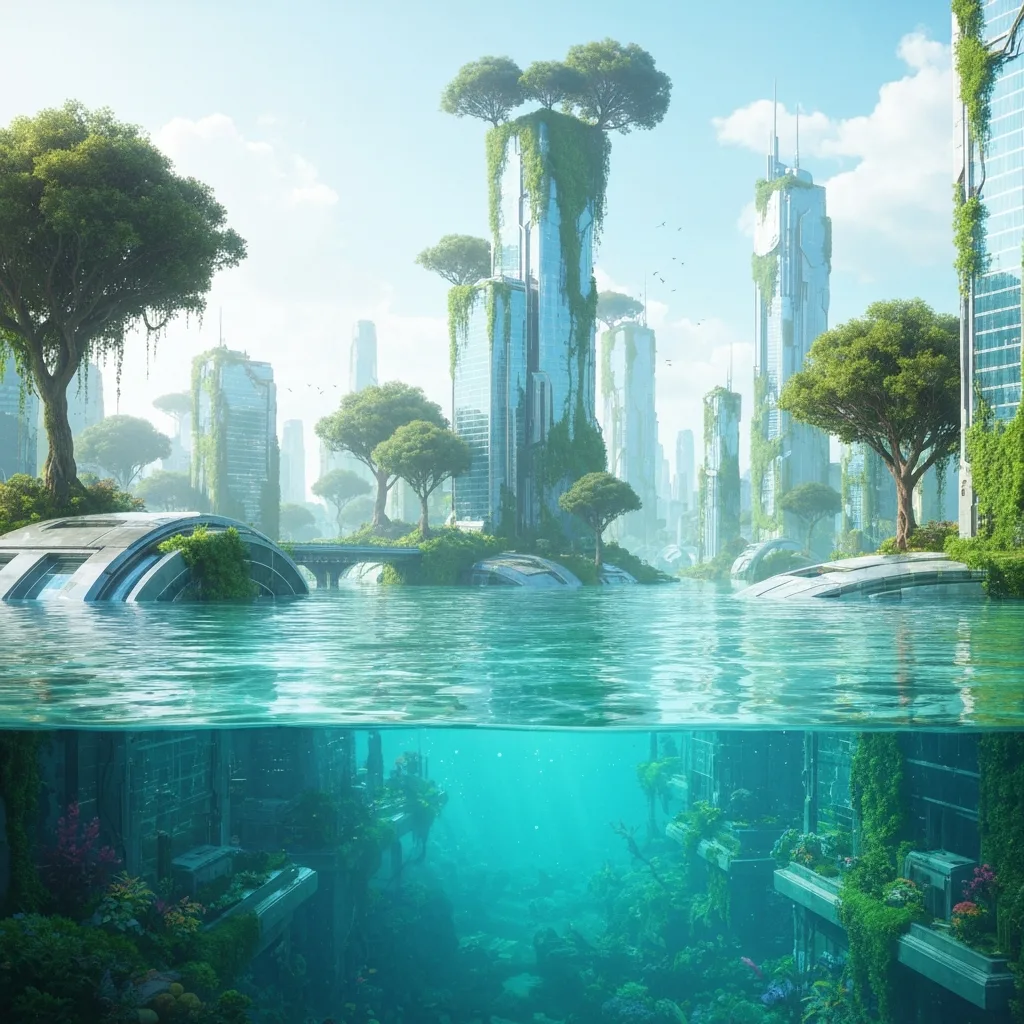
While early climate fiction leaned heavily into grim, unavoidable doom, a newer wave of literature is actively resisting pure nihilism. Sometimes referred to as “hopepunk” or “solar-punk,” this sub-movement within cli-fi focuses on radical resilience, community building, and aggressive adaptation. These stories acknowledge the severity of the crisis but refuse to accept human extinction as a foregone conclusion. They explore geoengineering, sustainable technology, and decentralized community networks, arguing that fighting for a damaged world is still a worthwhile endeavor.
Standout Works Shaping the Genre
Several contemporary novels have broken through the cultural noise, earning critical acclaim and proving that climate fiction can be both artistically profound and commercially successful. These works approach the subject from wildly different angles, showcasing the versatility of the genre.
The Overstory by Richard Powers
Winner of the Pulitzer Prize for Fiction, Richard Powers’ The Overstory is a monumental achievement in eco-fiction. Powers attempts something incredibly difficult: he shifts the narrative timescale away from the brief, frantic pace of human life and aligns it with the slow, deep time of trees. The novel weaves together the lives of nine different characters, all of whom have unique, profound connections to trees. Through their intertwining stories, Powers critiques human short-sightedness and industrial capitalism. The novel does not lecture; rather, it attempts to fundamentally alter the reader’s perception of the natural world, suggesting that plants are not merely resources or background scenery, but active, communicative participants in the Earth’s ecosystem.
The Ministry for the Future by Kim Stanley Robinson
Kim Stanley Robinson is widely regarded as one of the most important voices in hard science fiction, and The Ministry for the Future is perhaps his most urgent work. The novel opens with a harrowing, scientifically grounded depiction of a wet-bulb heatwave in India that kills millions in a matter of days. From this traumatic inciting incident, Robinson builds a sprawling, meticulously researched narrative about a fictional UN agency tasked with advocating for future generations. The book is dense with discussions of carbon coin economics, glacier geoengineering, and eco-terrorism. Despite its grim opening, it is ultimately a pragmatic, optimistic book that outlines a plausible, if difficult, roadmap for human survival.
Flight Behavior by Barbara Kingsolver
Barbara Kingsolver approaches climate change not through global policy or deep time, but through the lens of rural, working-class America. In Flight Behavior, a young woman living in poverty in the Appalachian Mountains discovers a massive, unexpected colony of monarch butterflies roosting in the forest behind her house. The butterflies have been thrown off their migratory path by extreme weather patterns. Kingsolver brilliantly contrasts the scientific reality of the butterflies’ presence with the religious and economic interpretations of the local community. By grounding a global crisis in a highly specific, fiercely local setting, Kingsolver explores how class, education, and media consumption shape our understanding of environmental disasters.
The Psychological Impact of Climate Narratives
Why do we need fiction to understand a problem that is fundamentally rooted in physics and chemistry? The answer lies in human psychology. Cognitive scientists have long known that the human brain is poorly equipped to process massive, abstract, long-term threats. We are evolutionarily wired to react to immediate, visible dangers. When presented with a spreadsheet detailing parts-per-million of atmospheric carbon dioxide, the brain often defaults to apathy or denial.
Fiction bypasses this cognitive block through a mechanism known as “narrative transport.” When a reader becomes immersed in a story, their neurological responses mirror those they would experience in real life. If a reader bonds with a character who is fighting to save their flooded home, the reader experiences a fraction of that anxiety, grief, and determination. Climate fiction translates the macro-level data into micro-level empathy.
Furthermore, these novels provide a safe psychological space to process climate anxiety. Many people feel a paralyzing sense of helplessness regarding the environment. By engaging with narratives where characters confront, navigate, and sometimes overcome these massive challenges, readers can work through their own fears. Literature offers a rehearsal space for the difficult future we are facing, allowing us to build emotional resilience.
The Future of Climate Fiction
As the effects of global warming become increasingly pronounced, it is highly likely that the “cli-fi” label will eventually become obsolete. Just as a contemporary novel does not need a special genre tag to indicate that characters use smartphones or the internet, future literary fiction will naturally incorporate extreme weather, resource scarcity, and climate migration as standard elements of the human experience. The environment will no longer be a backdrop; it will be an active, demanding character in almost every story.
Ultimately, the rise of climate fiction represents literature doing what it has always done best: holding a mirror up to society, reflecting our deepest anxieties, and challenging us to imagine better ways of living. These authors are not just writing stories; they are drafting the emotional and moral blueprints we will need to navigate the precarious decades ahead. By reading them, we take the first crucial step toward understanding the magnitude of our reality, transforming our collective dread into a catalyst for meaningful action.




Do you enjoy the content on Agenda Creativa?
Your contributions help me create new articles, share creative ideas, and keep this platform alive! If you like what I do and want to support my work, you can buy us a coffee.
Every cup of coffee means more than just a gesture – it's direct support for my passion to create inspiring and useful content. Thank you for being part of this journey!
☕ Buy me a coffee